Przeczytaj
Model United Nations is a great opportunity for you to develop confidence and raise your awareness of global issues. It’s an invaluable experience that has helped many young people get into university or even find their first jobs! Learn more about MUN and how you can benefit from participating in this event.
Obrady MUN to świetna okazja, żeby zbudować pewność siebie i zdobyć wiedzę na temat wydarzeń na świecie. MUN to bezcenne doświadczenie, które pomogło wielu młodym ludziom dostać się na studia lub nawet otrzymać pierwszą pracę. Dowiedz się więcej o tym, czym są obrady MUN i jakie korzyści przynoszą.
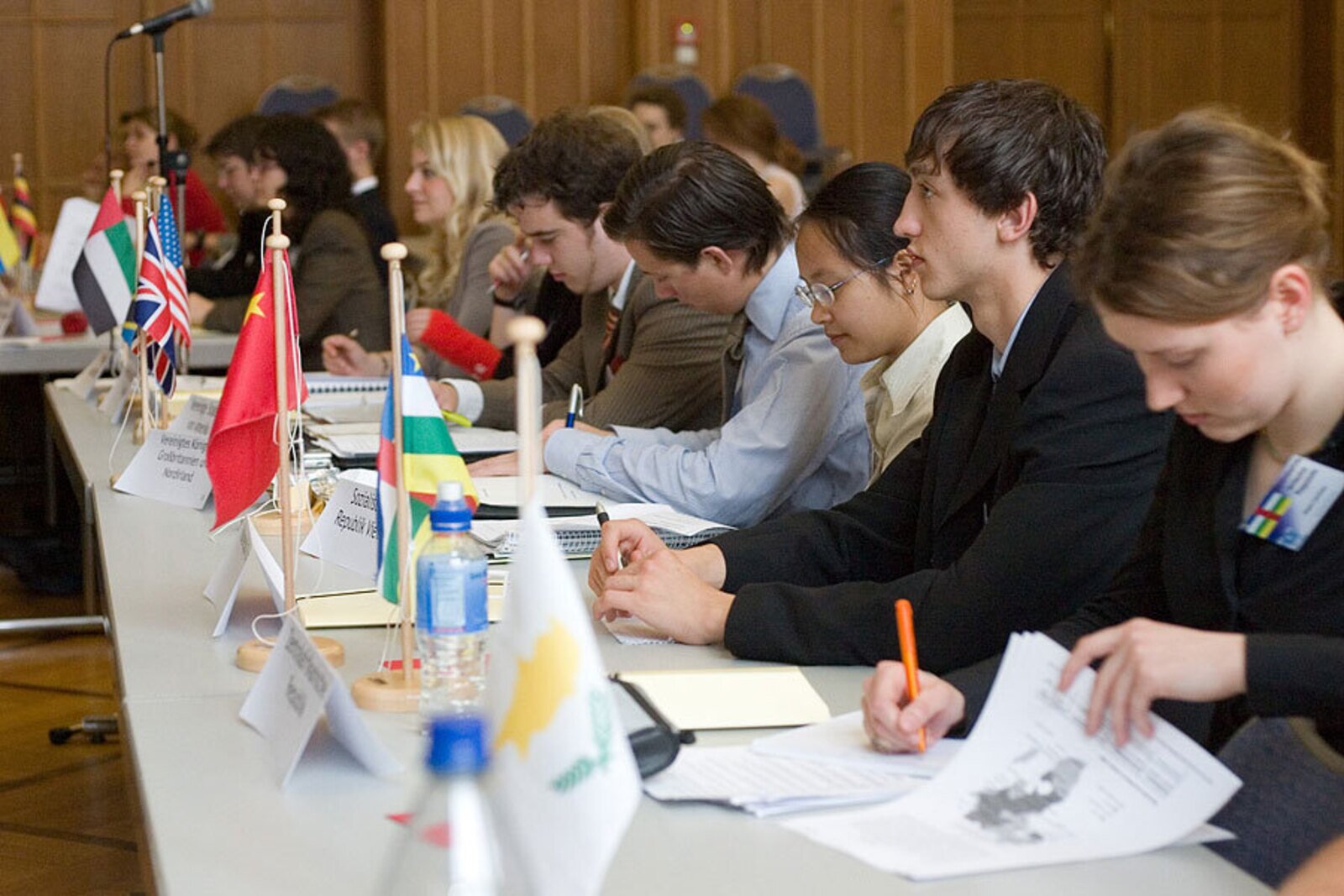
Study the text and do the exercises below.
How to Get Ready for the Model United Nations?During Model United NationsModel United Nations sessions, young people have an opportunity to step into the shoes ofstep into the shoes of world leaders to discuss and resolve global problemsresolve global problems. A) ___ There, you will learn about world politics and exercise diplomacy and strategic planning.
You will be assigned a country and you will play the role of its delegate. It might be a real challenge as the country you are assigned may represent a totally different outlookoutlook from your own on the issues that will be the subject matter of the debatesubject matter of the debate, but you will still need to act in the best interest ofact in the best interest of this country as well as global peace and security. For example, you may be assigned the role of France in a debate on the future of nuclear energy, or Australia in a discussion about climate change. B) ___ Prior toPrior to the conference, you will be provided with guidance in terms of how you should research the topic and your assigned country before the conference. You will have to complete a Country ProfileCountry Profile, Position PaperPosition Paper and prepare an Opening SpeechOpening Speech. If you are new to doing this kind of research, it will take a while to collect all the information and documents, so procrastinationprocrastination is not your best ally in this task.
Once you’ve conducted your research and created the position paper and policy proposals in agreement with your assigned country profile, submit the documents to the Chair of the Committee prior to the opening of the event. Remember that you must not copy directly from any sources as plagiarismplagiarism is not tolerated. C) ___ The conference starts with a plenary meetingplenary meeting of the General AssemblyGeneral Assembly. The organising body will assign participants roles, such as President and Vice‑President, Chairs of CommitteesChairs of Committees and Secretary General. They are responsible for all logistic aspects of the MUN. The President of the General Assembly and the Head DelegatesHead Delegates make their statements, and then all delegates join their committee meetings for debates and negotiations.
Each item in the individual committee's schedule is approached in two steps: there is a discussion part and then an action part. First, all delegates present their statements and, as a result of discussions which follow, they should be able to draft their resolutionsdraft their resolutions, that is, proposals of solutions of the problem they tackletackle. When these are ready, the draft resolutions are submitted to the Secretary of the Committee. D) ___ Their aim is to review the draft resolution until general consensus is achievedconsensus is achieved.
MUN conferences are organised at schools, campuses, or other venues with the capacity to seat large groups of peopleseat large groups of people, and they last at least a couple of days. E) ___ At the end of the event, each committee gives awards to its most exceptional participants. The categories are: Best Delegate, which is the highest honour, Outstanding Delegate and Honourable MentionHonourable Mention. The criteria considered when choosing the winner are: effectiveness in leading a debate, delivering speeches and writing resolutionsresolutions. F) ___ It’s mostly about networking and making friends with people who think alike, as well as with those who have different perspectives.
Źródło: Anna Posyniak‑Dutka, [na podstawie:] https://web.stanford.edu/group/sias/cgi-bin/wordpress/about/whats-model-un/ [dostęp 24.08.2022], https://www.un.org/en/model-united-nations/step-step-outline-organizing-mun [dostęp 24.08.2022], https://schoolsweb.buckscc.gov.uk/equalities/model-united-nations/ [dostęp 24.08.2022], https://bestdelegate.com/mun-made-easy-how-to-get-started-with-model-united-nations/ [dostęp 24.08.2022], https://www.wisemee.com/how-to-write-a-mun-position-paper/ [dostęp 24.08.2022], licencja: CC BY-SA 3.0.
B) 1. You must prove that you are able to write your original Position Paper., 2. A series of informal and formal meetings proceed., 3. You will also be given certain tasks to complete before the session., 4. If you’re interested in current affairs and you’d like to practise public speaking and debating about challenges the global community is facing these days, MUN is a perfect place for you., 5. Make sure you book your place at the conference early., 6. Don’t forget, though, that the event is not only about awards., 7. Committee meetings, speeches and debates usually take the whole weekend., 8. You will have to arrive a few days before the conference.
C) 1. You must prove that you are able to write your original Position Paper., 2. A series of informal and formal meetings proceed., 3. You will also be given certain tasks to complete before the session., 4. If you’re interested in current affairs and you’d like to practise public speaking and debating about challenges the global community is facing these days, MUN is a perfect place for you., 5. Make sure you book your place at the conference early., 6. Don’t forget, though, that the event is not only about awards., 7. Committee meetings, speeches and debates usually take the whole weekend., 8. You will have to arrive a few days before the conference.
D) 1. You must prove that you are able to write your original Position Paper., 2. A series of informal and formal meetings proceed., 3. You will also be given certain tasks to complete before the session., 4. If you’re interested in current affairs and you’d like to practise public speaking and debating about challenges the global community is facing these days, MUN is a perfect place for you., 5. Make sure you book your place at the conference early., 6. Don’t forget, though, that the event is not only about awards., 7. Committee meetings, speeches and debates usually take the whole weekend., 8. You will have to arrive a few days before the conference.
E) 1. You must prove that you are able to write your original Position Paper., 2. A series of informal and formal meetings proceed., 3. You will also be given certain tasks to complete before the session., 4. If you’re interested in current affairs and you’d like to practise public speaking and debating about challenges the global community is facing these days, MUN is a perfect place for you., 5. Make sure you book your place at the conference early., 6. Don’t forget, though, that the event is not only about awards., 7. Committee meetings, speeches and debates usually take the whole weekend., 8. You will have to arrive a few days before the conference.
F) 1. You must prove that you are able to write your original Position Paper., 2. A series of informal and formal meetings proceed., 3. You will also be given certain tasks to complete before the session., 4. If you’re interested in current affairs and you’d like to practise public speaking and debating about challenges the global community is facing these days, MUN is a perfect place for you., 5. Make sure you book your place at the conference early., 6. Don’t forget, though, that the event is not only about awards., 7. Committee meetings, speeches and debates usually take the whole weekend., 8. You will have to arrive a few days before the conference.
Type your answers to the questions in 3–4 sentences in each case.
What is MUN and why is it organised?
What do you have to prepare if you want to participate in MUN?
Would you be interested in taking part in MUN? Why? Why not?
Słownik
/ ˌækt ɪn ðə best ˈɪntrəst ɒv /
działać w najlepszym interesie kogoś/czegoś (to take actions bearing in mind the best solution for somebody / something)
/ tʃeəz əv kəˈmɪtɪz / / tʃeər əv ə kəˈmɪti /
przewodniczący/przewodniczące komisji (l. mn.) [przewodniczący/przewodnicząca komisji (l. poj.)] (an official responsible for running debate sessions)
/ kənˈsensəs ɪz əˈtʃiːvd / / əˈtʃiːv kənˈsensəs /
zostanie osiągnięte porozumienie [osiągnąć porozumienie] (to attain a compromise)
/ ˌkʌntri ˈprəʊfaɪl /
profil kraju (a document including all most important information about a given country)
/ ˈkʌrənt əˈfeəz / / ˈkʌrənt əˈfeə /
bieżące sprawy [bieżąca sprawa] (political, social, and cultural events happening in the world at the present time)
/ drɑːft ðeə ˌrezəˈluːʃn̩z / / drɑːft ə ˌrezəˈluːʃn̩ /
sporządzić projekt rezolucji (to write a preliminary version of a resolution)
/ ˈdʒenr̩əl əˈsembli /
Zgromadzenie Ogólne (the most powerful governing body of an organisation)
/ hed ˈdelɪɡeɪts / / hed ˈdelɪɡeɪt /
główni delegaci [główny delegat/ główna delegatka] (a main person representing an assigned country)
/ ˈɒnərəbl̩ ˈmenʃn̩ /
wyróżnienie (a prize given for high quality work to someone who was not awarded first, second, or third place in a competition)
/ ˈmɒdl̩ juˈnaɪtɪd ˈneɪʃn̩z /
Model Organizacji Narodów Zjednoczonych (a simulation of debates taking place during the United Nations meetings)
/ ˈəʊpənɪŋ spiːtʃ /
mowa otwierająca (a talk delivered at the beginning of an event)
/ ˈaʊtlʊk /
spojrzenie, pogląd (opinion or attitude to something)
/ ˈpleɪdʒɪərɪzəm /
plagiat (taking somebody else’s work and presenting it as yours)
/ ˈpliːnəri ˈmiːtɪŋ /
zebranie plenarne (a gathering in which everybody takes part)
/ pəˈzɪʃn̩ ˈpeɪpə /
dokument przedstawiający stanowisko kraju w odniesieniu do problemu, który będzie dyskutowany (a document presenting a stance of a country in relation to the discussed topic)
/ ˈpraɪə tuː /
przed (before)
/ prəʊˌkræstɪˈneɪʃn̩ /
prokrastynacja, odkładanie na później (delaying or postponing taking action)
/ ˌrezəˈluːʃn̩z / / ˌrezəˈluːʃn̩ /
rezolucje [rezolucja] (an official statement which includes a declaration to take action)
/ rɪˈzɒlv ˈɡləʊbl̩ ˈprɒbləmz / / rɪˈzɒlv ə ˈɡləʊbl̩ ˈprɒbləm /
rozwiązywać globalne problemy [rozwiązać globalny problem] (to find a solution to a world problem)
/ si:t ˈlɑ:dʒ ɡruːps əv ˈpiːpl̩ /
pomieścić duże grupy ludzi (to be big enough for large groups of people to be able to sit down)
/ ˌsekrɪtəri ˈdʒenrəl /
Sekretarz Generalny/Generalna (a main administrator of an organisation)
/ step ˈɪntə ðə ʃuːz ɒv /
wcielić się w rolę (to play a role of somebody else)
/ sʌbˈdʒekt ˌmætər əv ðə dɪˈbeɪt /
przedmiot debaty (the topic of a discussion)
/ ˈtækl̩ /
zajmują się [zajmować się] (to deal with something)
Źródło: GroMar Sp. z o.o., licencja: CC BY‑SA 3.0