Przeczytaj
The picture below shows a man who is taking part in elections. Being able to vote is one of the most fundamental rights of citizens in a democratic country. Get familiar with the text to find out more about what democracy is.
Zdjęcie poniżej przedstawia mężczyznę, który bierze udział w wyborach. Możliwość głosowania jest jednym z najbardziej podstawowych praw obywateli w demokratycznym kraju. Zapoznaj się z tekstem, aby dowiedzieć się więcej o tym, czym jest demokracja.
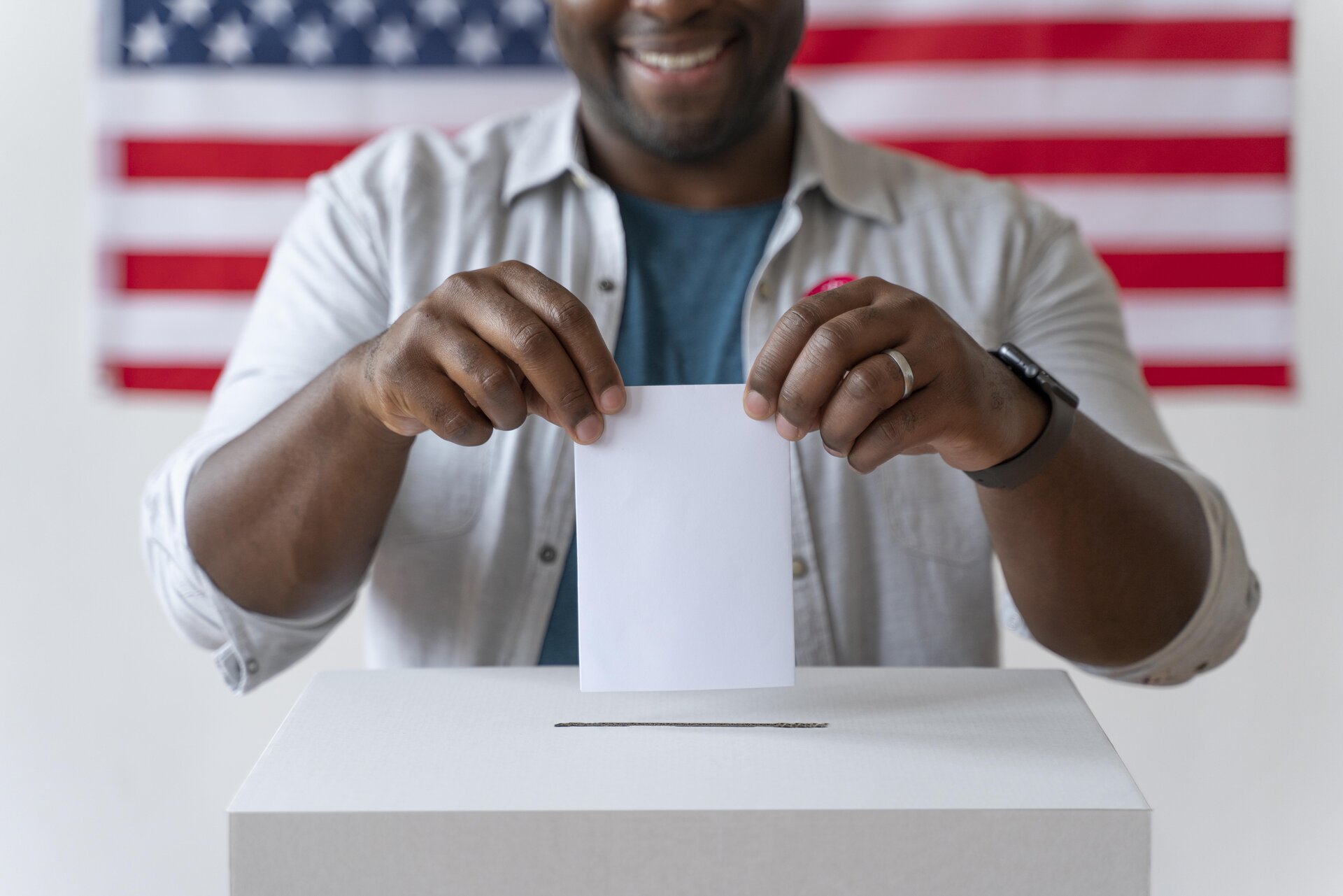
Study the text to learn more about democracy. Do you know its basic concepts?
What Is Democracy?A democracy is a system of governancegovernance that gives people the ability to exerciseexercise political influencepolitical influence and restrictsrestricts the authority of the head of statehead of state. It allows for the separation of duties among different branchesbranches of government and protects the preservationpreservation of basic rightsrights and libertiesliberties.
Democracy continues to be the most often used type of governance around the globe, despite the prominenceprominence of non‑democratic, authoritarian regimesauthoritarian regimes like China, Russia, North Korea, and Iran. The terms “people” (dēmos) and “rule” (kratos), which are both Greek words, are the roots of the word democracy. Perhaps the best definition of democracy is found in U.S. President Abraham Lincoln's renowned 1863 Gettysburg Address, which is a “government of the people, by the people, for the people…” The easiness of the idea would lead one to believe that establishingestablishing and maintainingmaintaining a government of, for, and by the people – a “popular” government – is not very difficult. However, a number of important political and practical concerns must be discussed while draftingdrafting a constitution, which normally serves as the frameworkframework within which a democracy will operate.
Political scientists generally agree that the following six factors provide the basis for most democracies:
A. ... is the idea that the people, acting through their elected representativesrepresentatives, establish and maintain the government.
B. ... is a framework for holding free and fair elections, and in accordance within accordance with the popular sovereignty concept, it is the people who are the source of all political power.
C. ... is based on a belief that democracies rarely thrivethrive in the absence of the population’s active involvement. The ability and encouragement to participate in political and civic activities are hallmarkshallmarks of healthy democracies.
D. ... defines that political authority should be split and distributed among the many governmental organisations and shouldn’t be centralised in a single person – such as a king or a queen.
E. ... are freedoms which safeguardsafeguard each citizen’s universal privileges. In addition toIn addition to that, they are guaranteed by the countries’ constitutions. They are believed to be inherent toinherent to all people, regardless ofregardless of their gender, nationality, ethnicity, colour, religion, language, or any other characteristics.
F. ... states that all citizenscitizens are subject toare subject to the regulations that are made by the public and fairly applied in a way that respects human rights by an independent judicial system.
Democracy exists in many different forms around the world. More democratic systems have been recognised throughout history than there are nationsnations on the planet. For instance in 2018, 96 out of 167 nations (57%) with a population of at least 500,000 had some kind of democracy. Statistics reveal that since the mid‑1970s, the number of democracies among world governments has been rising.
Źródło: Dorota Giżyńska, licencja: CC BY-SA 3.0.
2. A democracy is a system in which people are given the power to establish exercise political influence.
3. Without people’s participation, democracies will never thrive safeguard.
4. Separation of powers is about the division of power between different hallmarks branches of the government.
5. In democratic countries, freedom of speech is one of civil liberties representatives.
Answer the questions below. Write 2‑3 sentences to each question.
Describe in your own words what democracy is.
What is the origin of the word ‘democracy’?
What is the biggest advantage of living in a democratic country as opposed to an authoritarian regime?
Słownik
/ a: sʌbˈdʒekt tuː / / bi sʌbˈdʒekt tuː /
podlegają [podlegać]
/ ɔ:ˌthetaɒrɪˈteəriən reɪˈʒiːm /
reżim autorytarny
/ ˈbrɑːntʃɪz / / brɑːntʃ /
tu: działy [dział]
/ ˈsɪtɪzənz / / ˈsɪtɪzən /
obywatele [obywatel/obywatelka]
/ ˈdrɑːftɪŋ / / drɑːft /
sporządzenie projektu [sporządzać projekt]
/ ɪˈlektərəl ˈsɪstəm /
system wyborczy
/ ɪˈstæblɪʃɪŋ / / ɪˈstæblɪʃ /
ustanowienie [ustanawiać]
/ ˈeksəsaɪz /
tu: wywierać
/ ˈfreɪmwɜːk /
rama, szkielet
/ ˈɡʌvənəns /
system rządów
/ ˈhɔːlmɑːks / / ˈhɔːlmɑːk /
cechy charakterystyczne [cecha charakterystyczna]
/ hed əv steɪt /
głowa państwa
/ ˈhjuːmən raɪts / / ˈhjuːmən raɪt /
prawa człowieka [prawo człowieka]
/ ɪn əˈkɔːdns wɪð /
zgodnie z
/ ɪn əˈdɪʃn̩ tuː /
oprócz
/ ɪnˈhɪərənt tuː /
nieodłącznie
/ ˈlɪbətiz / / ˈlɪbəti /
swobody obywatelskie [swoboda obywatelska]
/ meɪnˈteɪnɪŋ / / meɪnˈteɪn /
utrzymanie [utrzymywać]
/ ˈneɪʃn̩z / / ˈneɪʃn̩ /
narody [naród]
/ pəˈlɪtɪkl̩ ˈɪnflʊəns /
wpływ polityczny
/ ˈpɒpjʊlə ˈsɒvrənti /
suwerenność narodu
/ ˌprezəˈveɪʃn̩ /
ochrona
/ ˈprɒmɪnəns /
waga, znaczenie
/ ˌpʌblɪk pɑ:ˌtɪsɪˈpeɪʃn̩ /
udział społeczeństwa
/ rɪˈɡɑːdləs ɒv /
bez względu na
/ ˌreprɪˈzentətɪvz / / ˌreprɪˈzentətɪv /
przedstawiciele [przedstawiciel/przedstawicielka]
/ rɪˈstrɪkts / / rɪˈstrɪkt /
zawęża, ogranicza [zawężać, ograniczać]
/ raɪts / / raɪt /
prawa [prawo]
/ ruːl əv lɔː /
praworządność
/ ˈseɪfɡɑːd /
zabezpieczać
/ ˌsepəˈreɪʃn̩ əv ˈpaʊəz /
rozdział władzy
/ thetaraɪv /
prosperować, dobrze się rozwijać
Źródło: GroMar Sp. z o.o., licencja: CC BY‑SA 3.0