Przeczytaj
The world is full of different animals. Some of them live far away so we call them exotic. In this section, you’re going to study a text about three of them.
Świat pełen jest różnych zwierząt. Część z nich żyje bardzo daleko od nas – te nazywamy egzotycznymi. W tej sekcji przeczytasz tekst o trzech z nich.
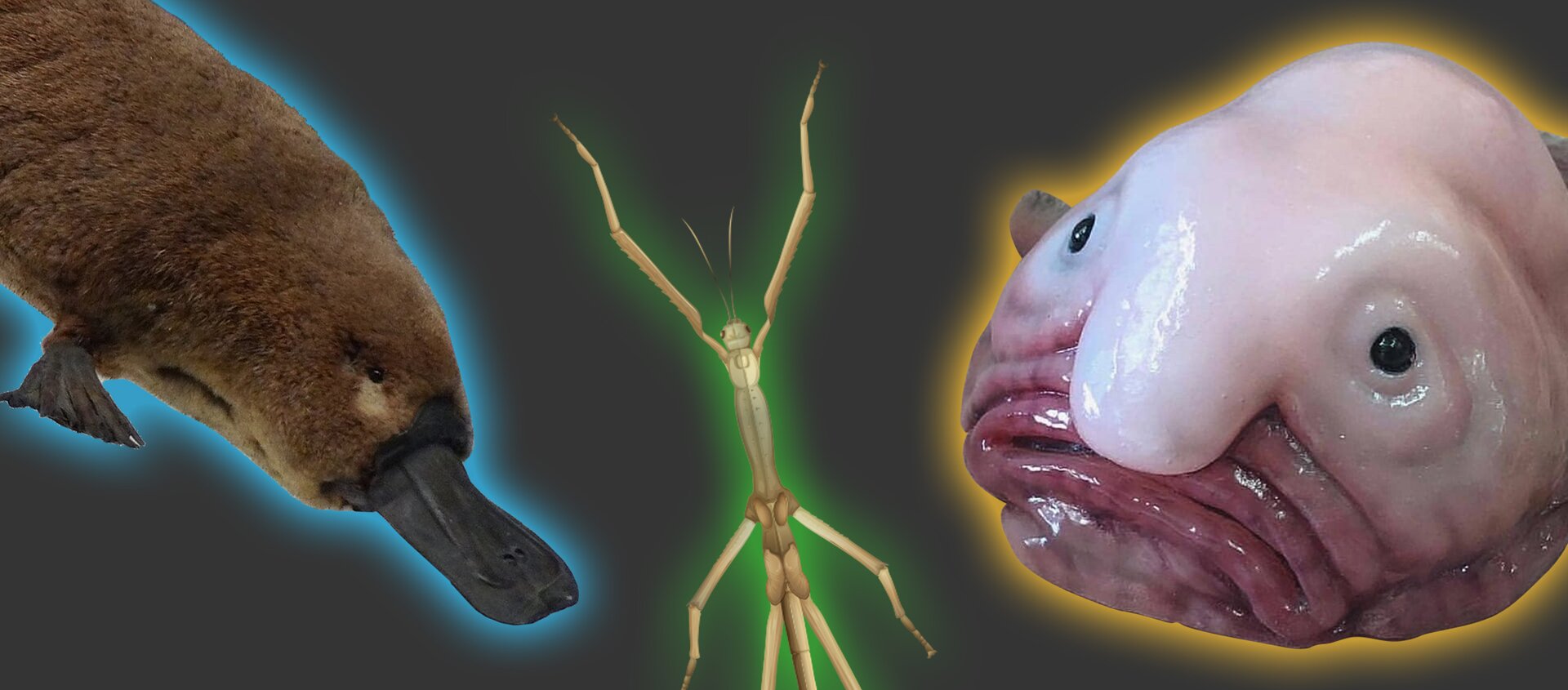
Match the names of animals with their definitions.
Połącz nazwy zwierząt z ich definicjami.
Study the text about exotic animals and then do the exercises below.
Przeczytaj tekst o egzotycznych zwierzętach, a następnie wykonaj ćwiczenia poniżej.
Some of the most interesting exotic animalsexotic animals are stick insectsstick insects. Their name is very fittingfitting. These little insects look exactly like stickssticks! It means that they can hidehide in the tree branchestree branches, and no one knows they’re there! Because of that, they can escapeescape predatorspredators. But if a predator finds a stick insect, it’s okay! Why? Stick insects can detachdetach their legs and run away. Their legs grow back.
PlatypusesPlatypuses are another group of exotic animals. They’re mammalsmammals but they lay eggslay eggs. They have got a wide beakbeak, furfur and a tailtail like a beaverbeaver. They’re very weird and many people are surprisedsurprised they exist! Platypuses sleep during the day and are active at night. They have got venomvenom and can hurthurt other animals and humans. It hurts a lot! Platypuses live only in AustraliaAustralia.
There is a very weird exotic animal that lives in the sea. It’s a blobfishblobfish. Blobfish haven’t got musclesmuscles or bonesbones, and they look very, very sad. Some people say they’re the ugliest animals in the world! Blobfish live deep underwaterunderwater, so you can't really see them. They spend most of their life eating. They live only in Australia.
Źródło: Zuzanna Kościuk, licencja: CC BY-SA 3.0.
How much do you know about each animal from the text? Group the words and phrases.
Ile wiesz o każdym ze zwierząt z tekstu? Pogrupuj wyrazy i wyrażenia.
Study the text and choose the correct answer.
Przeczytaj tekst, a następnie wybierz prawidłową odpowiedź.
- Stick insects
a) can detach their legs.
b) have dangerous venom.
c) live deep underwater.
- Platypuses
a) look very sad.
b) sleep during the day.
c) have no bones or muscles.
- Blobfish
a) live deep underwater.
b) hide in the trees.
c) are very dangerous.
- This animal has got venom:
a) stick insect.
b) blobfish.
c) platypus.
- These animals live only in Australia:
a) blobfish and platypus.
b) stick insect and blobfish.
c) platypus and stick insect.
Study the text again and fill in the gaps using the words below.
Przeczytaj tekst ponownie i uzupełnij luki wyrazami podanymi poniżej.
A stick insect looks exactly like a 1. bones, 2. mammal, 3. beak, 4. underwater, 5. hide, 6. detach, 7. stick, 8. venom, 9. muscles. It can 1. bones, 2. mammal, 3. beak, 4. underwater, 5. hide, 6. detach, 7. stick, 8. venom, 9. muscles in tree branches to escape predators. A stick insect can 1. bones, 2. mammal, 3. beak, 4. underwater, 5. hide, 6. detach, 7. stick, 8. venom, 9. muscles its legs.
2.
Platypus is a 1. bones, 2. mammal, 3. beak, 4. underwater, 5. hide, 6. detach, 7. stick, 8. venom, 9. muscles, but it lays eggs. It's got a 1. bones, 2. mammal, 3. beak, 4. underwater, 5. hide, 6. detach, 7. stick, 8. venom, 9. muscles and a tail like a beaver. It's got 1. bones, 2. mammal, 3. beak, 4. underwater, 5. hide, 6. detach, 7. stick, 8. venom, 9. muscles and can hurt other animals.
3.
Blobfish lives deep 1. bones, 2. mammal, 3. beak, 4. underwater, 5. hide, 6. detach, 7. stick, 8. venom, 9. muscles. It hasn't got any 1. bones, 2. mammal, 3. beak, 4. underwater, 5. hide, 6. detach, 7. stick, 8. venom, 9. muscles or 1. bones, 2. mammal, 3. beak, 4. underwater, 5. hide, 6. detach, 7. stick, 8. venom, 9. muscles. It lives in Australia.
Słownik
/ ɒˈstreɪliə /
Australia
/ biːk /
dziób
/ ˈbiːvə /
bóbr
/ ˈblɒbfɪʃ /
australijska ryba głębinowa
/ bəʊnz / / bəʊn /
kości [kość]
/ dɪˈtætʃ /
odczepić, odłączyć
/ ɪˈskeɪp /
uciekać
/ ɪɡˈzɒtɪk ˈænɪml̩z / / ɪɡˈzɒtɪk ˈænɪml̩ /
egzotyczne zwierzęta [egzotyczne zwierzę]
/ ˈfɪtɪŋ /
pasujące
/ fɜː /
futro
/ haɪd /
chować się
/ hɜːt /
krzywdzić, ranić
/ ˈleɪ eɡz /
znosić jaja
/ ˈmæml̩z / / ˈmæml̩ /
ssaki [ssak]
/ ˈmʌsl̩z / / ˈmʌsl̩ /
mięśnie [mięsień]
/ ˈplætɪpəsɪz / / ˈplætɪpəs /
dziobaki australijskie [dziobak australijski]
/ ˈpredətəz / / ˈpredətə /
drapieżniki [drapieżnik]
/ stɪks / / stɪk /
patyki [patyk]
/ stɪk ˈɪnsekts / / stɪk ˈɪnsekt /
patyczaki [patyczak]
/ səˈpraɪzd /
zaskoczony
/ teɪl /
ogon
/ tri: ˈbrɑːntʃɪz / / tri: brɑːntʃ /
gałęzie drzew [gałąź drzewa]
/ ˈvenəm /
jad
/ ˈʌndəwɔːtə /
pod wodą
Źródło: GroMar Sp. z o.o., licencja: CC BY‑SA 3.0