Przeczytaj
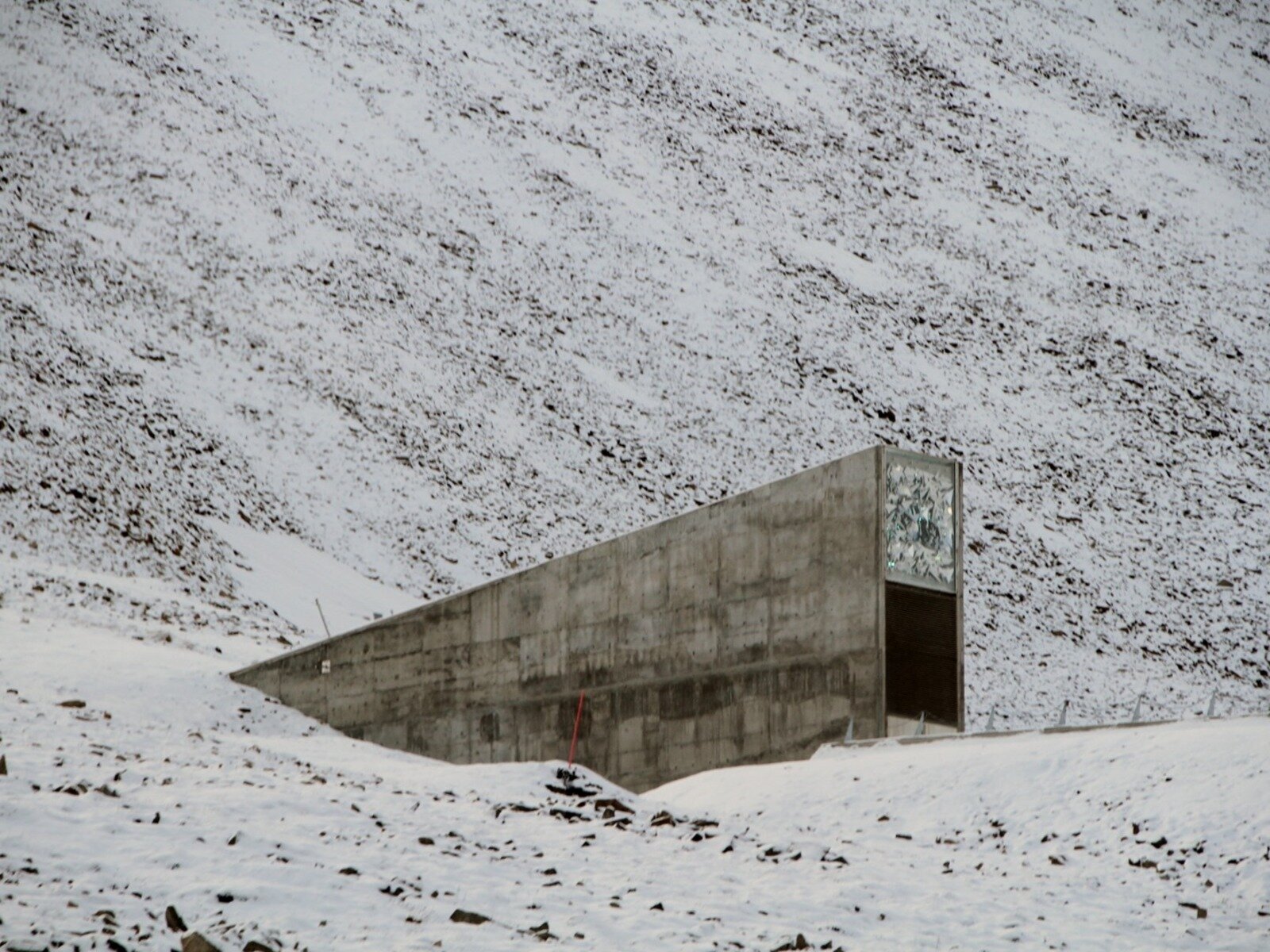
A surreal concrete construction spoils the otherwise pristine Arctic landscape on the Norwegian island of Svalbard. It’s the entrance to the Global Seed Vault, some say the guarantor of the world’s food security. Although probably the most intriguing due to its location, this gene bank is not the only such facility in the world. Many countries acknowledge the importance of preserving the biodiversity of their environments by collecting samples of seeds and locking them away in well protected bunkers. Why is it so important?
Nieskazitelny arktyczny krajobraz norweskiej wyspy Svalbard zakłóca pewna betonowa budowla o surrealistycznym wyglądzie. To wejście do Globalnego Banku Nasion, który jest – jak twierdzą niektórzy – gwarantem bezpieczeństwa żywnościowego Ziemi. To jednak niejedyny tego typu budynek na świecie. Wiele krajów decyduje się na ochronę bioróżnorodności swojego środowiska przez zbieranie i przechowywanie próbek nasion w starannie zaprojektowanych i monitorowanych obiektach. Dlaczego jest to tak istotne?
Match the names of seeds with their translation.
Study the text and do the exercises below.
The Future Is Locked Away in a VaultLongyearbyen is the northernmost town inhabited by people. Some call it the gate to the Arctic. Apart from being a starting point of most trips and expeditions towards the North Pole, it houses an absolutely fascinating institution: The Global Seed VaultGlobal Seed Vault. The top of the building can be spotted from a distance, but it’s like the proverbialproverbial tip of an iceberg, as what people are able to see is only a tiny bit of the whole system hidden inside a mountain.
The island of Svalbard, where the vault is located, was chosen due to its remotenessremoteness and the unique conditions it offers. The objectiveobjective was to find a place unaffectedunaffected by wars and acts of terroracts of terror to create a storage placestorage place where the duplicatesduplicates of all essential seeds could be kept safely. It’s a kind of backupbackup for global agriculture. There are over a million types of crop seedscrop seeds stored in the vault now, and the number is steadily growing as subsequent countries are sending their samplessamples to be depositeddeposited in the inventoryinventory. The facility has a capacitycapacity to store 4.5 million samples.
The building, if it can be called so as it is technically part of a mountain, is an extremely interesting construction. The entrance visible above the ground level leads to a 150‑metre long tunnel, which goes deep into the mountainside. The tunnel is spaciousspacious enough for trolleystrolleys to drive along and carry seeds to the vault rooms at the end of it. Out of the three rooms, only the middle one is used for storing seeds at the moment. The thick metal door which separates the tunnel from the seed chamber is covered with ice, as subzero temperature inside it is maintained. These consistent conditions of -18 degrees Celsius are essential, as they let the seeds be preservedpreserved in a state that makes it possible to grow crops from them once they are defrosteddefrosted. PermafrostPermafrost around the building helps the whole system to be more sustainablesustainable. Or it used to, as climate change is causing it to thawthaw.
The seed chamber is furnishedfurnished with floor‑to‑ceiling shelves stacked with labelled boxesstacked with labelled boxes. Inside the boxes, there are vacuum‑packedvacuum‑packed silver packets and test tubes with seeds from all over the world. Many of them are samples of plants which don’t grow anywhere in the world any more. The Global Seed Vault in Svalbard was established in 2008 and it has already helped to reintroducereintroduce varieties of plants which would have otherwise been lost forever for example in Syria, which suffered great lossessuffered great losses in terms of its biodiversitybiodiversity as a result of war.
There are actually 1,700 similar facilities in various places around the world. The one in Svalbard is special due to the fact that it is a backup for all of them. It cooperates with other gene banksgene banks to preserve a copy of every unique seed that exists. Some seed vaults have actually fallen victims tofallen victims to various conflicts and natural catastrophes and if it hadn’t been for the backup of the Svalbard bank, they would have been irreversibly lostirreversibly lost. Seed banks have been destroyed in Afghanistan and Iraq. A flood caused by the typhoon seriously damaged the resources of the one in the Philippines. These kinds of events are like local doomsdays and result in depleting generic materialdepleting generic material. Perhaps for that reason the seed bank in Svalbard is called the DoomsdayDoomsday Vault. It is like Noah's Ark for all plants essential for the survival of animals on earth, including humans. It houses 13 thousand years of our agricultural history.
Źródło: Anna Posyniak‑Dutka, [na podstawie:] https://www.theguardian.com/environment/2022/apr/15/seed-banks-the-last-line-of-defense-against-a-threatening-global-food-crisis [dostęp 12.06.2022], https://science.howstuffworks.com/environmental/green-science/seed-bank4.html [dostęp 12.06.2022], https://seedvault.nordgen.org/ [dostęp 12.06.2022], https://foodprint.org/issues/biodiversity-and-agriculture/ [dostęp 12.06.2022], https://foodprint.org/issues/biodiversity-and-agriculture/ [dostęp 12.06.2022], licencja: CC BY-SA 3.0.
a) is similar to an iceberg.
b) is high enough to be seen from far away.
c) is very small.
2. The Global Seed Vault was constructed in Svalbard because
a) it is far-flung and safe.
b) no war will ever be waged in the Arctic.
c) because you can’t go any further north.
3. The purpose of the Global Seed Vault is to
a) store seeds which cannot be found anywhere else in the world.
b) create copies of the most important crop seeds from all over the world.
c) keep copies of seeds crucial for mankind's survival safe.
4. The capacity of the Global Seed Vault
a) has been used in about one fourth so far.
b) is nearing its maximum.
c) is steadily growing.
5. Seeds in the Global Seed Vault are stored in subzero temperatures because
a) the frozen land around the building makes it impossible to heat the place.
b) these conditions keep the seeds in a state that allows for their germination in the future.
c) it reduces the cost of maintaining the whole facility.
6. The seeds in the Global Seed Vault
a) don’t grow anywhere in the world apart from Svalbard.
b) all have special tags attached to every single one of them.
c) are stored in various containers from which all air has been removed.
7. The seeds stored in the Global Seed Vault
a) have been used to help Syria rebuild its biodiversity lost as a result of war.
b) are swapped for other types with 1,700 similar facilities around the world.
c) has already been attacked a few times.
Type your answers the questions in 3–4 sentences in each case.
What’s the purpose of the seed banks?
Why is the Global Seed Vault in Svalbard special?
What can cause the loss of biodiversity?
SŁOWNIK
/ ækts əv ˈterə / / ˌækt əv ˈterə /
akty terroru [akt terroru] (violent attacks resulting in loss of lives and huge damage)
/ ˈbækʌp /
zapas, rezerwa (additional supply to be used if/when the original stock is used up)
/ ˌbaɪəʊdaɪˈvɜːsəti /
bioróżnorodność (the number of different varieties of plants and animals that live in a given place)
/ kəˈpæsɪti /
pojemność (how much of something can be stored in a given place)
/ krɒp siːdz / / krɒp siːd /
nasiona roślin uprawnych [nasiono rośliny uprawnej] (a seed of a plant that is grown for food)
/ ˌdiːˈfrɒstɪd / / ˌdiːˈfrɒst /
rozmrożony/rozmrożona [rozmrozić] (to make something thaw)
/ dɪˈpliːtɪŋ dʒɪˈnetɪk məˈtɪərɪəl / / dɪˈpliːt dʒɪˈnetɪk məˈtɪərɪəl /
zmniejszanie ilości materiału genetycznego [zmniejszać ilość materiału genetycznego] (to shrink the gene pool)
/ dɪˈpɒzɪtɪd / / dɪˈpɒzɪt /
deponowany/deponowana [deponować] (to leave something somewhere)
/ ˈduːmzdeɪ /
sądny dzień, koniec świata (the day the world ends)
/ ˈdjuːplɪkeɪts/
duplikaty [duplikat] (a second copy of something)
/ ˈdwɪndl̩ɪŋ ˌbaɪəʊdaɪˈvɜːsəti /
zmniejszająca się bioróżnorodność (decreasing number of varieties of plants and animals in a given area)
/ ˈfɔːlən ˈvɪktɪmz tuː / / fɔːl ˈvɪktɪm tuː /
padli/padły ofiarą [paść ofiarą] (to be hurt or damaged as a result of something)
/ ˌfɑː ˈflʌŋ /
odległy/odległa (remote, far away)
/ ˈfɜːnɪʃt / / ˈfɜːnɪʃ /
wyposażony/wyposażona [wyposażyć] (to equip)
/ dʒiːn bæŋks / / dʒiːn bæŋk /
banki genów [bank genów] (a place where samples of different genes are stored for future use or research purposes)
/ ˌdʒɜːmɪˈneɪʃn̩ /
kiełkowanie (the process of a plant growing from a seed)
/ ˈɡləʊbl̩ ˈsi:d vɔːlt /
Globalny Bank Nasion (a vault in Svalbard, Norway, where duplicates of all crop seeds are stored)
/ ˈɪnvəntr̩i /
inwentarz, skład (a collection of things in a given place)
/ ˌɪrɪˈvɜːsəbli lɒst /
stracony/stracona bezpowrotnie (destroyed and not possible to recreate)
/ ˈleɪbl̩d ˈbɒksɪz / / ˈleɪbl̩d bɒks /
oznakowane pudła [oznakowane pudło] (a container with a tag which explains what’s in it)
/ əbˈdʒektɪv /
cel (purpose)
/ ˈpɜːməfrɒst /
wieczna zmarzlina (land that is always frozen)
/ prɪˈzɜːvd / / prɪˈzɜːv /
zachowywany/zachowywana [zachować] (to keep something in an unchanged state)
/ ˈprɪstiːn /
nieskazitelny/nieskazitelna (unspoilt, in its original form)
/ prəˈvɜːbɪəl /
przysłowiowy/przysłowiowa (one connected with a saying people commonly repeat)
/ ˌriːɪntrəˈdjuːs /
ponownie wprowadzić (to start using something again)
/ rɪˈməʊtnəs /
oddalenie (isolation, the fact of being located far away from everything)
/ ˈsɑːmpl̩z / / ˈsɑːmpl̩ /
próbki [próbka] (a small amount of something provided as an example)
/ ˈspeɪʃəs /
przestronny/przestronna (having enough space to fit something)
/ stæk wɪð ˈleɪbl̩d ˈbɒksɪz / / stæk wɪð /
zapełniony/zapełniona oznakowanymi pudłami [zapełnić] (to put something somewhere so that the place is full)
/ ˈstɔːrɪdʒ ˈpleɪs /
miejsce przechowywania (a place where something is kept for future use)
/ ˈsʌfəd ˌgreɪt ˈlɒsɪz / / ˈsʌfə ˌgreɪt lɒs /
poniósł/poniosła ogromne straty [ponieść ogromną stratę] (to lose a lot)
/ səˈsteɪnəbl̩ /
zrównoważony/zrównoważona (using only the amount of resources which is necessary and not damaging the environment)
/ thetaɔː /
roztopić, rozmrozić (to become liquid as a result of warming up or to make something liquid as a result of warming it up)
/ ˈtrɒlɪz / / ˈtrɒli /
wózki [wózek] (a vehicle which can be used to transport something from one place to another)
/ ˌʌnəˈfektɪd /
nienaruszony/nienaruszona (untouched, not influenced)
/ ˈvækjʊəm pækt /
zapakowany/zapakowana próżniowo (put in containers from which all air has been sucked out)
Źródło: GroMar Sp. z o.o., licencja: CC BY‑SA 3.0