Przeczytaj
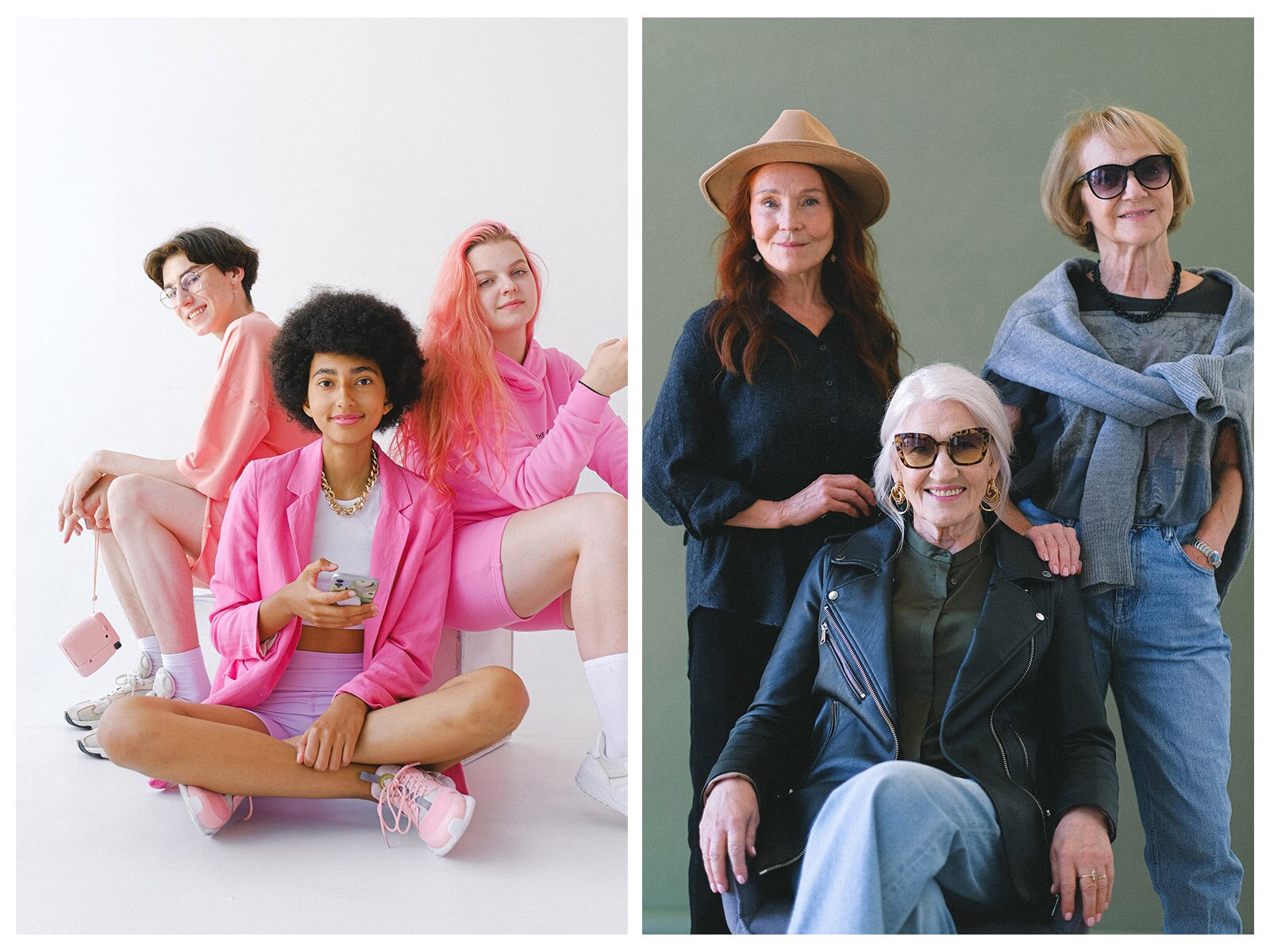
The pictures below show some young and mature women presenting different styles in fashion. Read the text to find out what a mother and a daughter think about each other’s styles.
Ilustracja przedstawia młode oraz dojrzałe kobiety prezentujące różne style ubierania się. Przeczytaj tekst, aby dowiedzieć się, co matka i córka myślą na temat swoich upodobań modowych.
Match the expressions with their translation.
Połącz wyrażenia z ich tłumaczeniem.
Drag the words and expressions to match them with the appropriate pictures.
Przeciągnij wyrazy i wyrażenia, aby połączyć je w pary z ilustracjami.
Read the text below and do the exercises.
Przeczytaj tekst i wykonaj poniższe ćwiczenia.
Generation GapIn this issueissue of FashionMagazine.com we are looking at differences between generationsgenerations when it comes to fashion. Are teens embarrassed to go out with a parent who is wearing old‑fashionedold‑fashioned clothes? We have asked Kelly, aged 17, and her mum, Ellen, what they really think about each other’s lookslooks.
Kelly, 17
I must say I’m a fashion followerfollower and I always know the latestlatest trends. I’m keen onI’m keen on modern styles and neon colours. That is why my mum keeps telling me that I look like a fashion victimfashion victim. She says fashion victims are people who follow all the trends and wear clothes which don’t suitsuit them at all.
Well, I don’t like the clothes my mum wears either. They are terribly old‑fashioned. She thinks she looks so cool and smartsmart but she is just boring with her identical, plainplain T‑shirts.
My uncle Victor says there is a generation gapgeneration gap between me and my mum. It is a big difference in opinions, beliefsbeliefs and lifestyles of younger and older generations. Uncle Victor is a very interesting person. When he was young, he was a hippiehippie. He had long hair, wore flared trousersflared trousers and was fond ofwas fond of colourful shirts with flowers. Mum says I’m similar to my uncle. When he was my age, he used to fall outfall out with his parents about his clothes all the time.
Ellen, 50
I’m a little embarrassed withembarrassed with what my daughter wears. She is always picking the most tacky clothes. Sometimes I just can’t tolerate her crazy style ideas. I prefer plain, casualcasual clothes. I don’t like any printsprints on them, especially floralfloral ones. When I decide to wear something it has to be fresh and ironed. I can’t standcan’t stand it when people wear scruffyscruffy things. You don’t have to wear designer outfitsdesigner outfits. It’s enough to put on some basic clothes. For example, a white polo shirt with navy blue trousers.
Kelly gets on well withgets on well with my older brother, Victor. She knows he used to be wear strange clothes himself. Well, we all agree there is a fashion generation gap between us. It's because we have different opinions about good styles in fashion.
Źródło: Anna Lech, licencja: CC BY-SA 3.0.
Drag and drop the words and expressions into the correct category.
Przeciągnij wyrazy i wyrażenia do odpowiedniej grupy.
Read the sentences below and choose the correct answer.
Przeczytaj poniższe zdania, a następnie wybierz poprawną odpowiedź.
Read the text again and decide if the following sentences are true or false.
Przeczytaj tekst ponownie, a następnie zdecyduj, czy podane zdania są prawdziwe, czy fałszywe.
- Kelly is fond of original clothes.
TRUE FALSE
- Kelly thinks her mum’s clothes are not interesting.
TRUE FALSE
- Uncle Victor and Kelly don’t understand each other.
TRUE FALSE
- Uncle Victor’s parents didn’t like his clothes.
TRUE FALSE
- Ellen thinks her clothes never go out of fashion.
TRUE FALSE
GRAMATYKA
Wyrażanie preferencji
W języku angielskim istnieje wiele możliwości wyrażania naszych upodobań, czyli opowiadania o tym, co lubimy, co nam się podoba, a co nie. Wyrażenia be fond of oraz be keen on mogą być stosowane wymiennie. Przykłady:
Sentence | Translation |
|---|---|
I am fond of modern styles in fashion. | Lubię nowoczesne style w modzie. |
Tom is keen on surfing. | Tom lubi surfing. |
Many young people are fond of superhero movies. | Wielu młodych ludzi lubi filmy o superbohaterach. |
Are you keen on reading? | Lubisz czytać? |
Czasownik prefer również służy do wyrażania preferencji. Możemy użyć go wraz z przyimkiem to, aby powiedzieć, że wolimy jedną rzecz od drugiej. Zarówno konstrukcja prefer to do, jak i prefer doing są poprawne. Przykłady:
Sentence | Translation |
|---|---|
She prefers films to books. | Ona woli filmy od książek. |
She prefers to watch films. | Ona woli oglądać filmy. |
She prefers watching films. | Ona woli oglądać filmy. |
Wyrażenie can’t stand pozwala nam powiedzieć, czego nie znosimy.
Sentence | Translation |
|---|---|
I can’t stand her tacky clothes. | Nie znoszę jej tandetnych ubrań. |
Drag the elements to put them in the correct order to make sentences.
Przeciągnij i ułóż elementy we właściwej kolejności, aby utworzyć zdania.
- 1. people, 2. are, 3. keen, 4. Many, 5. on, 6. young, 7. designer, 8. clothes 1. people, 2. are, 3. keen, 4. Many, 5. on, 6. young, 7. designer, 8. clothes 1. people, 2. are, 3. keen, 4. Many, 5. on, 6. young, 7. designer, 8. clothes 1. people, 2. are, 3. keen, 4. Many, 5. on, 6. young, 7. designer, 8. clothes 1. people, 2. are, 3. keen, 4. Many, 5. on, 6. young, 7. designer, 8. clothes 1. people, 2. are, 3. keen, 4. Many, 5. on, 6. young, 7. designer, 8. clothes 1. people, 2. are, 3. keen, 4. Many, 5. on, 6. young, 7. designer, 8. clothes 1. people, 2. are, 3. keen, 4. Many, 5. on, 6. young, 7. designer, 8. clothes.
Drag the words below to the correct places. There is one extra word which you do not need.
Przeciągnij podane wyrazy w odpowiednie luki. Jeden element nie pasuje do żadnej luki.
- Which trousers do you 1. in, 2. stand, 3. to, 4. prefer, 5. on, 6. keen, 7. of? The flared ones?
- My little brother is 1. in, 2. stand, 3. to, 4. prefer, 5. on, 6. keen, 7. of on computer games.
- I’m fond 1. in, 2. stand, 3. to, 4. prefer, 5. on, 6. keen, 7. of smart dresses, just like this one.
- You have a lot of books. You must be keen 1. in, 2. stand, 3. to, 4. prefer, 5. on, 6. keen, 7. of reading.
- I definitely prefer lessons at school 1. in, 2. stand, 3. to, 4. prefer, 5. on, 6. keen, 7. of online classes.
- Please, be quiet! I can’t 1. in, 2. stand, 3. to, 4. prefer, 5. on, 6. keen, 7. of this noise!
Type the missing words in the correct places. Type one word in each gap.
W każdą lukę wpisz jeden brakujący wyraz.
Słownik
/ bɪˈliːfs / / bɪˈliːf /
poglądy [pogląd]
/ kɑːnt stænd /
nie móc znieść
/ ˈkæʒʊəl /
codzienne (o ubraniach)
/ dɪˈzaɪnə /
markowe
/ dɪˈzaɪnə ˈaʊtfɪts / / dɪˈzaɪnə ˈaʊtfɪt /
markowe stroje [markowy strój]
/ ɪmˈbærəst wɪð /
zażenowany/zażenowana czymś
/ fɔːl ˈaʊt /
kłócić się
/ ˈfæʃn̩ ˈvɪktɪm /
ofiara mody
/ fleəd ˈtraʊzəz /
rozszerzane spodnie typu „dzwony”
/ ˈflɔːrəl /
kwiatowe
/ ˈfɒləʊə /
naśladowca/naśladowczyni, zwolennik/zwolenniczka
/ ˌdʒenəˈreɪʃn̩z / / ˌdʒenəˈreɪʃn̩ /
pokolenia [pokolenie]
/ ˌdʒenəˈreɪʃn̩ ɡæp /
różnica pokoleniowa
/ ˈɡets ˈɒn wel wɪð / / ˈget ˈɒn wel wɪð /
jest w dobrych stosunkach, dogaduje się [być w dobrych stosunkach, dogadywać się]
/ ˈɡəʊ aʊt əv ˈfæʃn̩ /
wyjdą z mody [wyjść z mody]
/ aɪm kiːn ɒn / / bi kiːn ɒn /
lubię [lubić coś]
/ ˈhɪpi /
hipis/hipiska
/ ˈɪʃuː /
tu: wydanie (czasopisma)
/ ˈleɪtɪst /
najnowsze
/ ˈlʊks /
wygląd
/ əʊl ˈfæʃn̩d /
staromodny/staromodna
/ pleɪn /
gładkie, bez wzorów
/ prɪnts / / prɪnt /
wzory, nadruki [wzór, nadruk]
/ ˈskrʌfi /
niechlujne
/ smɑːt /
eleganckie (o ubraniach)
/ suːt /
pasować (stylem, wzorem)
/ ˈtæki /
tandetny/tandetna, kiczowaty/kiczowata
/ wəz fɒnd ɒv / / bi fɒnd ɒv /
lubił/lubiła, wolał/wolała [lubić, woleć]
Źródło: GroMar Sp. z o.o., licencja: CC BY‑SA 3.0