bg‑azure

Have you ever wondered what scientists do? Perhaps you know that they do research. Maybe, you know that they use microscopes and test tubes. But is that all there is to a scientist’s job? Read the text below to find out how scientists work.

Czy zastanawiałeś/zastanawiałaś się kiedyś, co robią naukowcy? Może wiesz, że prowadzą badania i że używają mikroskopów i probówek. Ale czy to już wszystko, jeśli chodzi o ich pracę? Przeczytaj poniższy tekst, żeby dowiedzieć się, jak pracują naukowcy.
Rd1Y3soJxZAOd
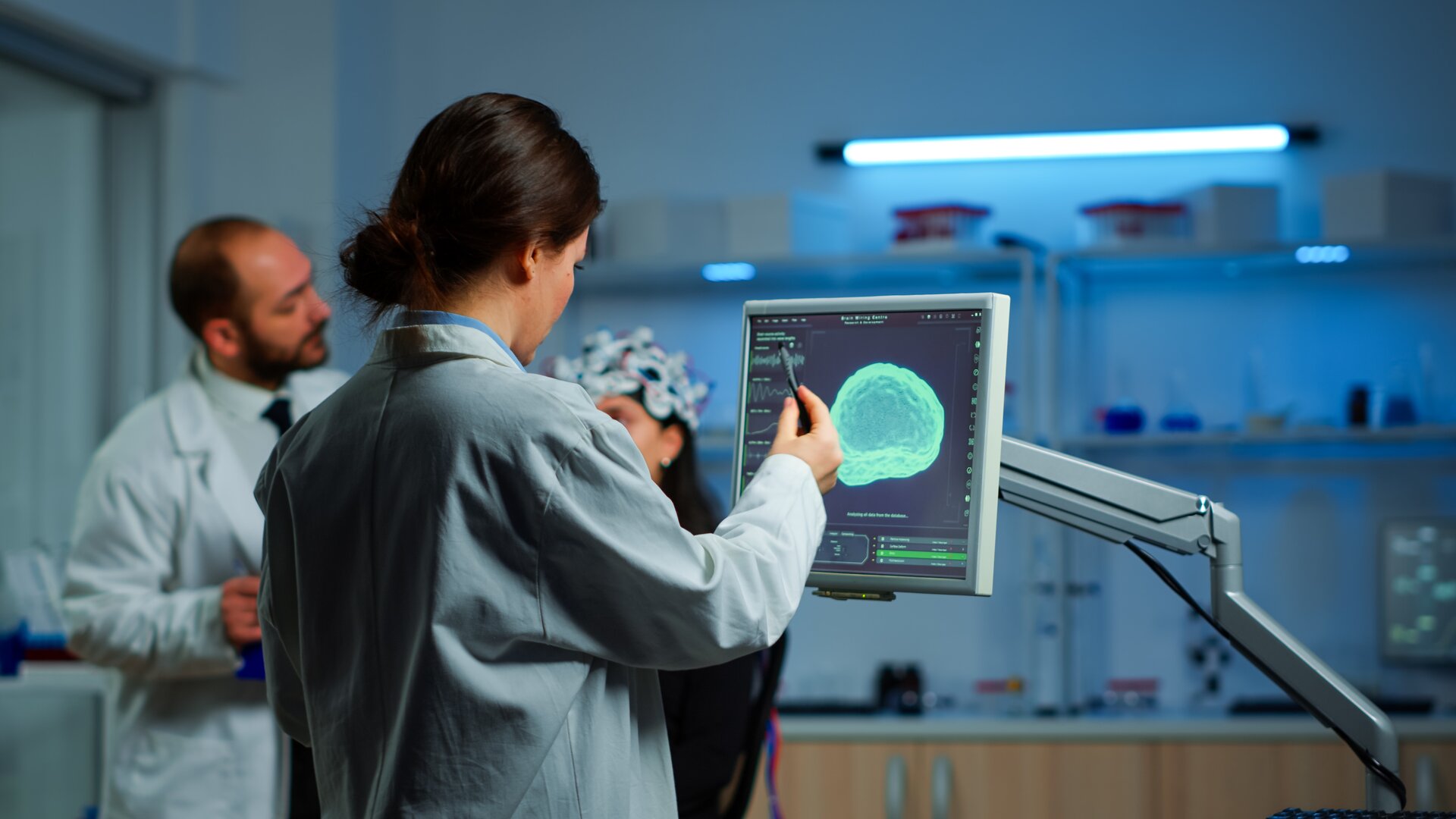
Do you know what a scientist does?
Czy wiesz, co robi naukowiec?
Źródło: dostępny w internecie: https://www.freepik.com/ [dostęp 30.12.2021].
Exercise 1

Match words to their definitions.

Połącz wyrazy z definicjami.

R1VgSAbnrqh2E
species Możliwe odpowiedzi: 1. a piece of information that helps you find the answer, 2. a set of animals or plants that have similar characteristics, 3. a wish to know or learn more, 4. a type of clothing worn by scientists, 5. a piece of glass that makes objects appear larger than they truly are magnifying glass Możliwe odpowiedzi: 1. a piece of information that helps you find the answer, 2. a set of animals or plants that have similar characteristics, 3. a wish to know or learn more, 4. a type of clothing worn by scientists, 5. a piece of glass that makes objects appear larger than they truly are curiosity Możliwe odpowiedzi: 1. a piece of information that helps you find the answer, 2. a set of animals or plants that have similar characteristics, 3. a wish to know or learn more, 4. a type of clothing worn by scientists, 5. a piece of glass that makes objects appear larger than they truly are clues Możliwe odpowiedzi: 1. a piece of information that helps you find the answer, 2. a set of animals or plants that have similar characteristics, 3. a wish to know or learn more, 4. a type of clothing worn by scientists, 5. a piece of glass that makes objects appear larger than they truly are lab coat Możliwe odpowiedzi: 1. a piece of information that helps you find the answer, 2. a set of animals or plants that have similar characteristics, 3. a wish to know or learn more, 4. a type of clothing worn by scientists, 5. a piece of glass that makes objects appear larger than they truly are
Źródło: GroMar Sp. z o.o., licencja: CC BY-SA 3.0.

Read the text below and do the exercises.

Przeczytaj poniższy tekst i wykonaj ćwiczenia.

What Does a Scientist Do?
Zuzanna Kościuk What Does a Scientist Do?

We all know scientistsscientists [scientist]scientists. We understand that they study our world and introduce changes. But what does a scientist actually do? If someone asked you, could you describe their job? If not, read the text below to learn more about their work.

In general, scientists are people who systematicallysystematicallysystematically gatherimproves [improve]gather and use evidenceevidenceevidence to make hypotheseshypotheses [hypothesis]hypotheses and testtest (verb)test them. Their main goalmain goalmain goal is to learn more about sciencesciencescience. Sounds difficult? Let’s try to divide it into steps. First, scientists should be curiouscuriouscurious about the world. Then, they find something they’re interested in. They want to know more about it. Perhaps, they want to know how the thing or phenomenonphenomenonphenomenon works. They look for clueslook for clues [look for a clue]look for clues that may help them understand difficult information. They collect clues as evidence. Then, they need to do researchdo researchdo research to test their hypothesis and show proofproofproof of their discoveriesdiscoverydiscoveries to others.

What does research look like? In truth, it depends on a scientist. There are many fieldsfields [field]fields in which a scientist may work. Some of them may study various speciesspeciesspecies of animals. Others focus on studying elementselements [element]elements. However, no matter what they specialise in, most researchersresearchers [researcher]researchers work in a lablablab. To work in a lab, one usually needs to put on a lab coatlab coatlab coat and use lab equipmentlab equipmentlab equipment to carry out testscarry out tests [carry out a test]carry out tests. Of course, tests may vary, but scientists may use microscopesmicroscopes [microscope]microscopes, a magnifying glassmagnifying glassmagnifying glass and test tubestest tubes [test tube]test tubes. Most research requires determinationdeterminationdetermination from the scientists. They may spend months, years, or even decades collectingcollecting [collect]collecting and analysinganalysing [analyse]analysing datadatadata. Scientific experimentsscientific experiments [scientific experiment]Scientific experiments require researchers to both observeobserveobserve and investigateinvestigateinvestigate whatever they’re working on. In short, research is a detaileddetaileddetailed study of a subjectsubjectsubject that discovers new information.

In many cases, someone runs an experimentruns an experiment [run an experiment]runs an experiment but they can’t proveproveprove anything. They are simply not successful, but they can still learn from it. Sometimes, however, a scientist examinesexamines [examine] (verb)examines something, and they manage to prove their idea. They have physical evidence to show others that they were right. In science, evidence is something that provesproveproves whether your idea was true or untrue. What happens next? Sometimes, we hear and see reportsreports [report] (noun)reports on the discovery on the newsnewsnews.

We could say that scientists work to change our lives. Sometimes in small ways and sometimes in big ones, but they neverthelessneverthelessnevertheless work for it. Do you know if being a scientist is your future?

1 Źródło: Zuzanna Kościuk, licencja: CC BY-SA 3.0.
Exercise 2

Read the text again and decide if the following sentences are true or false. 

Przeczytaj tekst ponownie, a następnie zdecyduj, czy podane zdania są prawdziwe, czy fałszywe.

RnmHGBFJ5Htp0
1. Scientists carry out tests because they want to understand specific things.
TRUEFALSE

2. Scientific curiosity means that you do everything you can to find an answer to a question.
TRUEFALSE

3. Every scientist does the same things.
TRUEFALSE

4. Researchers focus on the investigation and examination of things through tests and experiments.
TRUEFALSE

5. Some experiments may take more than ten years.
TRUEFALSE

6. Scientists can learn from their unsuccessful experiments.
TRUEFALSE

7. We always hear about new discoveries on the news.
TRUEFALSE
Źródło: GroMar Sp. z o.o., licencja: CC BY-SA 3.0.
Exercise 3

Read the text again and drag the words from the box to fill in the gaps.

Przeczytaj tekst ponownie, a następnie przeciągnij wyrazy z ramki w odpowiednie luki.

RrS5ZePtPQ7B2
1. Scientists are people who systematically 1. lab, 2. fields, 3. research, 4. clues, 5. experiment, 6. researchers, 7. scientist, 8. determination, 9. gather evidence.
2. They look for 1. lab, 2. fields, 3. research, 4. clues, 5. experiment, 6. researchers, 7. scientist, 8. determination, 9. gather that may help them understand.
3. There are many 1. lab, 2. fields, 3. research, 4. clues, 5. experiment, 6. researchers, 7. scientist, 8. determination, 9. gather in which a 1. lab, 2. fields, 3. research, 4. clues, 5. experiment, 6. researchers, 7. scientist, 8. determination, 9. gather may work.
4. No matter what they specialise in, most 1. lab, 2. fields, 3. research, 4. clues, 5. experiment, 6. researchers, 7. scientist, 8. determination, 9. gather work in a 1. lab, 2. fields, 3. research, 4. clues, 5. experiment, 6. researchers, 7. scientist, 8. determination, 9. gather.
5. Most 1. lab, 2. fields, 3. research, 4. clues, 5. experiment, 6. researchers, 7. scientist, 8. determination, 9. gather requires 1. lab, 2. fields, 3. research, 4. clues, 5. experiment, 6. researchers, 7. scientist, 8. determination, 9. gather from the scientists.
6. In many cases, someone runs an 1. lab, 2. fields, 3. research, 4. clues, 5. experiment, 6. researchers, 7. scientist, 8. determination, 9. gather but they can’t prove anything.
Źródło: GroMar Sp. z o.o., licencja: CC BY-SA 3.0.
Exercise 4

Read the text again. Then, translate the missing words to complete the gaps in the text below.

Przeczytaj tekst ponownie, a następnie przetłumacz brakujące wyrazy i uzupełnij luki w poniższych zdaniach.

Rr70N9GiUHFcv
To work in a lab, one usually needs to put on a     1. Tu uzupełnij (biały fartuch)     and use     2. Tu uzupełnij (wyposażenie laboratorium)     to carry out tests. Of course, tests may vary, but scientists may use     3. Tu uzupełnij (mikroskopów),     4. Tu uzupełnij (szkła powiększającego),     and     5. Tu uzupełnij (probówek).     Researchers may spend months, years, or even decades     6. Tu uzupełnij (zbierając)     and     7. Tu uzupełnij (analizując)     data.
Źródło: GroMar Sp. z o.o., licencja: CC BY-SA 3.0.

Słownik

analysing [analyse]
analysing [analyse]

/ ˈænəlaɪzɪŋ / / ˈænəlaɪz /

RjJyJYSHBjNNu1
Nagranie dźwiękowe

analizując [analizować]

RTK2aq2cMbEg81
Nagranie dźwiękowe
carry out tests [carry out a test]

/ ˈkæri aʊt tests / / ˈkæri aʊt ə ˈtest /

RIqSvBgeMUlAW1
Nagranie dźwiękowe

przeprowadzać testy [przeprowadzać test]

R1qXHPqnDqDIy1
Nagranie dźwiękowe
collecting [collect]

/ kəˈlektɪŋ / / kəˈlekt /

R1NtpJMTCbA3w1
Nagranie dźwiękowe

zbierając [zbierać]

RK4Ytmeg3W33Z1
Nagranie dźwiękowe
curious
curious

/ ˈkjʊərɪəs /

R1BtFwOT81ap31
Nagranie dźwiękowe

ciekawi/ciekawe [ciekawy/ciekawa]i

RrYNxJ03Q5om51
Nagranie dźwiękowe
data
data

/ ˈdeɪtə /

RS73bTRhTVVJM1
Nagranie dźwiękowe

dane (informacje o czymś lub o kimś)

R1ZzKKScXY4rZ1
Nagranie dźwiękowe
detailed
detailed

/ ˈdiːteɪld /

RH6YEhZ5hX03X1
Nagranie dźwiękowe

dokładne, szczegółowe

R1BkpzhahTDK21
Nagranie dźwiękowe
determination
determination

/ dɪˌtɜːmɪˈneɪʃn̩ /

RkdP4zpsyF4B01
Nagranie dźwiękowe

determinacja

RThJDMsvCCZeK1
Nagranie dźwiękowe
discoveries [discovery]

/ dɪˈskʌvərɪz / / dɪˈskʌvərɪ /

RKGQdiUU3awGC1
Nagranie dźwiękowe

odkrycia [odkrycie]i

RHxiMWEFTNLeX1
Nagranie dźwiękowe
elements [element]
elements [element]

/ ˈelɪmənts / / ˈelɪmənt /

R1BzO4trDEorS1
Nagranie dźwiękowe

pierwiastki [pierwiastek]

R1JNnPiP6rKDA1
Nagranie dźwiękowe
evidence
evidence

/ ˈevɪdəns /

RSHUKW2ReQBcl1
Nagranie dźwiękowe

dowód

RnawA0bzmZJGf1
Nagranie dźwiękowe
examines [examine] (verb)

/ ɪɡˈzæmɪnz / / ɪɡˈzæmɪn /

RGVeRcYcbcP1H1
Nagranie dźwiękowe

bada [badać]

RantC9SgtSln51
Nagranie dźwiękowe
fields [field]
fields [field]

/ fiːldz / / fiːld /

R5O3jItRqCQhD1
Nagranie dźwiękowe

dziedziny, obszary (np. badań) [dziedzina, obszar]

RRFzesKgy64nm1
Nagranie dźwiękowe
gather
gather

/ ˈɡæðə /

RVUl2SnksKJRn1
Nagranie dźwiękowe

zbierają [zbierać]i

R2BVprlgBFb9p1
Nagranie dźwiękowe
improves [improve]
improves [improve]

/ ɪmˈpruːvz / / ɪmˈpruːv /

RgjW6T2FjXmzs1
Nagranie dźwiękowe

poprawia [poprawiać]

R1SHeXr8SSAKv1
Nagranie dźwiękowe
investigate
investigate

/ ɪnˈvestɪɡeɪt /

R1YbSDdsghxQZ1
Nagranie dźwiękowe

badać, dociekać

RD1wl7hBPjTbC1
Nagranie dźwiękowe
lab
lab

/ læb /

RJSFyZgRLAMpC1
Nagranie dźwiękowe

laboratorium

RecLeOnW0YfJC1
Nagranie dźwiękowe
lab coat
lab coat

/ læb ˈkəʊt /

R1JnvlObkkHrJ1
Nagranie dźwiękowe

fartuch laboratoryjny, kitel

R1eWSPaRUeuef1
Nagranie dźwiękowe
lab equipment
lab equipment

/ læb ɪˈkwɪpmənt /

RicOLUeTb5faU1
Nagranie dźwiękowe

wyposażenie laboratorium

R15ky7P3L3Yjr1
Nagranie dźwiękowe
look for clues [look for a clue]

/ ˈlʊk fə kluːz / / ˈlʊk fər ə kluː /

R16osaUNuwuBV1
Nagranie dźwiękowe

szukać wskazówek [szukać wskazówki]

ReHINBg6TXcG81
Nagranie dźwiękowe
main goal
main goal

/ meɪn ɡəʊl /

R41AulZpKWvxN1
Nagranie dźwiękowe

główny cel

R8h5HbVZtJnM01
Nagranie dźwiękowe
magnifying glass
magnifying glass

/ ˈmæɡnɪfaɪɪŋ ˈɡlɑːs /

RSjPJ0E51l0vT1
Nagranie dźwiękowe

szkło powiększające

R117V3MsLhdqv1
Nagranie dźwiękowe
microscopes [microscope]

/ ˈmaɪkrəskəʊps / / ˈmaɪkrəskəʊp /

RoNjT4IsFnzUq1
Nagranie dźwiękowe

mikroskopy [mikroskop]

RCid4Hoam07KN1
Nagranie dźwiękowe
news
news

/ njuːz /

R4sjZmfoNcR101
Nagranie dźwiękowe

wiadomości

R1NRLtUUkEyNi1
Nagranie dźwiękowe
nevertheless
nevertheless

/ ˌnevəðəˈles /

RU6Y0xJeUfdGD1
Nagranie dźwiękowe

niemniej jednaki

RHRhhnCblbdDL1
Nagranie dźwiękowe
observe
observe

/ əbˈzɜːv /

R19esOTqF6FrG1
Nagranie dźwiękowe

obserwować

RnmwfbwpdoLMA1
Nagranie dźwiękowe
phenomenon
phenomenon

/ fɪˈnɒmɪnən /

RRkkzOV6DmvwL1
Nagranie dźwiękowe

zjawisko, fenomen (np. fizyczne)

RIkwIsMGQK9wk1
Nagranie dźwiękowe
proof
proof

/ pruːf /

RW5q7gJtiDHOd1
Nagranie dźwiękowe

dowód

R1gHcfonTmhZa1
Nagranie dźwiękowe
prove
prove

/ pruːv /

R19tgnfJ00OSe1
Nagranie dźwiękowe

udowodnić

R1Yz2cPJyl4Ho1
Nagranie dźwiękowe
reports [report] (noun)

/ rɪˈpɔːts / / rɪˈpɔːt /

ReBlNJaxP5gCA1
Nagranie dźwiękowe

sprawozdania [sprawozdanie]

RLjbJrog6hZau1
Nagranie dźwiękowe
researchers [researcher]

/ rɪˈsɜːtʃəz / / rɪˈsɜːtʃə /

R1bb28uFBAhNH1
Nagranie dźwiękowe

badacze [badacz/badaczka]

R2n2a6YVkUp5E1
Nagranie dźwiękowe
science
science

/ ˈsaɪəns /

R1ZFGPBFycWJL1
Nagranie dźwiękowe

nauka

RHwu1Nf4AM2BJ1
Nagranie dźwiękowe
scientific experiments [scientific experiment]

/ ˌsaɪənˈtɪfɪk ɪkˈsperɪmənts / / ˌsaɪənˈtɪfɪk ɪkˈsperɪmənt /

R1S1zEFE1aekk1
Nagranie dźwiękowe

eksperymenty naukowe [eksperyment naukowy]

RTntnfGZs5GzK1
Nagranie dźwiękowe
scientists [scientist]

/ ˈsaɪəntɪsts / / ˈsaɪəntɪst /

RvFM9eDfXPLdO1
Nagranie dźwiękowe

naukowcy [naukowiec/naukowczyni]

RVkmlrXjU4TcG1
Nagranie dźwiękowe
species
species

/ ˈspiːʃiːz /

R1GLFfmAwvrYk1
Nagranie dźwiękowe

gatunki [gatunek]

RUFPKrSi0joCk1
Nagranie dźwiękowe
subject
subject

/ ˈsʌbdʒekt /

R1Kb6lPV20cnJ1
Nagranie dźwiękowe

temat, badana osoba

RCOc6OxoDtcML1
Nagranie dźwiękowe
systematically
systematically

/ ˌsɪstəˈmætɪkl̩i /

REqWpePNRmhsB1
Nagranie dźwiękowe

systematycznie

R1ZswsHGnCl9k1
Nagranie dźwiękowe
test tubes [test tube]

/ ˈtest ˈtju:bz / / ˈtest ˈtju:b /

RnLyjEw5iMksj1
Nagranie dźwiękowe

probówki [probówka]

R1Z4eLNcdrcL41
Nagranie dźwiękowe

Źródło: GroMar Sp. z o.o., licencja: CC BY‑SA 3.0

RxW9kgYxzJeWT
(Uzupełnij).
Źródło: GroMar Sp. z o.o., licencja: CC BY-SA 3.0.
hypotheses [hypothesis]

/ haɪˈpɒthetaɪsiːz / / haɪˈpɒthetaəsɪs /

RT6m7YNiYL8hW1
Nagranie dźwiękowe

hipotezy [hipoteza]

RUYDd1VE9TKiM1
Nagranie dźwiękowe
test (verb)
test (verb)

/ ˈtest /

RUeSrigfyiOYY1
Nagranie dźwiękowe

przeprowadzać test

R13r9tgVZUn0r1
Nagranie dźwiękowe
do research
do research

/ du: rɪˈsɜːtʃ /

RFo2TcHurOko41
Nagranie dźwiękowe

przeprowadzać badanie naukowe

RKJ48ItT7RQ8z1
Nagranie dźwiękowe
discovery
discovery

/ dɪˈskʌvəri /

R1BUBHOj2qnbB1
Nagranie dźwiękowe

odkrycie

R1UllCakafyXi1
Nagranie dźwiękowe
runs an experiment [run an experiment]

/ rʌnz ən ɪkˈsperɪmənt / / ˈrʌn ən ɪkˈsperɪmənt /

R1CaZ8G8l3vtX1
Nagranie dźwiękowe

przeprowadza eksperyment [przeprowadzać eksperyment]

RfiBCAPPkDwc51
Nagranie dźwiękowe