Przeczytaj
Do you like flying? Some people love it so much that they want to work in the air. In this section, you’re going to study a text about two famous people who wanted to become pilots.
Lubisz latać? Niektórzy kochają to tak bardzo, że pragną o pracy w przestworzach. W tej sekcji przeczytasz tekst o dwóch sławnych osobach, które chciały zostać pilotami.
Match words with their definitions.
Połącz poniższe wyrażenia z ich definicjami.
Study the text about two famous pilots and then do the exercises below.
Przeczytaj tekst o dwójce sławnych pilotów, a następnie wykonaj ćwiczenia poniżej.
The Two Sky Heroes
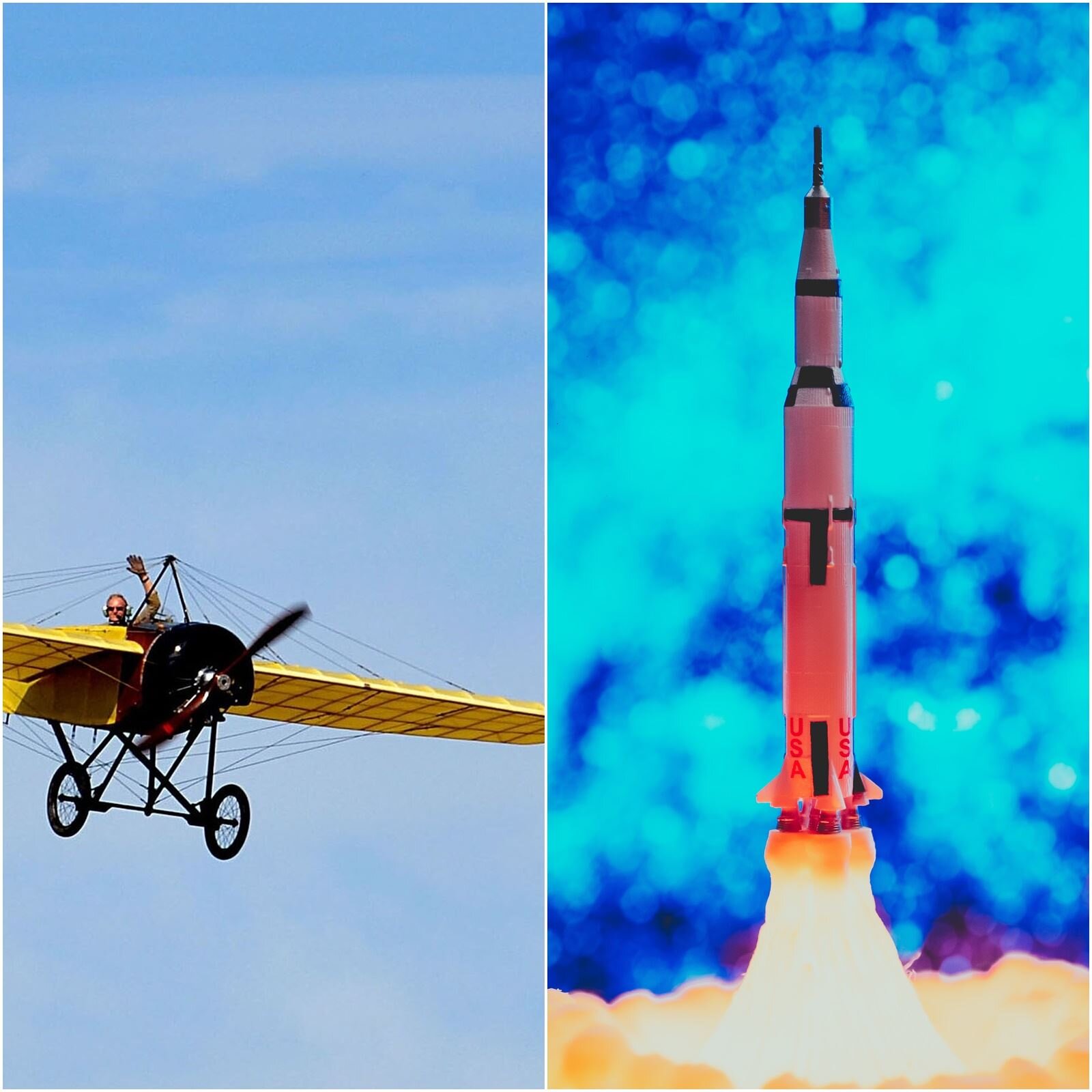
Many people dream of becoming a pilot. They want to fly helicoptersfly helicopters, military aircraft, passenger planes, or spaceshipsspaceships. There are around 333,000 active pilots in the world but only some of them are famous. Here are two of them.
Amelia Earhart
Amelia Earhart was born in 1897 in Kansas, USA. She always dreamt of becoming a pilot. She got her pilot’s licensepilot’s license as one of only 16 women in the world! In 1928, she made her first flight over the Atlantic Ocean. Then she became very famous all over the world but she wanted to achieveachieve more. Her next great dream was to fly a plane around the world. The routeroute was very long and dangerous. On the 2nd of July, 1937, Amelia started her journey. She planned to fly to a small island on the Pacific Ocean. She never arrivedarrived there. Unfortunately, nobody knows what happened to Amelia.
Neil Armstrong
Neil Armstrong was born in 1930 in Ohio, USA. He became interested in planes when his father took him to an air showair show. First he was a military pilot and then a test pilottest pilot. In his careercareer, he flew more than 200 different types of aircraftaircraft. Neil Armstrong joined NASA as one of its first pilots. On the 16th of July, 1969, Armstrong with his crewcrew took offtook off from Kennedy Space Centre on board Apollo 11. The spacecraftspacecraft landedlanded safely and Neil Armstrong became the first man on the Moonthe Moon.
Źródło: Marcin Legeżyński, licencja: CC BY-SA 3.0.
Study the text above. Choose the author of the following sentences: Amelia Earhart or Neil Armstrong.
Po przeczytaniu tekstu zdecyduj, kto jest ich autorem: Emilia Earhart czy Neil Armstrong?
Study the text again and decide if the following sentences are true or false.
Ponownie przeczytaj tekst i zdecyduj, czy podane zdania są prawdziwe, czy fałszywe.
TRUEFALSE
2. Amelia became very famous after flying around the world.
TRUEFALSE
3. Amelia’s plane got lost during her first flight.
TRUEFALSE
4. Neil Armstrong flew many different planes.
TRUEFALSE
5. Armstrong joined NASA before joining the military.
TRUEFALSE
Study the text again and drag the words from the box to fill in the gaps.
Przeczytaj tekst ponownie, a następnie przeciągnij wyrazy z ramki w odpowiednie luki.
2. Women did not usually fly 1. aircraft, 2. took off, 3. flying, 4. the Moon, 5. fly in the 1920s.
3. On her last flight, Emilia 1. aircraft, 2. took off, 3. flying, 4. the Moon, 5. fly from Papua, New Guinea.
4. Neil Armstrong was the first person to stand on 1. aircraft, 2. took off, 3. flying, 4. the Moon, 5. fly.
5. Neil Armstrong could 1. aircraft, 2. took off, 3. flying, 4. the Moon, 5. fly more than 200 different types of planes.
GRAMATYKA:
Czasu Past Simple używamy, by mówić o czynnościach lub zdarzeniach, które miały miejsce w przeszłości i już się zakończyły.
W zdaniach twierdzących używamy czasowników z końcówką -d lub -ed albo stosujemy czasowniki nieregularne w drugiej formie.
Przykłady:
Yesterday, I watched an air show. - Wczoraj obejrzałem pokaz lotniczy.
I joined the military. - Wstąpiłem do wojska.
You became pilots. - Zostaliście pilotami.
W zdaniach przeczących w czasie Past Simple, zamiast formy drugiej lub z końcówką -d lub -ed, stosuje się podstawową formę czasownika. Dodaje się wtedy wyrażenie didn’t.
Przykłady:
She didn't fly the plane yesterday. - Nie poleciała wczoraj samolotem.
We didn't become pilots. - Nie staliśmy się pilotami.
They didn't take off from the United States. - Nie wystartowali ze Stanów Zjednoczonych.
Pytania w czasie Past Simple tworzymy poprzez postawienie „did” na początku zdania. Należy pamiętać, że stosujemy wtedy podstawową formę czasownika.
Przykłady:
Did you get your license? - Czy dostałaś swoje uprawnienia?
Did he land on the Moon? - Czy wylądował na księżycu?
Did they take off an hour ago? - Czy wystartowali godzinę temu?
W czasie Past Simple często występują określenia czasu, takie jak: yesterday, last year, in March.
Przykłady:
I met with Susan two hours ago. - Dwie godziny temu spotkałem się z Susan.
She became a pilot in 1995. - Została pilotem w 1995 roku.
They got their pilot's license a month ago. - Miesiąc temu otrzymali uprawnienia pilota.
Uwaga! Choć niektóre czasowniki nieregularne mają podobne formy, to najlepiej jest nauczyć się ich na pamięć. Czy pamiętasz formy najważniejszych czasowników nieregularnych?
W poniższych ćwiczeniach przypomnisz sobie następujące formy czasowników:
English: | Polish: |
|---|---|
[be] was/were | [być] był/była/byli |
[begin] began | [zaczynać] zaczynał/zaczynała/zaczynali |
[buy] bought | [kupować] kupił/kupiła/kupili |
[drink] drank | [pić] pił/piła/pili |
[eat] ate | [jeść] jadł/jadła/jedli |
[feel] felt | [czuć] czuł/czuła/czuli |
[fly] flew | [latać] leciał/leciała/lecieli |
[give] gave | [dawać] dał/dała/dali |
[make] made | [robić] robił/ robiła/robili |
[read] read | [czytać] czytał/czytała/czytali |
[see] saw | [widzieć] widział/widziała/widzieli |
[sleep] slept | [spać] spał/spała/spali |
[speak] spoke | [mówić] mówił/mówiła/mówili |
[swim] swam | [pływać] pływał/pływała/pływali |
[take] took | [brać] brał/brała/brali |
[tell] told | [powiedzieć] powiedział/powiedziała/powiedzieli |
[understand] understood | [rozumieć] rozumiał/rozumiała/rozumieli |
[write] wrote | [pisać] pisał/pisała/pisali |
Complete the table with missing forms of verbs.
Uzupełnij tabelę brakującymi formami czasowników.
Explore the text grammar section and and write the right words in the gaps.
Ponownie przejrzyj wiadomości z działu „Gramatyka” w sekcji „Przeczytaj” i wpisz w luki właściwe wyrazy.
Słownik
/ əˈtʃiːv /
osiągać
/ ˈeər ˈʃoʊ /
pokaz lotniczy
/ ˈerˌkræft /
statek powietrzny, samolot
/ əˈraɪvd / / əˈraɪv /
przybył/przybyła [przybywać]
/ kəˈrɪr /
kariera
/ ˈkruː /
załoga
/ flaɪ ˈhelɪkɒptə / / flaɪ ə ˈhelɪkɒptə /
latać helikopterami [latać helikopterem]
/ ˈhelɪˌkɑːptərz / / ˈhelɪˌkɑːptər /
helikoptery [helikopter]
/ ˈlændəd / / ˈlænd /
wylądował/wylądowała [lądować]
/ ˈmɪləˌteri ˈerˌkræft /
samolot wojskowy
/ ˈpæsəndʒər ˈpleɪnz / / ˈpæsəndʒər ˈpleɪn /
samoloty pasażerskie [samolot pasażerski]
/ ˈpaɪləts ˈlaɪsəns /
licencja pilota, uprawnienia pilota
/ ruːt /
trasa
/ ˈspeɪˌskræft /
statek kosmiczny
/ ˈspeɪsʃɪps / / ˈspeɪsʃɪp /
statki kosmiczne [statek kosmiczny]
/ ˈtʊk ɔːf / / ˈteɪk ɔːf /
wystartował/wystartowała [startować]
/ ˈtest ˈpaɪlət /
pilot testowy
/ ðə ˈmuːn /
Księżyc
Źródło: GroMar Sp. z o.o., licencja: CC BY‑SA 3.0