Przeczytaj
The picture below shows the beauty of nature which is preserved in places like parks all over the world. You are going to read about a very special kind of park, which is called a geopark. What do you think its purpose is? What do people intend to preserve there?
Poniższa ilustracja ukazuje piękno przyrody, z którą można zetknąć się w parkach na całym świecie. Przeczytasz tekst na temat szczególnego rodzaju parku nazywanego geoparkiem. Jak myślisz, jaki jest cel istnienia geoparku i co ludzie pragną w nim zachować?
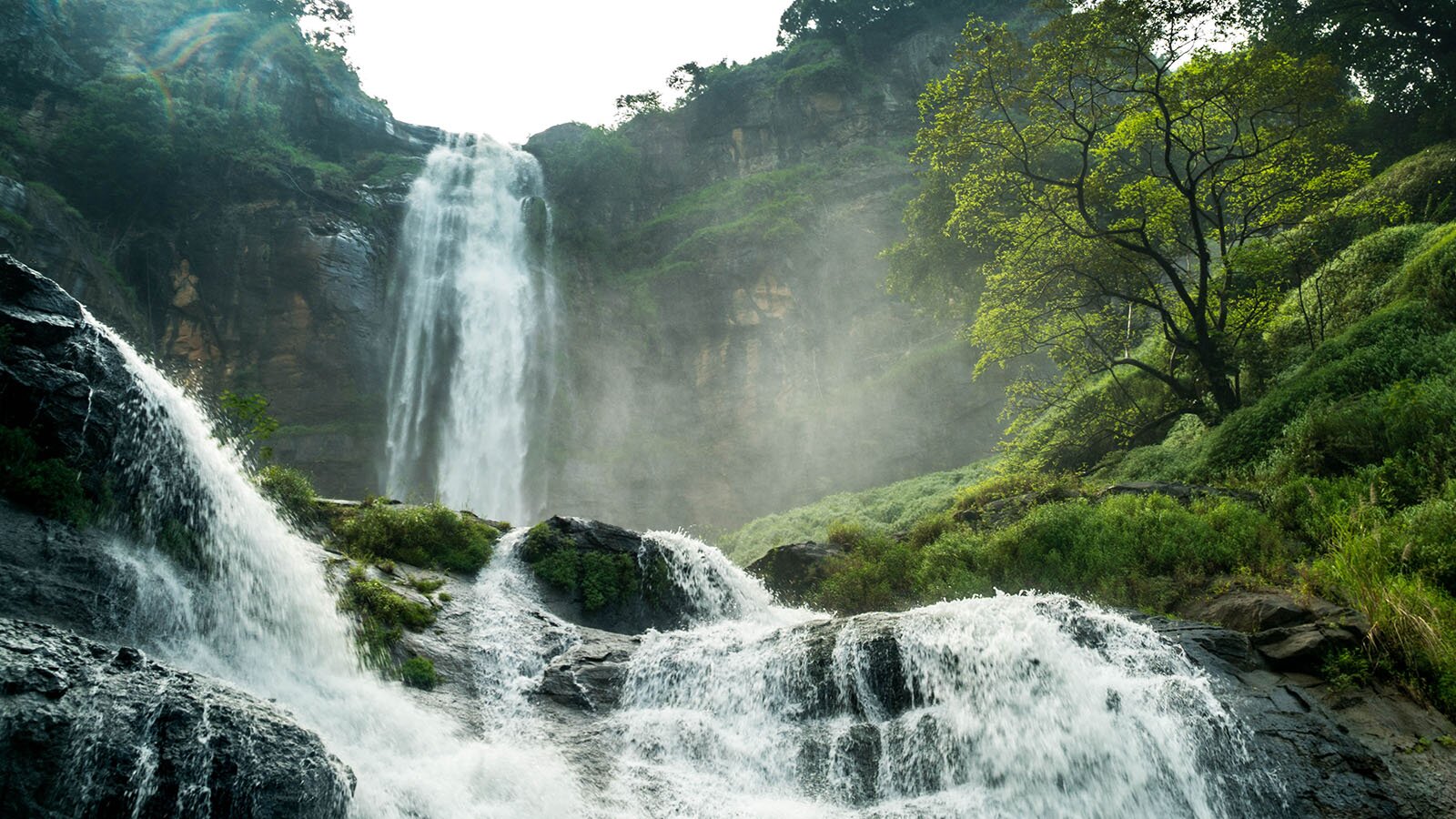
Read the text and do the exercises below.
Travelling That Makes All the DifferenceTourism is one of the most developing industries in the world. People are able to hand‑pick any destination in the deepest and farthest parts of the globe due to low‑cost flights and accommodation. We are searching for escape, inspiration, and fun. In the 2000s, tourists began to be more well‑read and started looking for more authentic experiences such as unique cultures, histories, and truly genuinegenuine natural attributesattributes of a chosen destination. No sooner had such a trend started to develop than a deep inner comprehension and need to preserve the natural beauty of these places was born.
Geotourism is an interest in geologygeology, but is also a new philosophy of travelling. Some also say that it’s a sister category to ecotourism. It includes such sectors as: urbanurban, ruralrural, dinosaurs, meteorites, aerial, volcanoes, wellnesswellness, miningmining, celestial, space, adventure, and underground tourism. According to National Geographic, geotourism is defined as tourism that “sustainssustains or enhancesenhances the geographical character of a place, its environment, culture, aestheticsaesthetics, heritageheritage, and the well‑being of residents.” It was first defined by Thomas Alfred Hose in 1995 as a kind of tourism associated not only with flora and fauna, but also with abiotic natureabiotic nature.
The idea of geotourism is to add value through the knowledge of geositesgeosites so that the local residents, who are often unaware of what natural treasures they live among, appreciate them more. Education is very important here. For the purposes of geotourism, local people are trained as guides to provide travellers with knowledge of the region. Educators reach out to as many people as possible in a particular region. Once that happens, the conservation of geological sitesconservation of geological sites and geo‑diversitygeo‑diversity will be feasible. Local communities should involve government agencies, travel agencies, and private businesses to help them recognise, protect, and maintain geositesprotect, and maintain geosites. That will guarantee independent visits to geosites (together with their corresponding in‑situin‑situ and ex‑situex‑situ artefactsartefacts) and use of geo‑trailsgeo‑trails, guided tours and geoactivities. If more tourists come to a place, there will be more jobs given and more money earned by its local people.
The more communities integrate to preserve their geological heritagegeological heritage, the more geoparks appear on the UNESCO Global Geoparks list. At present, the list contains 169 geoparks from 44 countries across the world. A vast number of geoparks are found in China, Spain, and Italy. There are also two of them in Poland; The Holy Cross Mountains UNESCO Global Geopark in the Świętokrzyskie Voivodeship and The Muskauer Faltenbogen/Łuk Mużakowa UNESCO Global Geopark, which is a Polish‑German transnationaltransnational geopark, situated at a midpoint of the geographical triangle formed by the three cities of Berlin, Dresden, and Zielona Góra.
We can travel long distances, take thousands of selfies, and eat tons of ice‑cream while being on holiday. Then, we can come back home recalling wonderful moments we spent. But we can also choose a holiday that makes a difference. Not only can you see breathtaking views, but also you can immerseimmerse yourself in the genuine culture and support local communities. We can leave footprints behind us or create hope, opportunities and dreams of a better place for the next generations of some local communities.
Źródło: Anna Faszcza, licencja: CC BY-SA 3.0.
A. To preserve natural resources and the character of the area.
B. To involve residents into sustaining their local culture.
C. To create more jobs and opportunities for incomers.
2. What are the main reasons for the growing interest in geotourism?
A. The low cost of tourism
B. Unique local cuisine
C. Well-educated travellers
3. What are the environmental impacts of geotourism?
A. The overflow of tourists is already unbearable.
B. Lots of money is spent to preserve the environment.
C. Tourists value the environment in its most natural form.
4. What are the social and cultural impacts of geotourism?
A. Education has become one of the main principles among local people.
B. There is high potential to create partnership between communities.
C. Local communities have started to compete with one another.
5. What are the economic impacts of geotourism?
A. Local traditions and customs are kept alive.
B. Most money generated through geotourism stays locally.
C. Local people are trained and given jobs.
Find one piece of information in the text about geotourism that surprised you the most. In 4‑5 sentences explain why it was surprising.
Słownik
/ ˌeɪbʌɪˈɒtɪk ˈneɪtʃə /
przyroda nieożywiona (the non‑living components of the natural environment, including rocks, water, air)
/ iːsˈthetaetɪks /
estetyka (the study of beauty, particularly in art and nature, involving principles of harmony, balance, and visual appeal)
/ ˈɑːtɪfækts / / ˈɑːtɪfækt /
artefakty [artefakt] (objects created by human beings, often with cultural or historical significance, such as tools, artwork, or structures)
/ ˈætrɪbjuːts / / ˈætrɪbjuːt /
cechy, atrybuty [cecha, atrybut] (characteristic or feature of something)
/ sɪˈlestɪəl /
związany z niebem i ciałami niebieskimi (concerning sky and celestial bodies)
/ ˌkɒnsəˈveɪʃn̩ əv ˌdʒɪəˈlɒdʒɪkl̩ saɪts /
ochrona (konserwacja) obszarów geologicznych (the preservation and protection of natural areas that hold significant geological value)
/ dɪˈstɪŋkt frɒm /
wyróżniający/wyróżniająca się (clearly different or of a different kind)
/ ɪnˈhɑːnsɪz / / ɪnˈhɑːns /
wzmacnia [wzmacniać] (to increase or further improve the good quality, value or status of somebody/something)
/ ˈdʒenjʊɪn /
prawdziwy/prawdziwa, autentyczny/autentyczna (real; exactly what it appears to be; not artificial)
/ ˈdʒiːəʊ daɪˈvɜːsɪti /
georóżnorodność (the variety and range of geological features found within a specific area or region)
/ ˈdʒiːəʊˌkɒnsəˈveɪʃn̩ /
geoochrona, ochrona przyrody nieożywionej (the practices aimed at preserving Earth's geological heritage and promoting its sustainable use)
/ ˌdʒɪəˈlɒdʒɪkl̩ ˈherɪtɪdʒ /
dziedzictwo geologiczne (the collection of geological features, sites, and landscapes that hold scientific, educational, or cultural value due to their geological significance)
/ dʒɪˈɒlədʒi /
geologia (the scientific study of Earth's structure, materials, processes, and history, including the formation of rocks, minerals, and landforms)
/ ˈdʒiːəʊpɑːks / / ˈdʒiːəʊpɑːk /
geoparki [geopark] (a designated area that showcases outstanding geological heritage)
/ ɪˈmɜːs /
zanurzyć (to fully engage or involve oneself in an experience or environment)
/ ɪn ˈsɪtjuː /
położony/położona w miejscu naturalnym, pierwotnym (in the original or correct place)
/ ˈmaɪnɪŋ /
górnictwo (the process of extracting valuable minerals, ores, or other geological resources from the Earth's crust)
/ prəˈtekt ənd meɪnˈteɪn ˈdʒiːəʊsaɪts / / prəˈtekt ənd meɪnˈteɪn ˈdʒiːəʊsaɪts /
chronić i zachować obszary geologiczne [chronić i zachować obszar geologiczny] (to safeguard the condition and value of geological sites, ensuring their preservation and preventing damage or degradation)
/ ˈrʊərəl /
wiejski/wiejska (connected with or like the countryside)
/ səˈsteɪnz / / səˈsteɪn /
utrzymuje, podtrzymuje [utrzymać, podtrzymać] (to provide enough of what somebody/something needs in order to live or exist)
/ ˌtrænzˈnæʃnəl /
ponadnarodowy/ponadnarodowa (existing in or involving different countries)
/ ˈɜːbən /
miejski/miejska (relating to cities)
/ ˈwelnəs /
dobra kondycja (being in good health)
Źródło: GroMar Sp. z o.o., licencja: CC BY‑SA 3.0