Przeczytaj
Some people love nature. They don’t want to work in an office. That’s why they choose outdoor jobs. In this section, you’re going to read a text about the most interesting outdoor jobs.
Niektórzy ludzie kochają naturę. Nie chcą więc pracować w biurze. To właśnie dlatego wybierają zawody na świeżym powietrzu. W tej sekcji przeczytasz tekst o najbardziej interesujących zawodach terenowych.
Match words with their definitions.
Połącz wyrazy z definicjami.
Read the text below and do the exercises.
Przeczytaj poniższy tekst i wykonaj ćwiczenia.
Some people love being outdoorsoutdoors. They walk, run, and enjoy nature. Because of that, they also want to work outdoors. There are many jobs in which you can work outside. Let’s have a look at some of the most interesting ones!
ArcheologistArcheologist
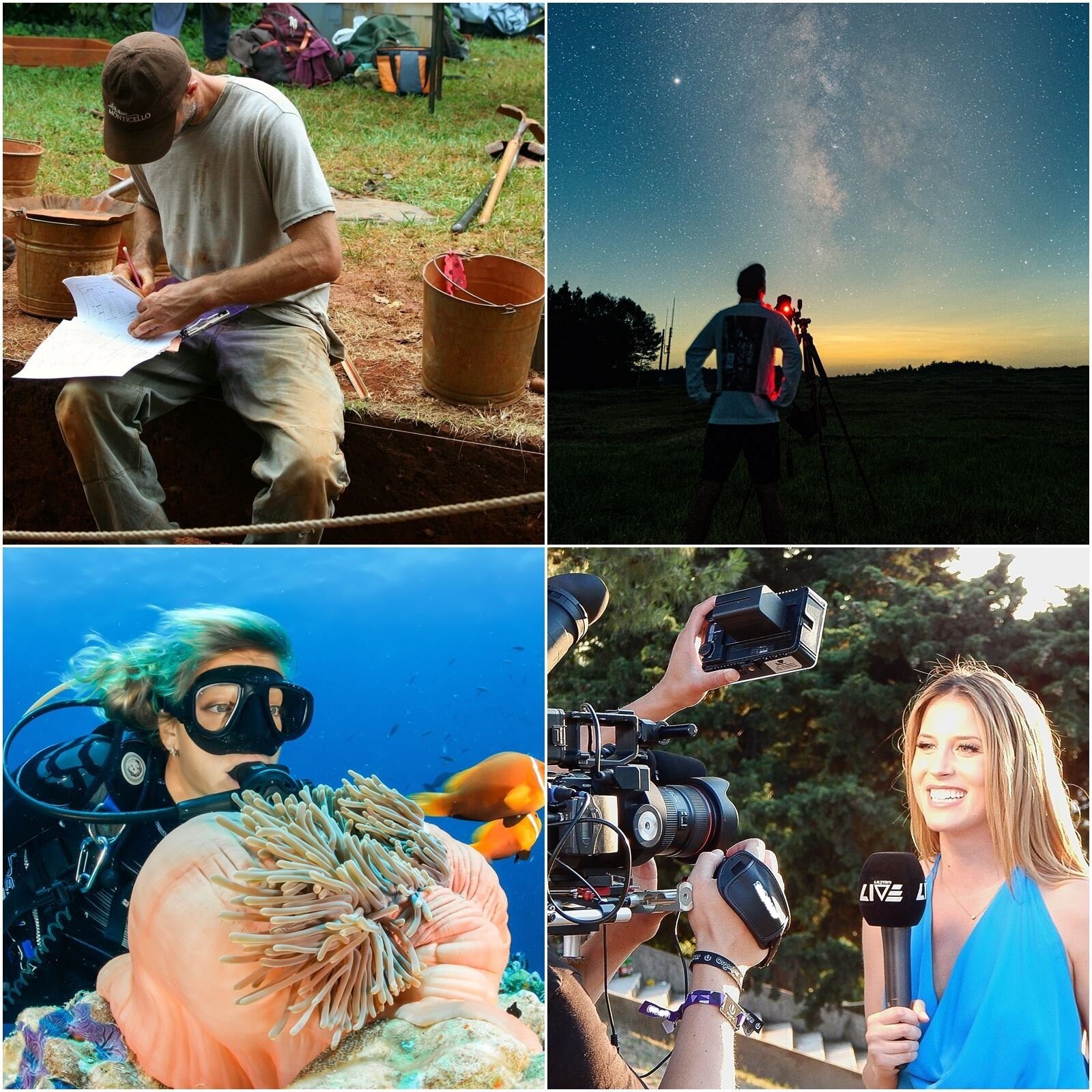
A lot of children dream about being archeologists. The archeologist’s job is difficult. Archeologists often travel to different countries. They work at dig sitesdig sites. They look for old things in the ground. These things are very old and can break easily. Archeologists have to be very carefulcareful.
AstronomerAstronomer
Astronomers watch the sky. They study the cosmoscosmos. They learn about stars and galaxiesgalaxies. They work in observatoriesobservatories, but sometimes they work outdoors, too! They use huge telescopestelescopes to watch the night sky.
OceanographerOceanographer
Oceanographers divedive in seas and oceans to study plants and animals. They study things like coral reefscoral reefs and fish. It’s a very hard job because they have to carry an oxygen bottleoxygen bottle. They can’t breathebreathe without it! The water can be very scary. Oceanographers see a lot of beautiful things as well!
TV news reporterTV news reporter
TV news reporters spend a lot of time outdoors. They travel a lot because they need to report onreport on many events. When something important happens, TV news reporters are there and they interviewinterview people. TV news reporters can see a lot of places during their work hours. But they always go back to the TV studioTV studio!
Źródło: Zuzanna Kościuk, licencja: CC BY-SA 3.0.
Read the text and decide if the following sentences are true or false.
Przeczytaj tekst, a następnie zdecyduj, czy podane zdania są prawdziwe, czy fałszywe.
2. Astronomers study the cosmos, which means they study stars and galaxies. TRUEFALSE
3. Oceanographers work underwater and collect samples of artifacts. TRUEFALSE
4. TV news reports can work in their country or abroad. TRUEFALSE
5. Being an archeologist and being an oceanographer are difficult jobs. TRUEFALSE
Based on the text, drag the words from the box to fill in the gaps.
Na podstawie tekstu przeciągnij wyrazy z ramki w odpowiednie luki.
2. Astronomers often work in 1. interview, 2. underwater, 3. dig sites, 4. artifacts, 5. observatories, 6. audience, 7. outdoors and use telescopes.
3. Oceanographers are people who work 1. interview, 2. underwater, 3. dig sites, 4. artifacts, 5. observatories, 6. audience, 7. outdoors.
4. TV news reporters spend a lot of time 1. interview, 2. underwater, 3. dig sites, 4. artifacts, 5. observatories, 6. audience, 7. outdoors.
5. They 1. interview, 2. underwater, 3. dig sites, 4. artifacts, 5. observatories, 6. audience, 7. outdoors people, so the 1. interview, 2. underwater, 3. dig sites, 4. artifacts, 5. observatories, 6. audience, 7. outdoors can learn what happened.
Which person from the text has the most interesting job? Why? Answer the question in 2–3 sentences.
Która osoba wymieniona w tekście ma najciekawszą pracę? Dlaczego? Odpowiedz na pytanie w 2–3 zdaniach.
Słownik
/ ˌɑːkiˈɒlədʒɪst /
archeolog/archeolożka
/ əˈstrɒnəmə /
astronom/astronomka
/ briːð /
oddychać
/ ˈkeəfʊl /
ostrożny/ostrożna
/ ˈkɒrəl ri:fs / / ˈkɒrəl ˈri:f /
rafy koralowe [rafa koralowa]
/ dɪɡ saɪts / / dɪɡ saɪt /
wykopaliska [wykopalisko]
/ daɪv /
nurkować
/ ˈɡæləksɪz / / ˈɡæləksi /
galaktyki [galaktyka]
/ ˈɪntəvjuː /
przeprowadzać wywiad
/ əbˈzɜːvətr̩iz / / əbˈzɜːvətr̩i /
obserwatoria [obserwatorium]
/ ˌəʊʃəˈnɒɡrəfə /
oceanograf/oceanografka
/ ˈɒksɪdʒən ˈbɒtl̩ /
butla z tlenem
/ rɪˈpɔːt ɒn /
informować (o czymś)
/ ˈstʌdi /
badać
/ ˈtelɪskəʊps / / ˈtelɪskəʊp /
teleskopy [teleskop]
/ ˌtiːˈviː njuːz rɪˈpɔːtə /
reporter telewizyjny/ reporterka telewizyjna
/ ˌtiːˈviː ˈstjuːdɪəʊ /
studio telewizyjne
Źródło: GroMar Sp. z o.o., licencja: CC BY‑SA 3.0