Believe it or not, rich and pretty people have problems, too. Money and looks aren’t key to happiness, even though we often seem to think so. Read the text below and see if you agree with it.
Możesz wierzyć lub nie, ale piękni i bogaci też mają problemy. Pieniądze i wygląd nie są kluczem do szczęścia, choć często wydaje nam się, że tak właśnie jest. Przeczytaj poniższy tekst i sprawdź, czy się z nim zgadzasz.
RLZoxX41vtYf5
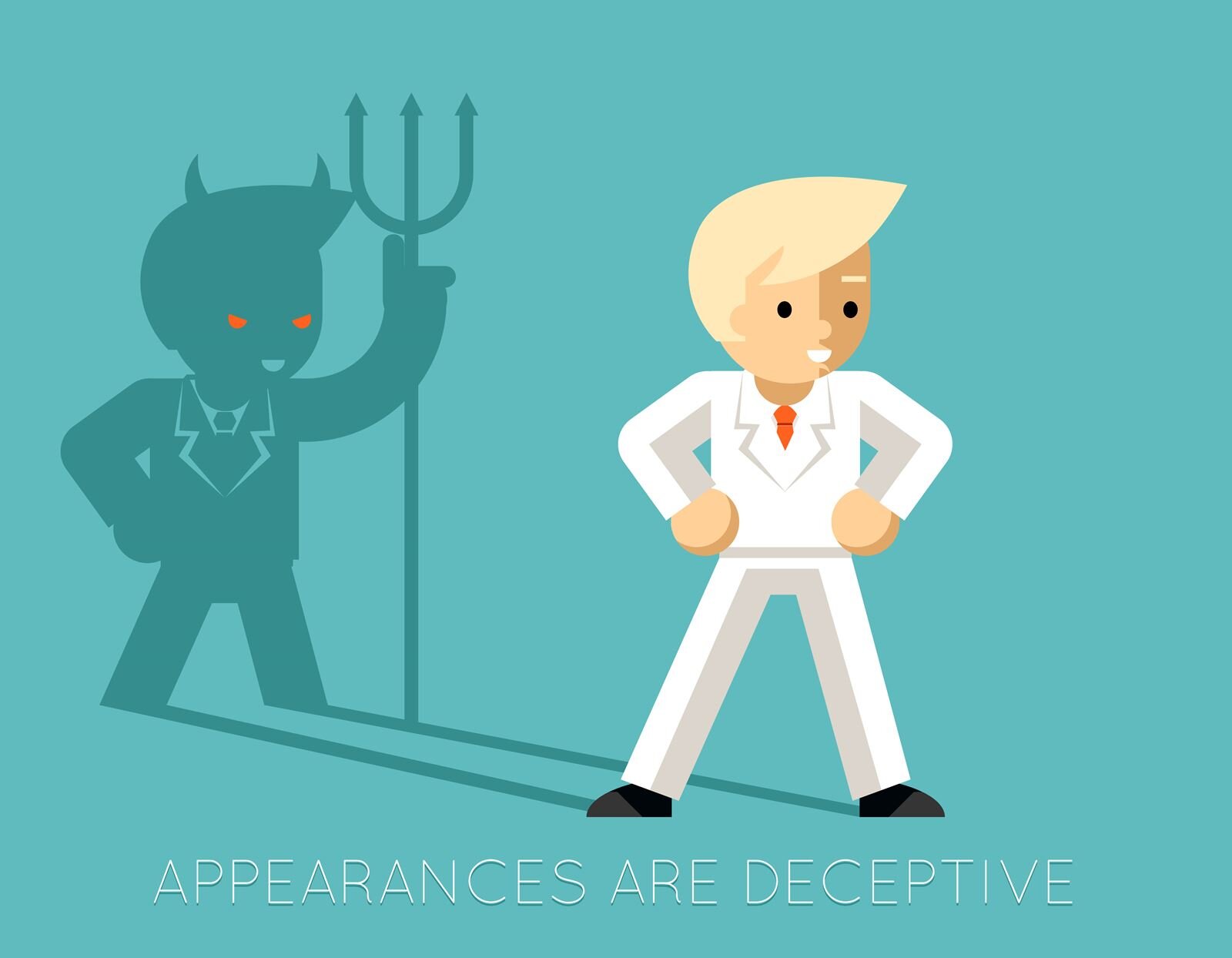
Ilustracja przedstawia postać chłopca w białym garniturze o blond włosach, za nim widoczny jest cień jego postaci. Cień różni się od chłopca gdyż ma na głowie rogi i czerwone oczy a w dłoni trzyma trójząb. Na dole ilustracji widnieje napis w języku angielskimAPPEARANCES ARE DECEPTIVE.
What you see is not always what you get!
To, co widzisz, nie zawsze jest tym, co dostajesz!
Źródło: dostępny w internecie: freepik.com [dostęp 11.10.2023], domena publiczna.
1
Exercise1
RgoUJ1JgP8BuO
Check if you understand the words below and match them with their Polish equivalents. appearance Możliwe odpowiedzi: 1. świadomość, 2. media społecznościowe, 3. samoocena, 4. postrzegać, 5. pusty, 6. wygląd, 7. pojawienie się self-esteem Możliwe odpowiedzi: 1. świadomość, 2. media społecznościowe, 3. samoocena, 4. postrzegać, 5. pusty, 6. wygląd, 7. pojawienie się social media Możliwe odpowiedzi: 1. świadomość, 2. media społecznościowe, 3. samoocena, 4. postrzegać, 5. pusty, 6. wygląd, 7. pojawienie się emergence Możliwe odpowiedzi: 1. świadomość, 2. media społecznościowe, 3. samoocena, 4. postrzegać, 5. pusty, 6. wygląd, 7. pojawienie się consciousness Możliwe odpowiedzi: 1. świadomość, 2. media społecznościowe, 3. samoocena, 4. postrzegać, 5. pusty, 6. wygląd, 7. pojawienie się perceive Możliwe odpowiedzi: 1. świadomość, 2. media społecznościowe, 3. samoocena, 4. postrzegać, 5. pusty, 6. wygląd, 7. pojawienie się empty Możliwe odpowiedzi: 1. świadomość, 2. media społecznościowe, 3. samoocena, 4. postrzegać, 5. pusty, 6. wygląd, 7. pojawienie się
Check if you understand the words below and match them with their Polish equivalents. appearance Możliwe odpowiedzi: 1. świadomość, 2. media społecznościowe, 3. samoocena, 4. postrzegać, 5. pusty, 6. wygląd, 7. pojawienie się self-esteem Możliwe odpowiedzi: 1. świadomość, 2. media społecznościowe, 3. samoocena, 4. postrzegać, 5. pusty, 6. wygląd, 7. pojawienie się social media Możliwe odpowiedzi: 1. świadomość, 2. media społecznościowe, 3. samoocena, 4. postrzegać, 5. pusty, 6. wygląd, 7. pojawienie się emergence Możliwe odpowiedzi: 1. świadomość, 2. media społecznościowe, 3. samoocena, 4. postrzegać, 5. pusty, 6. wygląd, 7. pojawienie się consciousness Możliwe odpowiedzi: 1. świadomość, 2. media społecznościowe, 3. samoocena, 4. postrzegać, 5. pusty, 6. wygląd, 7. pojawienie się perceive Możliwe odpowiedzi: 1. świadomość, 2. media społecznościowe, 3. samoocena, 4. postrzegać, 5. pusty, 6. wygląd, 7. pojawienie się empty Możliwe odpowiedzi: 1. świadomość, 2. media społecznościowe, 3. samoocena, 4. postrzegać, 5. pusty, 6. wygląd, 7. pojawienie się
Źródło: GroMar Sp. z o.o., licencja: CC BY-SA 3.0.
Read the text and do the exercises below.
Not Everything Is as It Seems
LuizaKubalskaNot Everything Is as It Seems
Our appearanceappearanceappearance has always been an important part of our self‑esteemself‑esteemself‑esteem. However, in recent years with the ever‑growingever‑growingever‑growing importance and accessibilityaccessibilityaccessibility of the internet, society has become ever more strict about it. We see beautiful actors, actresses, singers and all the influencers, and we think the way they look is the way we all could look if we only tried a little bit harder. We often don’t considerconsiderconsider the fact that these people don’t look like that in their everyday life and don’t live the way they present themselves online. We all want to be beautiful, tall and slim like they are, because we usually don’t realise that beauty is about being uniqueuniqueunique, not universal.
It doesn’t start with social media, however. We get teasedget teasedget teased in primary school for wearing glasses, being unattractiveunattractiveunattractive or for not wearing the newest, most fashionable clothes, and it's too early for us to realise that these things aren't important, so they sink deepersink deepersink deeper into our consciousnessconsciousnessconsciousness. It’s hard work changing that view. And it’s not just about the appearance but how successful we are at a particular ageat a particular ageat a particular age in life. Even before the emergenceemergenceemergence of social media we were bombarded with pictures of beauty in films and TV series. It has made us think it’s normal to have your own apartment in the very centrein the very centrein the very centre of New York City and a well‑paid, stable job at the age of 22. It’s nice to watch these shows, but they can leave you empty inside if you aren’t critical enough.
Short people want to be taller, overweightoverweightoverweight people want to be slimmer, elderlyelderlyelderly people want to be youthfulyouthfulyouthful... We often think that if we change our appearance, we will finally be happy, but happiness is found inside. When we see all those beautiful, sporty and rich people on social media, we are sure they’re happy, because they’re smiling and their posts are full of beauty... What we don’t see, however, is the amount of work they put into looking like that, and how the right camera angleangleangle and the settingsettingsetting of the photo can change everything.
Of course I am not saying that your appearance isn’t important, sincesincesince it’s the first thing people see about you. Still, the way we perceiveperceiveperceive ourselves can change everything about how others perceive us. So take care of yourself, your mind and your body alikealikealike, don’t beat yourself upbeat yourself upbeat yourself up for not looking the way the beauty standards currently are (since they change constantly!) and focus on the way you feel instead of what others think of you!
1 Źródło: LuizaKubalska, licencja: CC BY-SA 3.0.
2
Exercise2
R1dw17yhbPz4C
Read the text. What is it about? Choose the correct answer. Możliwe odpowiedzi: 1. How misleading TV shows are., 2. How famous people influence our self-esteem., 3. The importance of self-esteem.
Źródło: GroMar Sp. z o.o., licencja: CC BY-SA 3.0.
2
Exercise3
Read the text above and choose the correct answer. Only one answer in each line is correct.
R1JyoakCXW867
1. Importance of appearance has recently increased due to Możliwe odpowiedzi: 1. the growing importance of online celebrities., 2. the increasing presence of the Internet., 3. our low self-esteem.
Źródło: GroMar Sp. z o.o., licencja: CC BY-SA 3.0.
R1Qybu4HP5hjP
2. Social media and TV make us believe that Możliwe odpowiedzi: 1. it’s important to spend time with our friends., 2. it’s normal to have a house at a young age., 3. skin care is not necessary.
Źródło: GroMar Sp. z o.o., licencja: CC BY-SA 3.0.
R1V406aj2Ghci
3. People start judging each other’s appearance Możliwe odpowiedzi: 1. in adulthood., 2. during university years., 3. at primary school.
Źródło: GroMar Sp. z o.o., licencja: CC BY-SA 3.0.
R101IKmBRHzfu
4. People mistakenly believe that beauty Możliwe odpowiedzi: 1. makes us happier., 2. is achieved by going to the gym., 3. is only necessary in social media.
Źródło: GroMar Sp. z o.o., licencja: CC BY-SA 3.0.
Rp4MwAmANpX8K
5. The author suggests to readers that Możliwe odpowiedzi: 1. they should not to care about their appearance., 2. mental well-being is more important than physical beauty., 3. they should work hard to look beautiful
Źródło: GroMar Sp. z o.o., licencja: CC BY-SA 3.0.
1
Exercise4
R15p4bbnyE3Ds
Look at the dialogue and the text again. Then complete the rule. Short adjectives (e.g. short, tall, pretty):
Comparative: ADJECTIVE + 1. 1. -er, 2. more, 3. -est, 4. the most, 5. the
Superlative: 2. 1. -er, 2. more, 3. -est, 4. the most, 5. the + ADJECTIVE + 1. -er, 2. more, 3. -est, 4. the most, 5. the
Long adjectives (e.g. handsome, beautiful, intelligent)
Comparative: 3. 1. -er, 2. more, 3. -est, 4. the most, 5. the + ADJECTIVE
Superlative: 4. 1. -er, 2. more, 3. -est, 4. the most, 5. the + ADJECTIVE
Look at the dialogue and the text again. Then complete the rule. Short adjectives (e.g. short, tall, pretty):
Comparative: ADJECTIVE + 1. 1. -er, 2. more, 3. -est, 4. the most, 5. the
Superlative: 2. 1. -er, 2. more, 3. -est, 4. the most, 5. the + ADJECTIVE + 1. -er, 2. more, 3. -est, 4. the most, 5. the
Long adjectives (e.g. handsome, beautiful, intelligent)
Comparative: 3. 1. -er, 2. more, 3. -est, 4. the most, 5. the + ADJECTIVE
Superlative: 4. 1. -er, 2. more, 3. -est, 4. the most, 5. the + ADJECTIVE
Źródło: GroMar Sp. z o.o., licencja: CC BY-SA 3.0.
2
Exercise5
Rq9uEsUEA5Svu
Choose the correct answers to make logical sentences.
My cousin is only 1.50 cm. He is the shortestshorter in my family.
My sister is 14 and I am 15. She is youngeryoungest than me.
My father is on a diet. He wants to become slimmershorter than he is.
She doesn’t think she is pretty, so she uses makeup to look the moremore beautiful.
He is the moremost handsome guy in our class, but he can’t find a girlfriend.
John (180 cm) is tallesttaller than Jake (175 cm), but Michael (185 cm) is the tallesttaller.
Mia is very pretty, but I think Gina is the most prettyprettiest girl in school.
Gina says Robert is morethe most interesting boy in our class, but I don’t agree.
Fiona is Miss World. She is the ugliestmost beautiful woman in the world.
That cake was good, but this one is more betterbetter.
Choose the correct answers to make logical sentences.
My cousin is only 1.50 cm. He is the shortestshorter in my family.
My sister is 14 and I am 15. She is youngeryoungest than me.
My father is on a diet. He wants to become slimmershorter than he is.
She doesn’t think she is pretty, so she uses makeup to look the moremore beautiful.
He is the moremost handsome guy in our class, but he can’t find a girlfriend.
John (180 cm) is tallesttaller than Jake (175 cm), but Michael (185 cm) is the tallesttaller.
Mia is very pretty, but I think Gina is the most prettyprettiest girl in school.
Gina says Robert is morethe most interesting boy in our class, but I don’t agree.
Fiona is Miss World. She is the ugliestmost beautiful woman in the world.
That cake was good, but this one is more betterbetter.
Źródło: GroMar Sp. z o.o., licencja: CC BY-SA 3.0.
2
Exercise6
Put the words in the correct order to make logical sentences.
RhcmO6O07Ub00
1. 1. prettier, 2. is, 3. than, 4. thought, 5. I, 6. She1. prettier, 2. is, 3. than, 4. thought, 5. I, 6. She1. prettier, 2. is, 3. than, 4. thought, 5. I, 6. She1. prettier, 2. is, 3. than, 4. thought, 5. I, 6. She1. prettier, 2. is, 3. than, 4. thought, 5. I, 6. She1. prettier, 2. is, 3. than, 4. thought, 5. I, 6. She.
1. 1. prettier, 2. is, 3. than, 4. thought, 5. I, 6. She1. prettier, 2. is, 3. than, 4. thought, 5. I, 6. She1. prettier, 2. is, 3. than, 4. thought, 5. I, 6. She1. prettier, 2. is, 3. than, 4. thought, 5. I, 6. She1. prettier, 2. is, 3. than, 4. thought, 5. I, 6. She1. prettier, 2. is, 3. than, 4. thought, 5. I, 6. She.
Źródło: GroMar Sp. z o.o., licencja: CC BY-SA 3.0.
Źródło: GroMar Sp. z o.o., licencja: CC BY-SA 3.0.
R61O9E3hmTt4L
5. 1. the, 2. tallest, 3. in my family, 4. My aunt, 5. is, 6. woman1. the, 2. tallest, 3. in my family, 4. My aunt, 5. is, 6. woman1. the, 2. tallest, 3. in my family, 4. My aunt, 5. is, 6. woman1. the, 2. tallest, 3. in my family, 4. My aunt, 5. is, 6. woman1. the, 2. tallest, 3. in my family, 4. My aunt, 5. is, 6. woman1. the, 2. tallest, 3. in my family, 4. My aunt, 5. is, 6. woman.
5. 1. the, 2. tallest, 3. in my family, 4. My aunt, 5. is, 6. woman1. the, 2. tallest, 3. in my family, 4. My aunt, 5. is, 6. woman1. the, 2. tallest, 3. in my family, 4. My aunt, 5. is, 6. woman1. the, 2. tallest, 3. in my family, 4. My aunt, 5. is, 6. woman1. the, 2. tallest, 3. in my family, 4. My aunt, 5. is, 6. woman1. the, 2. tallest, 3. in my family, 4. My aunt, 5. is, 6. woman.
Źródło: GroMar Sp. z o.o., licencja: CC BY-SA 3.0.
RppBaMch826r7
6. 1. is, 2. shortest, 3. in, 4. my family, 5. He, 6. the1. is, 2. shortest, 3. in, 4. my family, 5. He, 6. the1. is, 2. shortest, 3. in, 4. my family, 5. He, 6. the1. is, 2. shortest, 3. in, 4. my family, 5. He, 6. the1. is, 2. shortest, 3. in, 4. my family, 5. He, 6. the1. is, 2. shortest, 3. in, 4. my family, 5. He, 6. the.
6. 1. is, 2. shortest, 3. in, 4. my family, 5. He, 6. the1. is, 2. shortest, 3. in, 4. my family, 5. He, 6. the1. is, 2. shortest, 3. in, 4. my family, 5. He, 6. the1. is, 2. shortest, 3. in, 4. my family, 5. He, 6. the1. is, 2. shortest, 3. in, 4. my family, 5. He, 6. the1. is, 2. shortest, 3. in, 4. my family, 5. He, 6. the.
Źródło: GroMar Sp. z o.o., licencja: CC BY-SA 3.0.
RcrHv4Gfgl53a
7. 1. than, 2. is, 3. younger, 4. She, 5. me1. than, 2. is, 3. younger, 4. She, 5. me1. than, 2. is, 3. younger, 4. She, 5. me1. than, 2. is, 3. younger, 4. She, 5. me1. than, 2. is, 3. younger, 4. She, 5. me.
7. 1. than, 2. is, 3. younger, 4. She, 5. me1. than, 2. is, 3. younger, 4. She, 5. me1. than, 2. is, 3. younger, 4. She, 5. me1. than, 2. is, 3. younger, 4. She, 5. me1. than, 2. is, 3. younger, 4. She, 5. me.
Źródło: GroMar Sp. z o.o., licencja: CC BY-SA 3.0.
R1Dfgr3C8SPa2
8. 1. is, 2. slimmer, 3. than, 4. Ian, 5. he, 6. wants to, 7. become1. is, 2. slimmer, 3. than, 4. Ian, 5. he, 6. wants to, 7. become1. is, 2. slimmer, 3. than, 4. Ian, 5. he, 6. wants to, 7. become1. is, 2. slimmer, 3. than, 4. Ian, 5. he, 6. wants to, 7. become1. is, 2. slimmer, 3. than, 4. Ian, 5. he, 6. wants to, 7. become1. is, 2. slimmer, 3. than, 4. Ian, 5. he, 6. wants to, 7. become1. is, 2. slimmer, 3. than, 4. Ian, 5. he, 6. wants to, 7. become.
8. 1. is, 2. slimmer, 3. than, 4. Ian, 5. he, 6. wants to, 7. become1. is, 2. slimmer, 3. than, 4. Ian, 5. he, 6. wants to, 7. become1. is, 2. slimmer, 3. than, 4. Ian, 5. he, 6. wants to, 7. become1. is, 2. slimmer, 3. than, 4. Ian, 5. he, 6. wants to, 7. become1. is, 2. slimmer, 3. than, 4. Ian, 5. he, 6. wants to, 7. become1. is, 2. slimmer, 3. than, 4. Ian, 5. he, 6. wants to, 7. become1. is, 2. slimmer, 3. than, 4. Ian, 5. he, 6. wants to, 7. become.
Źródło: GroMar Sp. z o.o., licencja: CC BY-SA 3.0.
Źródło: GroMar Sp. z o.o., licencja: CC BY-SA 3.0.
R15O9A3vYH41y
10. 1. Jake, 2. than, 3. John is, 4. but Michael is, 5. taller, 6. the, 7. tallest1. Jake, 2. than, 3. John is, 4. but Michael is, 5. taller, 6. the, 7. tallest1. Jake, 2. than, 3. John is, 4. but Michael is, 5. taller, 6. the, 7. tallest1. Jake, 2. than, 3. John is, 4. but Michael is, 5. taller, 6. the, 7. tallest1. Jake, 2. than, 3. John is, 4. but Michael is, 5. taller, 6. the, 7. tallest1. Jake, 2. than, 3. John is, 4. but Michael is, 5. taller, 6. the, 7. tallest1. Jake, 2. than, 3. John is, 4. but Michael is, 5. taller, 6. the, 7. tallest.
10. 1. Jake, 2. than, 3. John is, 4. but Michael is, 5. taller, 6. the, 7. tallest1. Jake, 2. than, 3. John is, 4. but Michael is, 5. taller, 6. the, 7. tallest1. Jake, 2. than, 3. John is, 4. but Michael is, 5. taller, 6. the, 7. tallest1. Jake, 2. than, 3. John is, 4. but Michael is, 5. taller, 6. the, 7. tallest1. Jake, 2. than, 3. John is, 4. but Michael is, 5. taller, 6. the, 7. tallest1. Jake, 2. than, 3. John is, 4. but Michael is, 5. taller, 6. the, 7. tallest1. Jake, 2. than, 3. John is, 4. but Michael is, 5. taller, 6. the, 7. tallest.
Źródło: GroMar Sp. z o.o., licencja: CC BY-SA 3.0.
3
Exercise7
Rq6Xx1lTKa124
Are the following sentences correct or wrong?
He is the taller than me. correctwrong
This is the most beautiful flower in this garden. correctwrong
You don’t have to be slimmer than them. correctwrong
She’s youngest student in our class. correctwrong
My grandmother is older than my grandfather. correctwrong
I think I’m overweighter than you. correctwrong
He is the most old person in the world. correctwrong
You’re the prettiest girl I know. correctwrong
You’re the prettiest than her. correctwrong
Robert is gooder at English than me. correctwrong
Are the following sentences correct or wrong?
He is the taller than me. correctwrong
This is the most beautiful flower in this garden. correctwrong
You don’t have to be slimmer than them. correctwrong
She’s youngest student in our class. correctwrong
My grandmother is older than my grandfather. correctwrong
I think I’m overweighter than you. correctwrong
He is the most old person in the world. correctwrong
You’re the prettiest girl I know. correctwrong
You’re the prettiest than her. correctwrong
Robert is gooder at English than me. correctwrong
Źródło: GroMar Sp. z o.o., licencja: CC BY-SA 3.0.
GRAMATYKA
Stopień wyższy (comparative) i najwyższy (superlative) przymiotników
Krótkie przymiotniki (czyli te składające się z jednej sylaby oraz te składające się z dwóch sylab i kończące się na -y) stopniuje się: w stopniu wyższym przez dodanie do przymiotnika końcówki -er, a w stopniu najwyższym przez dodanie końcówki -est i poprzedzenie wyrazuthe. Przykłady:
tall, taller, the tallest – wysoki/wysoka, wyższy/wyższa, najwyższy/najwyższa
merry, merrier, the merriest – wesoły/wesoła, weselszy/weselsza, najweselszy/najweselsza
Zwróć uwagę na zasady ortograficzne.
Jeśli przymiotnik kończy się spółgłoskę poprzedzoną samogłoską krótką, to taką spółgłoskę podwajamy (np. slim, slimmer, the slimmest – szczupły/szczupła, szczuplejszy/szczuplejsza, najszczuplejszy/najszczuplejsza).
Jeśli przymiotnik kończy się na -e, w stopniu wyższym dodajemy do niego tylko końcówkę -r, a w stopniu najwyższym – końcówkę -st (np. nice, nicer, the nicest – miły/miła, milszy/milsza, najmilszy/najmilsza).
Jeśli przymiotnik kończy się na -y, to przed dodaniem końcówki -er w stopniu wyższym lub -est w stopniu najwyższym literę y wymienia się na i (np. pretty, prettier, the prettiest – ładny/ładna, ładniejszy/ładniejsza, najładniejszy/najładniejsza).
Dłuższe przymiotniki (czyli te składające się z dwóch sylab, które nie kończą się na -y, oraz przymiotniki składające się z trzech i większej liczby sylab) stopniuje się przez dodanie przed przymiotnikiem wyrazumorew celu utworzenia stopnia wyższego oraz wyrazumostw celu utworzenia stopnia najwyższego. Przykłady:
beautiful, more beautiful, the most beautiful – piękny/piękna, piękniejszy/piękniejsza, najpiękniejszy/najpiękniejsza
awkward, more awkward, the most awkward – niezręczny/niezręczna, bardziej niezręczny/niezręczna, najbardziej niezręczny/niezręczna
Jest też niewielka grupa przymiotników, które stopniujemy w sposób nieregularny. Najczęściej używane spośród nich to:
good, better, the best – dobry/dobra, lepszy/lepsza, najlepszy/najlepsza
bad, worse, the worst – zły/zła, gorszy/gorsza, najgorszy/najgorsza
Zwróć uwagę, że niezależnie od metody tworzenia stopnia najwyższego (-est, mostczy też stopniowanie nieregularne) przed przymiotnikiem w stopniu najwyższym dodajemythe.