Przeczytaj
The picture below shows a group of people preparing the stage before a performance. Would you like to work in a theatre? In this section, you are going to read a text about theatre, what it involves and how it operates. Read it to extend your knowledge about theatre production.
Poniższe zdjęcie przedstawia grupę ludzi przygotowującą scenę przed spektaklem. Czy chciałbyś/chciałabyś pracować w teatrze? W tej sekcji przeczytasz tekst na temat teatru, tego, z czym się łączy i jak działa. Przeczytaj go, aby poszerzyć wiedzę na temat produkcji teatralnej.
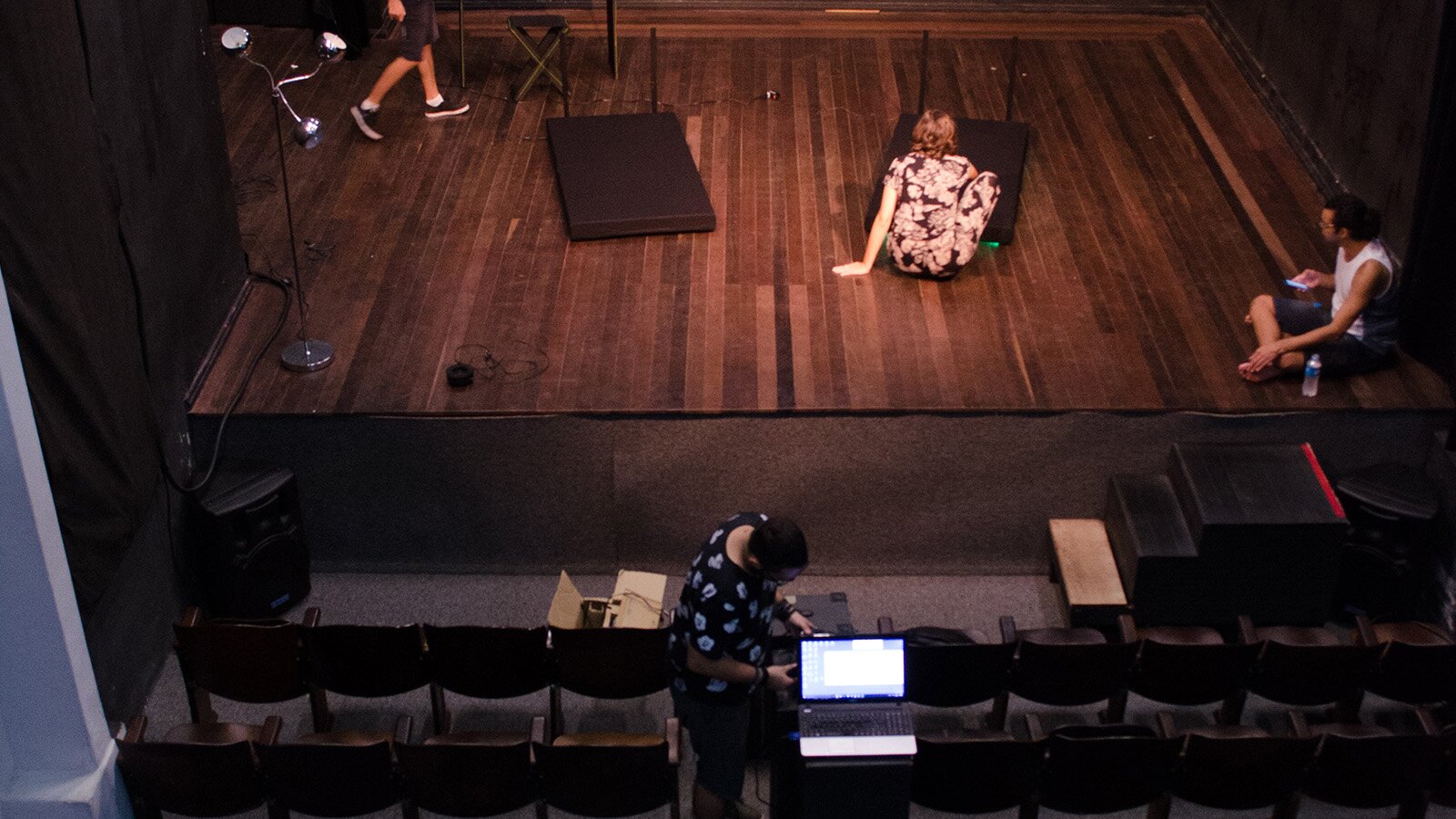
Read the text and learn about theatrical production.
A Play Is Not Only Acting“All the world’s a stage.” This famous quotation by William Shakespeare can be interpreted in various ways, because - just like theatre itself - there is so much meaning put into it. Theatre does something which seems to be impossible: it allows you to be present and escape the present moment at the same time. When we watch actors play on the stageplay on the stage, we forget about the world around us and, for some time, we live the lives and emotions of the characters played by them, no matter whether it’s a tragedytragedy or a comedycomedy.
While enjoying a play in the theatre, we don’t think about all the work put into its production. This is a long process, which begins with finding the right scriptscript and finishes with the first nightfirst night. Along the way, there are so many things which need to be done: decisions about the artistic vision and the available budget must be made. The the team of collaborators such as the lighting crew, the stage crew and the dressersdressers must be chosen, and auditionsauditions must be organised to choose the castcast. The rehearsalsrehearsals must be regularly held, so that the actors could memorise their lines and moves. All the propsprops and decorations must be prepared with attention to detail, which is especially important in the case of a costume playcostume play, because the setset must recreate the atmosphere of a specific time and space of the action. Every actor must study their rolestudy their role carefully before the last dress rehearsaldress rehearsal, during which they act in costumes, with props and all the set elements ready, imitating the exact conditions of a live production.
During the opening nightopening night, the emotions in the wingsin the wings are so intense that you can feel them in the air. The director is nervous. The actors are revising their lines for the last time, sitting in their dressing roomsdressing rooms and trying hard to overcome stage frightstage fright. The hardest work, however, is done by the people behind the curtains, who are handling costumes, lights, setting up propsprops and more. It doesn’t seem as glamorous as being in the light onstageonstage, but without the help of backstage staff, the show wouldn’t go on and be as flawlessflawless as it is. Then, the curtain is upthe curtain is up and it’s time to go on stage. The show is on.
Once the play comes to an end, the moment of truth comes: will the play be a hit or will it turn out to be a flopflop? Will the actors get a standing ovationstanding ovation at the end and have numerous curtain callscurtain calls, or will the audience stay indifferentindifferent? Of course, it mostly depends on good acting and cooperative effort of the whole group of people involved in the production of the play, but there is one more factor that can add to the success - publicitypublicity. Publicity should be ongoingongoing for several weeks, leading up to the first production, and it may involve fliersfliers, newspaper coveragenewspaper coverage, paid advertisements, posting trailers, “sneak peeks” behind the scenesbehind the scenes, organising contests and anything else the producer can do to draw the audience for the play. It really helps to get people to talk about the production even before it is shown, and to make them interested in it. If accomplished, all this hard work should pay offpay off in the end, and bring satisfaction and fame to actors, producers, directors, and other people involved in the whole process.
Źródło: Agnieszka Sękiewicz‑Magoń, dostępny w internecie: How To Produce a Play , https://www.wikihow.com/Produce-a-Play [dostęp 1.03.2022], Top 10 theatre superstitions , https://www.capitaltheatres.com/about/stories/top-10-theatre-superstitions [dostęp 1.03.2022], licencja: CC BY-SA 3.0.
Read the text above and choose the correct answer.
a) We can't escape from it when we don’t like a play.
b) It allows us to be in two worlds at the same time.
c) All tragedies have elements of comedy.
2. The main idea of the second paragraph is that
a) producing a play is a long and complex process.
b) producers are the most important people in the process of producing a play.
c) everybody involved in the production should do their job well.
3. Who is the busiest during the first night?
a) The cast
b) Crew members
c) The director
4. Why is publicity important for a play?
a) It helps actors to act better.
b) It pays for the effort put into the play.
c) It informs and attracts the audience.
5. What is the main purpose of the article?
a) To explain why an actor’s job is difficult.
b) To present the duties of people working in the theatre.
c) To show different stages of theatrical production.
Based on the vocabulary used in the text, type in the missing words. Pay attention to the correct spelling of the words you type in.
Type your answers to the questions. Use 2–3 sentences in each case.
How do you understand Shakespeare’s line: “All the world’s a stage”?
Do you like going to the theatre? Why? Why not?
Do you forget about the real world while watching a theatre play? Why? Why not?
Słownik
/ ɔːˈdɪʃn̩z / / ɔːˈdɪʃn̩ /
przesłuchania [przesłuchanie]
/ bɪˈhaɪnd ðə siːnz /
za kulisami, w kuluarach
/ kɑːst /
obsada aktorska
/ ˈkɒmədi /
komedia
/ ˈkɒstjuːm ˈpleɪ /
sztuka kostiumowa
/ kɜ:tn kɔ:lz / / kɜ:tn kɔːl /
wywołania przed kurtynę [wywołanie przed kurtynę]
/ ˈdres rɪˈhɜːsl̩ /
próba kostiumowa
/ ˈdresəz / / ˈdresə /
garderobiani/garderobiane [garderobiany/garderobiana]
/ ˈdresɪŋ ruːmz / / ˈdresɪŋ ruːm /
garderoby [garderoba]
/ ˈfɜ:st naɪt /
premiera
/ ˈflɔːləs /
doskonały/doskonała, nieskazitelny/nieskazitelna
/ ˈflaɪəz / / ˈflaɪə /
ulotki [ulotka]
/ flɒp /
klapa
/ ɪn ðə wɪŋz /
za kulisami
/ ɪnˈdɪfrənt /
obojętny/obojętna
/ ˈnjuːspeɪpə ˈkʌvərɪdʒ /
relacje prasowe
/ ˌɒn ˈɡəʊiŋ /
trwający/trwająca, toczący/tocząca się
/ ˌɑːnˈsteɪdʒ /
na scenie
/ ˈəʊpənɪŋ naɪt /
premiery [premiera]
/ ˈpeɪ ɒf /
opłacić się
/ pleɪ ˈɒn ðə steɪdʒ /
występują na scenie [występować na scenie]
/ prɒps / / prɒp /
rekwizyty [rekwizyt]
/ pʌbˈlɪsɪti /
rozgłos, reklama
/ rɪˈhɜːsl̩z / / rɪˈhɜːsl̩ /
próby [próba]
/ skrɪpt /
scenariusz
/ set /
plan teatralny
/ steɪdʒ fraɪt /
trema
/ ˈstændɪŋ əʊˈveɪʃn̩ /
owacje na stojąco
/ ˈstʌdi ðeə rəʊl /
nauczyć się swojej roli
/ ðə kɜ:tn z ʌp /
kurtyna idzie w górę
/ ˈtrædʒədi /
tragedia