Przeczytaj
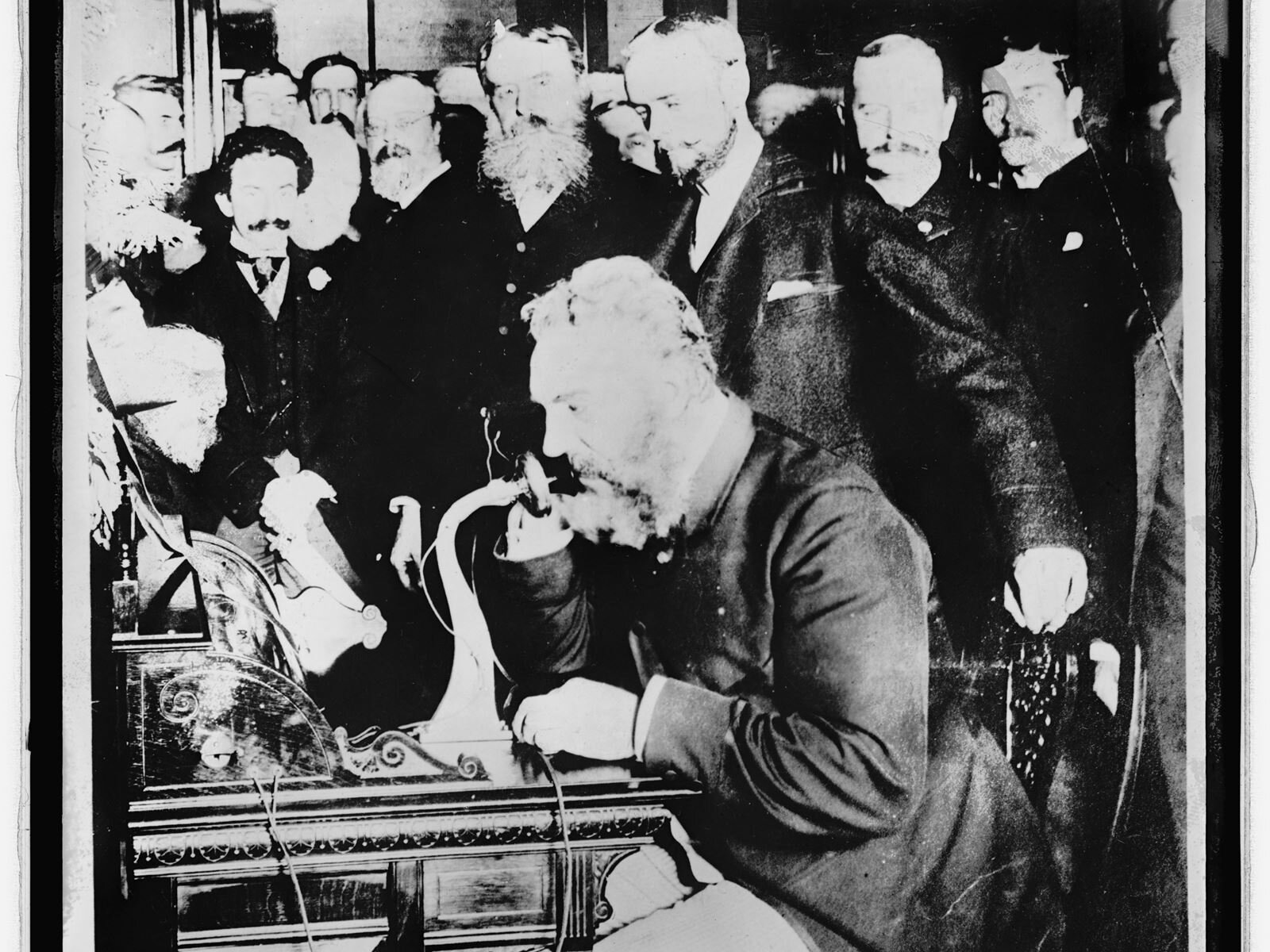
The picture below shows the famous inventor Alexander Graham Bell with his invention. Do you know who he was? Read the text to find out how he invented the phone and how it has changed throughout history.
Poniższa ilustracja przedstawia słynnego naukowca Alexandra Grahama Bella oraz jego wynalazek. Czy słyszałeś/słyszałaś kiedyś o Bellu? Przeczytaj tekst, aby dowiedzieć się, w jaki sposób wynalazł telefon oraz jak to urządzenie zmieniało się na przestrzeni dziejów.
Match the words and their Polish translations.
Połącz słowa oraz ich polskie odpowiedniki.
Play memo. Find the words and their Polish translations.
Zagraj w memo. Znajdź słowa oraz ich polskie odpowiedniki.
Read the text about the history of the phone to find out who invented it and why and how it has developed over the years.
Przeczytaj tekst dotyczący historii telefonu, a dowiesz się, kto i dlaczego go wynalazł oraz jak zmieniał się przez lata.
Can You Hear Me?
Phones are everywhere, in the shop, in the tram, in the park and on the beach. It’s also possible that you’re reading this text on your mobile phonemobile phone. Modern phones do not look at all like the first phones, but they are still used for the same purposepurpose: to communicatecommunicate with people.
Alexander Graham Bell invented the telephone. Let’s go deeper into the history of his inventioninvention. Bell was born in 1847 in Scotland. His mother was deafdeaf. Bell’s father developeddeveloped a system to teach deaf children to communicate. Bell helped his father in his work and began inventing things on his own. Then, he moved to America. In 1872 he opened a school in Boston to teach deaf kids how to speak.
The first telephone call took placetook place in 1876 between Alexander Graham Bell and his assistant Thomas Watson. They were about 3 km away from each other. The first words spoken were “Mr Watson, come here. I want to see you.”
Alexander Graham Bell created his own company in 1877, the Bell Telephone Company. After that telephones started to appearappear in big US cities. Early phones needed an operatoroperator. In 1920, London and the United States were connectedconnected by the first phone service.
The biggest problem for communicationcommunication was wireswires. All phones were landline phoneslandline phones. They were connected by wires or lines. Many companies worked to solve this problem. In 1973 the phone company Motorola demonstrateddemonstrated the first cell phonecell phone. It was known as the “brickbrick” because it was big and heavy. It had no wires but only twenty minutes of battery lifebattery life. It was also very expensive.
Now, mobile phones are very different. You can talk, send textssend texts and take photos, too. Most people in the world have smartphones. They runrun different applicationsapplications. Apps let people play games, shop, read, get maps and directionsdirections, set appointmentsappointments, and do many other tasks.
Can you imagine your life without a phone?
Źródło: Dorota Giżyńska Barbara Bednarczyk, licencja: CC BY-SA 3.0.
Match the dates with the events.
Dopasuj daty do wydarzeń.
Drag and drop the correct words in the text below.
Przeciągnij poprawne wyrazy do poniższego tekstu.
Read the sentences and choose one correct word.
Przeczytaj zdania i wybierz jeden poprawny wyraz.
Drag and drop the words to fill in the empty spaces in the sentences.
Przeciągnij i upuść wyrazy w odpowiednie miejsce w zdania.
Słownik
/ əˈpɪə /
pojawiać się
/ əˈpɔɪntmənts / / əˈpɔɪntmənt /
spotkania [spotkanie]
/ ˈbætəri ˌlaɪf /
czas pracy baterii
/ brɪk /
cegła
/ 'sel foʊn /
telefon komórkowy
/ kəˈmjuːnɪkeɪt /
komunikować się
/ kəˌmjuːnɪˈkeɪʃn̩ /
komunikacja
/ kəˈnek.tɪd/ / kəˈnekt /
połączone [połączyć]
/ dɪˈrekʃənz / / dɪˈrekʃən /
kierunki [kierunek]
/ def /
głuchoniemy/głuchoniema
/ ˈdemənstreɪtɪd / / ˈdemənstreɪt /
przedstawił/przedstawiła [przedstawiać]
/ dɪˈveləpt / / dɪˈveləp /
opracował/opracowała [opracować]
/ dɪˈveləpmənt /
rozwój
/ ɪnˈvent /
wynaleźć
/ ɪnˈvenʃn̩ /
wynalazek
/ ˈlændlaɪn fəʊnz / / ˈlændlaɪn fəʊn /
telefony stacjonarne [telefon stacjonarny]
/ ˌməʊ.baɪl ˈfəʊn/
telefon komórkowy
/ ˈɒpəreɪtə /
operator, osoba obsługująca coś
/ ˈpɜːpəs /
cel
/ rʌn ˌæplɪˈkeɪʃənz /
uruchamiać aplikacje
/ send teksts /
wysyłać wiadomości
/ ˈtʊk ˈpleɪs / / ˈteɪk ˈpleɪs /
odbył/odbyła się [odbyć się]
/ waɪəz / / 'waɪə /
kable [kabel]
Źródło: GroMar Sp. z o.o., licencja: CC BY‑SA 3.0