Przeczytaj
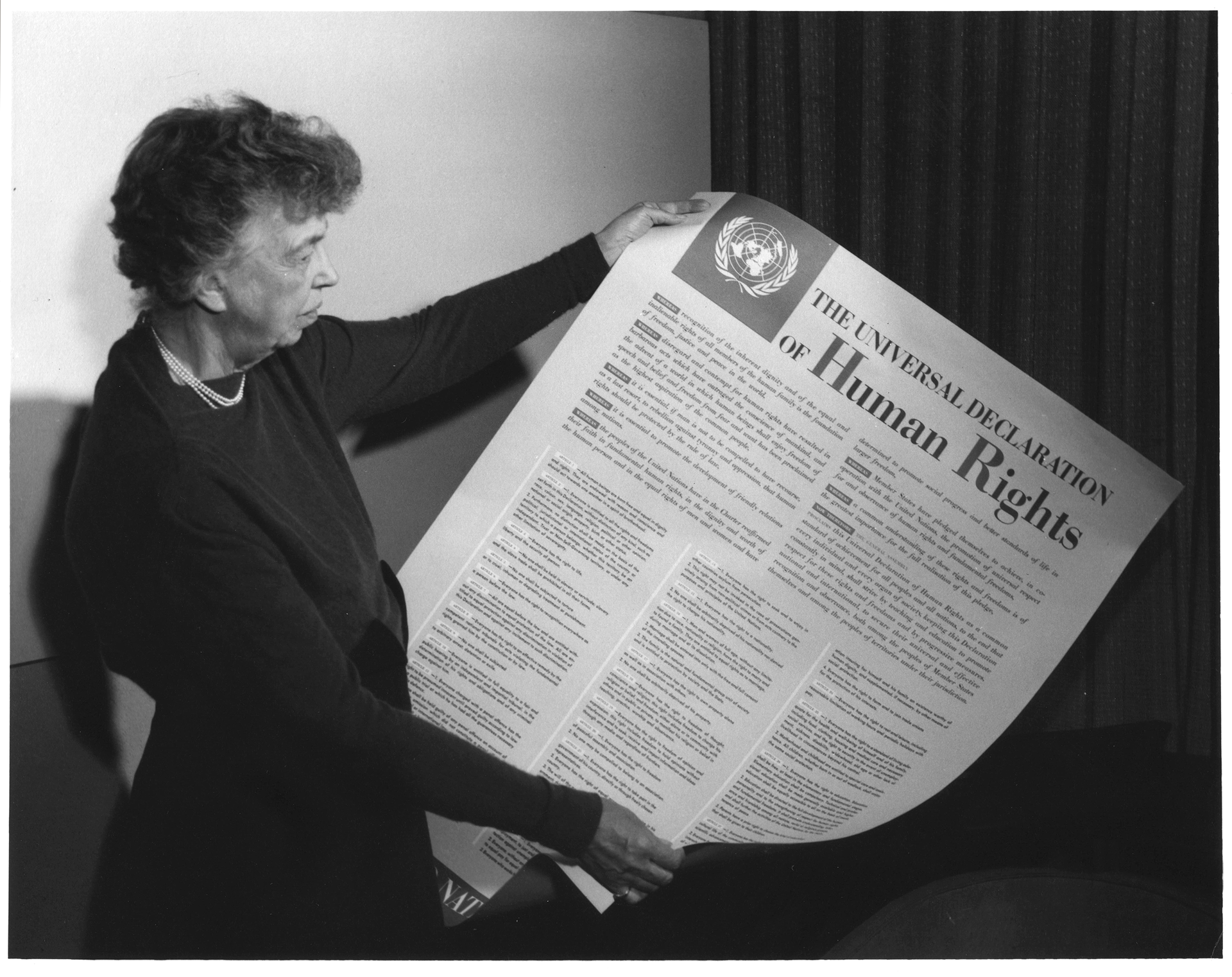
The photo shows Eleanor Roosvert, a social activist and chairwoman of the Commission on Human Rights, who had a great influence on the drafting of the Universal Declaration of Human Rights. Have you ever wondered how important they are? In this section you will read a text which discusses their importance.
Zdjęcie przedstawia Eleanor Roosevelt, działaczkę społeczną i przewodniczącą Komisji Praw Człowieka – kobietę, która miała ogromny wpływ na opracowanie Powszechnej Deklaracji Praw Człowieka. Czy kiedykolwiek zastanawiałeś się, jak ważne to są prawa? W tej sekcji przeczytasz tekst dotyczący tego, jak ważne są kwestie praw człowieka na świecie.
Study the text about the history of human rights and do the exercises below.
What are Human Rights and Why Do They Matter?The history of the concept of human rightshuman rights is quite long. Over the centuries and across religions, cultures and societies, people had to deal with defining ideas of rightfulnessrightfulness, justicejustice, and rights. One of the most modern confirmationsconfirmations of universal human rights was the result of experiencing World War II. 2.1 ___
The main objective of the agreement established by the UN was to reaffirm faithreaffirm faith in fundamental human rights. And in the same spirit, in 1948, the UN General Assembly adopted the Universal Declaration of Human RightsUniversal Declaration of Human Rights. This document was written by an international committee chaired bychaired by Eleanor Roosevelt. 2.2 ___ The declaration is based on the principle that all human beings are born free and equalequal in dignitydignity and rights. It consists ofconsists of 30 articles that deal withdeal with the right to non‑discriminationright to non‑discrimination and the right to liberty. It not only refers torefers to negative freedoms, like the freedom from slaveryslavery, but also positive ones, such as freedom of having your possessions or freedom of movement. It refers to basic civil and political rights such as freedomfreedom of expressing your opinion, of religion, and of peaceful assemblypeaceful assembly. It also covers social and economic rights such as the right to choose one’s profession or to fair wages and treatment.The declaration does not define which rights are more important, emphasising their universalityuniversality, indivisibilityindivisibility, and interdependenceinterdependence. And in the past decades, international human rights law has grown, deepening and expanding our understanding of human rights and how to protect them.
So if these principles are so well‑developed, then why are human rights constantly violated and ignored all over the world? The problem is that it is not easy to commonly enforceenforce these rightsrights or punish violators. This is simply because the UDHR is a declaration and not a law. That means it has almost no power to force states to change their policy or compensate a victimcompensate a victim. 2.3 ___ Despite the obvious criticism, supporters appreciate the UDHR’s positive role in setting international standards and helping activists in their campaigns. Moreover, they also claim that not all human rights instruments are powerless. For instance, the European Convention on Human Rights established a court, where member countries along with their citizens can bring cases. 2.4 ___
Human rights law is constantly evolving in compliance within compliance with our views and definitions of basic human rights, which are based on the ideas of equality and guaranteed access to essential social and economic goods, services, and opportunities. Undoubtedly, there is general agreement that some areas require further exploration and further attention from the international community.
Źródło: Iwona Mikucka, licencja: CC BY-SA 3.0.
B. 1. The only thing that can be done, in case of any violations, is to monitor and investigate them., 2. It took a lot of time to agree on a document that recognised the different political, cultural and economic systems of the United Nations., 3. Therefore, In 1944, the leaders of the main powers met to create an organisation that could bring together the states of the world. This organisation was called the United Nations., 4. Probably, that’s the reason why UDHR is not treated seriously., 5. That institution issues decisions that each member country must agree with.
C. 1. The only thing that can be done, in case of any violations, is to monitor and investigate them., 2. It took a lot of time to agree on a document that recognised the different political, cultural and economic systems of the United Nations., 3. Therefore, In 1944, the leaders of the main powers met to create an organisation that could bring together the states of the world. This organisation was called the United Nations., 4. Probably, that’s the reason why UDHR is not treated seriously., 5. That institution issues decisions that each member country must agree with.
D. 1. The only thing that can be done, in case of any violations, is to monitor and investigate them., 2. It took a lot of time to agree on a document that recognised the different political, cultural and economic systems of the United Nations., 3. Therefore, In 1944, the leaders of the main powers met to create an organisation that could bring together the states of the world. This organisation was called the United Nations., 4. Probably, that’s the reason why UDHR is not treated seriously., 5. That institution issues decisions that each member country must agree with.
Answer the questions. Write 2–3 sentences to each question.
What are human rights?
When was UDHR established?
Why is the UDHR abused?
Słownik
/ əˈɡriː wɪð /
zgadzać się z
/ brɪŋ təˈɡeðə /
łączyć kogoś lub coś, gromadzić
/ tʃeəd baɪ / / bi tʃeəd baɪ /
być pod przewodnictwem kogoś
/ ˈkɒmpənseɪt ə ˈvɪktɪm /
zadośćuczynić ofierze
/ ˌkɒnfəˈmeɪʃn̩z / / ˌkɒnfəˈmeɪʃn̩ /
potwierdzenia [potwierdzenie]
/ kənˈsɪsts ɒv / / kənˈsɪst ɒv /
składa się z [składać się z]
/ diːl wɪð /
zajmują się, dotyczą [zajmować się, dotyczyć]
/ ˈdɪɡnɪti /
godność (the state of being worthy of honour or respect)
/ ˈiːkwəl ɪn ˈdɪɡnɪti /
równy/równa w godności
/ ɪnˈfɔːs raɪts / / ɪnˈfɔːs ə raɪt /
egzekwować prawa (egzekwować prawo)
/ ˈiːkwəl /
równy/równa (being the same in value)
/ ˈfriːdəm /
wolność
/ ˈhjuːmən raɪts /
prawa człowieka (a right that is believed to belong to every person)
/ ɪn kəmˈplaɪəns wɪð /
zgodnie z
/ ˌɪndɪˌvɪzəˈbɪləti /
niepodzielność (the fact that something cannot be separated)
/ ˌɪntədɪˈpendəns /
współzależność (the dependance of two or more people or things on each other)
/ ˈdʒʌstɪs /
sprawiedliwość (just treatment)
/ ˈpiːsfəl əˈsembli /
pokojowe zgromadzenie [freedom of meeting]
/ ˌriːəˈfɜːm feɪtheta /
przywrócić wiarę
/ rɪˈfɜːz tuː / / rɪˈfɜː tuː /
odnosi się do [odnosić się do]
/ ˈraɪtflnəs /
prawość, prawowitość (the state of being just, equitable)
/ ˈraɪt tu ˈlɪbəti /
prawo do wolności
/ ˈraɪt tu ˌnɒn dɪˌskrɪmɪˈneɪʃn̩ /
prawo do nie bycia dyskryminowanym
/ ˈsleɪvəri /
niewolnictwo
/ ˌjuːnɪˈvɜːsl̩ ˌdekləˈreɪʃn̩ əv ˈhjuːmən raɪts /
Powszechna Deklaracja Praw Człowieka [a historic document which outlined the rights and freedoms everyone is entitled to]
/ ˌjuːnɪvɜːˈsælɪti /
uniwersalność, powszechność
Źródło: GroMar Sp. z o.o., licencja: CC BY‑SA 3.0