bg‑azure

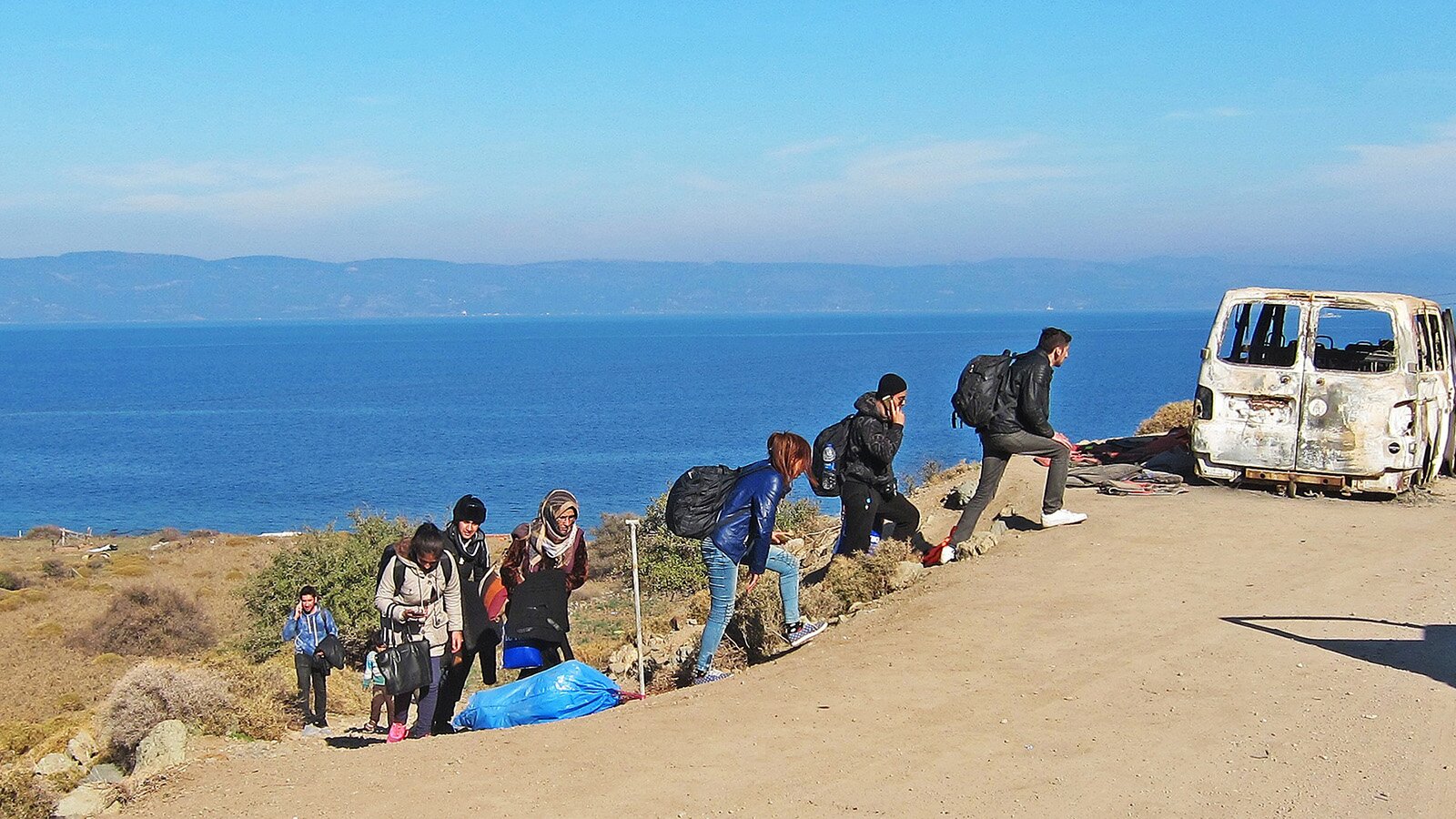
The picture below shows people who have decided to leave their country of origin. What do you think made them do that? What would make you move to another country? In this part of the material, you are going to read a text about some possible reasons for doing so.

Poniższe zdjęcie przedstawia ludzi, którzy zdecydowali się opuścić swoje kraje pochodzenia. Jak sądzisz, co ich do tego skłoniło? Co przekonałoby ciebie do przeprowadzki do innego kraju? W tej części materiału przeczytasz tekst dotyczący możliwych powodów takiej decyzji.
R13H4eyHENTPj
We’re all looking for a place to call home
Wciąż szukamy miejsca, które nazwiemy domem
Źródło: dostępny w internecie: pixabay.com [dostęp 18.10.2021], domena publiczna.
1
Exercise 1

Study the short texts of 5 speakers. Match the speakers with the most likely cause of their decision to move to another country.

RZfhRA5LCm1QO
When I first met her in 2004, she was there on business. After just a couple of days, I couldn’t stand the idea of living in two different countries, so far away from each other! I don’t regret the decision, though. It’s our 10th anniversary today! Możliwe odpowiedzi: 1. money, 2. job perspectives, 3. war, 4. love, 5. curiosity I was fed up with trying to make ends meet every month. The bills, the mortgage… It was killing me. Then, my friend showed me a really interesting job offer abroad. At first I was a bit scared but now I know it was the best decision in my entire life! Możliwe odpowiedzi: 1. money, 2. job perspectives, 3. war, 4. love, 5. curiosity My life was fantastic, I had a job, a happy family, a little house in the countryside. But then… it all started so suddenly, and we didn’t have a choice. I took my family and we left everything behind. We’re safe now and that’s what matters the most. Możliwe odpowiedzi: 1. money, 2. job perspectives, 3. war, 4. love, 5. curiosity Although I had graduated from university, I was still unemployed two years after that. All I was offered was a job in a nearby supermarket. It was hopeless. That’s not why I’d spent 5 years cramming and giving up my social life. Now, I’m a proud genetic engineer in Boston, Massachusetts. Możliwe odpowiedzi: 1. money, 2. job perspectives, 3. war, 4. love, 5. curiosity I’ve never felt like I belonged to one place. The world is so huge, and there are so many people I’d like to meet and so many places I can’t wait to visit. Does it make any sense to stay in one place when there’s so much out there waiting for you to be discovered? I really doubt it. All in all, your home is where your heart is, isn’t it? Możliwe odpowiedzi: 1. money, 2. job perspectives, 3. war, 4. love, 5. curiosity
Źródło: GroMar Sp. z o.o., licencja: CC BY-SA 3.0.
Exercise 1
RmQFmEjkOeaHC
Listen to the recordings and match the speakers with the most likely cause of their decision to move to another country. Możliwe odpowiedzi: 1. job perspectives, 2. curiosity, 3. war, 4. money, 5. love
Źródło: GroMar Sp. z o.o., licencja: CC BY-SA 3.0.

Read the text and do the exercises below.

When Your Home Country Is Not Enough
Anna Caruk When Your Home Country Is Not Enough

As the world is becoming more and more connected, it is also easier and easier to up sticksup sticksup sticks and move to another country. Whether it’s for an improved quality of life, love, or escaping wars, the reasons behind migrationmigrationmigration can vary greatly. Generally, people move to a country either because they want to, or they are forced by the happenings in their home country, like war, faminefaminefamine, or lack of resources. Sometimes people decide they would like to retire and move to a warmer climate to enjoy their twilight yearstwilight yearstwilight years.

For those who wish to move on to a warmer climate, Spain and Southern France are perfect destinations to migratemigratemigrate to. ExpatsexpatExpats are commonly found in these areas. Escaping the hustle and bustlehustle and bustlehustle and bustle of cities, people search for a more relaxed living environment to settle in.settle insettle in. However, purchasing a house in another country is often reserved for wealthy individuals.

Asylum seekersasylum seekerAsylum seekers are in a polar oppositepolar oppositespolar opposite situation. They are people who are forcibly relocated from their home countries due to conditions out of their control. War and other conflicts often make large numbers of people abandon their homes and fleefleeflee. In such cases migrantsmigrants [migrant]migrants are referred to as refugees. Countries neighbouring areas of conflict often offer to resettleresettleresettle many of these people. However, people may move further afieldfurther afieldfurther afield, and an example of this is Australia’s resettlementresettlementresettlement of European refugees after WWII.

In the not too distant future, it is predicted that patterns of migrations will shiftshift (verb)shift. Global warming makes many densely populated areas uninhabitableuninhabitableuninhabitable, so a large number of people will transfertransfertransfer themselves and their belongingsbelongingsbelongings to cooler areas or other places less affected by extreme heatwaves. Unlike economic migrantseconomic migranteconomic migrants, who simply look for greater economic opportunities, those people might not have any choice but to seek a place to survive.

1 Źródło: Anna Caruk , dostępny w internecie: John Dunn, 20 interesting facts about migration, https://www.sableinternational.com/blog/20-interesting-facts-about-migration [dostęp 6.03.2023], Christopher Inkpen, 7 facts about world migration, https://www.pewresearch.org/fact-tank/2014/09/02/7-facts-about-world-migration[dostęp 6.03.2023 r.].https://www.pewresearch.org/fact-tank/2014/09/02/7-facts-about-world-migration/ [dostęp 6.03.2023], licencja: CC BY-SA 3.0.
Exercise 2
R1QMQ4gL16uLM
Type the missing words in the correct places. Mind that (n) stands for a noun and (v) for a verb.
  1. to immigrate (v) – an Tu uzupełnij (n)
  2. to seek (v) asylum – an asylum Tu uzupełnij (n)
  3. to rehome (v) – Tu uzupełnij (n)
  4. to relocate (v) – Tu uzupełnij (n)
  5. to resettle (v) – Tu uzupełnij (n)
  6. to transfer (v) – a Tu uzupełnij (n)
  7. to migrate (v) – a Tu uzupełnij (n, person)
Źródło: GroMar Sp. z o.o., licencja: CC BY-SA 3.0.
Exercise 3

Read the beginnings of sentences below and choose the correct answer to finish them according to what you have learnt from the text above. Only one answer is correct.

RuXcYNZtd76bK
1. There are Możliwe odpowiedzi: 1. a few similar causes of migration., 2. many different reasons for people to move to another country., 3. more people who are economic migrants than those looking for a warmer climate.
Źródło: GroMar Sp. z o.o., licencja: CC BY-SA 3.0.
R1bhuL5ffxiEH
2. Spain and Southern France are common destinations for migrants mainly because of Możliwe odpowiedzi: 1. extremely beautiful environment and lively cities., 2. lower cost of living and cheaper houses., 3. better weather conditions and peacefulness of the places.
Źródło: GroMar Sp. z o.o., licencja: CC BY-SA 3.0.
ReEjfHPBTYoc6
3. Expats are usually Możliwe odpowiedzi: 1. poor landowners., 2. wealthy enough to purchase houses in a foreign country., 3. fond of the hustle and bustle of cities.
Źródło: GroMar Sp. z o.o., licencja: CC BY-SA 3.0.
RrV6bph4B8NVP
4. Countries neighbouring areas of conflict often Możliwe odpowiedzi: 1. get rid of refugees., 2. help people in need find another place to live in., 3. send migrants to Australia.
Źródło: GroMar Sp. z o.o., licencja: CC BY-SA 3.0.
RftkQfmg9trlT
5. Global warming is likely to
Źródło: GroMar Sp. z o.o., licencja: CC BY-SA 3.0.
R1KnMSilXWzLi
6. Economic migrants
Źródło: GroMar Sp. z o.o., licencja: CC BY-SA 3.0.
Exercise 4
R1ZLvSRXDGgR5
Drag the words below to the correct places. There is one extra word which you do not need. Hi! I’m Latya Aslan and I come from Syria. When the war broke out in my country, I escaped abroad and so I became one of many     1. 1. asylum seekers, 2. shift, 3. pull up stakes, 4. relocated, 5. immigrants, 6. an expat     who headed to the UK. The country turned out to be unbelievably friendly to     2. 1. asylum seekers, 2. shift, 3. pull up stakes, 4. relocated, 5. immigrants, 6. an expat     and soon became sort of my second home. To my surprise, I’ve found out that there are plenty of other people like me, who needed to     3. 1. asylum seekers, 2. shift, 3. pull up stakes, 4. relocated, 5. immigrants, 6. an expat     and arrive here from all over the world. People often don’t understand what it’s like to be     4. 1. asylum seekers, 2. shift, 3. pull up stakes, 4. relocated, 5. immigrants, 6. an expat     and feel homesick. Luckily for me, last month I met Rajesh who is also     5. 1. asylum seekers, 2. shift, 3. pull up stakes, 4. relocated, 5. immigrants, 6. an expat.     We seem to get on really well. With him by my side, I can see my future in the UK now. Keep your fingers crossed for us!
Źródło: GroMar Sp. z o.o., licencja: CC BY-SA 3.0.
Exercise 5
RlwraFNNJb4hd
Drag the following halves of sentences to make logical sentences. Although I'd prefer to go out more I spend at home much time because Możliwe odpowiedzi: 1. as there are so many new rules to learn and follow., 2. I don’t know anybody here., 3. of my foreign accent., 4. any qualifications., 5. they were forced to relocate to richer Europe., 6. like a complete stranger. People often laugh at me when I speak English because Możliwe odpowiedzi: 1. as there are so many new rules to learn and follow., 2. I don’t know anybody here., 3. of my foreign accent., 4. any qualifications., 5. they were forced to relocate to richer Europe., 6. like a complete stranger. It’s almost impossible to get a job without Możliwe odpowiedzi: 1. as there are so many new rules to learn and follow., 2. I don’t know anybody here., 3. of my foreign accent., 4. any qualifications., 5. they were forced to relocate to richer Europe., 6. like a complete stranger. Despite people being really friendly, I feel Możliwe odpowiedzi: 1. as there are so many new rules to learn and follow., 2. I don’t know anybody here., 3. of my foreign accent., 4. any qualifications., 5. they were forced to relocate to richer Europe., 6. like a complete stranger. I feel quite confused, Możliwe odpowiedzi: 1. as there are so many new rules to learn and follow., 2. I don’t know anybody here., 3. of my foreign accent., 4. any qualifications., 5. they were forced to relocate to richer Europe., 6. like a complete stranger. My grandparents were economic migrants so Możliwe odpowiedzi: 1. as there are so many new rules to learn and follow., 2. I don’t know anybody here., 3. of my foreign accent., 4. any qualifications., 5. they were forced to relocate to richer Europe., 6. like a complete stranger.
Źródło: GroMar Sp. z o.o., licencja: CC BY-SA 3.0.
Exercise 6

Based on the information from the text describe the two types of immigrants and explain how the patterns of migration might change in the future. Write 5–6 sentences.

RKAK5cHIPNpbc
Źródło: GroMar Sp. z o.o., licencja: CC BY-SA 3.0.

Słownik

asylum seeker
asylum seeker

/ əˈsaɪləm ˈsiːkə /

R3IGGgD35Ngjc1
Nagranie dźwiękowe

osoba starająca się o azyl (a person who has been forced to leave their own country, because they are in danger, and who arrives in another country asking to be allowed to stay there)

R6rdNxEodRbUI1
Nagranie dźwiękowe
belongings
belongings

/ bɪˈlɒŋɪŋz /

RVM2UxkTUgE861
Nagranie dźwiękowe

dobytek, mienie (the things that you own which can be moved, not land or buildings)

R1ZaxF7xfcrEw1
Nagranie dźwiękowe
economic migrant
economic migrant

/ ˌiːkəˈnɒmɪk ˈmaɪɡrənt /

RIuKnw9wBgHNg1
Nagranie dźwiękowe

migrant ekonomiczny/ migrantka ekonomiczna (a person who moves from one country to another in order to improve their standard of living)

RJTfIadEqANOn1
Nagranie dźwiękowe
expat
expat

/ ˈekspæt /

RUDCDDLi1rQYi1
Nagranie dźwiękowe

osoba mieszkająca na obczyźnie (a person living in a country that is not their own; a short form of expatriate)

R1Pr6y0EYMbVL1
Nagranie dźwiękowe
famine
famine

/ ˈfæmɪn /

RfNrYM2Q7baAn1
Nagranie dźwiękowe

klęska głodu (lack of food during a long period of time in a region)

RcPDxy8LXjBkT1
Nagranie dźwiękowe
flee
flee

/ fliː /

R1U2l4w8RWwhh1
Nagranie dźwiękowe

uciekać (to leave a person or place very quickly, especially because you are afraid of possible danger)

Rt3VkiLq6pu3t1
Nagranie dźwiękowe
further afield
further afield

/ ˈfɜːðər əˈfiːld /

RD9NgWsbYEtKo1
Nagranie dźwiękowe

daleko od domu (far away from home; to or in places that are not near)

Ryt7n6Vh95ynG1
Nagranie dźwiękowe
hustle and bustle
hustle and bustle

/ ˈhʌsl̩ ənd ˈbʌsl̩ /

R1YD4RFJLSSub1
Nagranie dźwiękowe

zgiełk, harmider (a large amount of activity and work, usually in a noisy surrounding)

RbdQfvJFdaBOD1
Nagranie dźwiękowe
immigrate
immigrate

/ ˈɪmɪɡreɪt /

R11pOZxmScyeY1
Nagranie dźwiękowe

imigrować (to come and live permanently in a country after leaving your own country)

Ru1vrreduxpih1
Nagranie dźwiękowe
immigration
immigration

/ ˌɪmɪˈɡreɪʃn̩ /

RuXRsyHi5ltST1
Nagranie dźwiękowe

imigracja (the process of coming to live permanently in a different country from the one you were born in; the number of people who do this)

RrdWVLszIu3ar1
Nagranie dźwiękowe
migrants [migrant]
migrants [migrant]

/ ˈmaɪɡrənts / / ˈmaɪɡrənt /

RAjQBI33tevzK1
Nagranie dźwiękowe

migranci, przesiedleńcy [migrant/migrantka, przesiedleniec] (a person who moves from one country to another for a variety of reasons)

R1Wrlf7yGueJf1
Nagranie dźwiękowe
migrate
migrate

/ maɪˈɡreɪt /

RaznJgsxFiKqT1
Nagranie dźwiękowe

migrować (to move from one town, country, etc. to go and live and/or work in another)

R1NU5JO6FmTZx1
Nagranie dźwiękowe
migration
migration

/ maɪˈɡreɪʃn̩ /

Rn9c2lvMPnGfY1
Nagranie dźwiękowe

migracja (the movement every year of large numbers of birds or animals from one place to another)

R1WInuRTDIifS1
Nagranie dźwiękowe
polar opposites
polar opposites

/ ˈpəʊlər ˈɒpəzɪts /

RuPIbf1fT9vak1
Nagranie dźwiękowe

(formalne) całkowite przeciwieństwo ((formal) used to describe something that is a complete opposite of something else)

R1dN7KczfaoNr1
Nagranie dźwiękowe
rehome
rehome

/ ˌriːˈhəʊm /

R15lkdnN7QCr21
Nagranie dźwiękowe

znaleźć dom (to find a new owner for somebody, usually a pet)

Rd6V9Mpp0C6Pi1
Nagranie dźwiękowe
resettle
resettle

/ ˌriːˈsetl̩ /

R1MTrG6sO2ZOU1
Nagranie dźwiękowe

przesiedlić (się) (to help people go and live in a new country or area; to go and live in a new country or area)

RAp5ud4W6nDby1
Nagranie dźwiękowe
resettlement
resettlement

/ ˌriːˈsetlmənt /

R1JXvo4AEppvF1
Nagranie dźwiękowe

przesiedlenie (the act or process of helping people go and live in a new country or area; the act of going to live in a new country or area)

RbMSz9e7iLxba1
Nagranie dźwiękowe
settle in
settle in

/ ˈsetl̩ ɪn /

RLVbQmyL6ocj61
Nagranie dźwiękowe

zadomowić się (to start feeling comfortable in a new place or situation)

R2CjBVatrTAA71
Nagranie dźwiękowe
shift (verb)
shift (verb)

/ ʃɪft /

RQvT1zYnVIa1s1
Nagranie dźwiękowe

zmienić (to change something)

RUYtUQjykMODZ1
Nagranie dźwiękowe
twilight years
twilight years

/ ˈtwaɪlaɪt ˈjiəz /

R1GJNtU1DAwap1
Nagranie dźwiękowe

zmierzch życia (the last years of someone's life)

R1A3C8s3KiBdW1
Nagranie dźwiękowe
uninhabitable
uninhabitable

/ ˌʌnɪnˈhæbɪtəbl̩ /

R1WCkLlWb9TWE1
Nagranie dźwiękowe

nienadający/nienadająca się do zamieszkania (not fit to live in; impossible to live in)

R3h397T1j61R71
Nagranie dźwiękowe
up sticks
up sticks

/ ˈʌp stɪks /

RfWkkO7Ti9iGl1
Nagranie dźwiękowe

przeprowadzić się (zmieniając zupełnie swoje życie, np. do innego kraju) (to suddenly move from your house and go to live somewhere else)

RwDGJD4ouuS8P1
Nagranie dźwiękowe
transfer
transfer

/ ˈtrænsfɜː /

R1CFKe0MyPImA1
Nagranie dźwiękowe

przenieść się (to change the place where one lives)

Rswn2mRcqVpKJ1
Nagranie dźwiękowe
RFTkt2Vj1Efp9
(Uzupełnij).
Źródło: GroMar Sp. z o.o., licencja: CC BY-SA 3.0.