Przeczytaj
Although before the 20th century scientists knew about the existence of galaxies, there was no agreement when it came to the size and nature of the universe. Space was believed to have been static and unchanging. Some scientists thought that the spiral objects they observed were nebulae located in our own galaxy, while others suggested that they were other galaxies existing outside the Milky Way. The observations carried out by Edwin Hubble in the 1920s by means of the largest telescope available at that time provided very interesting information, which helped answer many burning questions. Read the article below to find out how big and complex the Milky Way is, and what’s beyond it.
Naukowcy wiedzieli o istnieniu galaktyk jeszcze przed nastaniem XX wieku, ale nie było między nimi zgody co do natury i wielkości wszechświata. Wierzono, że przestrzeń jest statyczna i niezmienna. Niektórzy myśleli, że zaobserwowane przez nich spiralne obiekty były mgławicami zlokalizowanymi w naszej galaktyce, podczas gdy inni sugerowali, że muszą to być inne galaktyki istniejące poza Drogą Mleczną. Obserwacje dokonane przez Edwina Hubble’a w latach 20. XX wieku przy pomocy największego istniejącego wtedy teleskopu dostarczyły interesujących informacji, które pomogły odpowiedzieć na wiele pytań. Przeczytaj artykuł, by dowiedzieć się, jak duża jest Droga Mleczna i co znajduje się poza jej granicami.
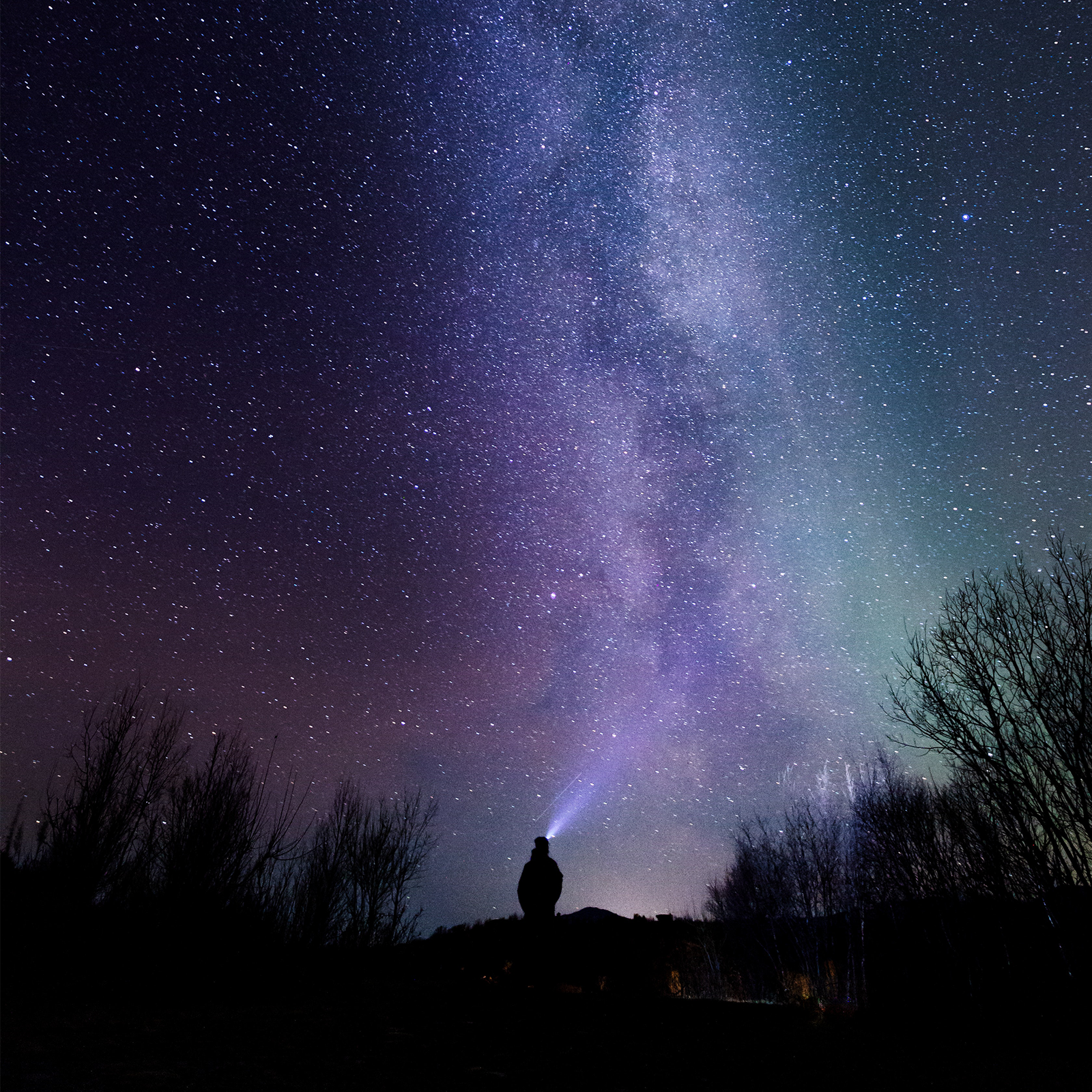
Read the text and do the exercises below.
The mystery of the size of the universe.While looking at the mysterious night sky, such as the one in the picture above, have you ever wondered how many billions of stars there are, or what lies beyond what we are able to see from our planet? Most of the celestial bodiescelestial bodies you can observe from Earth are part of our galaxygalaxy called the Milky WayMilky Way. The name related to the fact that it appeared to ancient observers to be a milky band of lightband of light – like a cosmic roadway – stretching across the dark sky.
Our Milky Way spiral galaxyspiral galaxy is just one of the billions of galaxies in the universeuniverse. Within it, there are at least 100 billion stars, and on average, each star has at least one planet orbitingorbiting it. This means there are potentially thousands of planetary systemsplanetary systems like our solar systemsolar system within the galaxy! Our Sun is one of at least 100 billion stars in the Milky Way, which measures about 100,000 light years across.
And where are we in the Milky Way? Our Sun lies near a small, partial armpartial arm called the Orion Arm, or Orion Spur, located between the SagittariusSagittarius and PerseusPerseus arms. The stars of our galaxy are arranged in a pinwheel patternpinwheel pattern, with four major arms. We live in one of them, about two‑thirds of the way outwardoutward from the centre. Most of the stars in our galaxy are thought to hosthost their own families of planetsfamilies of planets. Thousands of these planets have been discovered so far, with thousands more candidates being detected all the time and awaiting confirmationawaiting confirmation. Many of these newly discovered planetary systems are quite different from our own. All of the stars in the Milky Way orbit a supermassive black holesupermassive black hole at the galaxy's centre. Sagittarius A*, as the black hole was named, is estimated to be four million times as massive as our Sun. Fortunately, it is a safe distance from Earth, at around 28,000 light years away.
Clearly, the universe is a vast expanse of spacevast expanse of space that contains absolutely everything in existence: all of the galaxies, stars, and planets. Scientists calculate that there are at least 100 billion galaxies in the observable universeobservable universe, each one full of stars. On a very large scale, they form a bubbly structurebubbly structure. And from what we know, galaxies are not distributed randomlydistributed randomly throughout the Universe. Instead, they are clustered togetherclustered together in a very particular and intricate way.
All in all, the universe seems to be hiding its secrets well - the exact size of it being the biggest mystery. However, scientists believe that the universe is still expanding outwardexpanding outward. Will we ever be able to uncover all mysteries held by the universe? Considering the size of it, and the unimaginable number of stars and their planets that it contains, it is unlikely that we may ever learn everything about it.
Źródło: Marcin Legeżyński, licencja: CC BY-SA 3.0.
2. The universe is full of celestial bodies akin to our galaxy. TrueFalse
3. There are other planets in the Milky Way. TrueFalse
4. It takes light 100,000 years to travel from one end of our galaxy to the other. TrueFalse
5. The Solar System is located near the Sagittarius A* black hole. TrueFalse
6. Scientists keep finding new planets in the Milky Way. TrueFalse
7. There is a huge black hole in the centre of our galaxy. TrueFalse
8. The Milky Way’s nearest major neighbouring galaxy is called the Local Group. TrueFalse
9. Andromeda consists of about 30 galaxies. TrueFalse
10. Andromeda is the biggest threat to mankind's survival nowadays. TrueFalse
11. There is a certain pattern according to which galaxies are distributed in the universe. TrueFalse
Answers the questions below. Write 3‑4 sentences to each question.
Describe the position of Earth in the universe based on the information in the text.
In the text, two very similar names are used: Sagittarius Arm and Sagittarius A*. Explain what each of them refers to.
Słownik
/əˈweɪtɪŋ kənˌfɜːrˈmeɪʃən/
oczekując potwierdzenia (used to describe a situation when you are waiting to receive a response or affirmation to the requested you have made)
/bænd əv laɪt/
smuga światła
/ ˈbʌbli ˈstrʌktʃə /
bąbelkowa struktura (a structure that resembles bubbles)
/ sɪˈlestɪəl ˈbɒdɪz / / sɪˈlestɪəl ˈbɒdi /
ciała niebieskie [ciało niebieskie] (stars, planets, and other objects present in space)
/ ˈklʌstəd təˈɡeðə / / ˈklʌstə təˈɡeðə /
połączone w grupę [połączyć w grupę] (to gather some objects in a group)
/ dɪˈstrɪbjuːtɪd ˈrændəmli / / dɪˈstrɪbjuːt ˈrændəmli /
ułożone przypadkowo [ułożyć przypadkowo] (to put some objects together without any pattern or rule)
/ ɪkˈspændɪŋ ˈaʊtwəd / / ɪkˈspænd ˈaʊtwəd /
rozszerzający się na zewnątrz [rozszerzać się na zewnątrz] (growing towards the outside)
/ ˈfæmliz əv ˈplænɪts / / ˈfæmli əv ˈplænɪts /
rodziny planet [rodzina planet] (group of planets)
/ ˈɡæləksi /
galaktyka (a system of millions or billions of stars held together by gravitational force)
/həʊst/
być gospodarzem (to have guests)
/ laɪt ˈjiəz / / laɪt ˈjiə /
lata świetlne [rok świetlny] (distance that light travels in one year)
/ ˈmɪlki ˈweɪ /
Droga Mleczna (our galaxy)
/ əbˈzɜːvəbl̩ ˈjuːnɪvɜːs /
część wszechświata, która jest możliwa do obserwowania przez ludzi (the part of the universe that humans can observe)
/ ˈɔːbɪtɪŋ /
orbitujące (revolving in an orbit around)
/ˈaʊtwəd/
zewnętrzny, wypływający (of, on, or from the outside)
/ˈpɑːʃəl ɑːm/
częściowe ramię (not full arm)
/ ˈpɜrsiəs /
Perseusz
/ ˈpɪn wiːl ˈpætn̩ /
struktura wiatraka (structured like a toy consisting of lightweight vanes that revolve at the end of a stick)
/ ˈplænɪtri ˈsɪstəmz / / ˈplænɪtri ˈsɪstəm /
układy planetarne [układ planetarny] (a group of planets orbiting the same star)
/ ˌsædʒɪˈtɛriəs /
Strzelec
/ ˌsəʊlə ˈsɪstəm /
Układ Słoneczny (the Sun and all the planets orbiting it)
/ ˈspaɪərəl ˈɡæləksi /
galaktyka spiralna (a galaxy shaped like a spiral)
/ ˌsuːpəˈmæsɪv blæk həʊl /
superciężka czarna dziura (a celestial object that has a gravitational field so strong that light cannot escape it)
/ ˈjuːnɪvɜːs /
wszechświat (the entire celestial cosmos)
/ vɑːst ɪkˈspæns əv speɪs /
olbrzymia przestrzeń kosmosu (a large part of space)
Źródło: GroMar Sp. z o.o., licencja: CC BY‑SA 3.0