Reunited Kingdom of Poland
to characterise what factors facilitated the reunification of Poland;
to describe achievements of Władysław I the Short;
to characterise why monarchs of Bohemia claimed the Polish crown;
to describe why bringing the Piast lands back together was a difficult process.
The division of the country under the so‑called testamenttestament of Bolesław III the Wry‑Mouthed subsequently led to a great fragmentation of the territory of the former monarchy. However, the conviction in the existence of one common Poland still persisted among the Piast elites through the 12th and the 13th centuries. But the idea of reunification under the Piast reign was very far from materialising. First signs of such desires are related to the 13th century cult of Saint Stanislaus, Bishop of Kraków. It was believed that Poland would one day reintegrate as miraculously had the members of Saint Stanislaus's body. Such attempts were supported by the Roman‑Catholic Church because dioceses were often split under the rule of several different dukes. Nobles were also dissatisfied with the excessive fragmentation of the country. Noble families had very wide connections and held residences and estates in various duchies. Part of burghers supported reunification for economic reasons; they found it cumbersome to deal with the existing tax system and numerous trade charges (separate customs houses and the individual right of the stapleright of the staple in each principality). As a result, the pursuit of undisturbed growth by Polish elites and dukes in the mid‑13th century led to the common goal: the reunification of Poland. Dukes of Silesia, Henry I the Bearded and his son Henry II the Pious, were the first to attempt to consolidate the Piast lands. They managed to take over several principalities: Silesia, Lesser Poland and a part of Greater Poland, but they never used the title of the monarch of Poland. The breakthrough came with the attempts of Henry IV Probus, Duke of Wrocław. Having taken Kraków in 1290, he started official negotiations for the Pope's permission to be crowned as king, but his death in the same year ruined those plans. They were resumed by Przemysł II, Duke of Greater Poland and Pomerania. The intervention of Jakub Świnka, Archbishop of Gniezno, with the Pope in 1295 enabled the duke's official coronation as King of Poland. It was an unprecedented and momentous event as more than 200 years had passed since the previous coronation. Unfortunately, Przemysł's resuscitated Kingdom of Poland was limited to just two provincesprovinces: Pomerania and Greater Poland and survived just a year; early in 1296, the king was murdered.
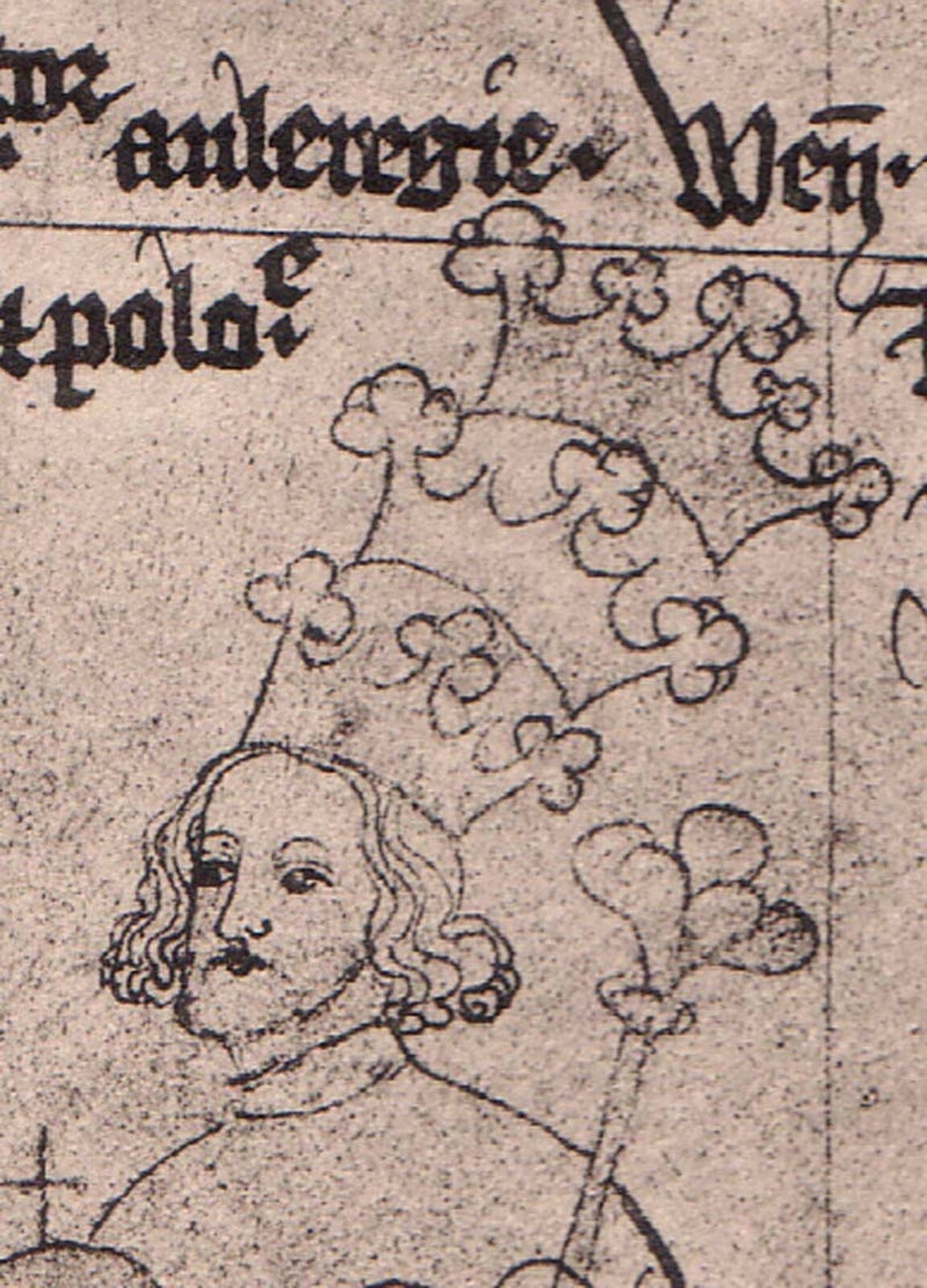
The contenders for the legacy of Przemysł II were the Piast dukes Władysław the Short and Henry III of Głogów and the King of Bohemia Wenceslaus II. Eventually, the latter succeeded and was crowned as King of Poland in 1300. But his rule faced resistance from the Piasts. They thought it unacceptable that the crown of Poland should have rested on the head of a member of a foreign dynasty. Despite the opposition, Wenceslaus II continued to hold the title until his death in 1305 and it was taken over by his son Wenceslaus III for just a year. His death put Władysław the Short, Duke of Kujawy, in a good position to seize power. In a couple of years, he brought the majority of the Piast principalities under his rule, including Lesser Poland with Kraków, where he had to tackle the rebellionrebellion of the nobles and burghers led by Mayor Albert. Once he managed to relatively deal with the domestic situation and safeguard the borders, the ruler resumed his plans to reclaim the king's crown. He leveraged the international developments to be crowned as King of Poland in 1320 in Kraków. His coronation was not recognised by the Dukes of Silesia and Mazovia or by the monarch of Bohemia, John of Luxembourg, who himself claimed rights to the title. Nonetheless, upon Władysław's death in 1333, the crown remained in the hands of the Piast dynasty, and his son Casimir, called the Great, became King of Poland. The coronation of Władysław I the Short and his son's accession to the throne ended the almost 200‑year period of feudal fragmentation of Poland.
Look at the maps below and compare two monarchies on the Polish lands: that of Wenceslaus II and that of Władysław I the Short.
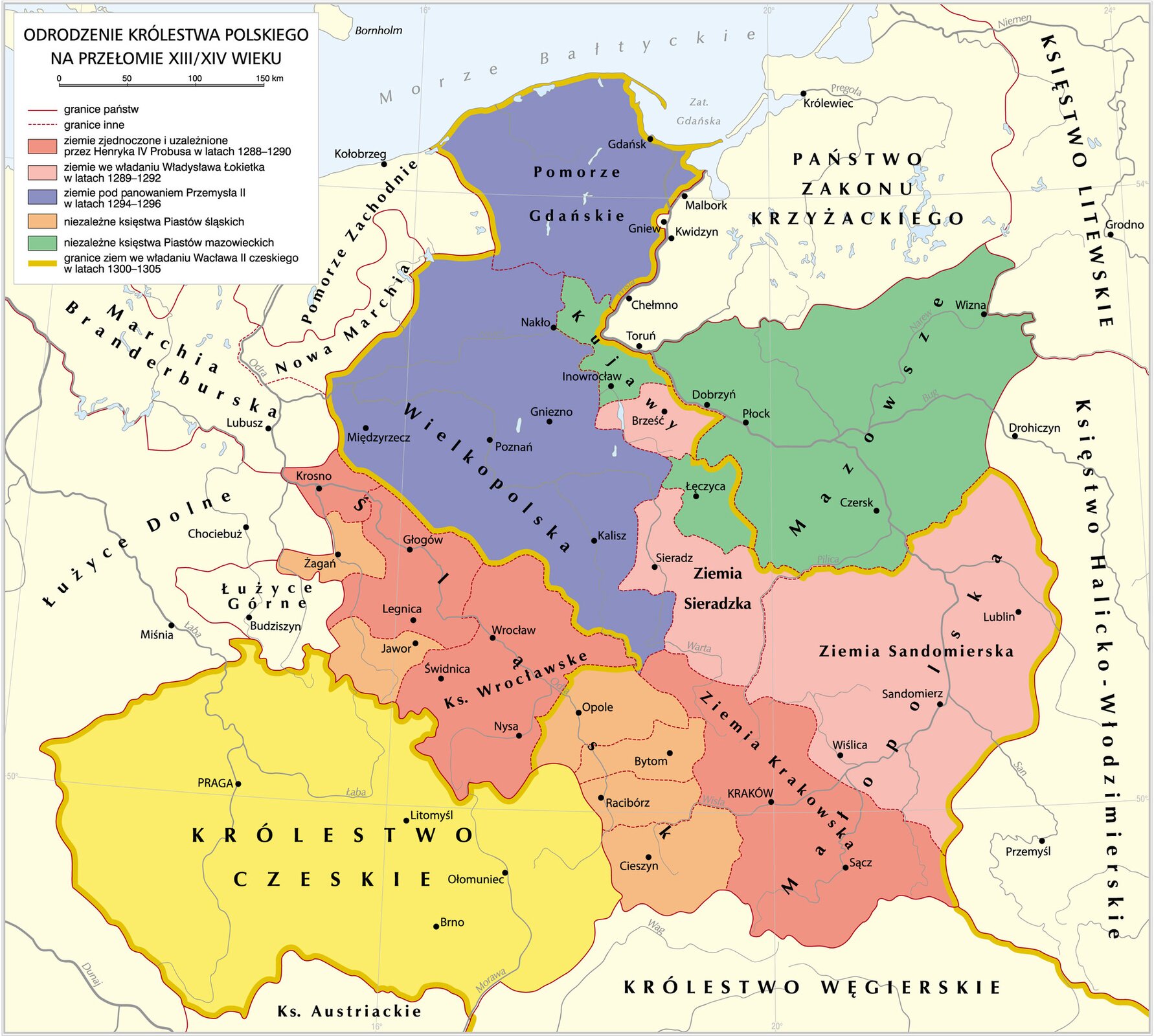
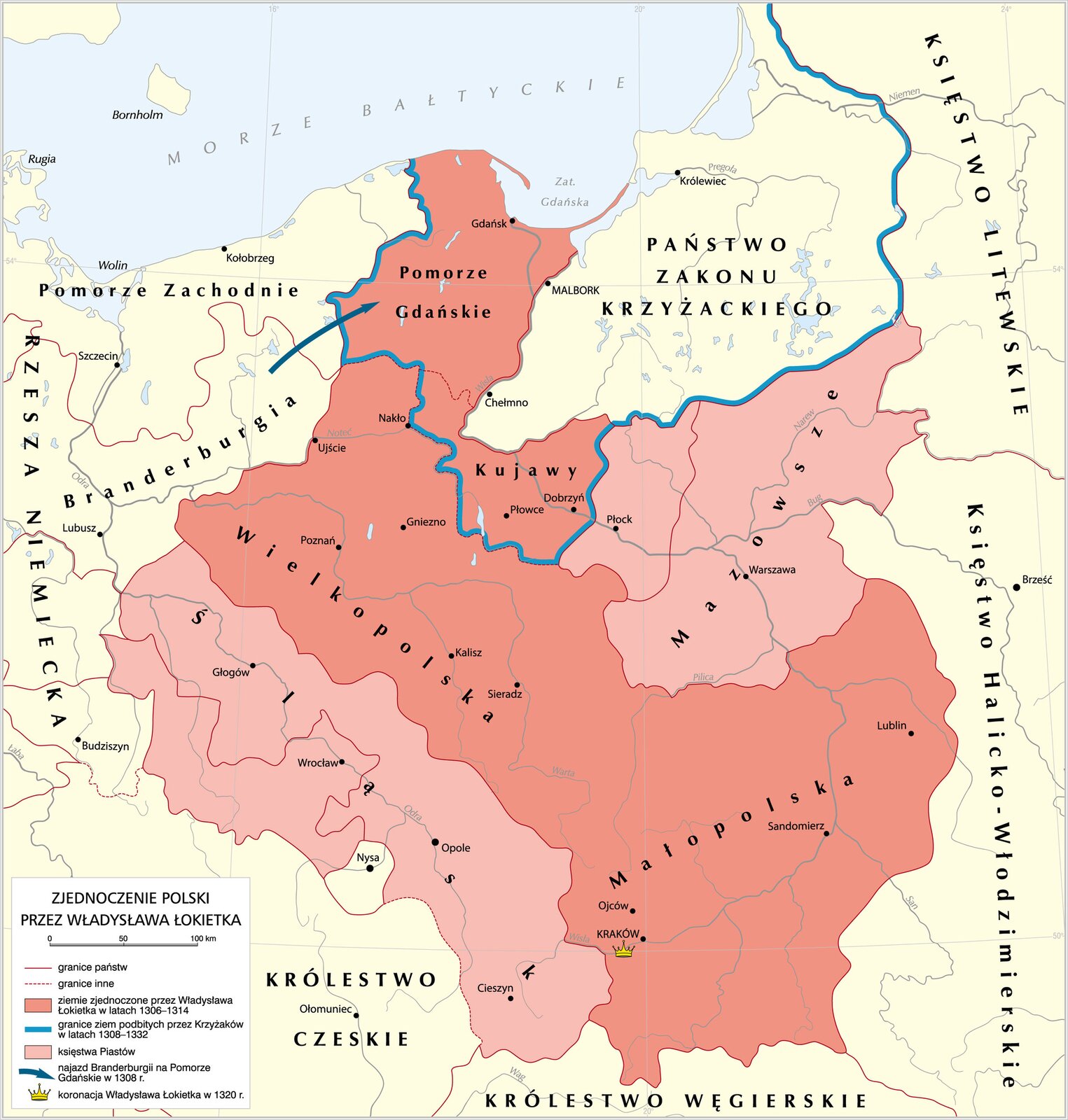
Which land belonging to the state of Wenceslas II was not in possession of Władysław I the Elbow-high in 1320. Choose from the given list.
- Kuyavia
- Gdańsk Pomerania
- Sandomierz province
- Opole, Racibórz and Cieszyn Silesia
- Sieradz land
Read the facts about Władysław I the Short and Casimir III the Great.
Match the date with the event.
1226, 1241, 1305, 1320, Last will and testament of Bolesław III the Wry-Mouthed, Grant of the location priviledge to Kraków, Coronation of Przemysł II as King of Poland, Rebellion by the burghers of Kraków led by Mayor Albert, Death of Władysław I the Short; coronation of Casimir III the Great
| Date | Event |
|---|---|
| Last will and testament of Bolesław III the Wry-Mouthed | |
| 1226 | |
| 1241 | |
| Grant of the location priviledge to Kraków | |
| Coronation of Przemysł II as King of Poland | |
| 1305 | |
| Rebellion by the burghers of Kraków led by Mayor Albert | |
| 1320 | |
| Death of Władysław I the Short; coronation of Casimir III the Great |
Keywords
coronation, centralisationcentralisation, testament
Glossary
Testament – dokument, akt prawny, w którym spadkobierca rozporządza swoim majątkiem na wypadek swojej śmierci.
Dzielnica – część Polski we władaniu księcia, która powstała po podziale kraju dokonanym przez Bolesława Krzywoustego.
Prawo składu – przywilej handlowy nadawany miastu przez monarchów, na mocy którego nie można było przewozić towarów bez wystawienia ich na sprzedaż miejscowym kupcom.
Bunt – zbrojne wystąpienie przeciwko legalnej władzy.
Pokój wieczysty – trwała zgoda, porozumienie między stronami (zazwyczaj państwami), które pozostają ze sobą w konflikcie zbrojnym.
Centralizacja – proces koncentrowania władzy i budowania jej poprzez podporządkowywanie jej organom naczelnym, np. władcy.
Bakałarz – niższy stopień naukowy. Najwcześniej był przyznawany na wydziale teologicznym.
Krzyżacy – zakon rycerski, sprowadzony na Mazowsze przez Konrada Mazowieckiego w 1226 r., jego pełna nazwa brzmi: Zakon Szpitala Najświętszej Marii Panny Domu Niemieckiego w Jerozolimie.
Sukcesja – zasada przekazywania, dziedziczenia władzy monarszej następcy w przypadku śmierci, abdykacji lub innych okolicznościach.