Rome – a city which became an empire – Revision
to describe the key information about Ancient Rome;
to explain how it happened that the small city‑state of Rome became an empire;
to define where we get information about the history of Rome;
to recognize the most important figures and dates in the history of Ancient Rome.
The ancient Romans believed that their ancestors had come from Troy and they could trace their lineage to the mythical Aeneas. Legend has it that, in 753 BC, Romulus, his descendant who had been miraculously saved by a she‑wolf, founded the city of Rome on one of the hills (according to the tradition, it was the Palatine Hill, but the city grew across seven knolls). During the first period of its existence, Rome was a monarchy ruled by kings. In 509 BC, the monarchy was overthrown and the government was entrusted to free citizens – that was the way the RepublicRepublic came into existence. Since that time, the highest power had been exercised by a council of elders – the SenateSenate and numerous officials.
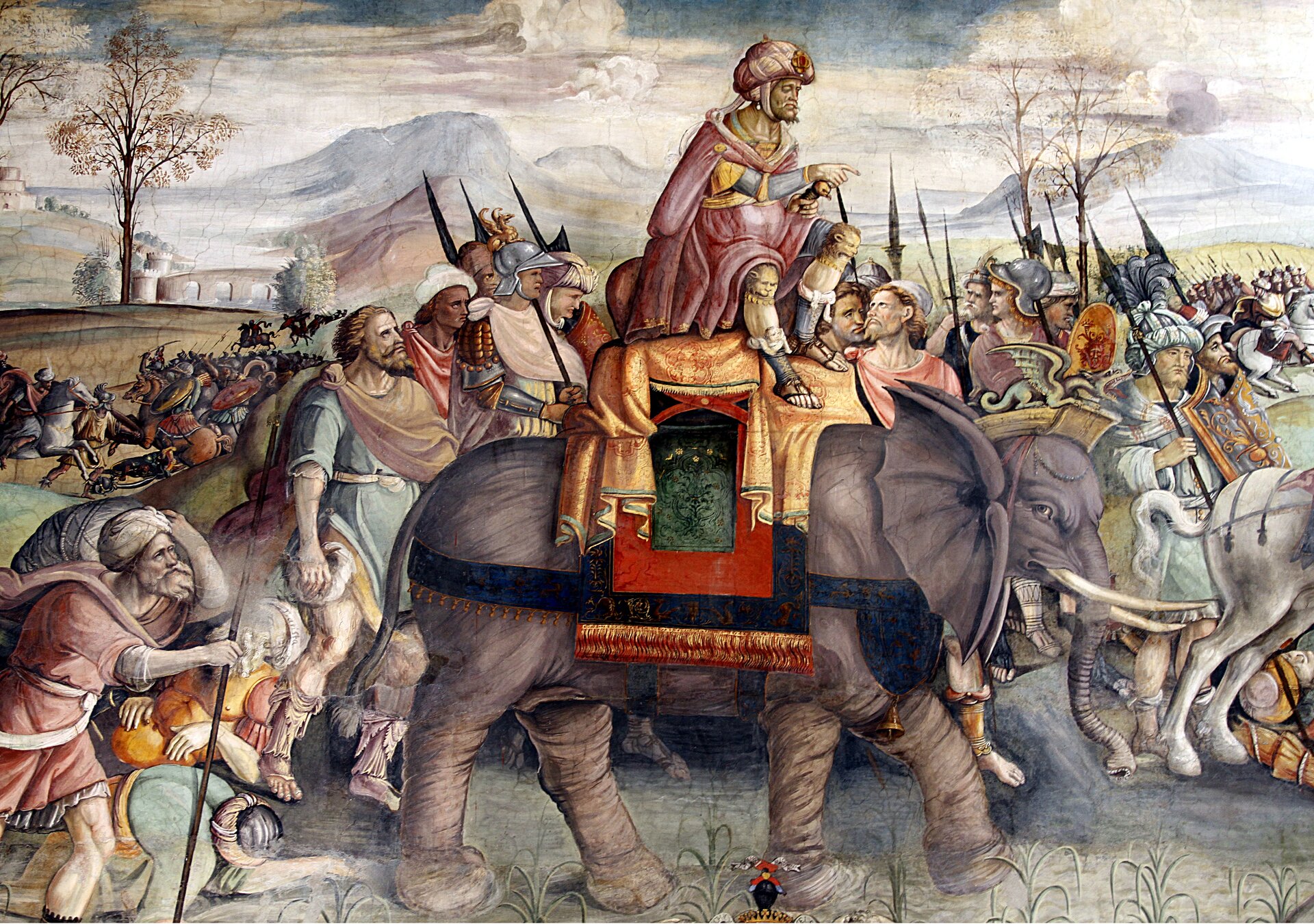
As a republicrepublic, Rome was a small city‑state and there was no indication that it would become one of the most powerful empires in the history of the world. Its biggest advantage was an efficient and well‑organised army. By pursuing a policy of conquest until the 3rd century BC, the Romans subdued the entire Italy and then started expansion in the basin of the Mediterranean. The turning point was the victory over Carthage in the three consecutive Punic Wars waged in the 3rd and 2nd centuries BC. The next stage was the conquest of the Greek world (2nd century BC) and Egypt (1st century BC). In the conquered territories which were situated outside Italy, Romans created provincesprovinces, headed by governors appointed by the SenateSenate. The conquests resulted in the creation of the Roman Empire, which absorbed riches and slaves. A change of the order that had prevailed for centuries, a recession caused by an inflow of cheap grain to Rome and the discontent of the poor led to disorganisation of the army and a crisis which engulfed the RepublicRepublic. An attempt at saving it was the reform of the army, implemented by Marius, which introduced a regular army. It lead to the rebuilding of the military power, but, at the same time, contributed to a greater role of the military leaders and stirred their political ambition, an example of which was the staggering career of Julius Caesar, the winner of the campaign in Gaul. After defeating his rivals, he assumed the powers of a dictatordictator for life and strived openly to gather full power in his hands, while realising that the republicanrepublican system did not suit the reality of an empire. The Roman aristocrats, who were afraid of losing their position and influence, conspired against Caesar, which led to his murder in 44 BC. However, the conspirators did not foresee one thing: the popularity of the leader and the fact that his numerous supporters did not intend to surrender without a fight. Gaius Octavius (Octavian), a grandson of Julius Caesar’s sister, adopted by Julius Caesar and appointed as his successor, emerged as the winner of the war which continued until 30 BC. He was given absolute power over the entire empire, as confirmation of which the SenateSenate gave him the title of Augustus – full of divine power, in 27 BC. Octavian called himself the first among the officials (princeps) and fulfilled his tasks in accordance with the republicanrepublican tradition. From that moment, the RepublicRepublic ceased to exist and Rome became an empireempire. Derived from the new title of the emperor, the political regime, which prevailed in Rome until the end of the 3rd century, is called the PrincipatePrincipate.
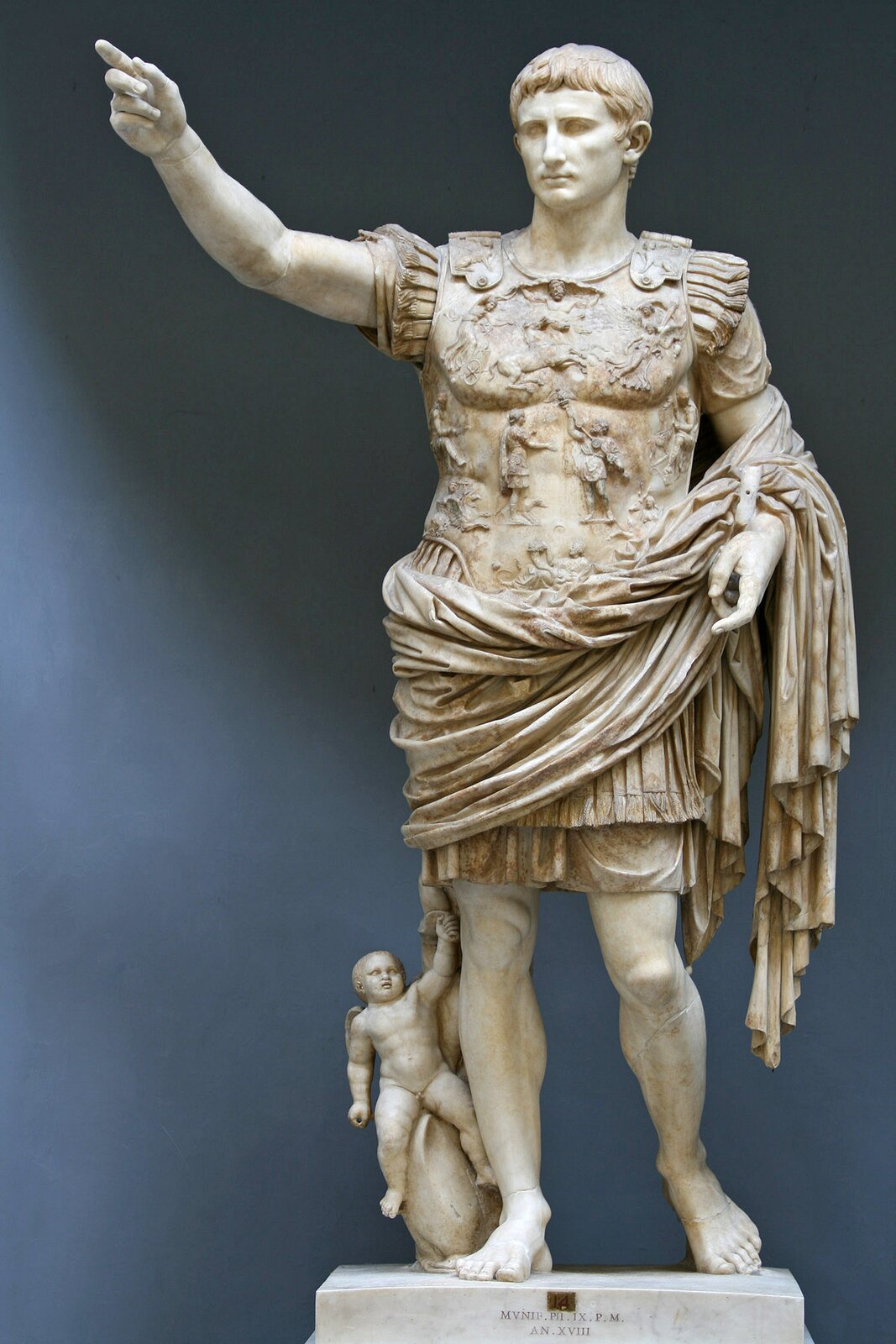
The reign of Octavian Augustus marked the beginning of a period of peace and prosperity for the EmpireEmpire, known as Pax RomanaPax Romana. Until the beginning of the 3rd century AD, Augustus’ successors sustained the idea of Pax Romana by focusing on the development of the conquered provincesprovinces and expansion of Roman influence. It was difficult, however, to maintain control and peace over such a huge territory. To ensure security at the borders, the Romans started to construct a system of border fortifications called limeslimes. The barbarian invasions which had intensified since the 3rd century AD, an internal struggle for power and an economic crisis were leading to the collapse of the Empire. To remedy the situation, at the end of the 3rd and the beginning of the 4th century AD, the emperor Diocletian conducted necessary reforms and introduced a new form of government – the Tetrarchy based on the reign of four emperors. He succeeded in heading off the crisis and preventing the downfall of the EmpireEmpire.
It did not, however, saved it from falling apart. After the death of Theodosius the Great in 395 AD, the EmpireEmpire was permanently divided into the Western Roman Empire with its capital in Ravenna and the Eastern Roman Empire with its capital in Constantinople. It was not the only problem of the falling empire. The Migration PeriodMigration Period, which started in the 4th century AD, became a threat the Romans could not deal with. The Germanic tribes and the Huns who came from Asia entered the territory of the EmpireEmpire, wreaking havoc and displacing its inhabitants. While it was true that the Romans succeeded in 451 AD, defeating the invading army in the Battle of the Catalaunian Plains, the collapse of the Western Roman EmpireEmpire was only a matter of time. The sack of Rome by Vandals four years later (455 AD) and the seizing of real power by consecutive Germanic military commanders finally led to the deposition of Romulus Augustulus in 476 AD. The event, which is thought to be the date of the ultimate collapse of the Western Roman EmpireEmpire, also became a dividing line between antiquity and the Middle Ages.
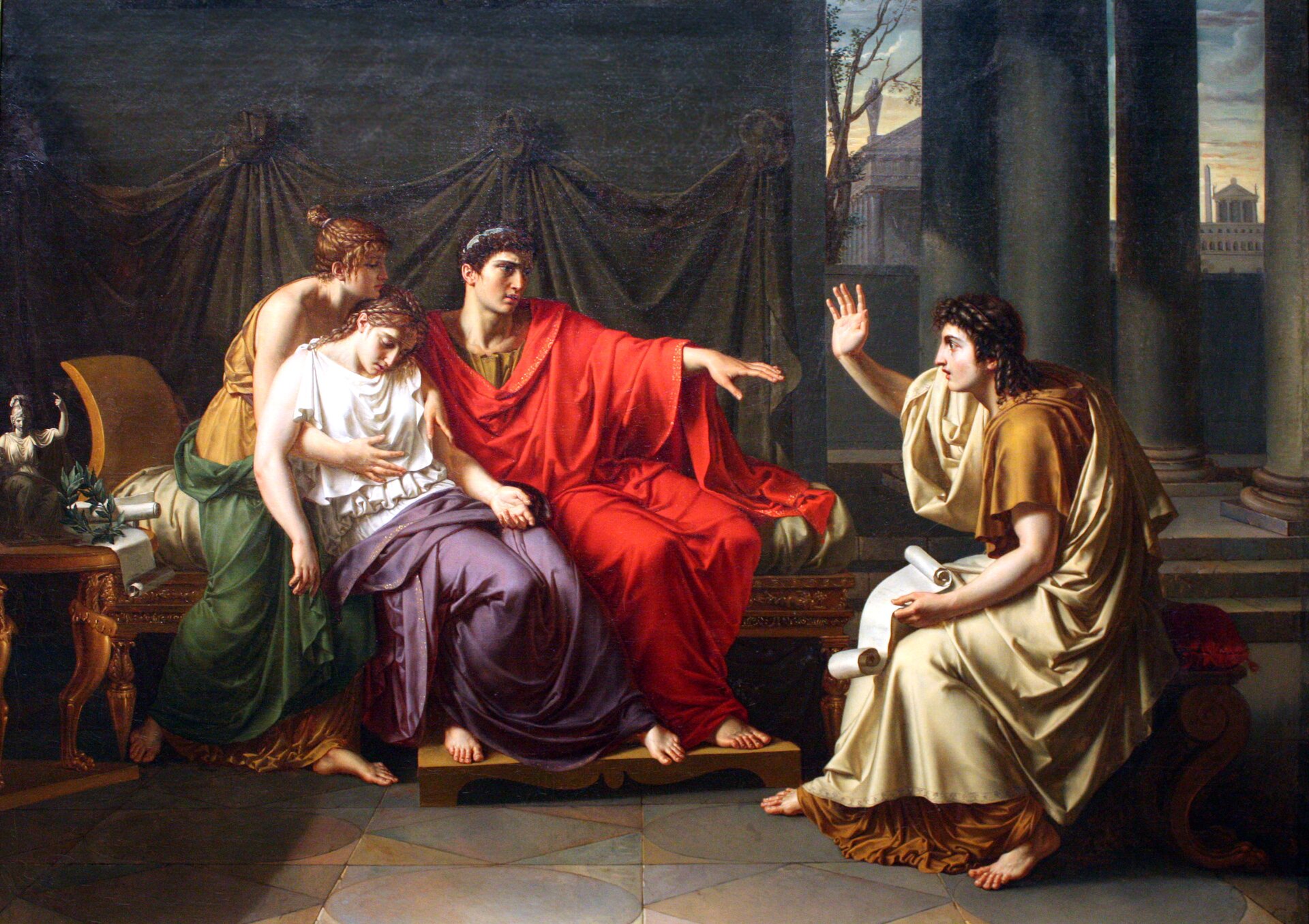
Roman culture and its achievements did not disappear with the collapse of the Western Roman EmpireEmpire. Its legacy is present nowadays in the form of the Roman alphabet, calendar, philosophy, law or structures which can be found virtually around and outside Europe. The most eminent Roman poets include Virgil, the author of the national Roman epic – Aeneid, Horace and Ovid. They drew heavily, as actually the entire Roman culture did, on the achievements of the ancient Greeks, contributing to the preservation of HellenicHellenic patterns and achievements.
However, the Romans were not mere imitators. They made ground‑breaking discoveries and came up with ingenious inventions which revolutionised the world at that time in many fields. Thanks to the popularisation and improvement of concrete and the dome vault, Roman structures not only still exist today but constituted an unattainable ideal for centuries. The Romans were also unrivalled in the field of law. Numerous statutes and legal principles still apply nowadays, being a living reminder of the times long gone by.
List examples of the achievements of the ancient Romans, which you use every day.
Arrange the events of the history of Ancient Rome in chronological order.
- The city of Rome is founded.
- The conquest of Macedonia.
- The Empire is divided into the Easter Roman Empire and the Western Roman Empire.
- The Migration Period.
- The Etruscans conquer Latium.
- Octavian Augustus seizes power.
Keywords
Empire, Rome, Republic, conquest
Glossary
Republika – dosłownie rzecz publiczna, ustrój polityczny, w którym władza sprawowana jest przez obywateli poprzez wybory. W starożytnym Rzymie było to niemonarchiczne sprawowanie władzy przez posiadających prawa polityczne obywateli.
Senat – najważniejsza i najtrwalsza instytucja polityczna w starożytnym Rzymie ustanowiona zgodnie z legendą przez Romulusa. Był obdarzony znacznym autorytetem, pełnił funkcję doradczą i opiniował projekty ustaw.
Dyktator – w republice rzymskiej urząd, który skupiał pełnię władzy. Był powoływany na 6 miesięcy w okresach największego zagrożenia państwa. Nie można było odwołać się od jego decyzji.
Prowincja – jednostka administracyjna w starożytnym Rzymie utworzona na podbitym terenie, poza Italią. Zarządzana była przez namiestników.
Limes – umocnienia i fortyfikacje na granicach cesarstwa rzymskiego.
Cesarstwo – forma ustroju państwa – monarchii – w której panujący obdarzony jest tytułem cezara. Cesarstwo rzymskie zostało zapoczątkowane przez Oktawiana Augusta.
Pax Romana – określenie czasów od panowania Oktawiana Augusta w 27 r. p.n.e. do śmierci Aleksandra Sewera w 235 r. n.e. Opisywał okres pokoju wewnątrz i na zewnątrz imperium rzymskiego.
Pryncypat – forma rządów w Cesarstwie Rzymskim wprowadzona przez Oktawiana Augusta, polegająca na koncentracji władzy w rękach jednej osoby przy zachowaniu pozorów ustroju republiki.
Tetrarchia – dosłownie rządy czterech, wprowadzony przez cesarza Dioklecjana system rządów polegający na równoczesnym panowaniu czterech władców – dwóch wyższej rangi – augustów oraz dwóch niższej – cezarów.
Wielka wędrówka ludów – okres migracji plemion barbarzyńskich, w szczególności Hunów i Germanów, na terytorium Cesarstwa Rzymskiego i sąsiednie, u schyłku starożytności i w początkach średniowiecza (IV‑VI wiek). Proces ten radykalnie odmienił obraz kontynentu europejskiego – doprowadził do zmian etnicznych na dużych obszarach, wyznaczył koniec starożytności i pociągnął za sobą upadek cesarstwa.
Hellenizacja – uleganie wpływom kultury i języka greckiego.