Savannas
what conditions favour the development of equatorial forests;
what solar illumination zones we distinguish on the Earth.
to describe the climatic conditions of savannas;
to describe characteristic features of seasons in savannas;
Environmental conditions in savannas
Savannas can be found in the tropical zone. Every day, the sun rises very high there. As a result, it is very hot there all year round. The rains fall for several months, in the period when the Sun reaches its highest point at noon. This period is called the rainy seasonrainy season. Having a plentiful supply of water, plants flourish, bloom and produce fruit then. The second season is the dry seasondry season. It is still hot, but there is no water, so the growth of some vegetation is halted until the next rainy season. The amount of water in deep layers of the soil and in rocks underneath is sufficient for very few trees and shrubs. Most of them shed leaves in the dry season, so as not to lose water through evaporation, while herbaceous plants dry out. Only in river valleys, there are narrow strips of evergreen trees, called gallery forests.
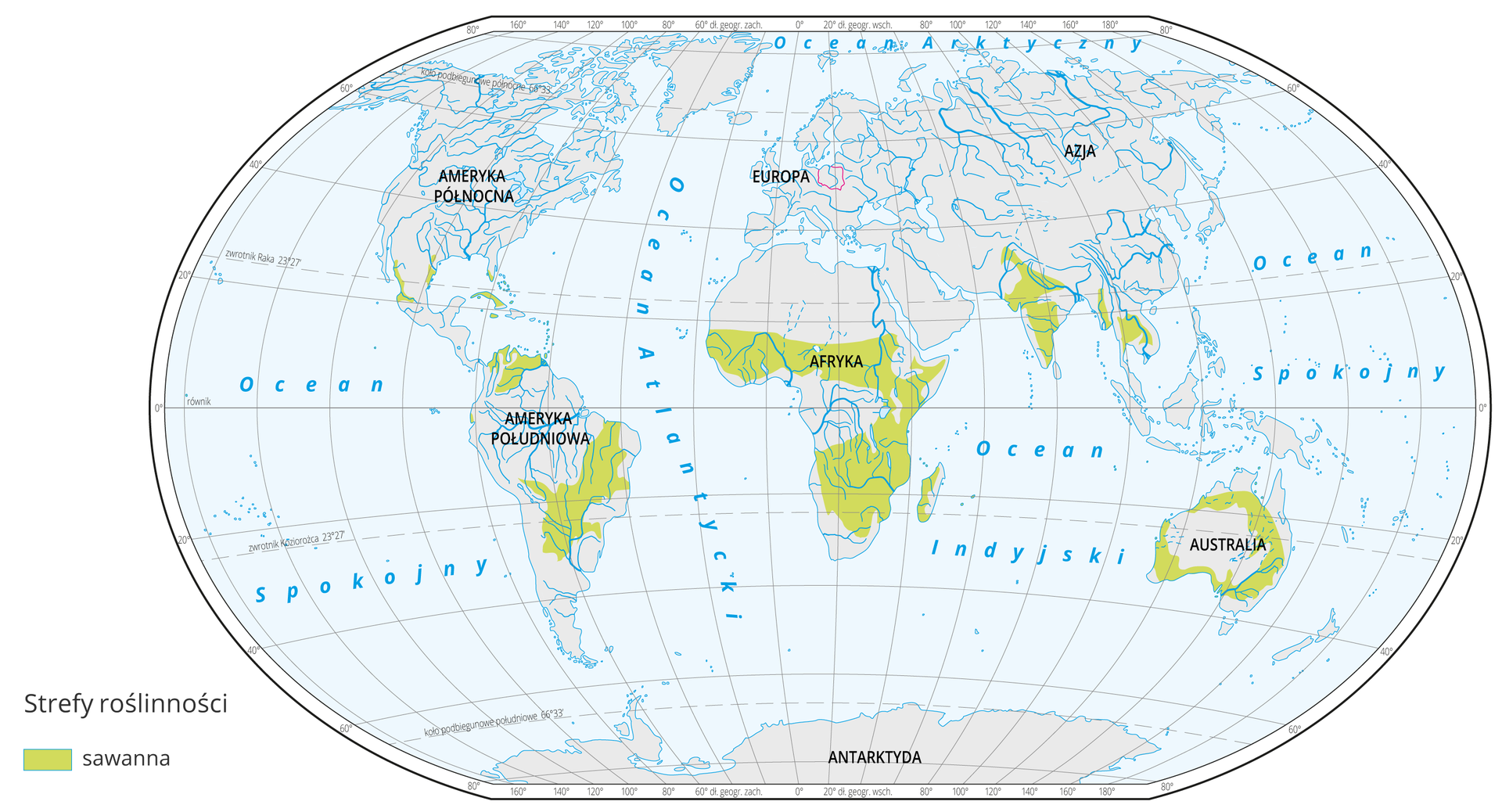
In Africa, savannas can be found to the north and south of the equatorial forests. Grassy areas occupy similar locations in South America, too - to the north and south of the Amazon rainforest – in the Brazilian Highlands, the Gran Chaco lowland and the Orinoko Lowland. Similar vegetation can also be encountered in North America in the border area between Mexico and the southernmost parts of the USA, in central India, in eastern parts of Madagascar and in north‑eastern Australia.
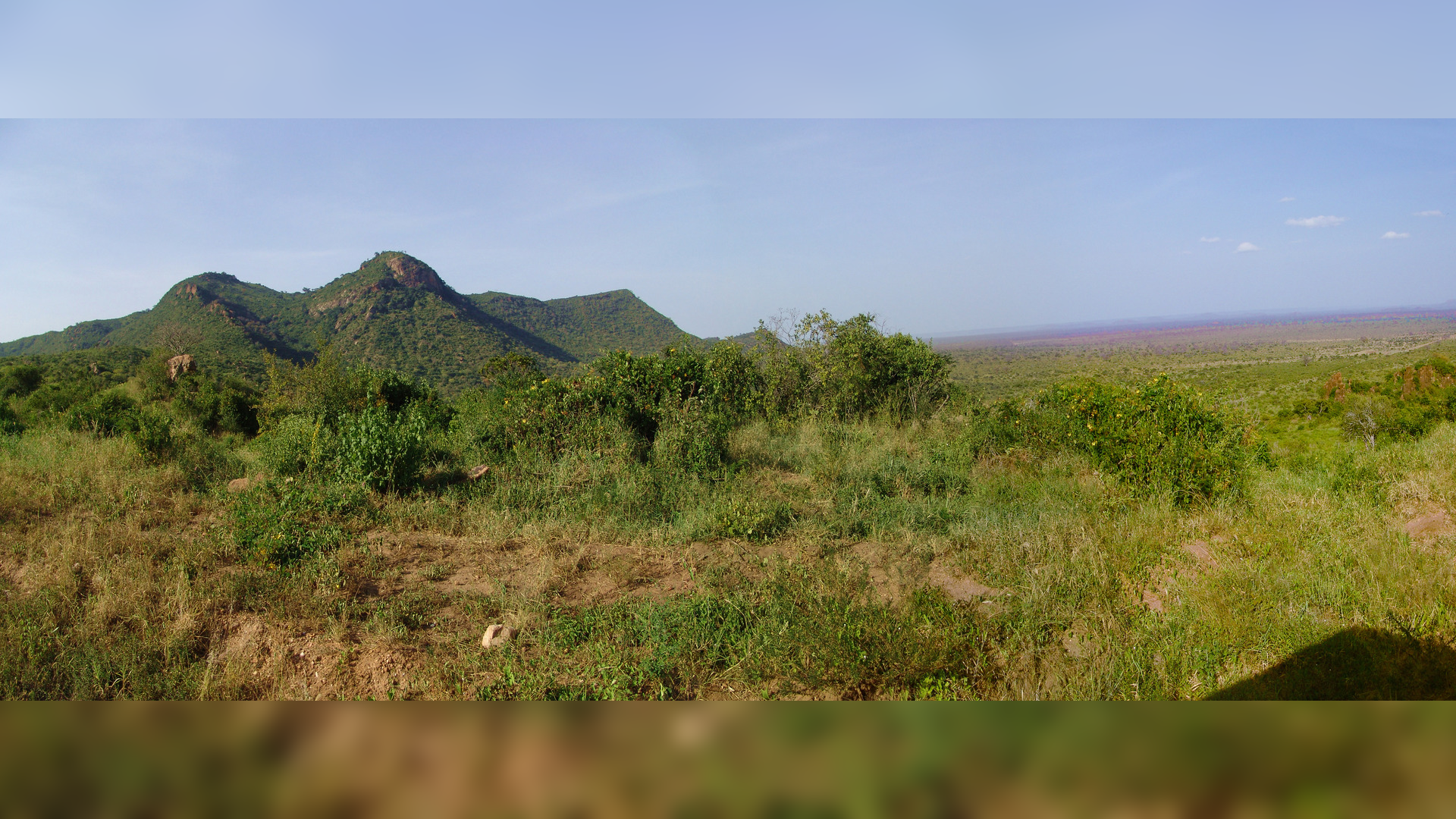
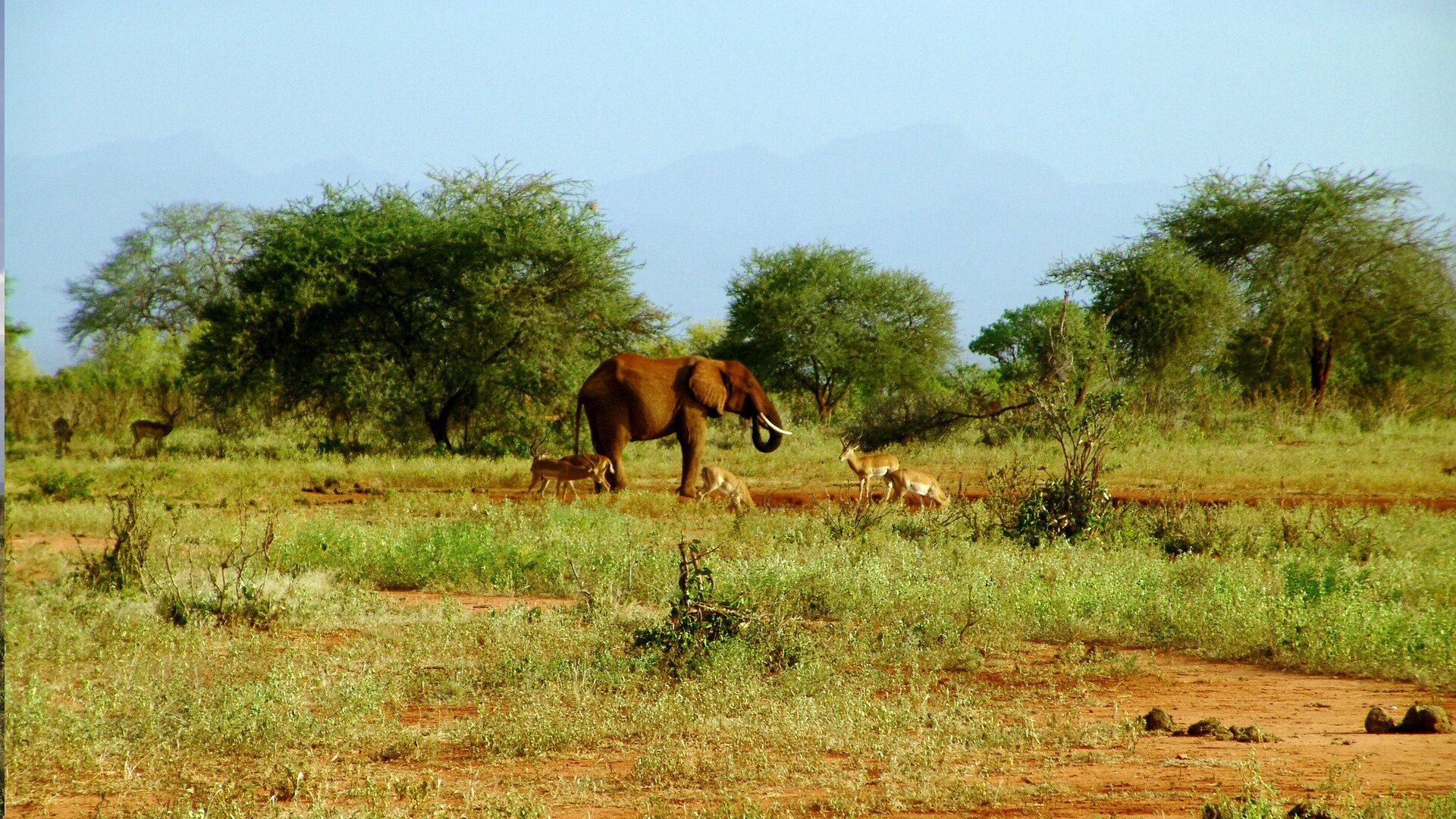
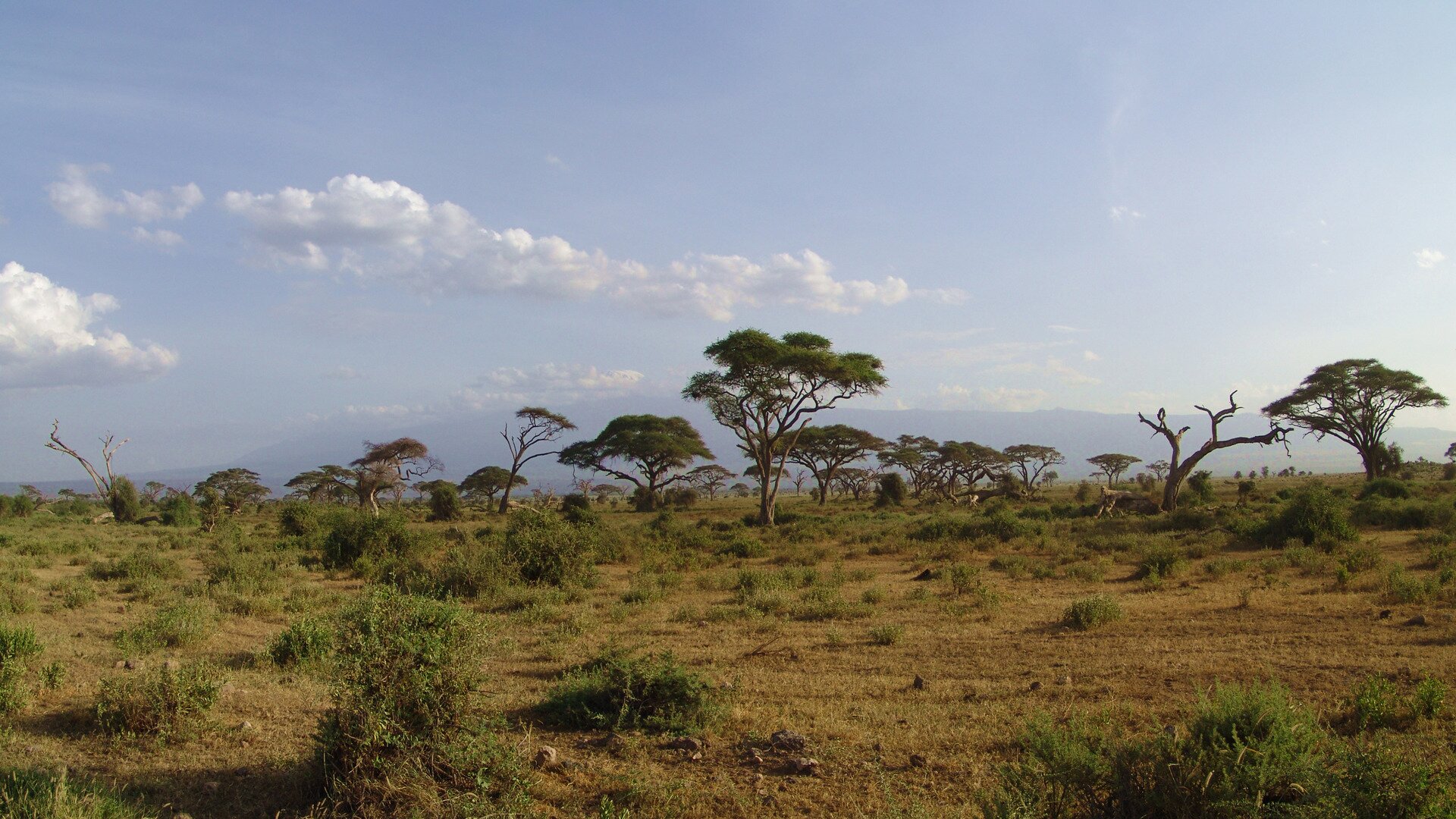
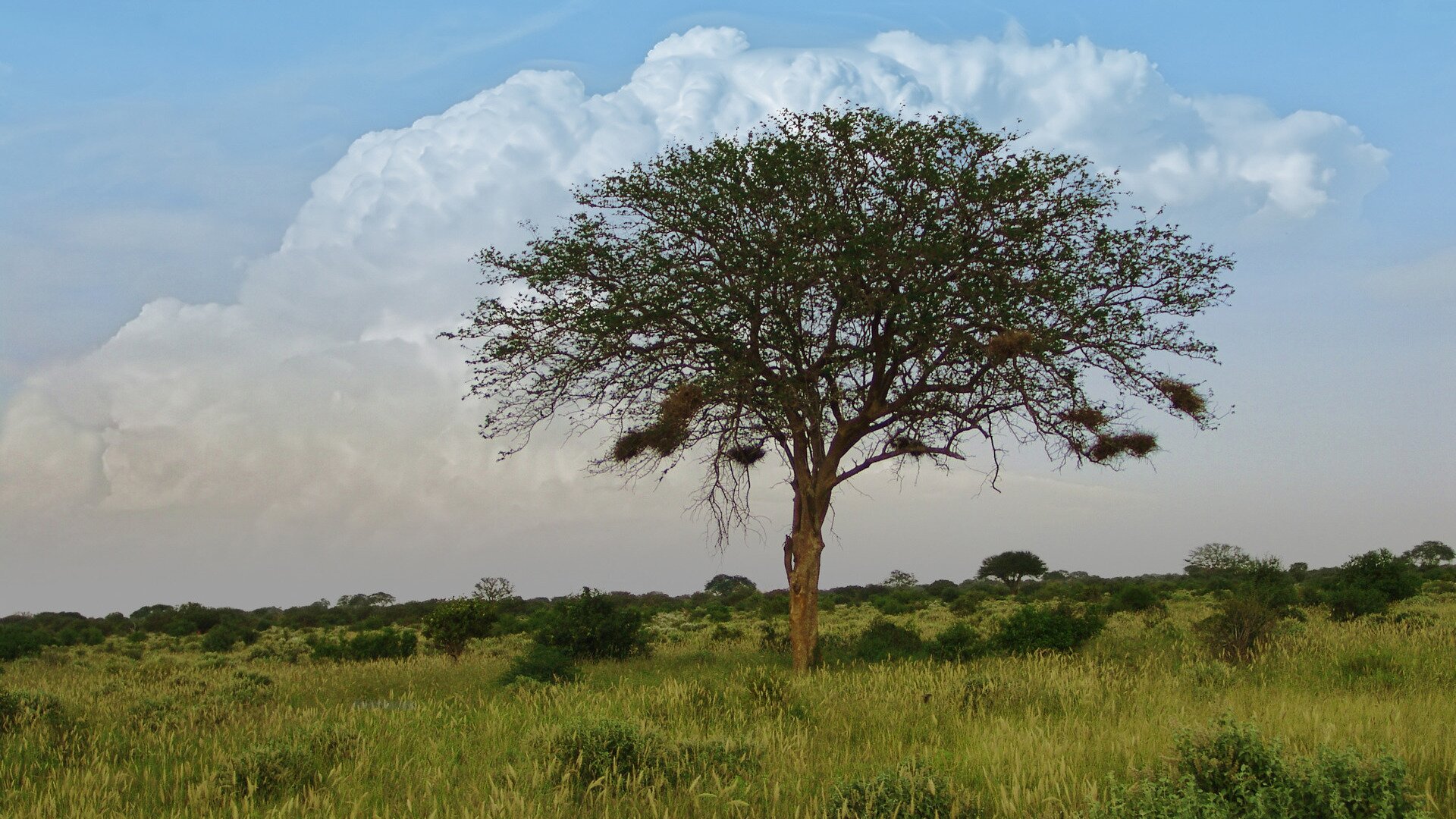
Savannas owe their distinctive appearance to regular wildfires. During the dry season, wildfires break out easily. Only plant species with extensive root systems (like grasses) or thick bark (like acacias or baobabs) survive. Young trees, which could transform a savanna into, for example, a forest, are burnt down.
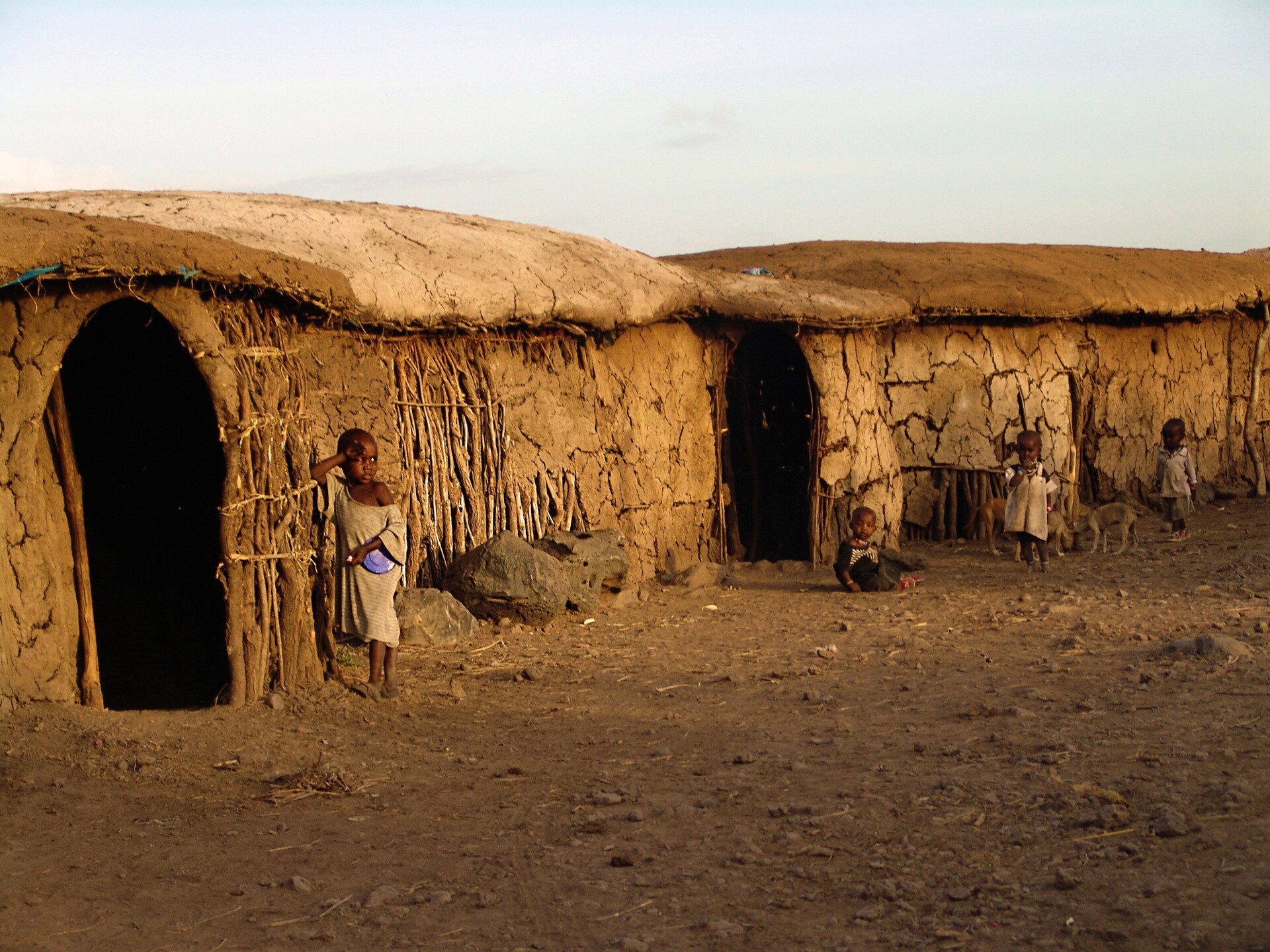
Today, savannas are inhabited, but economic activity is limited to animal husbandry and farming. Tourism is becoming increasingly significant for the economy there. In the past, hunting trips to Africa were organized too – safarisafari. Rich people hunted wild animals so that they could bring home trophies to boast with. Palaces were adorned with specially preserved heads of animals and antlers. Ivory was used to produce ornaments and medicines. As a result, the number of wild animals has decreased dramatically. Fortunately, this decline has been stopped in recent years. Nowadays, “bloodless hunting expeditions” are organized for tourists – safaris during which animals can be observed and photographed in their natural environment in parks and nature reserves. The jobs of guards and tourist guides in a national park constitute a significant source of income for local communities.
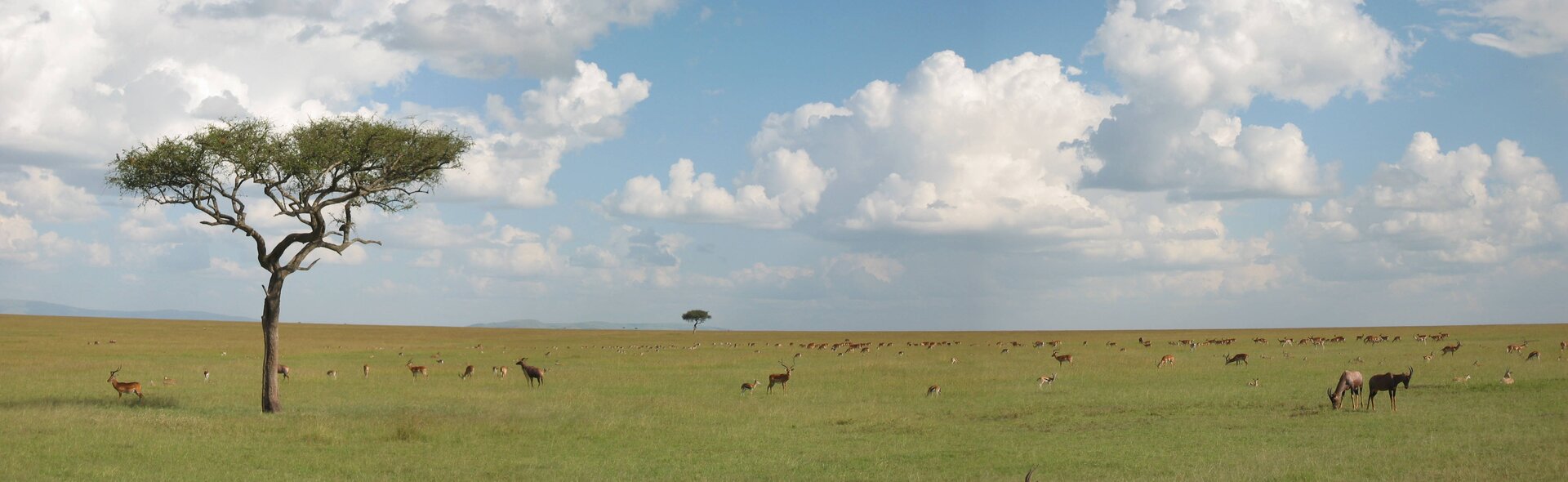
Look carefully at the photograph below, then do the task.
there are not many trees, dry season, herds of animals are grazing, rainy season
The photograph presents the ........................................................, because .........................................................
Summary
Changes in the height of the Sun’s path through the sky during the year have an effect on the amount of rainfall in savannas.
There are two hot seasons in savannas: the dry season and the rainy season.
Not many trees grow in savannas because of insufficient water resources.
Keywords
savanna, grass, rainy season, dry season
Match the pairs: English words with Polish definition.
podczas trwającej nawet przez 5 miesięcy pory suchej drzewa i krzewy tracą liście, a nadziemne części traw usychają, niegdyś wyprawa myśliwska, obecnie rodzaj turystyki mający formę zorganizowanej wycieczki mającej na celu obserwację i fotografowanie dzikiej przyrody, przynosi obfite opady, które powodują rozkwit życia na sawannie
| safari | |
| rainy season | |
| dry season |
Glossary
safari – niegdyś wyprawa myśliwska, obecnie rodzaj turystyki mający formę zorganizowanej wycieczki mającej na celu obserwację i fotografowanie dzikiej przyrody
pora deszczowa – przynosi obfite opady, które powodują rozkwit życia na sawannie
pora sucha – podczas trwającej nawet przez 5 miesięcy pory suchej drzewa i krzewy tracą liście, a nadziemne części traw usychają