Simple and complex substances
that an atom is the simplest element that builds matter;
that everything that surrounds us is built of atoms;
that atoms can combine to form molecules.
explain how a simple substance differs from a complex one;
give examples of simple and complex substances;
indicate simple substances (eg graphite) and complex substances (eg sugar, water) in the environment;
build models of some of the particles
Nagranie dostępne na portalu epodreczniki.pl
Nagranie dźwiękowe abstraktu dotyczące substancji prostych i złożonych
Simple substances
We already know that everything around us is made of atoms: trees, rocks, and even our bodies. If the substance consists of atoms of one kind, we say that it is an element or simple substancesimple substance.
A substance made up of atoms of one element can not be broken down into simpler substances that retain the properties of this element.
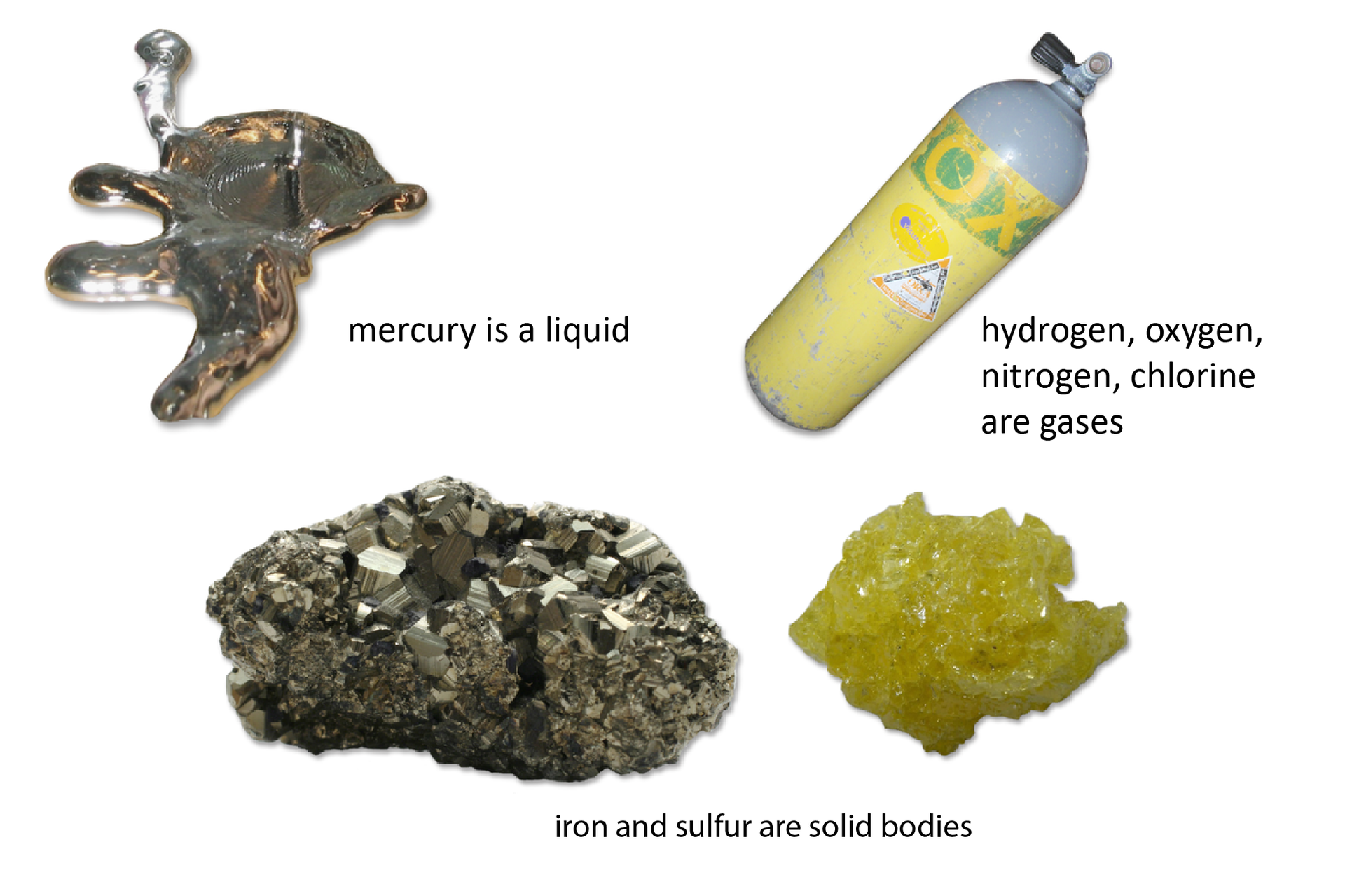
We know only 94 elements existing in nature. In addition, a certain amount of elements can only be obtained in laboratories. At room temperature, only two elements are liquids (bromine and mercury), eleven are gases (eg hydrogen, oxygen, nitrogen, chlorine, helium) and the remaining – solids (eg iron, carbon, sulfur, magnesium, calcium).
Complex substances
Most substances in nature are made up of atoms of elements joined in groups called molecules. If a molecules consist of atoms of at least two different elements, they form a complex substancecomplex substance.We now know thousands of such substances, and scientists are still creating and discovering new ones. Well known examples are; water, kitchen salt, sugar and vinegar.
The particles are too small to be seen with the naked eye, but we can show their construction using models. For example, the model of the water molecule shows us that it consists of two atoms of hydrogen and one atom of oxygen.
Before you watch the animation „How to build models of particles”, write down the research question and the hypothesis. Make notes while watching the movie, and finally add conclusions.
Film dostępny na portalu epodreczniki.pl
Animacja. Sześć klocków czerwony, czarny, biały, szary, zielony i żółty. Biały to najmniejszy jednorzędowy klocek. Pozostałe są czterorzędowe. Najpierw łączy się czerwony klocek z dwoma białymi symetrycznie umieszczone na brzegach czerwonego klocka - powstaje cząsteczka wody (H2O). Następnie dwa czerwone klocki z jednym czarnym (czerwone tworzą podstawę, na nich symetrycznie umieszczony czarny klocek) - cząsteczka dwutlenku węgla (CO2). Kolejno: żółty klocek plus zielony - soda i chlor. Klocki zachodzą na siebie - żółty na dole, zielony u góry. Tworzą cząsteczkę soli - NaCl. Klocek czerwony, czarny i szary - tlen, węgiel i wapń. Dwa czerwone klocki tworzą podstawę, na nich szary i czarny, na górze jeden czerwony. To cząsteczka kredy (CaCO3).
Properties of a substance
We can determine the properties of substances by performing tests such as heating or cooling the sample. We can also check how some substances behave towards others. For example, let's examine the properties of flour, sugar and citric acid.
Examination of the properties of flour, sugar and citric acid.
sugar
flour,
citric acid,
3 glasses,
3 teaspoons,
water.
Smell each of the substances to get to know its fragrance.
Determine the appearance and color of the substance.
Check if they are soluble in water: half fill three glasses with water and pour a teaspoon of flour into the first one, a teaspoon of sugar in the second, and a teaspoon of citric acid for the third. Mix the contents of each glass, watching what is happens inside the glass.
Each substance has certain properties that distinguish it from others. Knowing them, you can easily recognize this substance.
Periodic table of elements
Elements in addition to names also have chemical symbols.They are recognized all over the world. All elements are described in a special table, which we call the periodic table. From this table you can read the names and symbols of each element. In addition to names and symbols, the periodic table of elements contains other important information. Symbols of elements are an abbreviation of their Latin names. They are created by the first letter of the name, sometimes in combination with one of the following letters.
English name of the element | Latin name of the element | Symbol |
Oxygen | Oxygenium | O |
Nitrogen | Nitrogenium | N |
Carbon | Carboneum | C |
Hydrogen | Hydrogenium | H |
Iron | Ferrum | Fe |
Chlorine | Chlorum | Cl |
Calcium | Calcium | Ca |
Sodium | Natrium | Na |
Sort the substances into simple and complex
water, iron, sugars, oxygen
| Simple substances | |
|---|---|
| Complex substances |
Summary
Everything that surrounds us is made of simple or complex substances.
Simple substances consist of atoms of the same element.
Complex substances are composed of atoms of various elements joined into molecules.
In order to distinguish substances from each other, we observe and study their properties.
Keywords
element, simple substance, complex substance
Glossary
pierwiastek – substancja, która jest zbudowana z tylko jednego rodzaju drobin, np. tlen, wodór, żelazo
substancja prosta – patrz pierwiastek
substancja złożona – substancja zbudowana z atomów różnych pierwiastków połączonych w cząsteczki, np. woda jest substancją złożoną, której cząsteczki zbudowane są z atomów tlenu i wodoru