Soils
that the landscape consists of living and inanimate elements;
what is the meaning of water and air in nature;
that there are different rocks in the environment.
indicate elements of the soil;
describe the importance of soil organisms;
distinguish soil types;
assess soil fertility.
What is soil?
Soil is an approximately two‑metre‑thick layer consisting of rock particles, air, water, remains of dead organisms, as well as living plants, animals and fungi. It is hard to find a border between its components as they interpenetrate each other. Soil contains water and nutrients used by various soil organisms that live in it and at the same time co‑create it. Most plants use soil to anchor their roots and to extract water, air and other substances present in it. Many animals dig their burrows in soil. Soil is also used by people to grow plants for their own needs. Several layers may be distinguished in soil:
On the surface there are non‑decomposed remains of plants and animals;
below there is humus created as a result of decomposition of plant and animal remains;
deeper than that there is the eluvial layer from which various substances are being washed away by permeating rainwater;
on the bottom there is the bedrock, i.e. the rock from which soil was formed.
Soil fertility, i.e. the content of substances necessary for organisms to grow and develop, depends on many factors. The most important of those factors are: humus content, humidity, temperature and amount of air contained in the soil. Fertile soil has a lot of humus. Substances it contains are necessary for plants to develop. Between soil lumps there is space filled with air and water and used by plants and other soil organisms.
Examination of soil fertility near the place of residence.
magnifier,
microscope,
shoulder blade,
a piece of paper.
Using a spatula, download a handful of soil from the lawn, park or garden and place it on a piece of paper.
View the soil under the magnifying glass. Replace the soil components that you have seen.
Determine if the soil is wet. Put it on your palm and crush it. If the soil is clumped after opening the palm, it means that it contains water.
Leave the sample on a piece of paper for a few hours to dry.
Cut the dried soil and look under the magnifying glass again. Do you see other ingredients than before? If so, what are the ingredients?
The fertile soil should not be too dry. It should also not contain too much rock, such as sand.
Soil organisms
Why do you have to keep working on your garden (fertilise it, break up the soil), while in the forest or in a meadow everything happens without any intervention? There are thousands of organisms that inhabit and constantly co‑create soil.
Soil animals include, for example earthworms. I am sure you know them: they have narrow, long bodies divided up into segments. They do not have any legs - they move about by shrinking and extending their bodies. They live in soil and feed on plant remains. By drilling tunnels in the soil they break it up and enable water and air to penetrate even the deepest layers. This is how earthworms and other soil organisms co‑create soil.
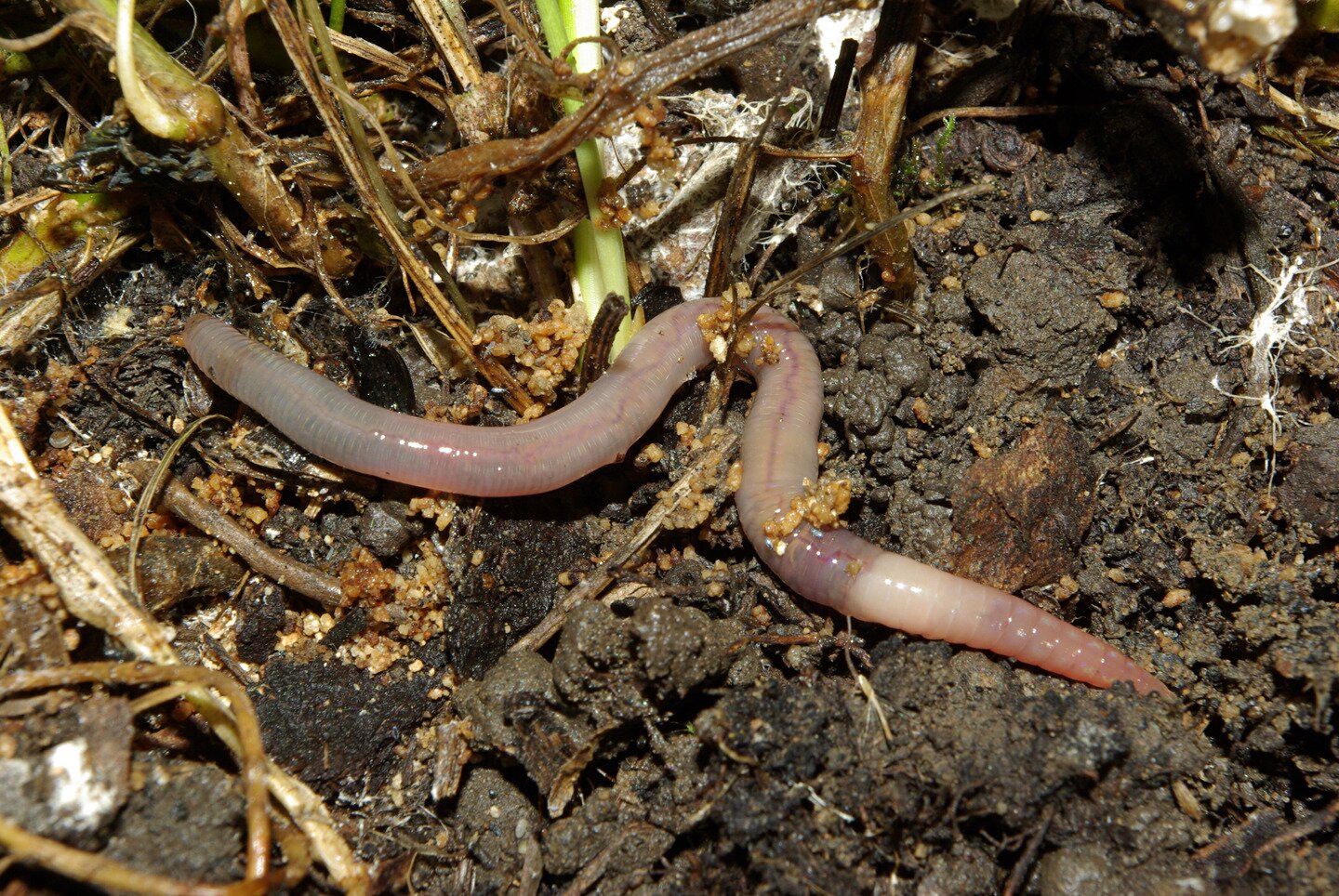
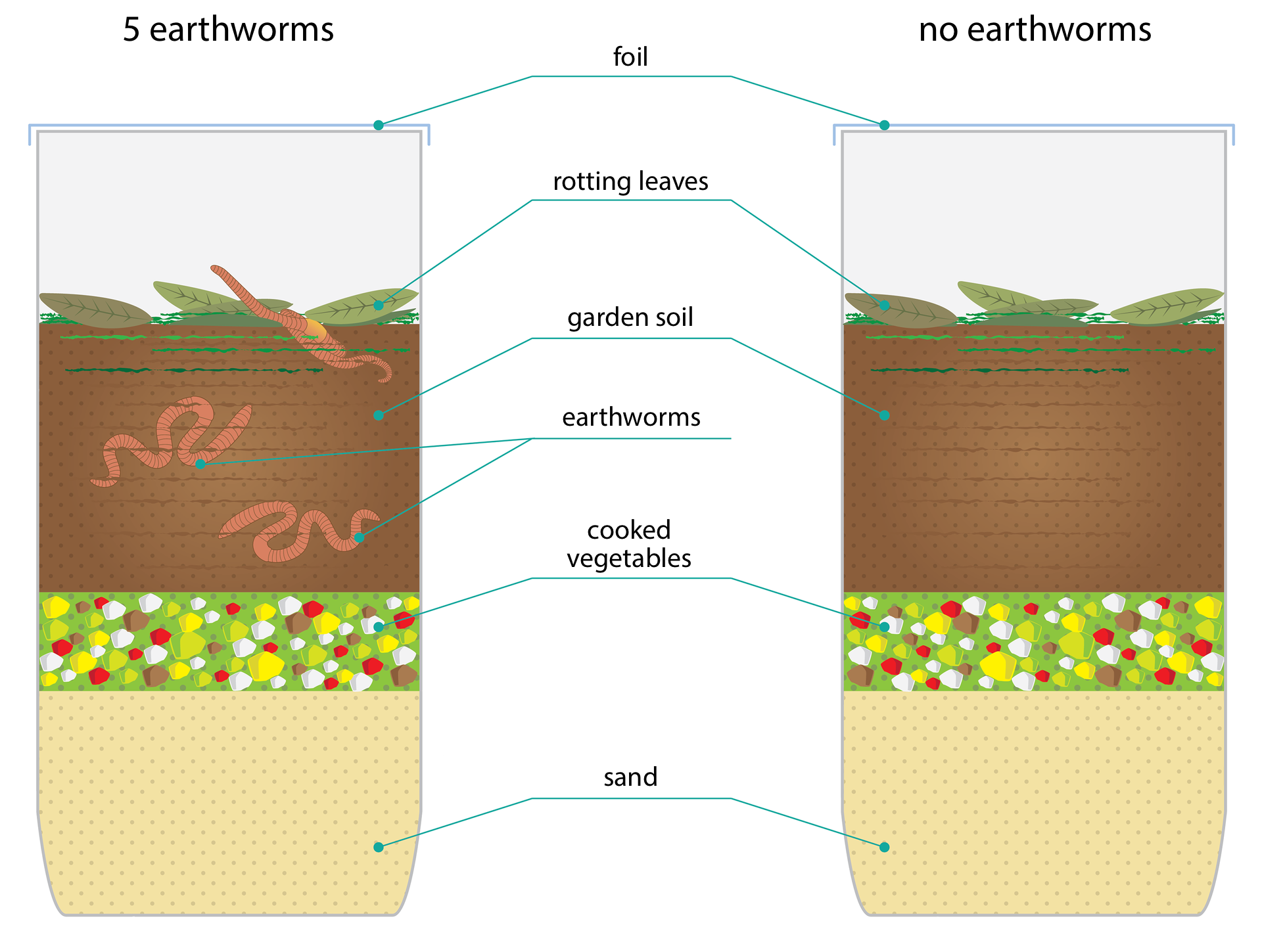
Demonstration of the effect of earthworms on soil.
2 large jars,
a half‑litre cup,
half a litre of sand,
half a litre of garden soil,
8‑12 decayed leaves,
cooked vegetables,
5 earthworms,
foil with several holes to cover the jars.
In two large jars place one layer of soil, boiled vegetables and sand (each approx. 3 cm thick), moisturize whole and beat. Put a few fallen leaves on top.
Insert several earthworms into one of the jars.
Cover the two jars and set them aside in a shady, calm place, eg in a wardrobe.
Check the humidity of the earth every day and add some water if necessary. Follow and note what changes have taken place. Answer whether after two weeks in both jars you can see the individual layers of earth and sand.
By drilling the corridors, earthworms mixed the sand with garden soil. In addition, it made the soil loose – the soil easily spilled out of the jar. The leaves have completely or partially disappeared, which means they have been eaten by earthworms.
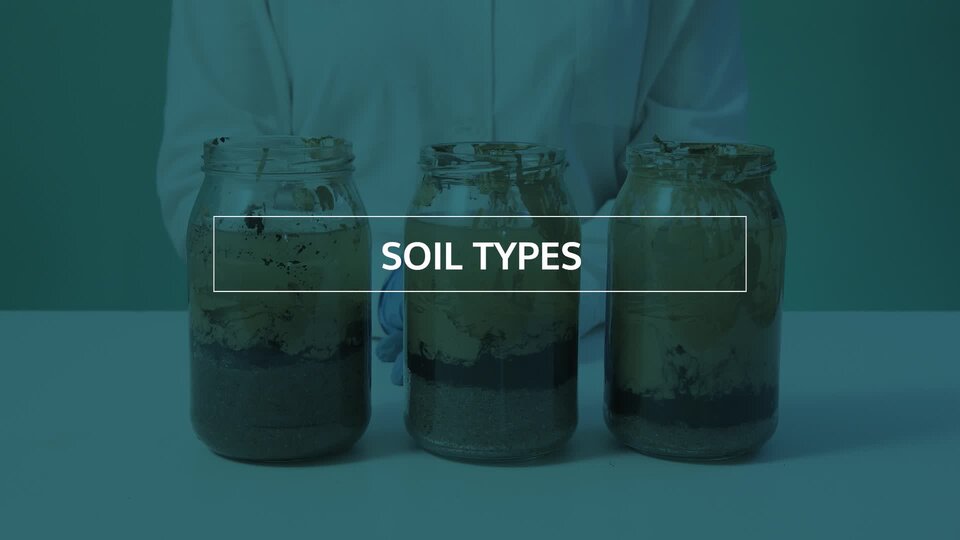
Film dostępny na portalu epodreczniki.pl
Nagranie filmowe przedstawiające doświadczenie odbywające się w laboratorium. Na stole stoją trzy słoiki litrowe zlewka z wodą oraz pojemniki w których, znajdują się silit, clay, sand. Doświadczenie polega na uzupełnianiu słoików poszczególnymi materiałami i zalaniu ich wodą. Po zakręceniu słoików odstawiamy je na dwadzieścia cztery godziny.
Exercise
Match the pairs: English and Polish words.
warstwa powierzchni ziemi o grubości do 2 m składająca się z okruchów skał, powietrza, wody oraz organizmów żywych i ich obumarłych szczątków, warstwa gleby o ciemnej barwie powstająca z rozkładu szczątków organicznych, skała utworzona z pyłów mineralnych nawianych przez wiatr; gleby powstałe na lessach dają najwyższe plony
| soil | |
| loess | |
| humus |
From these environmental elements, select those that form part of the soil.
- air
- bench
- plastics
- water
- paper
- concrete
Complete the sentences by selecting the correct phrases from the list.
water, atmospheric, organic matter, rocks, plants, soil, humus, organic, salt, lava, municipal, crude oil, metallic
The undeveloped remains of ............................ and animals often rest on the surface of the soil. Below is ............................, i.e. a layer of dark color resulting from the decomposition of ............................ debris. Deeper is the layer from which the soaking ............................ leaches various substances. The layers of the parent rock from which the ............................ is formed are located the lowest.
Summary
The soil consists of crumbs of rocks, air, water and plants, animals, fungi and their dead debris.
Soil organisms, including earthworms, have a significant influence on the formation and development of soils.
There are various types of soils in Poland, including podzolic, brown, loess, mady and chernozem.
Keywords
soil, humus, earthworms
Glossary
gleba – warstwa powierzchni ziemi o grubości do 2 m składająca się z okruchów skał, powietrza, wody oraz organizmów żywych i ich obumarłych szczątków.
próchnica – warstwa gleby o ciemnej barwie powstająca z rozkładu szczątków organicznych.