1
Show exercises:
1
Exercise 1
RA5mbiolMknEz
Pair the words/expressions with their correct definitions. speed laces Możliwe odpowiedzi: 1. to consider something when making a decision, 2. to do something intentionally, 3. in opposition to, 4. used by sportspeople; they are elastic and don’t need to be tied to make the shoe fit, 5. the ability to stand or put up with something physically hard or difficult, 6. likely to suffer or experience something not nice, 7. to buy something prone to Możliwe odpowiedzi: 1. to consider something when making a decision, 2. to do something intentionally, 3. in opposition to, 4. used by sportspeople; they are elastic and don’t need to be tied to make the shoe fit, 5. the ability to stand or put up with something physically hard or difficult, 6. likely to suffer or experience something not nice, 7. to buy something stamina Możliwe odpowiedzi: 1. to consider something when making a decision, 2. to do something intentionally, 3. in opposition to, 4. used by sportspeople; they are elastic and don’t need to be tied to make the shoe fit, 5. the ability to stand or put up with something physically hard or difficult, 6. likely to suffer or experience something not nice, 7. to buy something purchase Możliwe odpowiedzi: 1. to consider something when making a decision, 2. to do something intentionally, 3. in opposition to, 4. used by sportspeople; they are elastic and don’t need to be tied to make the shoe fit, 5. the ability to stand or put up with something physically hard or difficult, 6. likely to suffer or experience something not nice, 7. to buy something contrary to Możliwe odpowiedzi: 1. to consider something when making a decision, 2. to do something intentionally, 3. in opposition to, 4. used by sportspeople; they are elastic and don’t need to be tied to make the shoe fit, 5. the ability to stand or put up with something physically hard or difficult, 6. likely to suffer or experience something not nice, 7. to buy something take into account Możliwe odpowiedzi: 1. to consider something when making a decision, 2. to do something intentionally, 3. in opposition to, 4. used by sportspeople; they are elastic and don’t need to be tied to make the shoe fit, 5. the ability to stand or put up with something physically hard or difficult, 6. likely to suffer or experience something not nice, 7. to buy something on purpose Możliwe odpowiedzi: 1. to consider something when making a decision, 2. to do something intentionally, 3. in opposition to, 4. used by sportspeople; they are elastic and don’t need to be tied to make the shoe fit, 5. the ability to stand or put up with something physically hard or difficult, 6. likely to suffer or experience something not nice, 7. to buy something
Źródło: GroMar Sp. z o.o., licencja: CC BY-SA 3.0.
1
Exercise 2
R1NXBgSL6UNoI
Drag the words below to the correct places. There are 3 extra words which you do not need to use. 1. Improving your 1. purchase, 2. goggles, 3. account, 4. stamina, 5. inevitable, 6. purpose, 7. recommended, 8. prone, 9. laces helps you to make your results in aquathlon better.
2. Even if someone hits or kicks you in the swim race, remember it is not done on 1. purchase, 2. goggles, 3. account, 4. stamina, 5. inevitable, 6. purpose, 7. recommended, 8. prone, 9. laces.
3. When considering training for an aquathlon, you should take into 1. purchase, 2. goggles, 3. account, 4. stamina, 5. inevitable, 6. purpose, 7. recommended, 8. prone, 9. laces the need for regular swimming and running.
4. In an aquathlon race many contestants have special speed 1. purchase, 2. goggles, 3. account, 4. stamina, 5. inevitable, 6. purpose, 7. recommended, 8. prone, 9. laces in their shoes and this helps them to save some time.
5. To start training for an aquathlon race you don’t need to 1. purchase, 2. goggles, 3. account, 4. stamina, 5. inevitable, 6. purpose, 7. recommended, 8. prone, 9. laces special equipment, but a tri-suit is often recommended.
6. In an aquathlon race contestants are less 1. purchase, 2. goggles, 3. account, 4. stamina, 5. inevitable, 6. purpose, 7. recommended, 8. prone, 9. laces to head injuries than in a triathlon.
Źródło: GroMar Sp. z o.o., licencja: CC BY-SA 3.0.
1
Exercise 3
R1QLZ9z8T7259
Choose the correct answers. More than one answer may be correct in each case. 1. In an aquathlon race if all contestants begin together this means they start
a) in a mass.
b) in waves.
c) in goggles.
d) in speed laces.

2. If a person starts training a new sport, he/she
a) takes it on.
b) takes it up.
c) gets on it.
d) prepares for it.

3. Before the swim race, people who start in an aquathlon race often
a) participate in a cooldown.
b) time their chip.
c) put on their swimming cap.
d) rinse their goggles.

4. If a price of sports equipment is high, it is
a) exorbitant.
b) on purpose.
c) purchase
d) prone to.

5. The healthy meal after an aquathlon race should contain
a) carbohydrates.
b) sugars.
c) salts.
d) proteins.

6. Professional sports and races are good for people who enjoy
a) improving their stamina.
b) competing.
c) losing.
d) commencing.

7. After the race, it is not recommended to
a) take an early night.
b) recover.
c) hydrate.
d) have a warm-up.
Źródło: GroMar Sp. z o.o., licencja: CC BY-SA 3.0.
1
Exercise 4
R14EaIMbBs6iF
Choose if the sentences are TRUE or FALSE. 1. In aquathlons the necessary equipment are swimming gloves and goggles.
TRUEFALSE

2. Triathlon races combine three sports: swimming, running, and cycling.
TRUEFALSE

3. If you don’t have a bike, you can’t take part in an aquathlon.
TRUEFALSE

4. A cooldown is an important exercise that sportspeople do before an aquathlon race.
TRUEFALSE

5. If you want to be good at an aquathlon, you need to swim and run really well.
TRUEFALSE

6. People who are successful in triathlon races usually do well in aquathlons.
TRUEFALSE

7. A tri-suit is a type of suit that the organisers wear in a triathlon or aquathlon race.
TRUEFALSE

Źródło: GroMar Sp. z o.o., licencja: CC BY-SA 3.0.
2
Exercise 5

Choose the odd word out that is not a synonym to the other two words.

RmiaxlYQh6pfz
Źródło: GroMar Sp. z o.o., licencja: CC BY-SA 3.0.
2
Exercise 5
R1Xvbp3vam4y8
Choose the odd word out that is not a synonym to the other two words. Colour it in green. mixture chip blend obstacle peer problem commence start purchase purchase blend buy held organised divided inevitable affordable approachable
Źródło: GroMar Sp. z o.o., licencja: CC BY-SA 3.0.
2
Exercise 6
RuoZCrQ32HvXu
Translate the words/phrases to complete the sentences.
Źródło: GroMar Sp. z o.o., licencja: CC BY-SA 3.0.
3
Exercise 7

Answer the question: what kind of equipment does an aquathlon require? Write a short text (5–6 sentences).

R1DvGq8S6MHEj
Źródło: GroMar Sp. z o.o., licencja: CC BY-SA 3.0.
3
Exercise 7

Analyse the photo. Do you think that this sportsman is a typical contestant in an aquathlon? Why? Why not? Think about the information you have learnt from the e‑material and justify your opinion. Write a short text (6‑8 sentences).
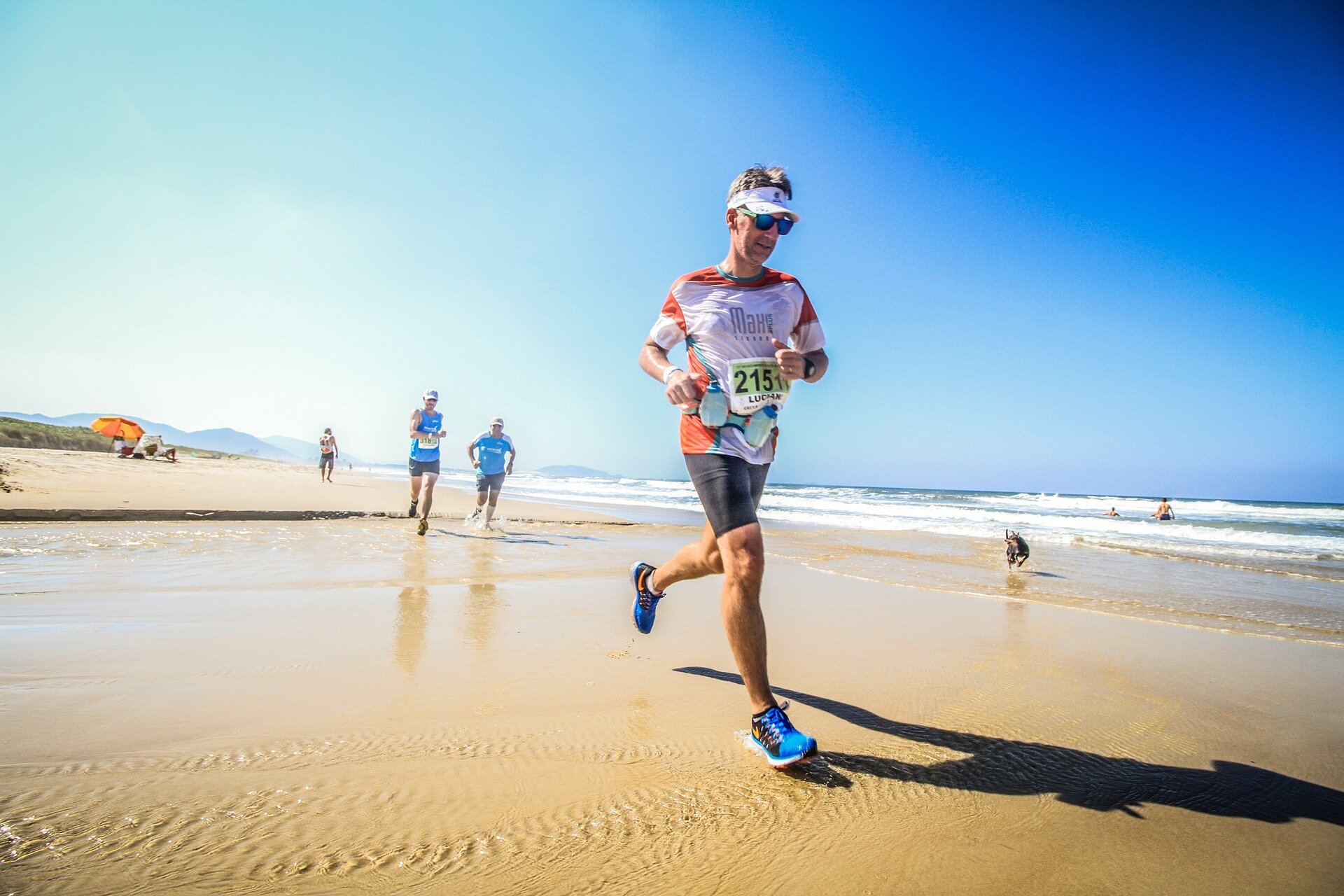
R1LBMpvLkaTI6
Źródło: dostępny w internecie: https://pixabay.com/ [dostęp 16.02.2023], domena publiczna.
R1bckssDLwe99
(Uzupełnij).
Źródło: GroMar Sp. z o.o., licencja: CC BY-SA 3.0.
3
Exercise 8

You have taken up a new sport - aquathlon - and hope to get your peers interested in it. Write a blog post in which you:

  • explain what aquathlon is and how it differs from triathlon;

  • write about why you think aquathlon might be interesting for teenagers;

  • describe your plans for the sport;

  • encourage your readers to try aquathlon and to write their opinions in the comments.

Use between 100 and 150 words.

Exam tipazurewhite
RMBgIu0UVOESY
(Uzupełnij).
Źródło: GroMar Sp. z o.o., licencja: CC BY-SA 3.0.