1
Show exercises:
1
Exercise 1
RVkNFcveRm90d
Drag the words to create collocations related to fossils. undergo Możliwe odpowiedzi: 1. in mud, 2. secrets, 3. the Earth, 4. decomposition, 5. body parts, 6. age reveal Możliwe odpowiedzi: 1. in mud, 2. secrets, 3. the Earth, 4. decomposition, 5. body parts, 6. age inhabit Możliwe odpowiedzi: 1. in mud, 2. secrets, 3. the Earth, 4. decomposition, 5. body parts, 6. age covered Możliwe odpowiedzi: 1. in mud, 2. secrets, 3. the Earth, 4. decomposition, 5. body parts, 6. age geological Możliwe odpowiedzi: 1. in mud, 2. secrets, 3. the Earth, 4. decomposition, 5. body parts, 6. age petrified Możliwe odpowiedzi: 1. in mud, 2. secrets, 3. the Earth, 4. decomposition, 5. body parts, 6. age
Źródło: GroMar Sp. z o.o., licencja: CC BY-SA 3.0.
1
Exercise 2
RphMzsaUY0r1i
Complete the sentences with collocations related to fossils. 1. We are all in the midst of a new 1. undergo decomposition, 2. geological age, 3. revealed secrets, 4. inhabit the Earth, 5. covered in mud, experts say.
2. When my son came back from the playground yesterday, his shoes were 1. undergo decomposition, 2. geological age, 3. revealed secrets, 4. inhabit the Earth, 5. covered in mud.
3. Human bodies 1. undergo decomposition, 2. geological age, 3. revealed secrets, 4. inhabit the Earth, 5. covered in mud after death.
4. I don’t trust my ex-boyfriend as he 1. undergo decomposition, 2. geological age, 3. revealed secrets, 4. inhabit the Earth, 5. covered in mud about me to his friends.
5. A lot of different creatures 1. undergo decomposition, 2. geological age, 3. revealed secrets, 4. inhabit the Earth, 5. covered in mud.
Źródło: GroMar Sp. z o.o., licencja: CC BY-SA 3.0.
2
Exercise 3
RxA1w57LShvtC2
Choose the correct words to create a text about fossils and what we can learn from them. The aim of this text is to exemplify the idea of     1. fossilsamberextinction     and how they can be useful in learning about the history of Earth. It also enumerates four different types of     2. fossilspreservedextinction     elements of organisms. Moreover, the article highlights the work of     3. doctors palaeontologists scientists     who constantly try to unveil the secrets of the past. Due to their efforts, people have found out about the existence and     4. extinction preservation decomposition     of dinosaurs. Furthermore, fossils assist in defining the     5. fossil geological age decay     of a rock. Apart from scientific purposes, some fossils also have aesthetic value as is the case with     6. faeces mouldamber.     However, more research needs to be done to provide more detailed answers to the questions about our planet’s past.
Źródło: GroMar Sp. z o.o., licencja: CC BY-SA 3.0.
2
Exercise 4
R1Saoy3jEmm3V
Drag the words to create meaningful sentences with some facts about fossils. 1. 1. was found, 2. around 1815, 3. dinosaur fossil, 4. The first1. was found, 2. around 1815, 3. dinosaur fossil, 4. The first1. was found, 2. around 1815, 3. dinosaur fossil, 4. The first 1. was found, 2. around 1815, 3. dinosaur fossil, 4. The first.
Źródło: GroMar Sp. z o.o., licencja: CC BY-SA 3.0.
R1e38zZ3F60X3
2. 1. in 1996, 2. was found, 3. A fossil of, 4. a non-avian dinosaur, 5. with feathers1. in 1996, 2. was found, 3. A fossil of, 4. a non-avian dinosaur, 5. with feathers 1. in 1996, 2. was found, 3. A fossil of, 4. a non-avian dinosaur, 5. with feathers1. in 1996, 2. was found, 3. A fossil of, 4. a non-avian dinosaur, 5. with feathers 1. in 1996, 2. was found, 3. A fossil of, 4. a non-avian dinosaur, 5. with feathers.
Źródło: GroMar Sp. z o.o., licencja: CC BY-SA 3.0.
RvIzbCtdR4dnG
3. 1. the dinosaurs, 2. In 2019, 3. became extinct, 4. published a paper, 5. some palaeontologists, 6. about the day, 1. the dinosaurs, 2. In 2019, 3. became extinct, 4. published a paper, 5. some palaeontologists, 6. about the day1. the dinosaurs, 2. In 2019, 3. became extinct, 4. published a paper, 5. some palaeontologists, 6. about the day 1. the dinosaurs, 2. In 2019, 3. became extinct, 4. published a paper, 5. some palaeontologists, 6. about the day1. the dinosaurs, 2. In 2019, 3. became extinct, 4. published a paper, 5. some palaeontologists, 6. about the day1. the dinosaurs, 2. In 2019, 3. became extinct, 4. published a paper, 5. some palaeontologists, 6. about the day.
Źródło: GroMar Sp. z o.o., licencja: CC BY-SA 3.0.
R13jnsbLlefBM
4. 1. Inside that lump of fossilised resin, 2. there was a tick, 3. still full of blood, 4. some 20 million years old 1. Inside that lump of fossilised resin, 2. there was a tick, 3. still full of blood, 4. some 20 million years old, 1. Inside that lump of fossilised resin, 2. there was a tick, 3. still full of blood, 4. some 20 million years old, 1. Inside that lump of fossilised resin, 2. there was a tick, 3. still full of blood, 4. some 20 million years old.
Źródło: GroMar Sp. z o.o., licencja: CC BY-SA 3.0.
R1ZxpNrdS8yFL
5. 1. A construction worker, 2. found, 3. a 110-million-year-old fossil, 4. at a work site in Sheldon, Iowa, the USA 1. A construction worker, 2. found, 3. a 110-million-year-old fossil, 4. at a work site in Sheldon, Iowa, the USA 1. A construction worker, 2. found, 3. a 110-million-year-old fossil, 4. at a work site in Sheldon, Iowa, the USA 1. A construction worker, 2. found, 3. a 110-million-year-old fossil, 4. at a work site in Sheldon, Iowa, the USA.
Źródło: GroMar Sp. z o.o., licencja: CC BY-SA 3.0.
3
Exercise 5
R1JboPwVJjDhl
Word formation. Change the words given and complete the sentences. Word formation. Change the words given and complete the sentences. 1. Tu uzupełnij takes place when an organism dies. DECOMPOSE 2. They used acid to dissolve the Tu uzupełnij rock. SEDIMENT 3. The priority is given to the Tu uzupełnij of the marine and coastal environment. PRESERVE 4. The bluefin tuna is threatened with Tu uzupełnij because of intensive overfishing. EXTINCT 5. In addition to different Tu uzupełnijconditions, investors are also faced with higher regulatory and environmental risks in Europe. GEOLOGY 6. To keep investment coming in, Poland must increase its relative Tu uzupełnij, particularly through cultural tourism. ATTRACTIVE
Źródło: GroMar Sp. z o.o., licencja: CC BY-SA 3.0.
3
Exercise 6

John is a paleontologist who is currently kneeling on the rocks. Finish the text about John using the words given and changing them so that they make a logical and grammatically correct text.

RY3XdFLvyBuiT
Źródło: GroMar Sp. z o.o., licencja: CC BY-SA 3.0.
3
Exercise 6

Complete the description of the picture. Use the words given and change them so that they make a logical and grammatically correct text.
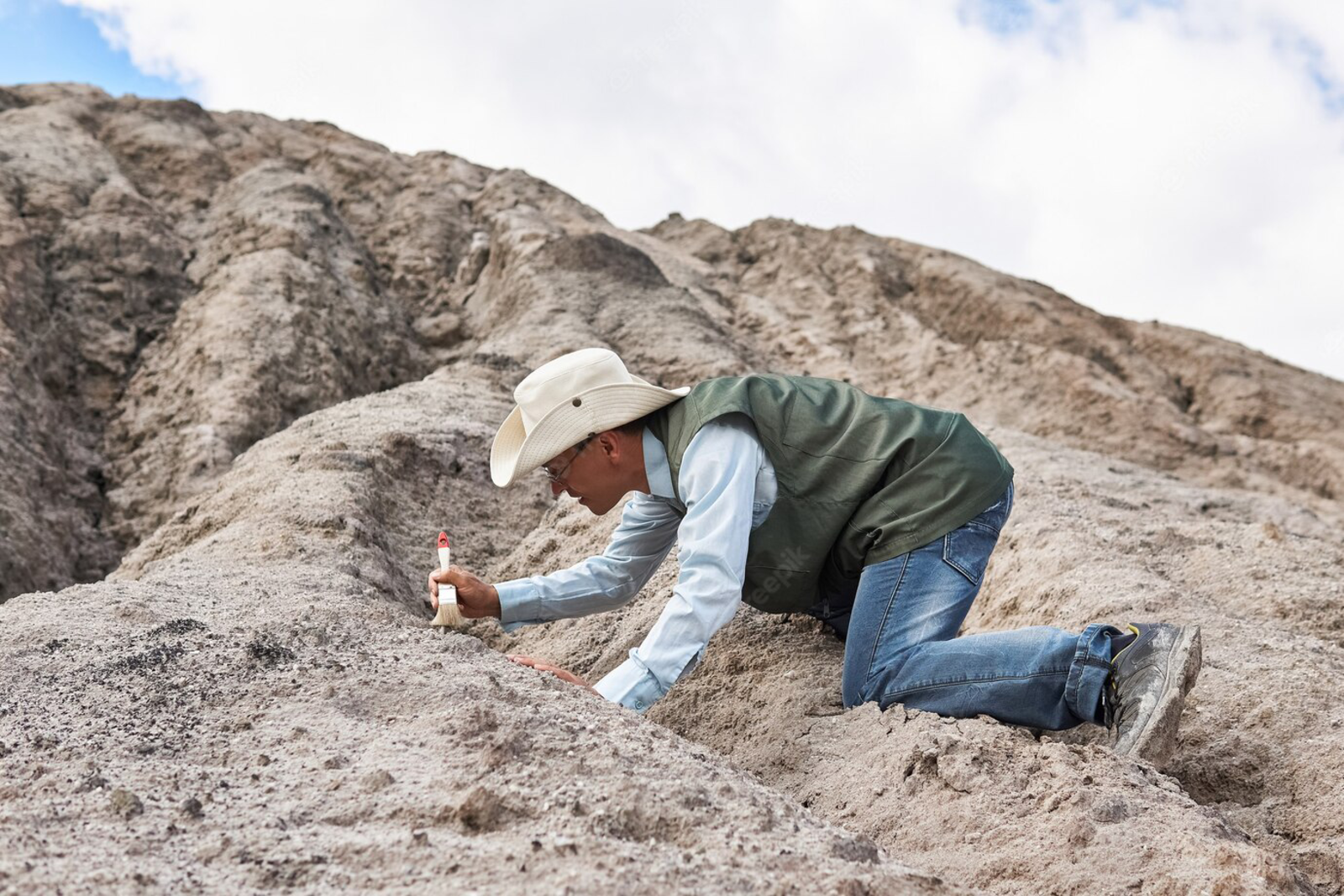
RBJFMeEOfP3Zq
Źródło: dostępny w internecie: https://www.freepik.com/ [dostęp 17.09.2022], domena publiczna.
R59rbKK445iUR
The photo shows a palaeontologist who (kneel/rock) Tu uzupełnij. He might (find) Tu uzupełnij a fossil and he (try/cover)Tu uzupełnij it from the sand. To my mind, he will (carry/he/search) Tu uzupełnij as he (seem/find) Tu uzupełnij something that is a treasure for him. He (might/look for/it) Tu uzupełnij since he was a child. He may become a world-renowned palaeontologist thanks to his finding.
Źródło: GroMar Sp. z o.o., licencja: CC BY-SA 3.0.
3
Exercise 7

Finish the sentences so that they are true for you.

  1. People go fossil hunting because …

  2. The last time I found an unusual rock was …

  3. Dinosaur extinction is for me…

  4. Looking for amber seems to be…

RRTVOw7p9KO5Q
(Uzupełnij).
Źródło: GroMar Sp. z o.o., licencja: CC BY-SA 3.0.
3
Exercise 8

You’ve recently found a fossil. Write an article for the school magazine (200–250 words) in which you explain what we can learn from your finding and summarise your experiences of hunting for fossils.

Exam tipazurewhite
RA9BnP5BH5O3E
(Uzupełnij).
Źródło: GroMar Sp. z o.o., licencja: CC BY-SA 3.0.