Pair words with their definitions. antler Możliwe odpowiedzi: 1. dry stems of plants used to construct roofs, 2. a lifestyle based on moving around and not settling, 3. a large, semi-permanent tent, 4. paintings by early prehistoric people, 5. a wooly elephant-like animal that is now extinct, 6. a period when humans started farming land, 7. connected to raising animals, 8. a thing similar to a bone that grows out of an animal’s head, 9. the era dominated by humans, 10. a small community, 11. to look for food or things you can use, 12. a period when a lot of machines started to be built mammoth Możliwe odpowiedzi: 1. dry stems of plants used to construct roofs, 2. a lifestyle based on moving around and not settling, 3. a large, semi-permanent tent, 4. paintings by early prehistoric people, 5. a wooly elephant-like animal that is now extinct, 6. a period when humans started farming land, 7. connected to raising animals, 8. a thing similar to a bone that grows out of an animal’s head, 9. the era dominated by humans, 10. a small community, 11. to look for food or things you can use, 12. a period when a lot of machines started to be built Anthropocene Możliwe odpowiedzi: 1. dry stems of plants used to construct roofs, 2. a lifestyle based on moving around and not settling, 3. a large, semi-permanent tent, 4. paintings by early prehistoric people, 5. a wooly elephant-like animal that is now extinct, 6. a period when humans started farming land, 7. connected to raising animals, 8. a thing similar to a bone that grows out of an animal’s head, 9. the era dominated by humans, 10. a small community, 11. to look for food or things you can use, 12. a period when a lot of machines started to be built cave art Możliwe odpowiedzi: 1. dry stems of plants used to construct roofs, 2. a lifestyle based on moving around and not settling, 3. a large, semi-permanent tent, 4. paintings by early prehistoric people, 5. a wooly elephant-like animal that is now extinct, 6. a period when humans started farming land, 7. connected to raising animals, 8. a thing similar to a bone that grows out of an animal’s head, 9. the era dominated by humans, 10. a small community, 11. to look for food or things you can use, 12. a period when a lot of machines started to be built forage Możliwe odpowiedzi: 1. dry stems of plants used to construct roofs, 2. a lifestyle based on moving around and not settling, 3. a large, semi-permanent tent, 4. paintings by early prehistoric people, 5. a wooly elephant-like animal that is now extinct, 6. a period when humans started farming land, 7. connected to raising animals, 8. a thing similar to a bone that grows out of an animal’s head, 9. the era dominated by humans, 10. a small community, 11. to look for food or things you can use, 12. a period when a lot of machines started to be built industrialisation Możliwe odpowiedzi: 1. dry stems of plants used to construct roofs, 2. a lifestyle based on moving around and not settling, 3. a large, semi-permanent tent, 4. paintings by early prehistoric people, 5. a wooly elephant-like animal that is now extinct, 6. a period when humans started farming land, 7. connected to raising animals, 8. a thing similar to a bone that grows out of an animal’s head, 9. the era dominated by humans, 10. a small community, 11. to look for food or things you can use, 12. a period when a lot of machines started to be built Neolithic Możliwe odpowiedzi: 1. dry stems of plants used to construct roofs, 2. a lifestyle based on moving around and not settling, 3. a large, semi-permanent tent, 4. paintings by early prehistoric people, 5. a wooly elephant-like animal that is now extinct, 6. a period when humans started farming land, 7. connected to raising animals, 8. a thing similar to a bone that grows out of an animal’s head, 9. the era dominated by humans, 10. a small community, 11. to look for food or things you can use, 12. a period when a lot of machines started to be built Nomadic Możliwe odpowiedzi: 1. dry stems of plants used to construct roofs, 2. a lifestyle based on moving around and not settling, 3. a large, semi-permanent tent, 4. paintings by early prehistoric people, 5. a wooly elephant-like animal that is now extinct, 6. a period when humans started farming land, 7. connected to raising animals, 8. a thing similar to a bone that grows out of an animal’s head, 9. the era dominated by humans, 10. a small community, 11. to look for food or things you can use, 12. a period when a lot of machines started to be built Pastoral Możliwe odpowiedzi: 1. dry stems of plants used to construct roofs, 2. a lifestyle based on moving around and not settling, 3. a large, semi-permanent tent, 4. paintings by early prehistoric people, 5. a wooly elephant-like animal that is now extinct, 6. a period when humans started farming land, 7. connected to raising animals, 8. a thing similar to a bone that grows out of an animal’s head, 9. the era dominated by humans, 10. a small community, 11. to look for food or things you can use, 12. a period when a lot of machines started to be built straw Możliwe odpowiedzi: 1. dry stems of plants used to construct roofs, 2. a lifestyle based on moving around and not settling, 3. a large, semi-permanent tent, 4. paintings by early prehistoric people, 5. a wooly elephant-like animal that is now extinct, 6. a period when humans started farming land, 7. connected to raising animals, 8. a thing similar to a bone that grows out of an animal’s head, 9. the era dominated by humans, 10. a small community, 11. to look for food or things you can use, 12. a period when a lot of machines started to be built tribe Możliwe odpowiedzi: 1. dry stems of plants used to construct roofs, 2. a lifestyle based on moving around and not settling, 3. a large, semi-permanent tent, 4. paintings by early prehistoric people, 5. a wooly elephant-like animal that is now extinct, 6. a period when humans started farming land, 7. connected to raising animals, 8. a thing similar to a bone that grows out of an animal’s head, 9. the era dominated by humans, 10. a small community, 11. to look for food or things you can use, 12. a period when a lot of machines started to be built yurt Możliwe odpowiedzi: 1. dry stems of plants used to construct roofs, 2. a lifestyle based on moving around and not settling, 3. a large, semi-permanent tent, 4. paintings by early prehistoric people, 5. a wooly elephant-like animal that is now extinct, 6. a period when humans started farming land, 7. connected to raising animals, 8. a thing similar to a bone that grows out of an animal’s head, 9. the era dominated by humans, 10. a small community, 11. to look for food or things you can use, 12. a period when a lot of machines started to be built
Pair words with their definitions. antler Możliwe odpowiedzi: 1. dry stems of plants used to construct roofs, 2. a lifestyle based on moving around and not settling, 3. a large, semi-permanent tent, 4. paintings by early prehistoric people, 5. a wooly elephant-like animal that is now extinct, 6. a period when humans started farming land, 7. connected to raising animals, 8. a thing similar to a bone that grows out of an animal’s head, 9. the era dominated by humans, 10. a small community, 11. to look for food or things you can use, 12. a period when a lot of machines started to be built mammoth Możliwe odpowiedzi: 1. dry stems of plants used to construct roofs, 2. a lifestyle based on moving around and not settling, 3. a large, semi-permanent tent, 4. paintings by early prehistoric people, 5. a wooly elephant-like animal that is now extinct, 6. a period when humans started farming land, 7. connected to raising animals, 8. a thing similar to a bone that grows out of an animal’s head, 9. the era dominated by humans, 10. a small community, 11. to look for food or things you can use, 12. a period when a lot of machines started to be built Anthropocene Możliwe odpowiedzi: 1. dry stems of plants used to construct roofs, 2. a lifestyle based on moving around and not settling, 3. a large, semi-permanent tent, 4. paintings by early prehistoric people, 5. a wooly elephant-like animal that is now extinct, 6. a period when humans started farming land, 7. connected to raising animals, 8. a thing similar to a bone that grows out of an animal’s head, 9. the era dominated by humans, 10. a small community, 11. to look for food or things you can use, 12. a period when a lot of machines started to be built cave art Możliwe odpowiedzi: 1. dry stems of plants used to construct roofs, 2. a lifestyle based on moving around and not settling, 3. a large, semi-permanent tent, 4. paintings by early prehistoric people, 5. a wooly elephant-like animal that is now extinct, 6. a period when humans started farming land, 7. connected to raising animals, 8. a thing similar to a bone that grows out of an animal’s head, 9. the era dominated by humans, 10. a small community, 11. to look for food or things you can use, 12. a period when a lot of machines started to be built forage Możliwe odpowiedzi: 1. dry stems of plants used to construct roofs, 2. a lifestyle based on moving around and not settling, 3. a large, semi-permanent tent, 4. paintings by early prehistoric people, 5. a wooly elephant-like animal that is now extinct, 6. a period when humans started farming land, 7. connected to raising animals, 8. a thing similar to a bone that grows out of an animal’s head, 9. the era dominated by humans, 10. a small community, 11. to look for food or things you can use, 12. a period when a lot of machines started to be built industrialisation Możliwe odpowiedzi: 1. dry stems of plants used to construct roofs, 2. a lifestyle based on moving around and not settling, 3. a large, semi-permanent tent, 4. paintings by early prehistoric people, 5. a wooly elephant-like animal that is now extinct, 6. a period when humans started farming land, 7. connected to raising animals, 8. a thing similar to a bone that grows out of an animal’s head, 9. the era dominated by humans, 10. a small community, 11. to look for food or things you can use, 12. a period when a lot of machines started to be built Neolithic Możliwe odpowiedzi: 1. dry stems of plants used to construct roofs, 2. a lifestyle based on moving around and not settling, 3. a large, semi-permanent tent, 4. paintings by early prehistoric people, 5. a wooly elephant-like animal that is now extinct, 6. a period when humans started farming land, 7. connected to raising animals, 8. a thing similar to a bone that grows out of an animal’s head, 9. the era dominated by humans, 10. a small community, 11. to look for food or things you can use, 12. a period when a lot of machines started to be built Nomadic Możliwe odpowiedzi: 1. dry stems of plants used to construct roofs, 2. a lifestyle based on moving around and not settling, 3. a large, semi-permanent tent, 4. paintings by early prehistoric people, 5. a wooly elephant-like animal that is now extinct, 6. a period when humans started farming land, 7. connected to raising animals, 8. a thing similar to a bone that grows out of an animal’s head, 9. the era dominated by humans, 10. a small community, 11. to look for food or things you can use, 12. a period when a lot of machines started to be built Pastoral Możliwe odpowiedzi: 1. dry stems of plants used to construct roofs, 2. a lifestyle based on moving around and not settling, 3. a large, semi-permanent tent, 4. paintings by early prehistoric people, 5. a wooly elephant-like animal that is now extinct, 6. a period when humans started farming land, 7. connected to raising animals, 8. a thing similar to a bone that grows out of an animal’s head, 9. the era dominated by humans, 10. a small community, 11. to look for food or things you can use, 12. a period when a lot of machines started to be built straw Możliwe odpowiedzi: 1. dry stems of plants used to construct roofs, 2. a lifestyle based on moving around and not settling, 3. a large, semi-permanent tent, 4. paintings by early prehistoric people, 5. a wooly elephant-like animal that is now extinct, 6. a period when humans started farming land, 7. connected to raising animals, 8. a thing similar to a bone that grows out of an animal’s head, 9. the era dominated by humans, 10. a small community, 11. to look for food or things you can use, 12. a period when a lot of machines started to be built tribe Możliwe odpowiedzi: 1. dry stems of plants used to construct roofs, 2. a lifestyle based on moving around and not settling, 3. a large, semi-permanent tent, 4. paintings by early prehistoric people, 5. a wooly elephant-like animal that is now extinct, 6. a period when humans started farming land, 7. connected to raising animals, 8. a thing similar to a bone that grows out of an animal’s head, 9. the era dominated by humans, 10. a small community, 11. to look for food or things you can use, 12. a period when a lot of machines started to be built yurt Możliwe odpowiedzi: 1. dry stems of plants used to construct roofs, 2. a lifestyle based on moving around and not settling, 3. a large, semi-permanent tent, 4. paintings by early prehistoric people, 5. a wooly elephant-like animal that is now extinct, 6. a period when humans started farming land, 7. connected to raising animals, 8. a thing similar to a bone that grows out of an animal’s head, 9. the era dominated by humans, 10. a small community, 11. to look for food or things you can use, 12. a period when a lot of machines started to be built
Źródło: GroMar Sp. z o.o., licencja: CC BY-SA 3.0.
RFtHKmP637Y4o1
Exercise2
Order the elements into a timeline. Elementy do uszeregowania: 1. Implementing smart technology in homes, 2. Using cement to build strong structures such as skyscrapers, 3. Cave dwellings inhabited by first men, 4. Using concrete to build permanent structures, 5. Cities built with mudbrick, 6. Building temporary shelters using leaves and wood, 7. Building the first blocks of flats for factory workers
Order the elements into a timeline. Elementy do uszeregowania: 1. Implementing smart technology in homes, 2. Using cement to build strong structures such as skyscrapers, 3. Cave dwellings inhabited by first men, 4. Using concrete to build permanent structures, 5. Cities built with mudbrick, 6. Building temporary shelters using leaves and wood, 7. Building the first blocks of flats for factory workers
Źródło: GroMar Sp. z o.o., licencja: CC BY-SA 3.0.
R1aSsUID0MeDR2
Exercise3
Drag and drop the correct words into the gaps. There are two words that you don’t need.
Archeologists who find 1. skyscrapers, 2. urbanisation, 3. hunter-gatherers, 4. herded, 5. blocks of flats, 6. tents, 7. cave art, 8. concrete, 9. 3d-printed house, 10. subsistence, 11. mudbrick, 12. city walls prove that the caves were inhabited by people.
The early pastoralists often 1. skyscrapers, 2. urbanisation, 3. hunter-gatherers, 4. herded, 5. blocks of flats, 6. tents, 7. cave art, 8. concrete, 9. 3d-printed house, 10. subsistence, 11. mudbrick, 12. city walls animals in groups and moved them, so they couldn’t build permanent houses.
The main sources of food for 1. skyscrapers, 2. urbanisation, 3. hunter-gatherers, 4. herded, 5. blocks of flats, 6. tents, 7. cave art, 8. concrete, 9. 3d-printed house, 10. subsistence, 11. mudbrick, 12. city walls were berries and meat. They didn’t know how to farm and hence, couldn’t settle in a dwelling for good.
Neolithic times occured roughly at the same time as 1. skyscrapers, 2. urbanisation, 3. hunter-gatherers, 4. herded, 5. blocks of flats, 6. tents, 7. cave art, 8. concrete, 9. 3d-printed house, 10. subsistence, 11. mudbrick, 12. city walls processes, which are based on creating cities.
The first city buildings were built from simple materials such as 1. skyscrapers, 2. urbanisation, 3. hunter-gatherers, 4. herded, 5. blocks of flats, 6. tents, 7. cave art, 8. concrete, 9. 3d-printed house, 10. subsistence, 11. mudbrick, 12. city walls, straw, and wood.
Ancient Greeks and Romans had known 1. skyscrapers, 2. urbanisation, 3. hunter-gatherers, 4. herded, 5. blocks of flats, 6. tents, 7. cave art, 8. concrete, 9. 3d-printed house, 10. subsistence, 11. mudbrick, 12. city walls a long time before it was reinvented in the medieval times.
As cities grew throughout the middle ages, 1. skyscrapers, 2. urbanisation, 3. hunter-gatherers, 4. herded, 5. blocks of flats, 6. tents, 7. cave art, 8. concrete, 9. 3d-printed house, 10. subsistence, 11. mudbrick, 12. city walls needed to be built as defensive measures.
Industrialisation caused an increase in population density. Many people had to live in a small territory, so 1. skyscrapers, 2. urbanisation, 3. hunter-gatherers, 4. herded, 5. blocks of flats, 6. tents, 7. cave art, 8. concrete, 9. 3d-printed house, 10. subsistence, 11. mudbrick, 12. city walls were built to accommodate them.
The development of technology led to creating very tall office buildings known as 1. skyscrapers, 2. urbanisation, 3. hunter-gatherers, 4. herded, 5. blocks of flats, 6. tents, 7. cave art, 8. concrete, 9. 3d-printed house, 10. subsistence, 11. mudbrick, 12. city walls.
One of the most recent inventions is the 1. skyscrapers, 2. urbanisation, 3. hunter-gatherers, 4. herded, 5. blocks of flats, 6. tents, 7. cave art, 8. concrete, 9. 3d-printed house, 10. subsistence, 11. mudbrick, 12. city walls, which is created on site using a massive machine.
Drag and drop the correct words into the gaps. There are two words that you don’t need.
Archeologists who find 1. skyscrapers, 2. urbanisation, 3. hunter-gatherers, 4. herded, 5. blocks of flats, 6. tents, 7. cave art, 8. concrete, 9. 3d-printed house, 10. subsistence, 11. mudbrick, 12. city walls prove that the caves were inhabited by people.
The early pastoralists often 1. skyscrapers, 2. urbanisation, 3. hunter-gatherers, 4. herded, 5. blocks of flats, 6. tents, 7. cave art, 8. concrete, 9. 3d-printed house, 10. subsistence, 11. mudbrick, 12. city walls animals in groups and moved them, so they couldn’t build permanent houses.
The main sources of food for 1. skyscrapers, 2. urbanisation, 3. hunter-gatherers, 4. herded, 5. blocks of flats, 6. tents, 7. cave art, 8. concrete, 9. 3d-printed house, 10. subsistence, 11. mudbrick, 12. city walls were berries and meat. They didn’t know how to farm and hence, couldn’t settle in a dwelling for good.
Neolithic times occured roughly at the same time as 1. skyscrapers, 2. urbanisation, 3. hunter-gatherers, 4. herded, 5. blocks of flats, 6. tents, 7. cave art, 8. concrete, 9. 3d-printed house, 10. subsistence, 11. mudbrick, 12. city walls processes, which are based on creating cities.
The first city buildings were built from simple materials such as 1. skyscrapers, 2. urbanisation, 3. hunter-gatherers, 4. herded, 5. blocks of flats, 6. tents, 7. cave art, 8. concrete, 9. 3d-printed house, 10. subsistence, 11. mudbrick, 12. city walls, straw, and wood.
Ancient Greeks and Romans had known 1. skyscrapers, 2. urbanisation, 3. hunter-gatherers, 4. herded, 5. blocks of flats, 6. tents, 7. cave art, 8. concrete, 9. 3d-printed house, 10. subsistence, 11. mudbrick, 12. city walls a long time before it was reinvented in the medieval times.
As cities grew throughout the middle ages, 1. skyscrapers, 2. urbanisation, 3. hunter-gatherers, 4. herded, 5. blocks of flats, 6. tents, 7. cave art, 8. concrete, 9. 3d-printed house, 10. subsistence, 11. mudbrick, 12. city walls needed to be built as defensive measures.
Industrialisation caused an increase in population density. Many people had to live in a small territory, so 1. skyscrapers, 2. urbanisation, 3. hunter-gatherers, 4. herded, 5. blocks of flats, 6. tents, 7. cave art, 8. concrete, 9. 3d-printed house, 10. subsistence, 11. mudbrick, 12. city walls were built to accommodate them.
The development of technology led to creating very tall office buildings known as 1. skyscrapers, 2. urbanisation, 3. hunter-gatherers, 4. herded, 5. blocks of flats, 6. tents, 7. cave art, 8. concrete, 9. 3d-printed house, 10. subsistence, 11. mudbrick, 12. city walls.
One of the most recent inventions is the 1. skyscrapers, 2. urbanisation, 3. hunter-gatherers, 4. herded, 5. blocks of flats, 6. tents, 7. cave art, 8. concrete, 9. 3d-printed house, 10. subsistence, 11. mudbrick, 12. city walls, which is created on site using a massive machine.
Źródło: GroMar Sp. z o.o., licencja: CC BY-SA 3.0.
RUPPYxUbCTHE02
Exercise4
Match the fragments below to create full sentences. We’ ve changed our behaviours and our houses so much over the last few thousand years. You could say that Możliwe odpowiedzi: 1. an unprecedented rise in the number of people in cities., 2. we’ve come a long way!, 3. who directs the research on early episodic dwellings., 4. to fire clay and produce hard bricks., 5. prey and lived on a diet of mostly raw meat and fish., 6. the latter is larger and less mobile., 7. we relocate often and live in portable homes. This is the leading archaeologist on the site, Możliwe odpowiedzi: 1. an unprecedented rise in the number of people in cities., 2. we’ve come a long way!, 3. who directs the research on early episodic dwellings., 4. to fire clay and produce hard bricks., 5. prey and lived on a diet of mostly raw meat and fish., 6. the latter is larger and less mobile., 7. we relocate often and live in portable homes. Mudbrick was often used before we learned Możliwe odpowiedzi: 1. an unprecedented rise in the number of people in cities., 2. we’ve come a long way!, 3. who directs the research on early episodic dwellings., 4. to fire clay and produce hard bricks., 5. prey and lived on a diet of mostly raw meat and fish., 6. the latter is larger and less mobile., 7. we relocate often and live in portable homes. Early humans hunted Możliwe odpowiedzi: 1. an unprecedented rise in the number of people in cities., 2. we’ve come a long way!, 3. who directs the research on early episodic dwellings., 4. to fire clay and produce hard bricks., 5. prey and lived on a diet of mostly raw meat and fish., 6. the latter is larger and less mobile., 7. we relocate often and live in portable homes. During the times of industrialisation, we saw Możliwe odpowiedzi: 1. an unprecedented rise in the number of people in cities., 2. we’ve come a long way!, 3. who directs the research on early episodic dwellings., 4. to fire clay and produce hard bricks., 5. prey and lived on a diet of mostly raw meat and fish., 6. the latter is larger and less mobile., 7. we relocate often and live in portable homes. The difference between a tent and a a yurt is that Możliwe odpowiedzi: 1. an unprecedented rise in the number of people in cities., 2. we’ve come a long way!, 3. who directs the research on early episodic dwellings., 4. to fire clay and produce hard bricks., 5. prey and lived on a diet of mostly raw meat and fish., 6. the latter is larger and less mobile., 7. we relocate often and live in portable homes. We are a nomadic tribe. This means Możliwe odpowiedzi: 1. an unprecedented rise in the number of people in cities., 2. we’ve come a long way!, 3. who directs the research on early episodic dwellings., 4. to fire clay and produce hard bricks., 5. prey and lived on a diet of mostly raw meat and fish., 6. the latter is larger and less mobile., 7. we relocate often and live in portable homes.
Match the fragments below to create full sentences. We’ ve changed our behaviours and our houses so much over the last few thousand years. You could say that Możliwe odpowiedzi: 1. an unprecedented rise in the number of people in cities., 2. we’ve come a long way!, 3. who directs the research on early episodic dwellings., 4. to fire clay and produce hard bricks., 5. prey and lived on a diet of mostly raw meat and fish., 6. the latter is larger and less mobile., 7. we relocate often and live in portable homes. This is the leading archaeologist on the site, Możliwe odpowiedzi: 1. an unprecedented rise in the number of people in cities., 2. we’ve come a long way!, 3. who directs the research on early episodic dwellings., 4. to fire clay and produce hard bricks., 5. prey and lived on a diet of mostly raw meat and fish., 6. the latter is larger and less mobile., 7. we relocate often and live in portable homes. Mudbrick was often used before we learned Możliwe odpowiedzi: 1. an unprecedented rise in the number of people in cities., 2. we’ve come a long way!, 3. who directs the research on early episodic dwellings., 4. to fire clay and produce hard bricks., 5. prey and lived on a diet of mostly raw meat and fish., 6. the latter is larger and less mobile., 7. we relocate often and live in portable homes. Early humans hunted Możliwe odpowiedzi: 1. an unprecedented rise in the number of people in cities., 2. we’ve come a long way!, 3. who directs the research on early episodic dwellings., 4. to fire clay and produce hard bricks., 5. prey and lived on a diet of mostly raw meat and fish., 6. the latter is larger and less mobile., 7. we relocate often and live in portable homes. During the times of industrialisation, we saw Możliwe odpowiedzi: 1. an unprecedented rise in the number of people in cities., 2. we’ve come a long way!, 3. who directs the research on early episodic dwellings., 4. to fire clay and produce hard bricks., 5. prey and lived on a diet of mostly raw meat and fish., 6. the latter is larger and less mobile., 7. we relocate often and live in portable homes. The difference between a tent and a a yurt is that Możliwe odpowiedzi: 1. an unprecedented rise in the number of people in cities., 2. we’ve come a long way!, 3. who directs the research on early episodic dwellings., 4. to fire clay and produce hard bricks., 5. prey and lived on a diet of mostly raw meat and fish., 6. the latter is larger and less mobile., 7. we relocate often and live in portable homes. We are a nomadic tribe. This means Możliwe odpowiedzi: 1. an unprecedented rise in the number of people in cities., 2. we’ve come a long way!, 3. who directs the research on early episodic dwellings., 4. to fire clay and produce hard bricks., 5. prey and lived on a diet of mostly raw meat and fish., 6. the latter is larger and less mobile., 7. we relocate often and live in portable homes.
Źródło: GroMar Sp. z o.o., licencja: CC BY-SA 3.0.
REVjn4hLi7quJ2
Exercise5
Select the correct option. 1. It was Sunday afternoon. I… program on TV when I realised how little I knew about our history.
a) watched
b) had watched
c) was watching
2. I missed the first half of the programme because I … the TV announcement about it.
a) didn’t watch
b) hadn’t watched
c) wasn’t watching
3. The presentation about the new discovery made me realise how much work the archeologists … into that discovery.
a) had put
b) were putting
c) put
4. All historical periods… a groundbreaking moment that defined it.
a) had
b) had had
c) were having
5. It was fascinating to learn that, for example, at the time cement was discovered, people… bicycles.
a) knew
b) had already known
c) were knowing
6. Surprisigly, concrete… more than a thousand years before Christ was born.
a) has been known
b) had been known
c) knew
7. I … to the lecture with excitement and interest and as a result I found a new perspective on things.
a) listened
b) was listening
c) had listened
Select the correct option. 1. It was Sunday afternoon. I… program on TV when I realised how little I knew about our history.
a) watched
b) had watched
c) was watching
2. I missed the first half of the programme because I … the TV announcement about it.
a) didn’t watch
b) hadn’t watched
c) wasn’t watching
3. The presentation about the new discovery made me realise how much work the archeologists … into that discovery.
a) had put
b) were putting
c) put
4. All historical periods… a groundbreaking moment that defined it.
a) had
b) had had
c) were having
5. It was fascinating to learn that, for example, at the time cement was discovered, people… bicycles.
a) knew
b) had already known
c) were knowing
6. Surprisigly, concrete… more than a thousand years before Christ was born.
a) has been known
b) had been known
c) knew
7. I … to the lecture with excitement and interest and as a result I found a new perspective on things.
a) listened
b) was listening
c) had listened
Źródło: GroMar Sp. z o.o., licencja: CC BY-SA 3.0.
R19HqASym3NE53
Exercise6
Complete the gaps in the sentences with the correct past forms of the verbs in brackets. Pay attention to the spelling of the verb forms you type in the gaps. 1) They Tu uzupełnij (meet) while working at the same university. 2) I admit I Tu uzupełnij (not like) history, but now I think it’s alright. 3) He asked me several questions while we Tu uzupełnij(do) the interview. 4) Until I learned about prehistory, I Tu uzupełnij (never have) an interest in archaeology. 5) When we Tu uzupełnij (talk), there Tu uzupełnij (be) a sudden noise. 6) When I Tu uzupełnij (walk) in, the lecturer Tu uzupełnij (argue) with his students. 7) I didn’t know who he was. I Tu uzupełnij (not meet) him before.
Complete the gaps in the sentences with the correct past forms of the verbs in brackets. Pay attention to the spelling of the verb forms you type in the gaps. 1) They Tu uzupełnij (meet) while working at the same university. 2) I admit I Tu uzupełnij (not like) history, but now I think it’s alright. 3) He asked me several questions while we Tu uzupełnij(do) the interview. 4) Until I learned about prehistory, I Tu uzupełnij (never have) an interest in archaeology. 5) When we Tu uzupełnij (talk), there Tu uzupełnij (be) a sudden noise. 6) When I Tu uzupełnij (walk) in, the lecturer Tu uzupełnij (argue) with his students. 7) I didn’t know who he was. I Tu uzupełnij (not meet) him before.
Źródło: GroMar Sp. z o.o., licencja: CC BY-SA 3.0.
R1cDs0loWB3Of3
Exercise7
Drag and drop verbs in correct gaps in the text. There are two verbs you do not need. Last night, when I 1. 1. had, 2. found, 3. happened, 4. was walking, 5. met, 6. got, 7. had met, 8. had got, 9. I was browsing, 10. had had, 11. had heard, 12. wanted home from the university, something very pleasant 2. 1. had, 2. found, 3. happened, 4. was walking, 5. met, 6. got, 7. had met, 8. had got, 9. I was browsing, 10. had had, 11. had heard, 12. wanted to me. It was late afternoon and I 3. 1. had, 2. found, 3. happened, 4. was walking, 5. met, 6. got, 7. had met, 8. had got, 9. I was browsing, 10. had had, 11. had heard, 12. wanted a very nice and eventful day so far. There was a beautiful breeze as I walked by the beach and everything was quiet. I was not very tired and I 4. 1. had, 2. found, 3. happened, 4. was walking, 5. met, 6. got, 7. had met, 8. had got, 9. I was browsing, 10. had had, 11. had heard, 12. wanted a few of my friends from my study group. We talked a lot about books, so I decided to stop by the local library and look at books for a while. I 5. 1. had, 2. found, 3. happened, 4. was walking, 5. met, 6. got, 7. had met, 8. had got, 9. I was browsing, 10. had had, 11. had heard, 12. wanted to the archaeology section and found a very interesting position about the history of human dwellings. It reminded me of something I 6. 1. had, 2. found, 3. happened, 4. was walking, 5. met, 6. got, 7. had met, 8. had got, 9. I was browsing, 10. had had, 11. had heard, 12. wanted from my friend Donna, who is studying ancient history and wrote a dissertation on early human dwellings. It was a very interesting story about cave art. As 7. 1. had, 2. found, 3. happened, 4. was walking, 5. met, 6. got, 7. had met, 8. had got, 9. I was browsing, 10. had had, 11. had heard, 12. wanted through its pages, I 8. 1. had, 2. found, 3. happened, 4. was walking, 5. met, 6. got, 7. had met, 8. had got, 9. I was browsing, 10. had had, 11. had heard, 12. wanted a note. It was actually from Donna, and it said ‘If you’re into cave art as much as I am, ask me out!’ And it 9. 1. had, 2. found, 3. happened, 4. was walking, 5. met, 6. got, 7. had met, 8. had got, 9. I was browsing, 10. had had, 11. had heard, 12. wanted her telephone number! I think she 10. 1. had, 2. found, 3. happened, 4. was walking, 5. met, 6. got, 7. had met, 8. had got, 9. I was browsing, 10. had had, 11. had heard, 12. wanted me to invite her on a date!
Drag and drop verbs in correct gaps in the text. There are two verbs you do not need. Last night, when I 1. 1. had, 2. found, 3. happened, 4. was walking, 5. met, 6. got, 7. had met, 8. had got, 9. I was browsing, 10. had had, 11. had heard, 12. wanted home from the university, something very pleasant 2. 1. had, 2. found, 3. happened, 4. was walking, 5. met, 6. got, 7. had met, 8. had got, 9. I was browsing, 10. had had, 11. had heard, 12. wanted to me. It was late afternoon and I 3. 1. had, 2. found, 3. happened, 4. was walking, 5. met, 6. got, 7. had met, 8. had got, 9. I was browsing, 10. had had, 11. had heard, 12. wanted a very nice and eventful day so far. There was a beautiful breeze as I walked by the beach and everything was quiet. I was not very tired and I 4. 1. had, 2. found, 3. happened, 4. was walking, 5. met, 6. got, 7. had met, 8. had got, 9. I was browsing, 10. had had, 11. had heard, 12. wanted a few of my friends from my study group. We talked a lot about books, so I decided to stop by the local library and look at books for a while. I 5. 1. had, 2. found, 3. happened, 4. was walking, 5. met, 6. got, 7. had met, 8. had got, 9. I was browsing, 10. had had, 11. had heard, 12. wanted to the archaeology section and found a very interesting position about the history of human dwellings. It reminded me of something I 6. 1. had, 2. found, 3. happened, 4. was walking, 5. met, 6. got, 7. had met, 8. had got, 9. I was browsing, 10. had had, 11. had heard, 12. wanted from my friend Donna, who is studying ancient history and wrote a dissertation on early human dwellings. It was a very interesting story about cave art. As 7. 1. had, 2. found, 3. happened, 4. was walking, 5. met, 6. got, 7. had met, 8. had got, 9. I was browsing, 10. had had, 11. had heard, 12. wanted through its pages, I 8. 1. had, 2. found, 3. happened, 4. was walking, 5. met, 6. got, 7. had met, 8. had got, 9. I was browsing, 10. had had, 11. had heard, 12. wanted a note. It was actually from Donna, and it said ‘If you’re into cave art as much as I am, ask me out!’ And it 9. 1. had, 2. found, 3. happened, 4. was walking, 5. met, 6. got, 7. had met, 8. had got, 9. I was browsing, 10. had had, 11. had heard, 12. wanted her telephone number! I think she 10. 1. had, 2. found, 3. happened, 4. was walking, 5. met, 6. got, 7. had met, 8. had got, 9. I was browsing, 10. had had, 11. had heard, 12. wanted me to invite her on a date!
Źródło: GroMar Sp. z o.o., licencja: CC BY-SA 3.0.
3
Exercise8
Imagine you are giving a talk on an online stream. Your topic is the history of houses and you are taking questions from an audience that is mostly children. Try to come up with interesting answers using as many ideas and words from this material as you can. Write your answers in 2‑3 sentences in each case. Remember to match your language to their level!
R6oPMULLFcCfB
Źródło: GroMar Sp. z o.o., licencja: CC BY-SA 3.0.
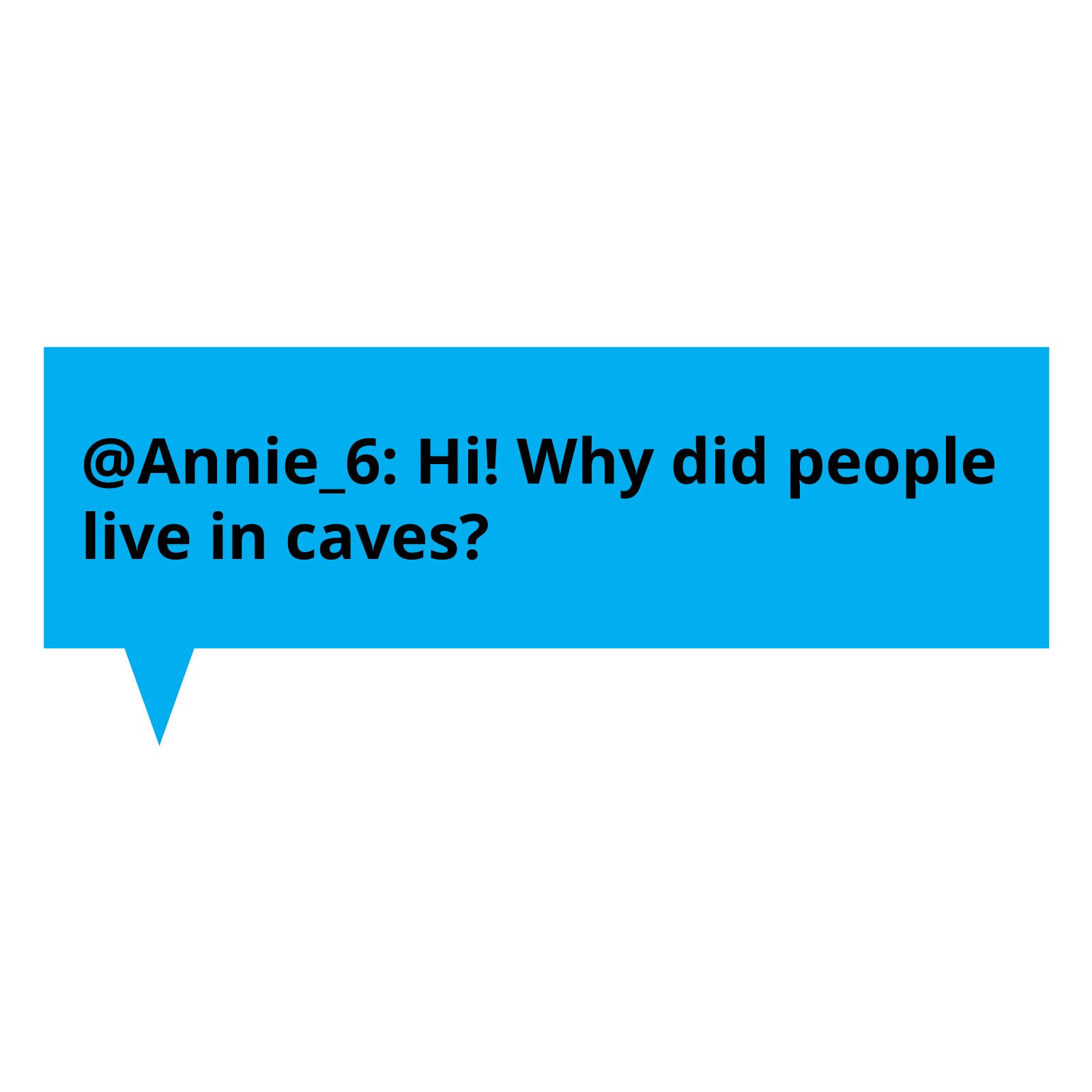
Hi Annie! Thanks for your question! Actually, people did… It was…We don’t live there anymore because…
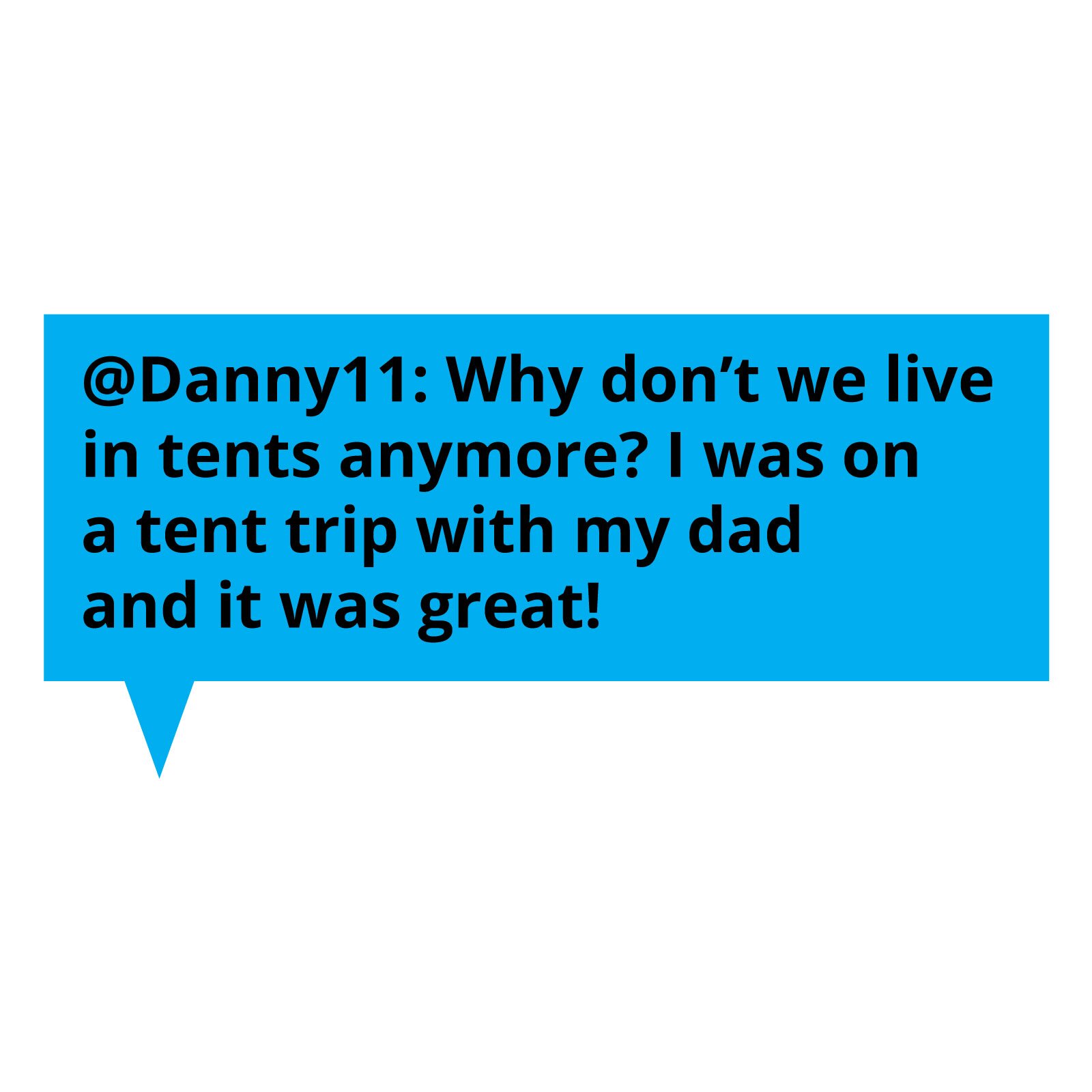
Hello…! Tents are… Some people still live in…
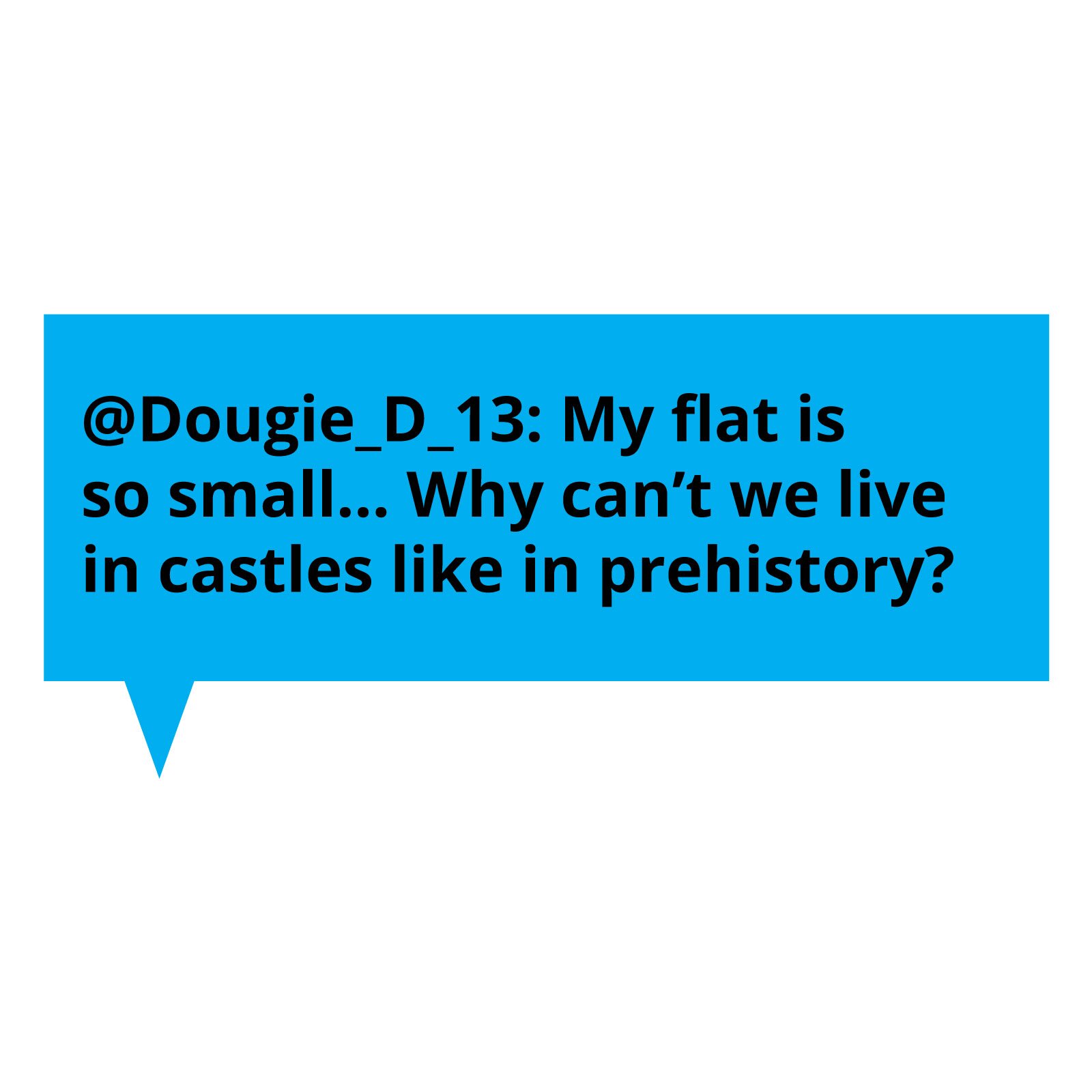
Hi… We sometimes must live in… It’s because of…
Hi Annie! Thanks for your question. It’s a very good question! Actually, people did live in caves as long as over 40000 years ago! They painted amazing pictures of animals there, perhaps similar to yours! But we don’t live there anymore, because we don’t need to hide from tigers and other dangerous animals, and we can build nice, warm houses!
Hello Danny! Camping is actually great, I love it, too! Tents are actually great portable homes and some tribes still use them and live in them, especially when they need to move and hunt. Did you do any fishing while you were camping? Some people, like tribes of fishermen and hunters, still live in such structures, as they can pick their house up and move to other hunting or fishing grounds.
Hi, Dougie! Unfortunately, we sometimes must live in tiny flats. It’s because of a process called urbanisation. It’s when a lot of people move into cities to look for work, and they all need to live somewhere. Castles are great, but they serve a different purpose: they have powerful walls and they are very good defensive structures. Knights and archers used to live there and they defended their kings. It wasn’t in prehistory though, it was much later. Castles were mostly built in the medieval times, about a thousand years ago!
3
Exercise8
Imagine you are giving a talk on an online stream. Your topic is the history of houses and you are taking questions from an audience that is mostly children. Try to come up with interesting answers using as many ideas and words from this material as you can. Write your answers in 2‑3 sentences in each case. Remember to match your language to their level!
RVUa6WlZvV8OJ
Ilustracja
Źródło: Konrad Szczodrak, domena publiczna.
R17seIh3uJzRn
(Uzupełnij).
Źródło: GroMar Sp. z o.o., licencja: CC BY-SA 3.0.
Show hintazurewhite
Hi Annie! Thanks for your question! Actually, people did… It was…We don’t live there anymore because…
Show answerazurewhite
Hi Annie! Thanks for your question. It’s a very good question! Actually, people did live in caves as long as over 40000 years ago! They painted amazing pictures of animals there, perhaps similar to yours! But we don’t live there anymore, because we don’t need to hide from tigers and other dangerous animals, and we can build nice, warm houses!
R1SYWQ3hyV8bL
Ilustracja
Źródło: Konrad Szczodrak, domena publiczna.
RnTrRsFNLoO0T
(Uzupełnij).
Źródło: GroMar Sp. z o.o., licencja: CC BY-SA 3.0.
Show hintazurewhite
Hello…! Tents are… Some people still live in…
Show answerazurewhite
Hello Danny! Camping is actually great, I love it, too! Tents are actually great portable homes and some tribes still use them and live in them, especially when they need to move and hunt. Did you do any fishing while you were camping? Some people, like tribes of fishermen and hunters, still live in such structures, as they can pick their house up and move to other hunting or fishing grounds.
RCZe9y6yeLl9P
Ilustracja
Źródło: Konrad Szczodrak, domena publiczna.
R18ynYntWAnb1
(Uzupełnij).
Źródło: GroMar Sp. z o.o., licencja: CC BY-SA 3.0.
Show hintazurewhite
Hi… We sometimes must live in… It’s because of…
Show answerazurewhite
Hi, Dougie! Unfortunately, we sometimes must live in tiny flats. It’s because of a process called urbanisation. It’s when a lot of people move into cities to look for work, and they all need to live somewhere. Castles are great, but they serve a different purpose: they have powerful walls and they are very good defensive structures. Knights and archers used to live there and they defended their kings. It wasn’t in prehistory though, it was much later. Castles were mostly built in the medieval times, about a thousand years ago!
3
Exercise9
People have come a long way in terms of the types of houses they live in. Write an article in which you describe the evolution of dwellings and explain the reasons behind the changes. Your article should be 200‑250 words long.
Exam tipazurewhite
Ludzie przeszli długą drogę w konstruowaniu domów, w których mieszkają. Napisz artykuł, w którym opiszesz ewolucję siedlisk ludzkich oraz wyjaśnisz powody stojące za zmianami. Twój artykuł powinien składać się z 200–250 wyrazów.
R1ZMxhZQzHfEq
(Uzupełnij).
Źródło: GroMar Sp. z o.o., licencja: CC BY-SA 3.0.
The Evolution of Dwellings: From Caves to Skyscrapers
Houses dwellings have … from to … showing our … Understanding the … might reveal …
Early humans didn’t … as they …. They often changed… in pursuit of…. The event that changed it was …. When people learnt how to …, they started ….
…was another important event which …. More and more people …and started living in … which later developed into ….
In the 20th century, … led to … . Modern architecture …
The evolution of dwellings has been … by … . … has influenced …
Additionally, the … has been … As people’s needs …
From … to …, dwellings reflect … . As we move forward, the … will shape …
The Evolution of Dwellings: From Caves to Skyscrapers
Human dwellings have evolved from caves to skyscrapers, reflecting our adaptability and innovation. Understanding the reasons behind these changes reveals the progress and ingenuity that shaped our living spaces.
Early humans didn’t construct permanent dwellings, as they were nomadic hunter‑gatherers. They often changed places in which they stayed in pursuit of animals to hunt. The invention that changed it all was the development of agriculture. When people learnt how to grow plants, they started constructing more permanent shelters.
Industrialization was another important event which caused changes in the way people lived. More and more people moved to cities and started living in densely‑populated houses which later developed into blocks of flats.
In the 20th century, technology and urbanization led to high‑rise apartments and skyscrapers. Modern architecture utilized steel, concrete, and glass for taller and efficient living spaces.
The evolution of dwellings has been driven by various factors. Societal progress has greatly influenced the way we live. Changes in economic systems and population growth have also shaped housing trends.
Additionally, the pursuit of comfort and safety has been a driving force behind the evolution of dwellings. As people's needs and aspirations have changed over time, so have their homes.
From caves to skyscrapers, dwellings reflect human civilization's journey. As we move forward, the quest for sustainable and inclusive living spaces will shape the future of our dwellings to meet the needs of future generations.