heart Możliwe odpowiedzi: 1. You can breathe because of this organ., 2. This organ is like a computer of your body., 3. You can move your legs because of this body part., 4. This organ pumps blood. brain Możliwe odpowiedzi: 1. You can breathe because of this organ., 2. This organ is like a computer of your body., 3. You can move your legs because of this body part., 4. This organ pumps blood. lung Możliwe odpowiedzi: 1. You can breathe because of this organ., 2. This organ is like a computer of your body., 3. You can move your legs because of this body part., 4. This organ pumps blood. knee Możliwe odpowiedzi: 1. You can breathe because of this organ., 2. This organ is like a computer of your body., 3. You can move your legs because of this body part., 4. This organ pumps blood.
heart Możliwe odpowiedzi: 1. You can breathe because of this organ., 2. This organ is like a computer of your body., 3. You can move your legs because of this body part., 4. This organ pumps blood. brain Możliwe odpowiedzi: 1. You can breathe because of this organ., 2. This organ is like a computer of your body., 3. You can move your legs because of this body part., 4. This organ pumps blood. lung Możliwe odpowiedzi: 1. You can breathe because of this organ., 2. This organ is like a computer of your body., 3. You can move your legs because of this body part., 4. This organ pumps blood. knee Możliwe odpowiedzi: 1. You can breathe because of this organ., 2. This organ is like a computer of your body., 3. You can move your legs because of this body part., 4. This organ pumps blood.
Źródło: GroMar Sp. z o.o., licencja: CC BY-SA 3.0.
1
Exercise2
Are these organs or body parts? Group the elements accordingly. Note: the number of elements in each set is equal.
Czy to narządy, czy części ciała? Odpowiednio pogrupuj elementy. Uwaga: liczba elementów w każdym zestawie jest taka sama.
RCn3XkzA2FnIQ
ORGANS Możliwe odpowiedzi: 1. knee, 2. leg, 3. lung, 4. brain, 5. stomach, 6. heart, 7. elbow, 8. nose BODY PARTS Możliwe odpowiedzi: 1. knee, 2. leg, 3. lung, 4. brain, 5. stomach, 6. heart, 7. elbow, 8. nose
ORGANS Możliwe odpowiedzi: 1. knee, 2. leg, 3. lung, 4. brain, 5. stomach, 6. heart, 7. elbow, 8. nose BODY PARTS Możliwe odpowiedzi: 1. knee, 2. leg, 3. lung, 4. brain, 5. stomach, 6. heart, 7. elbow, 8. nose
Źródło: GroMar Sp. z o.o., licencja: CC BY-SA 3.0.
2
Exercise3
Read the descriptions and choose the correct answer.
Przeczytaj opisy, a następnie wybierz poprawne odpowiedzi.
R1VTF5vJMADwl
1. We can hear sounds because of this body part. earlungnose
2. This body part helps us breathe. boneeyenose
3. The food goes into this body part. bonestomachheart
4. There are many of these inside our bodies. boneslungsears
1. We can hear sounds because of this body part. earlungnose
2. This body part helps us breathe. boneeyenose
3. The food goes into this body part. bonestomachheart
4. There are many of these inside our bodies. boneslungsears
Źródło: GroMar Sp. z o.o., licencja: CC BY-SA 3.0.
2
Exercise4
Drag and drop the words below to fill in the gaps.
Przeciągnij i upuść podane wyrazy, tak aby uzupełnić luki.
RLgc92D5tJc4J
1. Thanks to our legs, we can 1. breathe, 2. support, 3. works, 4. touch, 5. move around.
2. We use the lungs to 1. breathe, 2. support, 3. works, 4. touch, 5. move.
3. The bones 1. breathe, 2. support, 3. works, 4. touch, 5. move our bodies.
4. We use our hands to 1. breathe, 2. support, 3. works, 4. touch, 5. move things.
5. Our body 1. breathe, 2. support, 3. works, 4. touch, 5. move because of our organs.
1. Thanks to our legs, we can 1. breathe, 2. support, 3. works, 4. touch, 5. move around.
2. We use the lungs to 1. breathe, 2. support, 3. works, 4. touch, 5. move.
3. The bones 1. breathe, 2. support, 3. works, 4. touch, 5. move our bodies.
4. We use our hands to 1. breathe, 2. support, 3. works, 4. touch, 5. move things.
5. Our body 1. breathe, 2. support, 3. works, 4. touch, 5. move because of our organs.
Źródło: GroMar Sp. z o.o., licencja: CC BY-SA 3.0.
2
Exercise5
In each point, choose the form of have got which best fits the gap in the sentence.
W każdym punkcie wybierz formę have got, która najlepiej pasuje do luki w zdaniu.
RsOlDQa54eOzY
She … red hair. Her hair is blond. Możliwe odpowiedzi: 1. hasn’t got, 2. haven’t got, 3. has
Źródło: GroMar Sp. z o.o., licencja: CC BY-SA 3.0.
R14tKTjK8R03N
… you … blue eyes? Możliwe odpowiedzi: 1. Has/got, 2. Have/got, 3. Got/have
Źródło: GroMar Sp. z o.o., licencja: CC BY-SA 3.0.
RzTr2QMG81XCf
People … two ears to hear sounds. Możliwe odpowiedzi: 1. have got, 2. has got, 3. haven’t got
Źródło: GroMar Sp. z o.o., licencja: CC BY-SA 3.0.
RjgeaqyVy63mE
He … beautiful blue eyes. I’m jealous! Możliwe odpowiedzi: 1. hasn’t got, 2. have got, 3. has got
Źródło: GroMar Sp. z o.o., licencja: CC BY-SA 3.0.
R17U9MI3vLzOe
We … eyes to hear. That’s what we’ve got ears for. Możliwe odpowiedzi: 1. hasn’t got, 2. haven’t got, 3. have got
Źródło: GroMar Sp. z o.o., licencja: CC BY-SA 3.0.
2
Exercise6
Fill in the gaps with the correct forms of have got.
Uzupełnij luki poprawnymi formami have got.
R6CDWZxosYEUv
1. People Tu uzupełnij (have/got) two ears and two eyes but only one nose. 2. I Tu uzupełnij (have/not/got) one eye, but I can still see. 3. The human body Tu uzupełnij (have/got) many important parts. 4. Tu uzupełnij (we/have/got) elbows to move our arms? 5. The human body Tu uzupełnij (have/not/got) two noses.
1. People Tu uzupełnij (have/got) two ears and two eyes but only one nose. 2. I Tu uzupełnij (have/not/got) one eye, but I can still see. 3. The human body Tu uzupełnij (have/got) many important parts. 4. Tu uzupełnij (we/have/got) elbows to move our arms? 5. The human body Tu uzupełnij (have/not/got) two noses.
Źródło: GroMar Sp. z o.o., licencja: CC BY-SA 3.0.
3
Exercise7
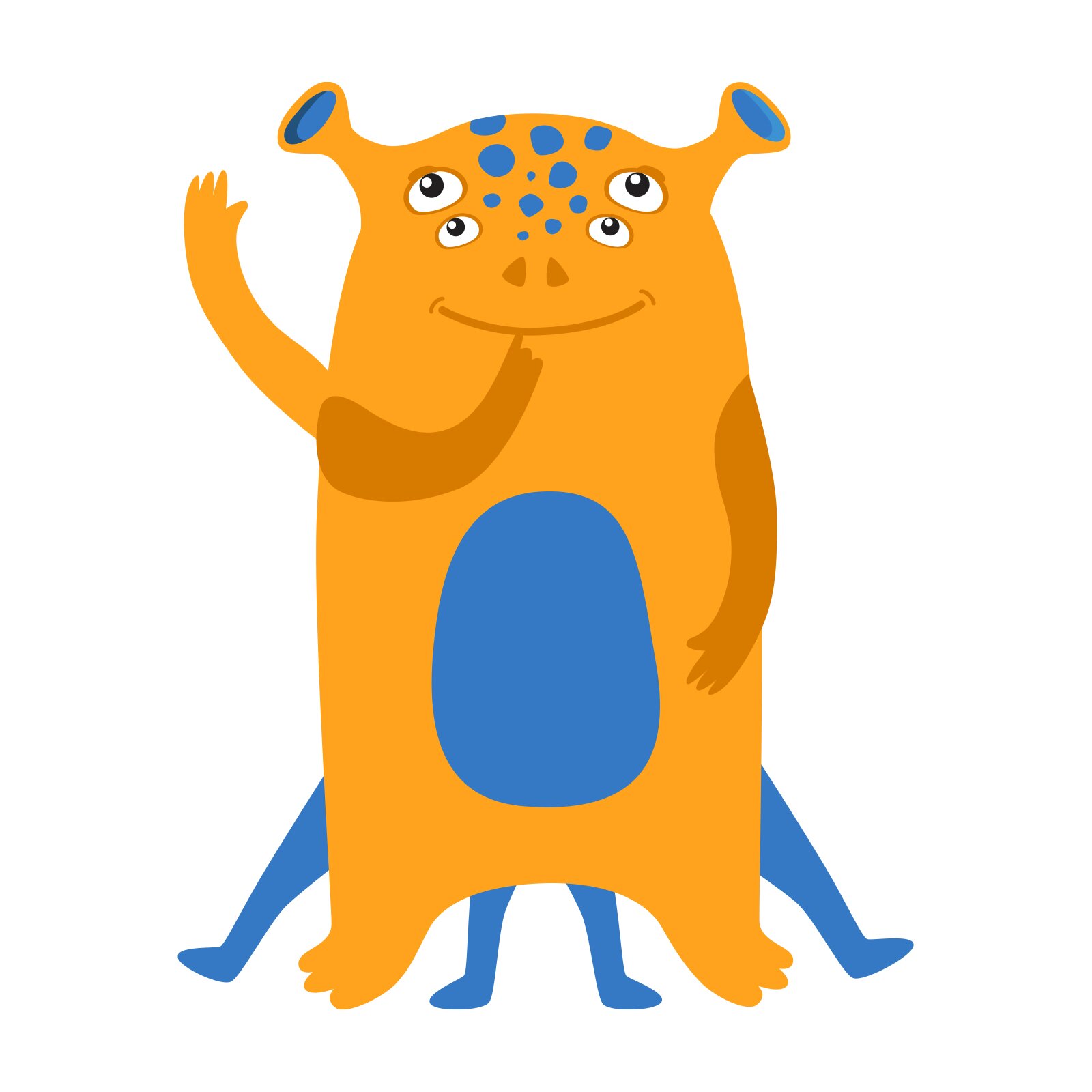
Imagine you’re on an alien planet. Describe an alien you can see in 3 sentences.
Wyobraź sobie, że jesteś na obcej planecie. Opisz w trzech zdaniach kosmitę, którego widzisz.
RfIbZYLGJrCfm
Źródło: GroMar Sp. z o.o., licencja: CC BY-SA 3.0.
It’s got ... It’s got ... and ... It’s ... and ...
It’s got four eyes. It’s got three arms and six legs. It’s blue and orange.
3
Exercise7
Describe the monster. Write at least 3 sentences.
Opisz potwora, używając przynajmniej trzech zdań.
R1X9d729DYdbH
Ilustracja
Źródło: Daniel Łyżwiński, licencja: CC BY-SA 3.0.
Rt6VOHyLTj9TX
(Uzupełnij).
Źródło: GroMar Sp. z o.o., licencja: CC BY-SA 3.0.
It’s got ...
It’s got ... and ...
It’s ... and ...
It’s got four eyes. It’s got three arms and six legs. It’s blue and orange.
3
Exercise8
You’re interested in the human body. Write a blog post in which you:
name the body parts humans have got;
describe what’s inside our bodies;
give one piece of information about an organ or a body part.
Your answer shouldn’t be longer than 50 words.
Jesteś zainteresowany/zainteresowana ludzkim ciałem. Stwórz notkę na blog, w której wyjaśnisz:
jakie części ciała mają ludzie;
co znajduje się wewnątrz ludzkiego ciała;
jak wygląda i jaką pełni funkcję jeden z wybranych przez ciebie narządów lub któraś z części ciała.
Twoja odpowiedź nie powinna być dłuższa niż 50 wyrazów.
Napisz swoją wypowiedź w języku angielskim. Podpisz się jako XYZ.
Rozwiń swoją wypowiedź w każdym z trzech podpunktów, tak aby osoba nieznająca polecenia w języku polskim uzyskała wszystkie wskazane w nim informacje. Pamiętaj, że długość wypowiedzi nie powinna przekraczać 50 wyrazów. Napisz każdy z realizowanych podpunktów w oddzielnym akapicie. W ten sposób będziesz wiedzieć, czy na pewno dany podpunkt został przez ciebie wystarczająco rozwinięty (nie licząc wyrazów podanych na początku wypowiedzi).
RIAFObYwzyjKg
(Uzupełnij).
Źródło: GroMar Sp. z o.o., licencja: CC BY-SA 3.0.
The human body is… / We’ve got… / We’ve got… too. / Inside our body, we’ve got… / The… can… / Because of our… we…
The human body is amazing! We’ve got two arms, legs, elbows and knees. We’ve got a nose and a mouth, too. Inside our body, we’ve got many organs. We’ve got a brain, a heart, a stomach, lungs and bones. The lungs are very important. Because of them, we can breathe.