1. What is each physical body made up of? 2. What states of matter do you know? 3. What is the difference in the molecular structure of gases, liquids and solids? 4. What are the characteristics of a given state of matter? Consider 3 levels of matter that you know.
1. Each physical body is made up of particles. 2. There are three basic states of matter: solid, liquid and gas. 3. These bodies are made up of the same particles, but they differ in the density of particles and the possibility of particle movement. 4. Solids retain their shape and volumevolumevolume, liquids take the shape of a vessel and retain their volume, gases take the shape of a vessel and occupy its entire volume.
Presentation of the shape change of various solids under the influence of applied force.
Research hypothesis
Depending on the material from which the body is made, we can change its shape by applying external force.
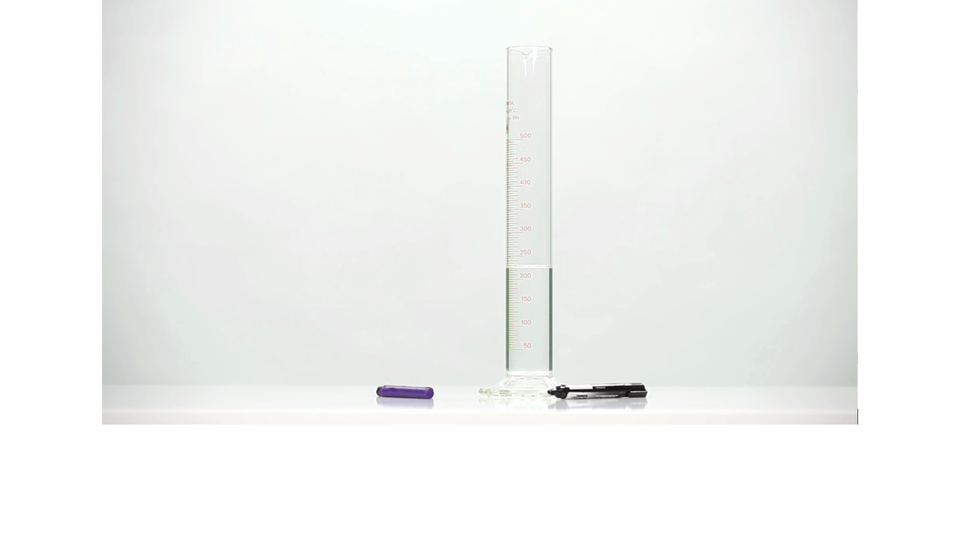
The course of the experiment
1. The teacher, using force, attempts to change the shape of bodies made from various materials. 2. For certain bodies, despite the use of high force, the change of shape is not possible, for example stone, ceramics, etc. 3. For a certain group of bodies, the shape change is relatively easy, for example chalk, plasticine or clay.
Solids retain a definite shape. However, there are materials whose shape can be easily changed, e.g. plasticine or clay.
R18Z3BX25wfVw1
Pokaz multimedialny - zmiana kształtu ciał stałych. Instrukcja obsługi z poziomu klawiatury: 1. Uruchomienie aplikacji - ENTER, 2. Na każdym ze slajdów czytany jest automatycznie tekst alternatywny po polsku, 3. Przy pierwszym uruchomieniu na pierwszym slajdzie, czytanie tekstu po angielsku - TAB, 4. Przejście między slajdami: do następnego slajdu - TAB, do poprzedniego slajdu - TAB + SHIFT, 5. Przejście do czytania napisu po angielsku - strzałka w górę + strzałka w dół (czyta tekst po angielsku widoczny na slajdzie).
Pokaz multimedialny - zmiana kształtu ciał stałych. Instrukcja obsługi z poziomu klawiatury: 1. Uruchomienie aplikacji - ENTER, 2. Na każdym ze slajdów czytany jest automatycznie tekst alternatywny po polsku, 3. Przy pierwszym uruchomieniu na pierwszym slajdzie, czytanie tekstu po angielsku - TAB, 4. Przejście między slajdami: do następnego slajdu - TAB, do poprzedniego slajdu - TAB + SHIFT, 5. Przejście do czytania napisu po angielsku - strzałka w górę + strzałka w dół (czyta tekst po angielsku widoczny na slajdzie).
a) Changing the shape of a plastic solid causes a change of its volumevolumevolume. b) If we divide a solid into parts, the sum of their volumes is equal to the volume of the solid before the division. c) The volume of a solid before division is smaller than the total volume of the solid parts.
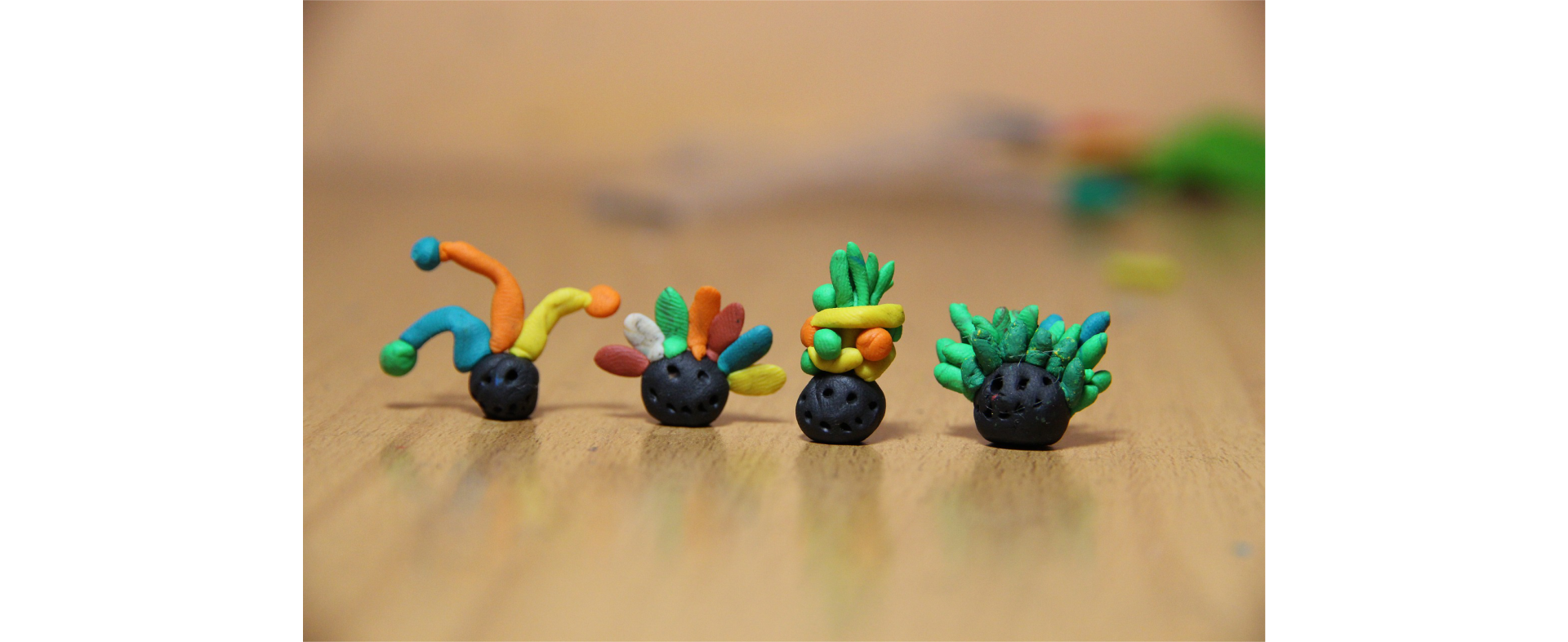
Na stole ustawione są w jednym rzędzie cztery figurki z plasteliny przedstawiające główki z różnymi czapkami. Od lewej: czapka królewskiego klauna, czyli trzy długie części zakończone kulkami, czapka z kolorowym pióropuszem, czapka z owocami, czapka z zielonymi liśćmi.
Plasticine figurines
Source: GroMar, licencja: CC BY 3.0.
RR4KEz6bpu2BJ
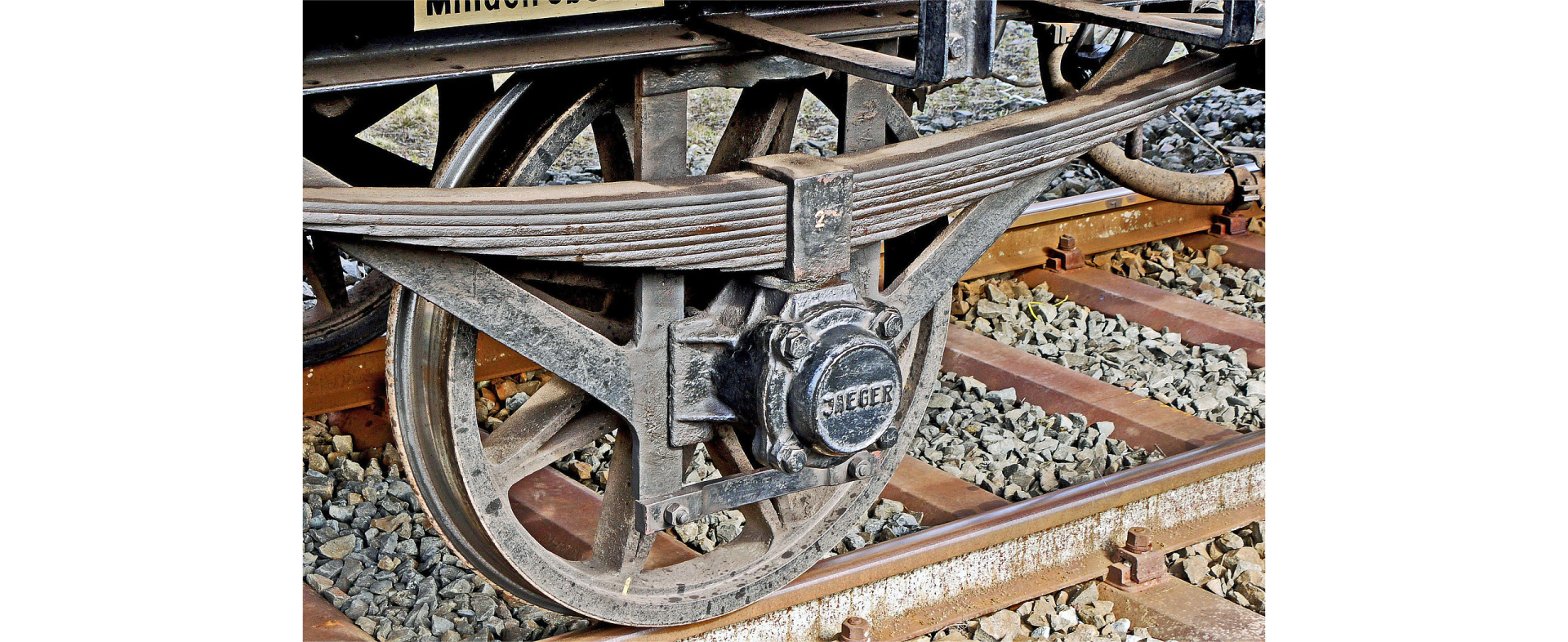
Zdjęcie przedstawia resory stalowe przy kołach starego wagonu stojącego na szynach.
Steel springs
Source: GroMar, licencja: CC BY 3.0.
R1QljJdXcmFck
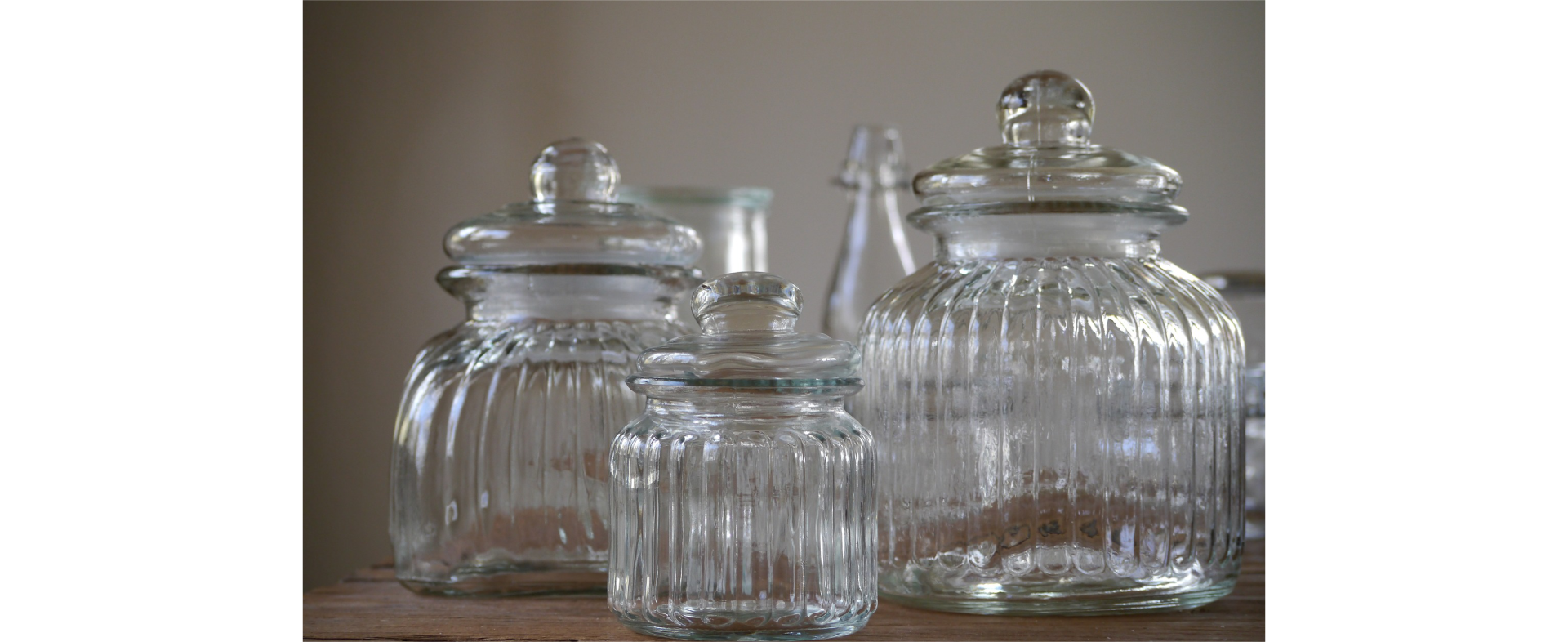
Zdjęcie przedstawiam szklane zdobione naczynia z pokrywkami na przykład na makaron, cukier.
a) Presented bodies are solid bodies, having a definite shape and volumevolumevolume. b) Plasticine figurines can be deformed permanently. The spring changes its shape under the influence of the applied force. However, after removing the influence of external force, it returns to the previous shape. Glass vessels can be broken due to the large force.
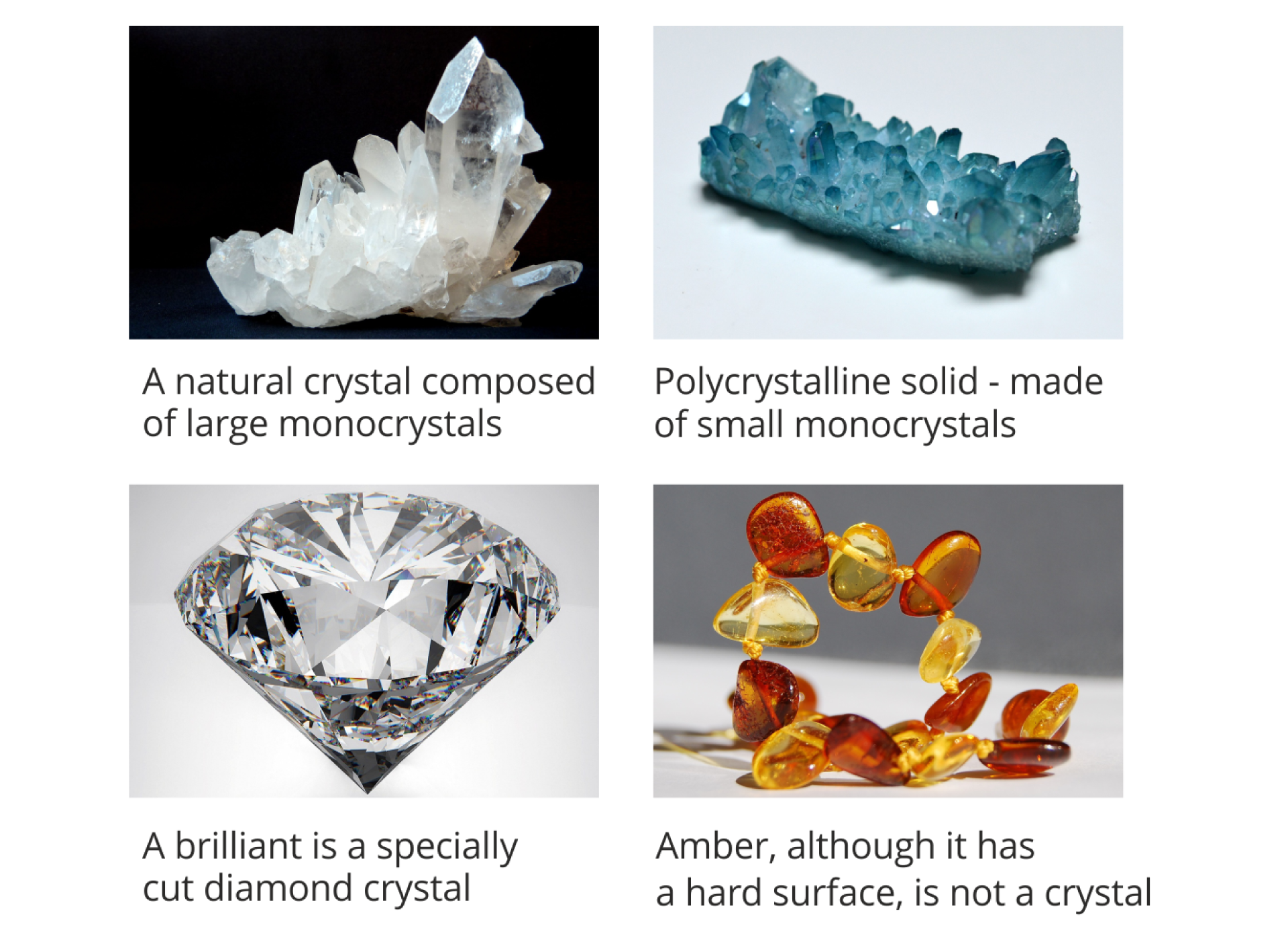
Ilustracja przedstawia cztery zdjęcia z opisami. Zdjęcie naturalnego kryształu złożonego z dużych monokryształów przezroczystych i białych opisane A natural crystal composed of large monocrystals. Zdjęcie ciała polikrystalicznego w odcieniach niebieskiego zbudowanego z niewielkich monokryształów opisane Pollycrystalline solid - made of small monocrystals. Zdjęcie dużego brylantu, czyli specjalnie oszlifowanego kryształu diamentu, opisane A brillant is a specially cut diamond crystal. Zdjęcie ciała amorficznego, czyli bransoletki z bursztynami w różnych odcieniach, opisane Amber, although it has a hard surface, is not a crystal.
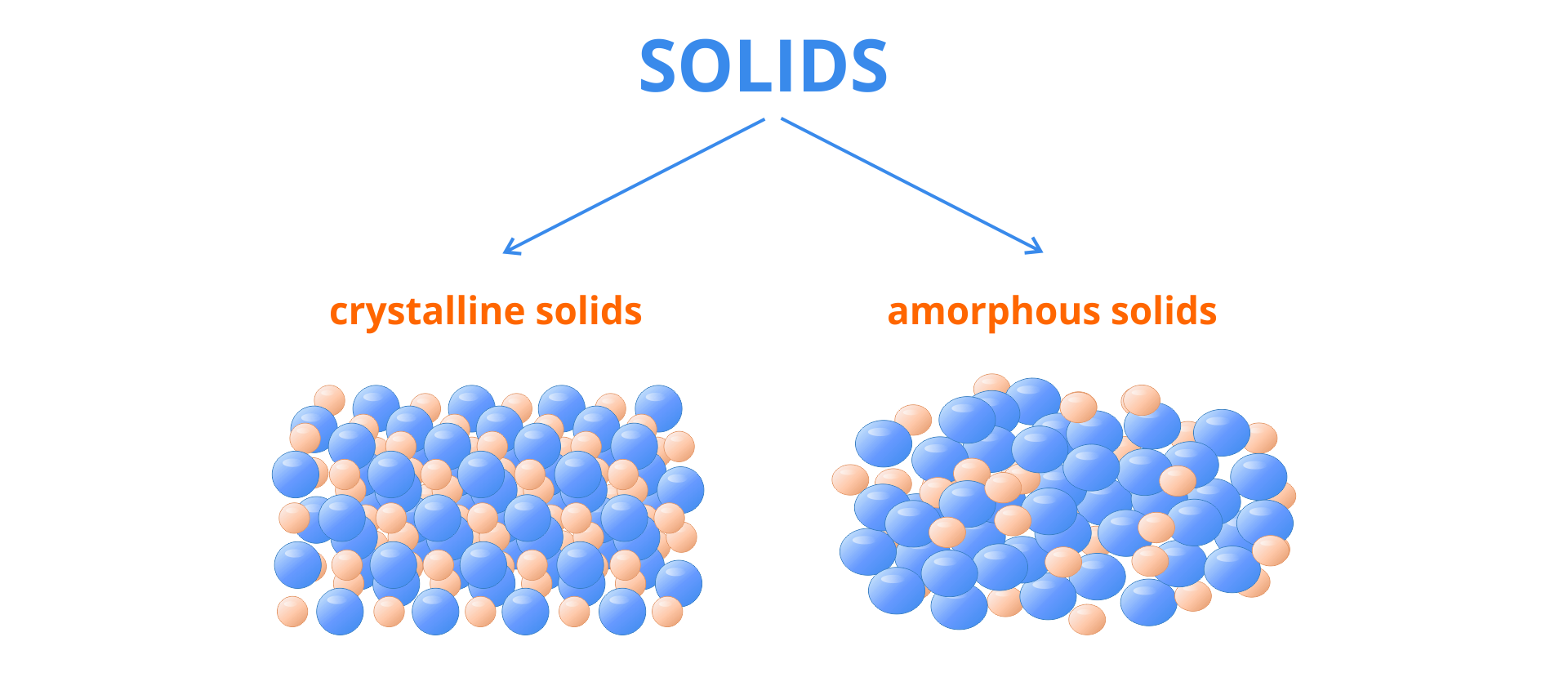
Refer to illustration presenting a comparison of the internal structure of a crystalline solid and an amorphous solidamorphous solidamorphous solid.
RDsWvT1F5vVsR
Rysunek przedstawiający porównanie wewnętrznej budowy ciała o budowie krystalicznej i o budowie amorficznej zwanej też budową bezpostaciową. Od góry napis solids, od niego dwie strzałki w dół do crystalline solids i amorphous solids. Pod crystalline solids zbiór złożony z kółek w dwóch rozmiarach ułożonych równomiernie. Pod amorphous solids zbiór elips w dwóch rozmiarach ułożonych nierównomiernie.
Comparison of the arrangement of molecules in crystalline and amorphous solid
The body made of one crystalcrystalcrystal is a monocrystal. The body made of many crystals is a polycrystalpolycrystalpolycrystal. A solid with a disordered structure of molecules is an amorphous solidamorphous solidamorphous solid.
Changing the shape of a solid does not affect its volume.
ElasticityelasticityElasticity is a physical property of the bodies in which the body returns to its original shape and volumevolumevolume after the action of the external deforming force has ceased.
PlasticityplasticityPlasticity is a physical property of the bodies in which a solid under the influence of external force undergoes permanent deformation.
BrittlenessbrittlenessBrittleness is a physical property of the bodies in which the material cracks or crumbles under the influence of external force.
There is no clear division into elastic, plastic and brittle solids. This division is conventional and depends on the magnitude of the force acting on the given body.
Some solids are composed of atoms, ions or molecules showing a regular spatial pattern. If we know the location of one atom or molecule, we are able to predict the position of the other. When we connect them all together with line segments, we get a certain geometrical structure called a lattice.
Not all solids have a crystalline structure. Some of them are characterized by a disordered molecular structure. Such bodies are called amorphous.
Exercises
R1AS2cGncPvoI
Exercise 5
Wersja alternatywna ćwiczenia: Determine which sentences are true. Możliwe odpowiedzi: 1. Writing with blackboard chalk on the board uses brittleness of the chalk., 2. Claying uses elastic deformation., 3. Hot forging uses the plastic properties of iron., 4. Sculpting in the rock material uses elastic action., 5. Archery uses the elasticity of the material from which the bow is made., 6. When cutting and polishing a diamond while making a brilliant, the brittleness of the diamond is used., 7. Jumping on the trampoline uses the plasticity of the trampoline material.
Wersja alternatywna ćwiczenia: Determine which sentences are true. Możliwe odpowiedzi: 1. Writing with blackboard chalk on the board uses brittleness of the chalk., 2. Claying uses elastic deformation., 3. Hot forging uses the plastic properties of iron., 4. Sculpting in the rock material uses elastic action., 5. Archery uses the elasticity of the material from which the bow is made., 6. When cutting and polishing a diamond while making a brilliant, the brittleness of the diamond is used., 7. Jumping on the trampoline uses the plasticity of the trampoline material.
Determine which sentences are true.
Writing with blackboard chalk on the board uses brittleness of the chalk.
Claying uses elastic deformation.
Hot forging uses the plastic properties of iron.
Sculpting in the rock material uses elastic action.
Archery uses the elasticity of the material from which the bow is made.
When cutting and polishing a diamond while making a brilliant, the brittleness of the diamond is used.
Jumping on the trampoline uses the plasticity of the trampoline material.
zadanie
Source: GroMar, licencja: CC BY 3.0.
Exercise 6
How can we get salt crystals (NaCl)?
Dissolve in a small amount of hot water so much salt that some of it remain undissolved. The vessel with concentrated solution is covered with paper, in which we make a small hole through which we put the thread inside so that it is submerged in the solution. We leave the vessel in a place with constant temperature. After some time, small crystals of salt will appear on the thread.
Exercise 7
Write in English what materials with crystalline and amorphous structure are used in your environment. What are they used for?
Materials with a crystalline structure are, for example, sugar used for food, natural or artificial crystals used in the production of jewellery. Amorphous materials are glass, plastic packaging used for food.
R11Vor0SH50mU
Exercise 8
Wersja alternatywna ćwiczenia: Indicate which pairs of expressions or words are translated correctly. Możliwe odpowiedzi: 1. kryształ - crystal, 2. ciało amorficzne - amorphous solid, 3. sieć krystaliczna - crystal lattice, 4. stan skupienia - state of matter, 5. plastyczność - brittleness, 6. kruchość - plasticity
Wersja alternatywna ćwiczenia: Indicate which pairs of expressions or words are translated correctly. Możliwe odpowiedzi: 1. kryształ - crystal, 2. ciało amorficzne - amorphous solid, 3. sieć krystaliczna - crystal lattice, 4. stan skupienia - state of matter, 5. plastyczność - brittleness, 6. kruchość - plasticity
Indicate which pairs of expressions or words are translated correctly.
kryształ - crystal
ciało amorficzne - amorphous solid
sieć krystaliczna - crystal lattice
stan skupienia - state of matter
plastyczność - brittleness
kruchość - plasticity
zadanie
Source: GroMar, licencja: CC BY 3.0.
R10IdYWqbutDk1
Interaktywna gra, polegająca na łączeniu wyrazów w pary w ciągu jednej minuty. Czas zaczyna upływać wraz z rozpoczęciem gry. Jeden ruch to odkrywanie najpierw jednej potem drugiej karty z wyrazem. Każdy wyraz jest odczytywany. Kolejny ruch to odkrywanie trzeciej i czwartej karty. W ten sposób odsłuchasz wszystkie wyrazy. Nawigacja z poziomu klawiatury za pomocą strzałek, odsłuchiwanie wyrazów enterem lub spacją. Znajdź wszystkie pary wyrazów.
Interaktywna gra, polegająca na łączeniu wyrazów w pary w ciągu jednej minuty. Czas zaczyna upływać wraz z rozpoczęciem gry. Jeden ruch to odkrywanie najpierw jednej potem drugiej karty z wyrazem. Każdy wyraz jest odczytywany. Kolejny ruch to odkrywanie trzeciej i czwartej karty. W ten sposób odsłuchasz wszystkie wyrazy. Nawigacja z poziomu klawiatury za pomocą strzałek, odsłuchiwanie wyrazów enterem lub spacją. Znajdź wszystkie pary wyrazów.
Match Polish terms with their English equivalents.
kruchość
kryształ
crystal
polycrystal
brittleness
sprężystość
amorphous solid
elasticity
ciało amorficzne
polikryształ
Source: Zespół autorski Politechniki Łódzkiej, licencja: CC BY 3.0.