Swedish Deluge
why Poland was waging war against Sweden;
the history of the Swedish Deluge and the origins of its name;
the importance of the defence of the Jasna Góra Monastery for the Poles;
the role of Stefan Czarniecki during the war with Sweden;
the consequences of the 1655‑1660 war with Sweden.
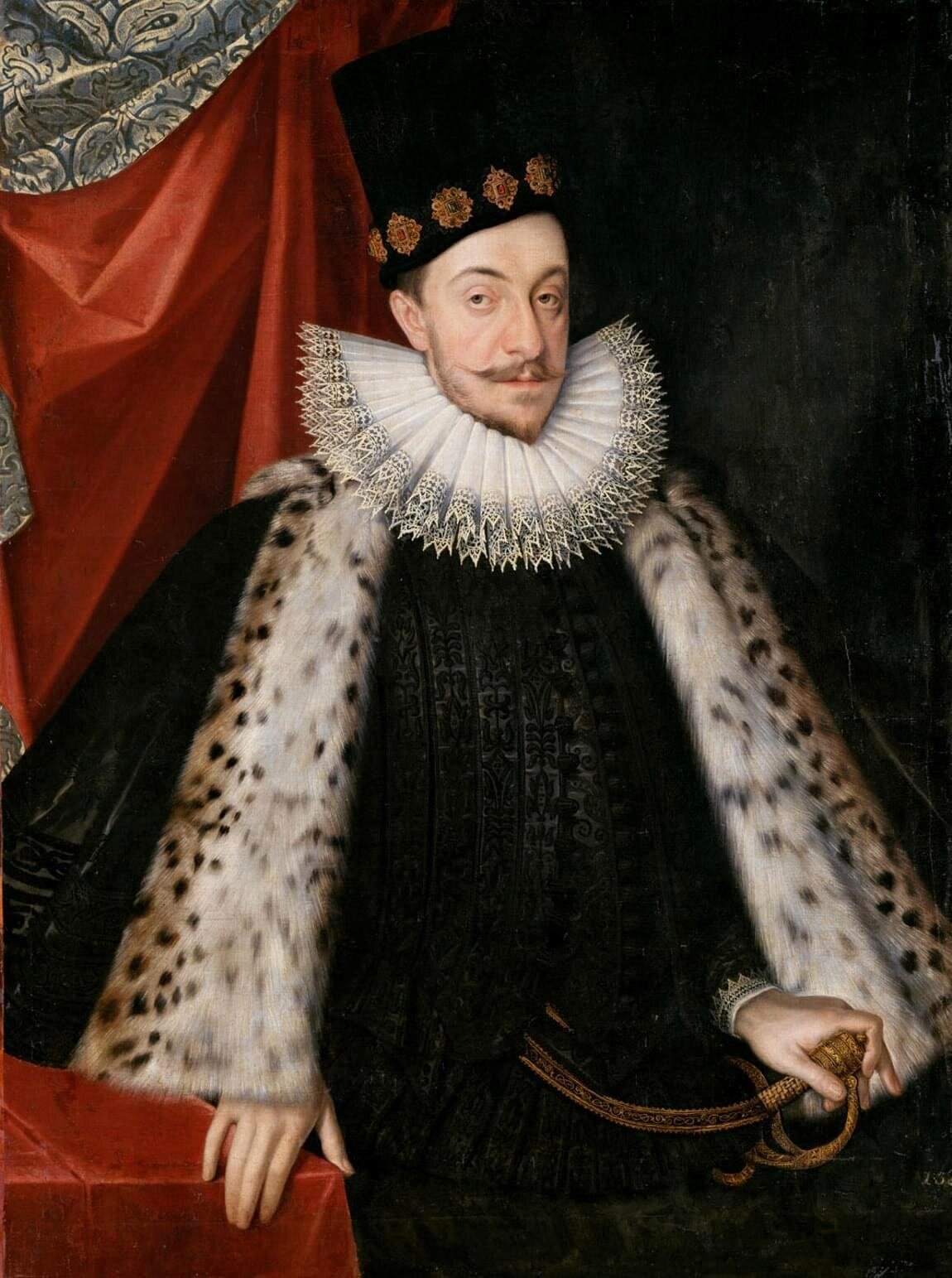
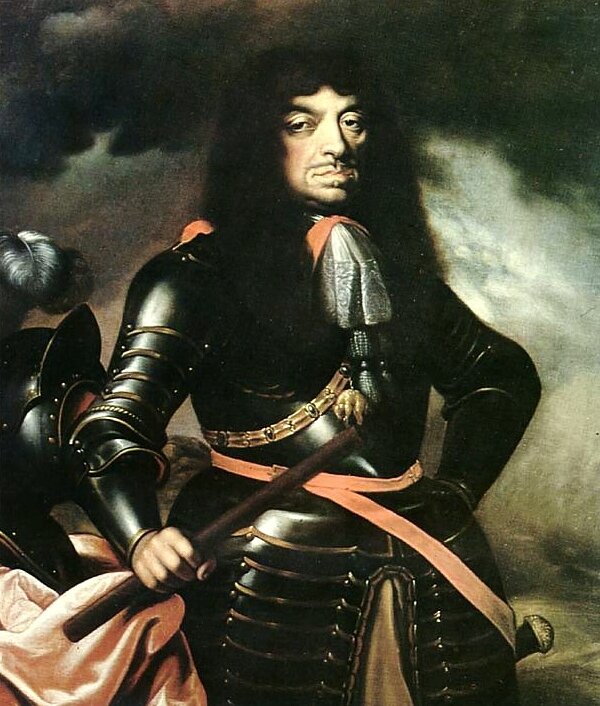
After the election of Sigismund III Vasa as the King of Poland, in time the Republic of Poland and Sweden were merged by a personal union (after the death of his father, Sigismund was also the King of Sweden). But soon his power was overthrown there. Sigismund, like his sons later, did not intend to give up his fatherhood and stubbornly called himself the King of Sweden. Additionally, Livonia become a major hotspot between the Polish‑Lithuanian Commonwealth and Sweden. The Swedes sought to occupy Livonia and then control Pomerania, so that the Baltic Sea would become a Swedish internal sea. This resulted in a long‑standing conflict. In the years 1655–1660, the so‑called Swedish Deluge took place. A well‑organized Swedish army invaded and occupied most of Poland and Lithuania, destroying and robbing many cultural goods. King John Casimir fled the country. The neighbouring countries even planned to divide up the Commonwealth lands between themselves. The heroic *defence of the Pauline Jasna Góra Monastery near Częstochowa became a powerful rallying symbol. On the other hand, in Wielkopolska (Greater Poland) Stefan Czarniecki, an outstanding military commander, used hit‑and‑run tacticshit‑and‑run tactics (guerilla warfare) against the Swedes. As a result of war and diplomatic efforts, the alliances were reversed, and Swedes withdrew from Poland and Lithuania. Later, the Treaty of Oliva was struck, under which John Casimir relinquished his rights to the Swedish throne and recognised earlier Swedish conquests in Livonia.
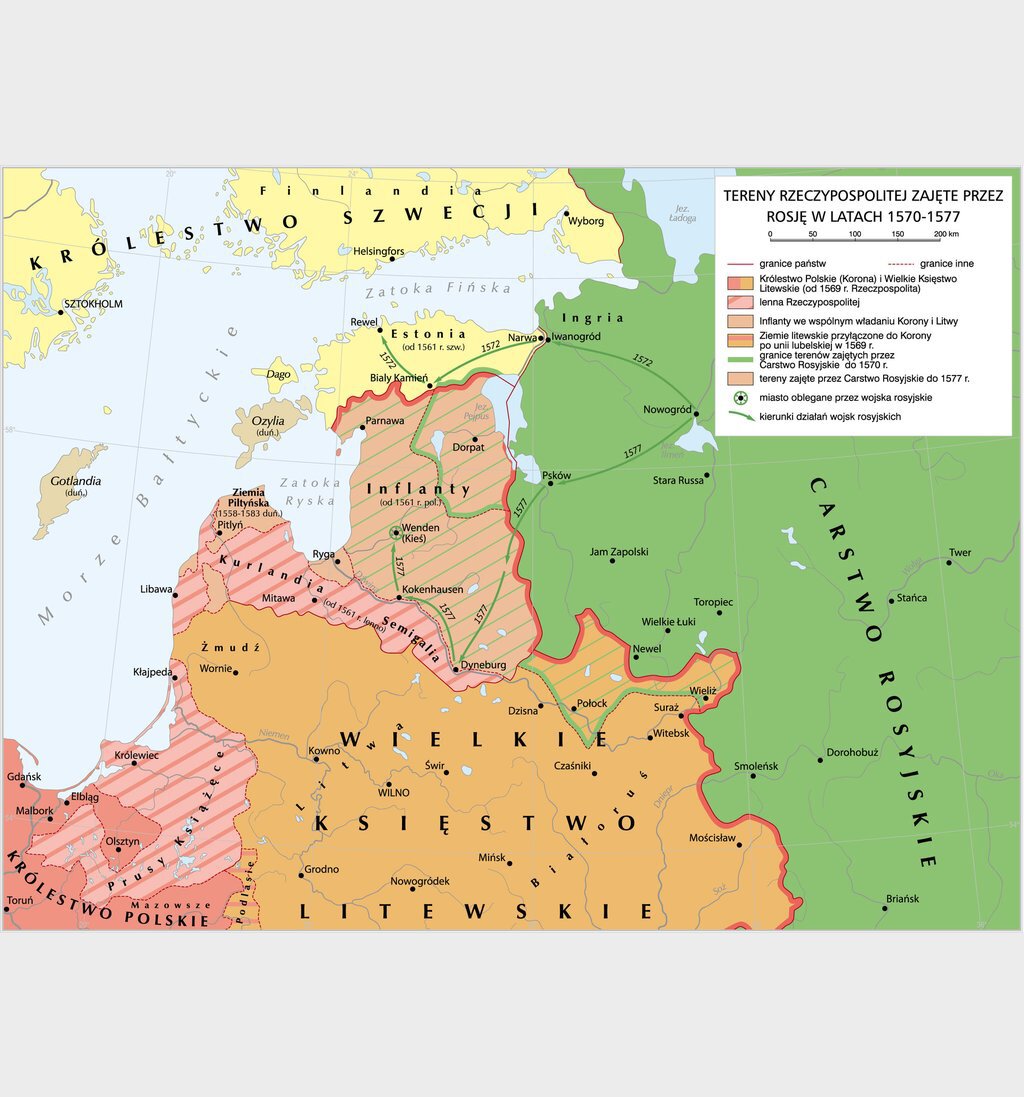
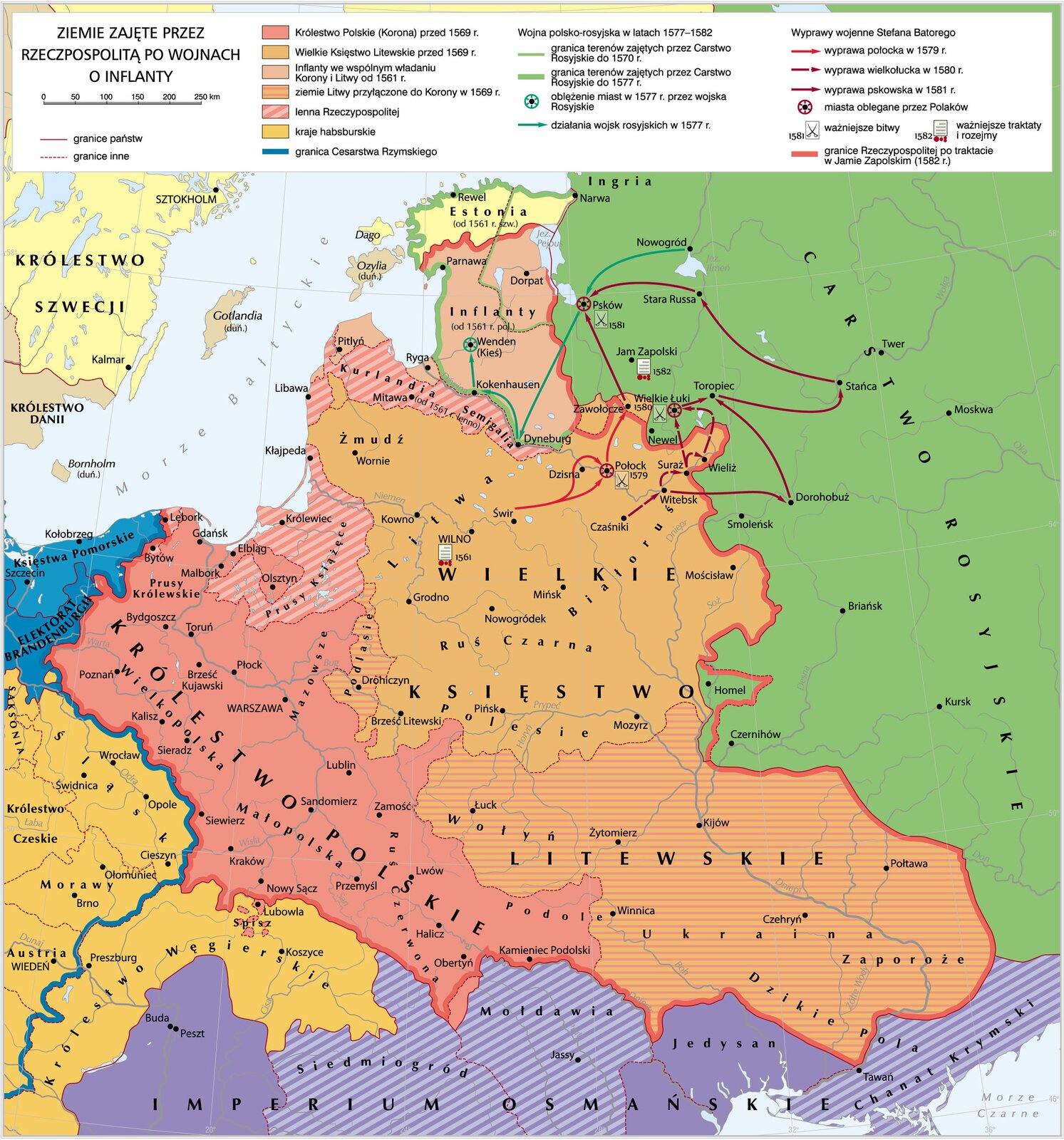
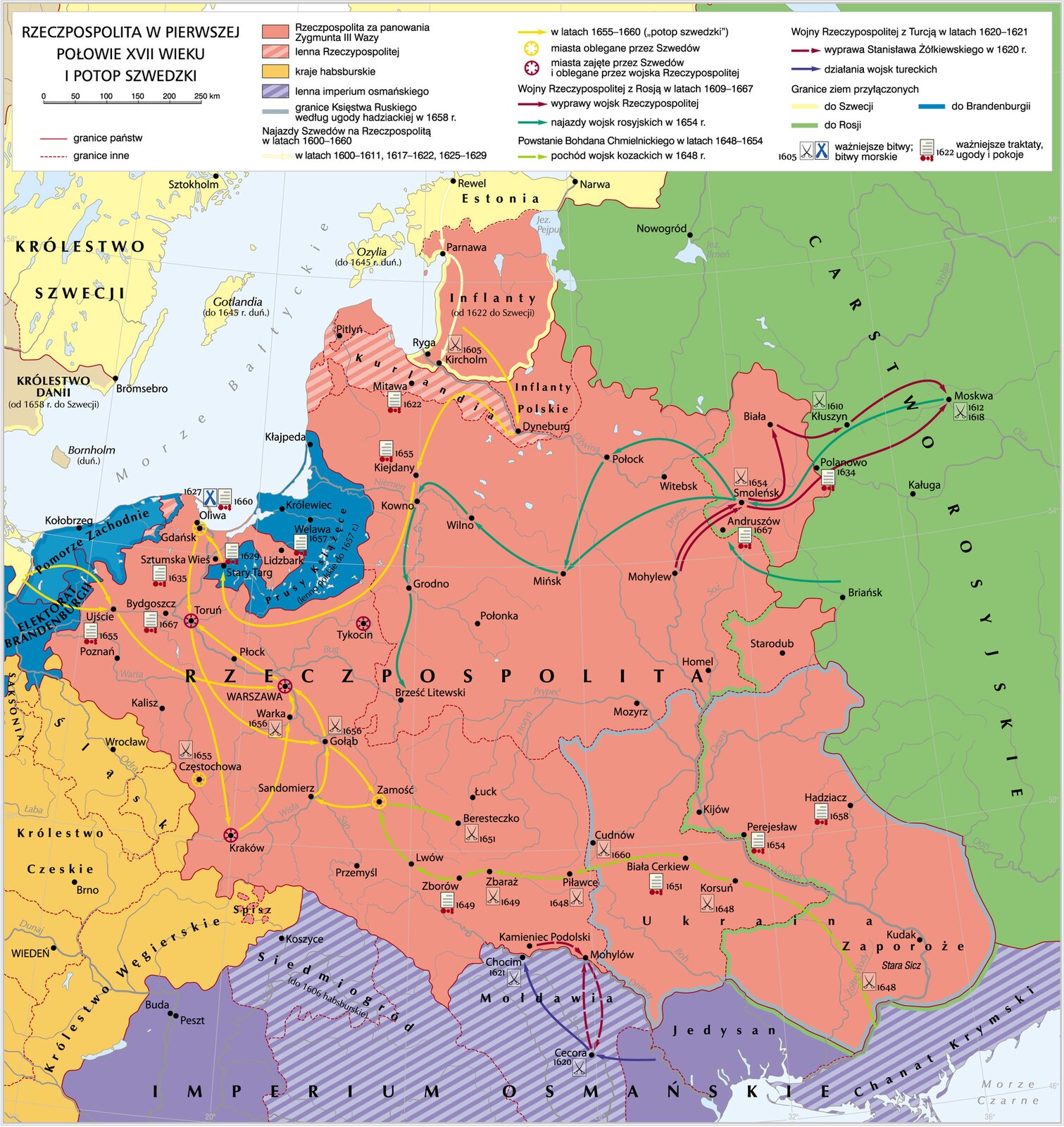
Point out the sentences that are correct.
- Poland and Sweden were located on the Baltic Sea.
- The Commonwealth and Sweden shared a land border.
- Moscow had access to the Baltic Sea.
- The city of Riga belonged to the Commonwealth.
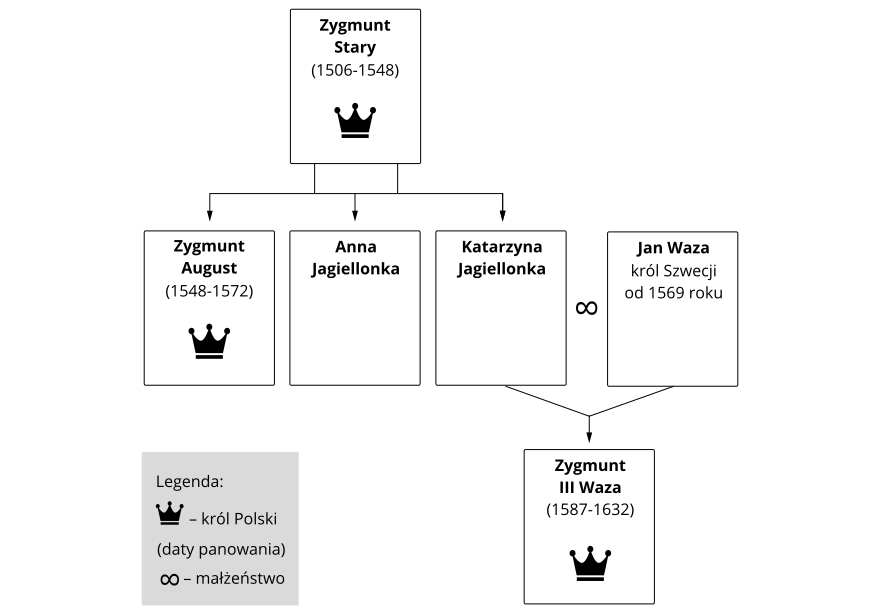
Choose the correct sentences.
- Sigismund III Vasa, king of Poland and Sweden, was the son of John Vasa and Catherine Jagiellon.
- John Waza, a Swedish prince, married Catherine Jagiellon.
- Sigismund I the Old was the grandfather of Sigismund III Vasa.
- Catherine Jagiellon was the daughter of Sigismund I the Old.
- Anna Jagiellon was the sister of Sigismund III Vasa.
- Sigismund II Augustus was the brother of Catherine Jagiellon.
Read about the most important events concerning the Polish‑Swedish relations before the Deluge. How do you assess these relations?
Read the source text and do the following exercises:
Describe the behaviour of the Swedish soldiers in the occupied areas of the Commonwealth.
List the crimes committed by the Swedes.
Roczniki miasta Łowicza pisane w latach 1648–1659Najpierw część żołnierzy szwedzkich, która została się do obrony zamku i miasta, gdy król [król szwedzki Karol X Gustaw] z wojskiem dalej po całym królestwie grasował, zajęła prawie wszystkie domy. Musieliśmy, choć niechętnie, żywić ich i konie. Broń wszystkim odebrali, niektórych wypędzili z domów, innym zabrali wszystkie sprzęty i co miesiąc brali z każdego domu podatki nie do zniesienia [...]. Nie szczędzili i świątyń, najpierw całkiem zburzyli klasztor bonifratrów [...], potem zrównali z ziemią kościół św. Jana Chrzciciela [...], zabrali szaty kościelne, kielichy, krzyże, świeczniki itp. [...] Z organów powyrywali piszczałki, ludzi przebywających w kościele pobili i ograbili, wreszcie pół miasta spalili.
Source: Andrzej Kazimierz Cebrowski, Roczniki miasta Łowicza pisane w latach 1648–1659.
Match the characters to their descriptions.
King of Poland, patron of culture and art, during his reign there were long years of peace. He was universally educated, and it is to him that we owe the Sigismund's Column in Warsaw., Outstanding Polish commander, Field Crown Hetman, became famous battling the Swedes during the Swedish Deluge with his use of guerilla warfare., King of Sweden, carried out a failed invasion of Poland between 1655 and 1660., King of Sweden, eminent commander and reformer, led Sweden to military and economic power., Admiral of the Polish war fleet, chief commander in the victorious naval battle of Oliwa, nowadays called the "Polish Horatio Nelson"., King of Poland and Sweden, was dethroned in Sweden by his uncle on father's side. Moved the capital to Warsaw. He was the longest reigning election ruler - from 1587 to 1632., Field Crown Hetman, commander of the Polish Army in the Battle of Trzciana., Prior of the Pauline Jasna Góra Monastery, he commanded the defence of the monastery during the Swedish Deluge., King of Poland. During his reign, Poland fought wars on many fronts against Sweden, Moscow and the uprising Cossacks. After the death of his wife and in the absence of support for his reforms, he abdicated and left Poland., Great Lithuanian Hetman, one of the most notable military leaders of the Polish–Lithuanian Commonwealth, achieved a great victory in the battle of Kircholm.
| Sigismund III Vasa | |
| Władysław IV Vasa | |
| Jan Karol Chodkiewicz | |
| Stanisław Koniecpolski | |
| Gustav II Adolph | |
| Charles X Gustav | |
| John II Casimir Vasa | |
| Stefan Czarniecki | |
| Augustyn Kordecki | |
| Arend Dickmann |
Keywords
Swedish Deluge, John Casimir, Defence of Częstochowa
Glossary
wolna elekcja – w Rzeczypospolitej Obojga Narodów był to wybór monarchy przez szlachtę, nieprzestrzegający zasad sukcesji dynastycznej. Pierwsza wolna elekcja miała miejsce w 1573 roku - wybrano wtedy na króla Polski Henryka Walezego.
detronizacja – pozbawienie siłą lub traktatem panującego władcy tronu. Najczęściej związana jest z przejęciem władzy przez inną osobę lub grupę osób, zamachem stanu.
abdykacja – przedwczesne zrzeczenie się, ustąpienie ze stanowiska, panującego władcy z tronu i jego praw tytularnych. Może być dobrowolne, np. ze względu na stan zdrowia lub przymusowa, wymuszona przez okoliczności lub otoczenie.
pielgrzymka – podróż do miejsc świętych i kultu religijnego podjęta z powodów religijnych, odbywana najczęściej z powodów zadośćuczynienia za grzechy, wyrażenia prośby o zdrowie i pomyślność lub w podziękowaniu za okazaną przez Boga łaskę.
ojciec – w Polsce jest to zwyczajowy tytuł stosowany wobec zakonników i członków zakonów.
bastion – jeden z elementów umocnień w dawnych fortyfikacjach. Najczęściej znajdowały się na rogach lub załamaniach i przybierały kształt trójkąta, rombu lub pięcioboku.
husaria – polska jazda w początkowym okresie lekka, z czasem przekształcona w ciężką, zaliczana do najskuteczniejszych formacji wojskowych w dziejach kawalerii. Charakterystyczną cechą były długie, nawet 5 m, kopie oraz przymocowane do pleców zbroi paradnej skrzydła, które najprawdopodobniej nie były używane w czasie walki.
roczniki – inaczej annały, chronologiczny spis najważniejszych wydarzeń dla danego kraju lub społeczności. Były najwcześniejszą formą piśmiennictwa historiograficznego, czyli opisującego historię.
wojna szarpana – inaczej wojna podjazdowa, rodzaj walki stosowany przez stronę słabszą, która unika bezpośredniego starcia w rozstrzygającej bitwie, atakując mniejsze oddziały wroga, jego zaplecze i obozowiska.