The Kościuszko Uprising
who deems Tadeusz Kościuszko a national hero and why;
who were the kosynierzykosynierzy;
why did Tadeusz Kościuszko make the Proclamation of PołaniecProclamation of Połaniec;
how did the Poles defend the principles of the Constitution of 3 May 1791 and what was left of their independence.
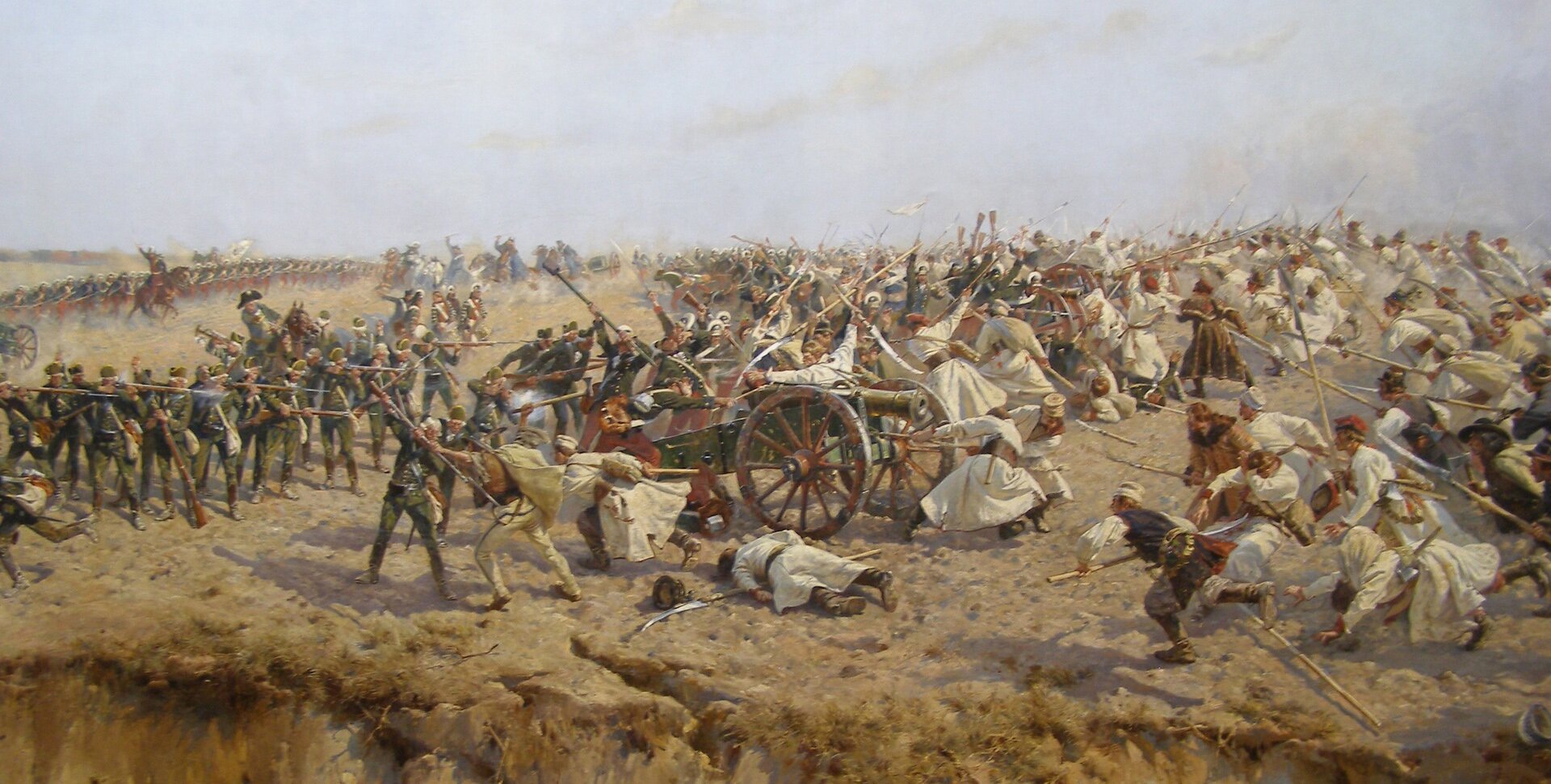
In the wake of the Second Partition of Poland in 1794, an uprising insurrectioninsurrection began. The leader of the Polish military, joined by scythe‑wielding peasants (kosynierzy), was Tadeusz Kościuszko, a hero of the American War of Independence. At first, the insurgents achieved a degree of success – for example in the Battle of Racławice, where they defeated the Russian army while suffering relatively small losses. Soon after those victories, though, defeats followed. On 10 October 1794, in the Battle of Maciejowice, the Polish army lost, and Kościuszko, wounded, was taken prisoner. Soon after, the Russians captured Warsaw. The uprising collapsed.
One document signed by the King was met with indignation. Stanisław August Poniatowski announced that he was joining the pro‑Russian Targowica . The first sentence was:
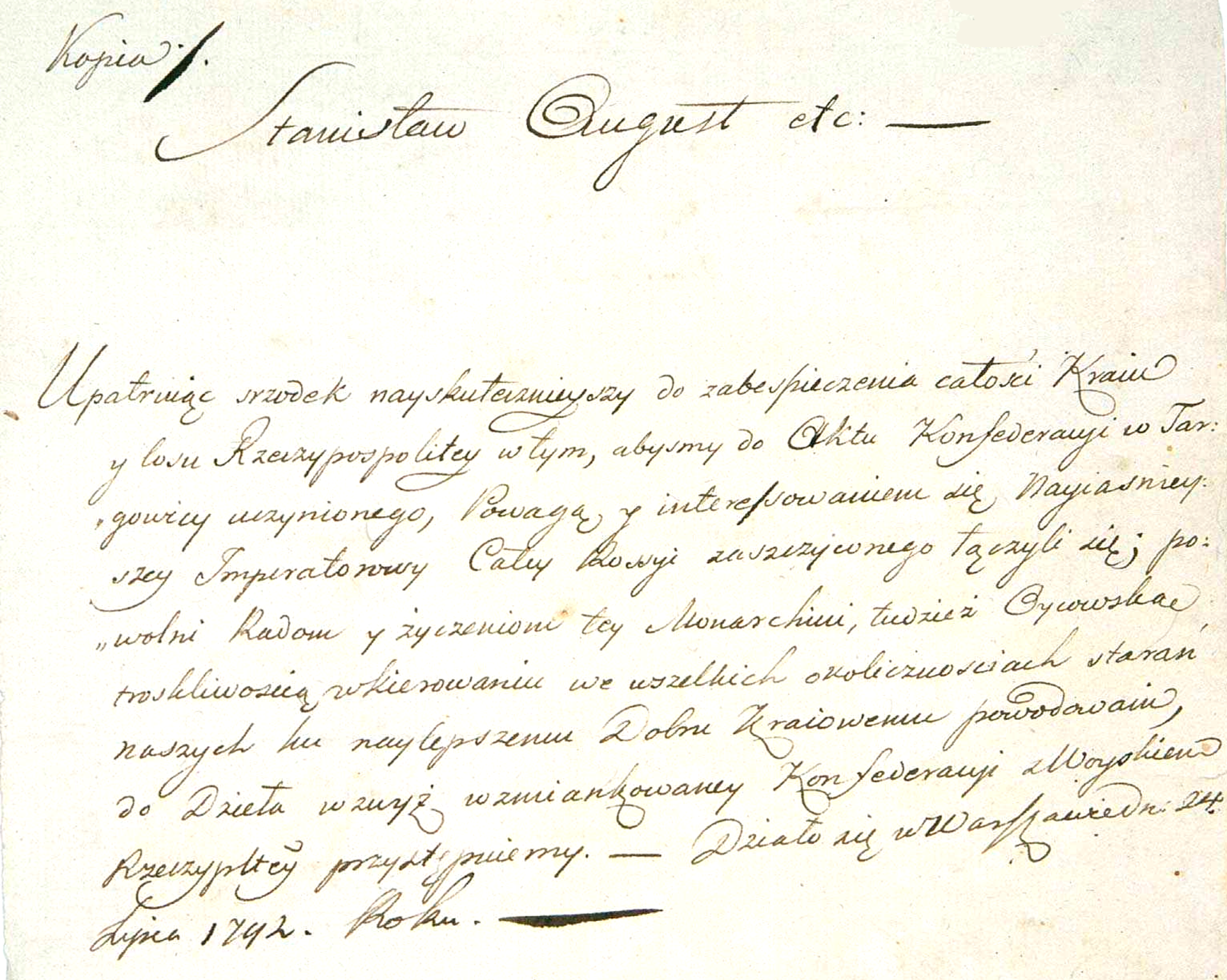
Upatrując środek najskuteczniejszy do zabezpieczenia całości kraju i losu Rzeczypospolitej w tym, abyśmy do konfederacji w Targowicy uczynionej, powagą i interesowaniem się Najjaśniejszej Imperatorowej całej Rosji zaszczyconego, przyłączyli się.
Mark the truthful sentences based on the quoted excerpt.
- The Targowica Confederation supported the Constitution of 3 May 1791.
- The King thought that joining Targowica would help maintain the unity of the country.
- The King justified his decision with the care for the fate of Poland.
- The Russians supported the reforms of the Great Sejm.
Read the excerpt from Tadeusz Kościuszko’s oath, sworn on 24 March 1794 in Cracow, then indicate which of the statements listed below are true.
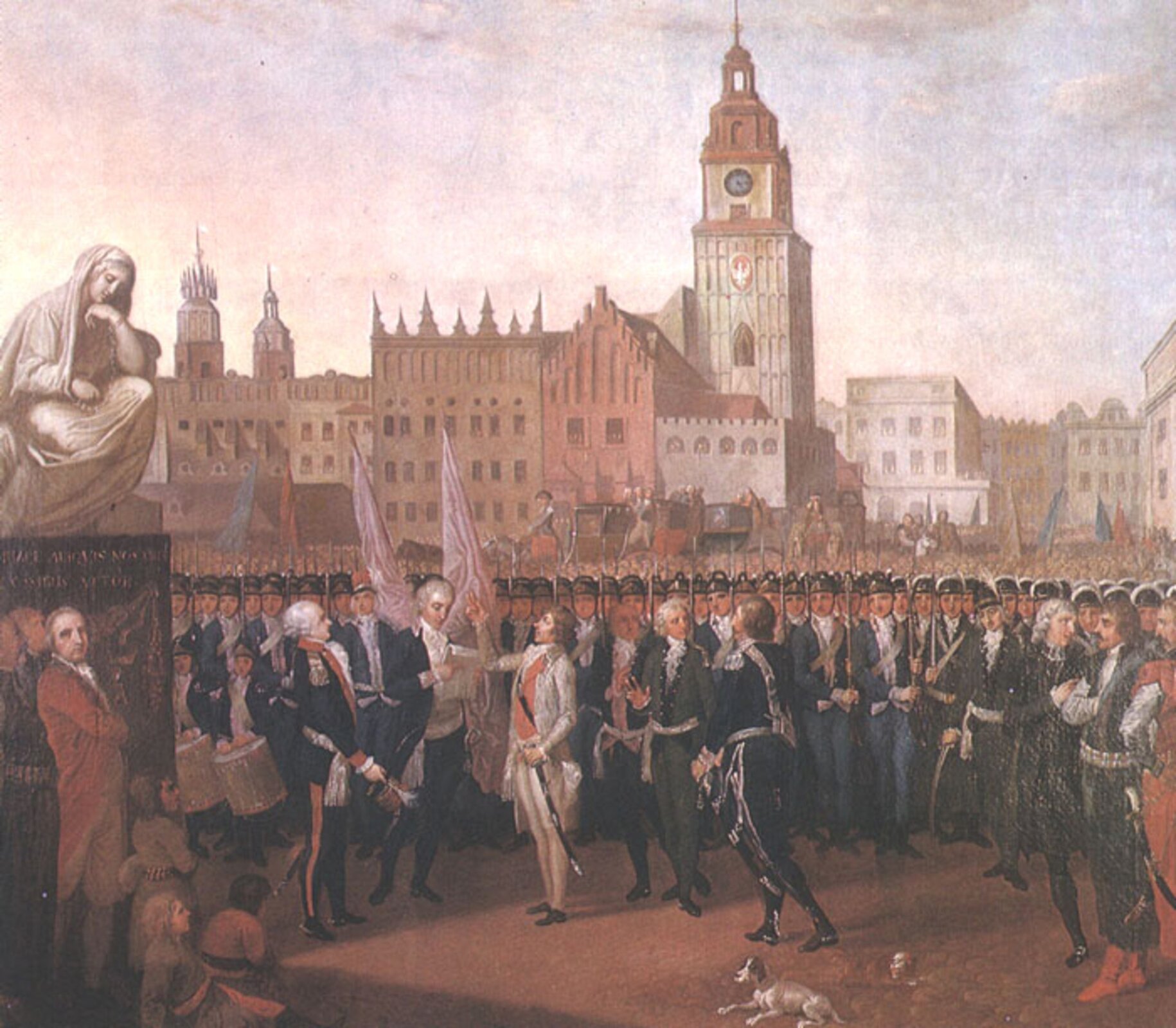
Ja, Tadeusz Kościuszko, przysięgam w obliczu Boga całemu Narodowi Polskiemu, iż powierzonej mi władzy na niczyj prywatny ucisk nie użyję, lecz jedynie jej dla obrony całości granic, odzyskania samowładności Narodu i ugruntowania powszechnej wolności używać będę.
Mark the truthful statements.
- Tadeusz Kościuszko promised a quick end to the war.
- King Poniatowski was supposed to become a leader of the Uprising alongside Kościuszko.
- Tadeusz Kościuszko did not use his authority for private ends.
- Tadeusz Kościuszko used his authority to defend the country and protect Poland’s freedom.
- Tadeusz Kościuszko swore an oath to the entire Polish nation.
Mark the correct answers.
- the peasants’ reluctance to risk their lives at war.
- the peasants’ costumes, acting as their uniforms.
- Wojciech Bartosz, who extinguished the cannon’s fuse using his cap, preventing it from firing.
- scythes held in their hands instead of firearms.
Mark the correct answer.
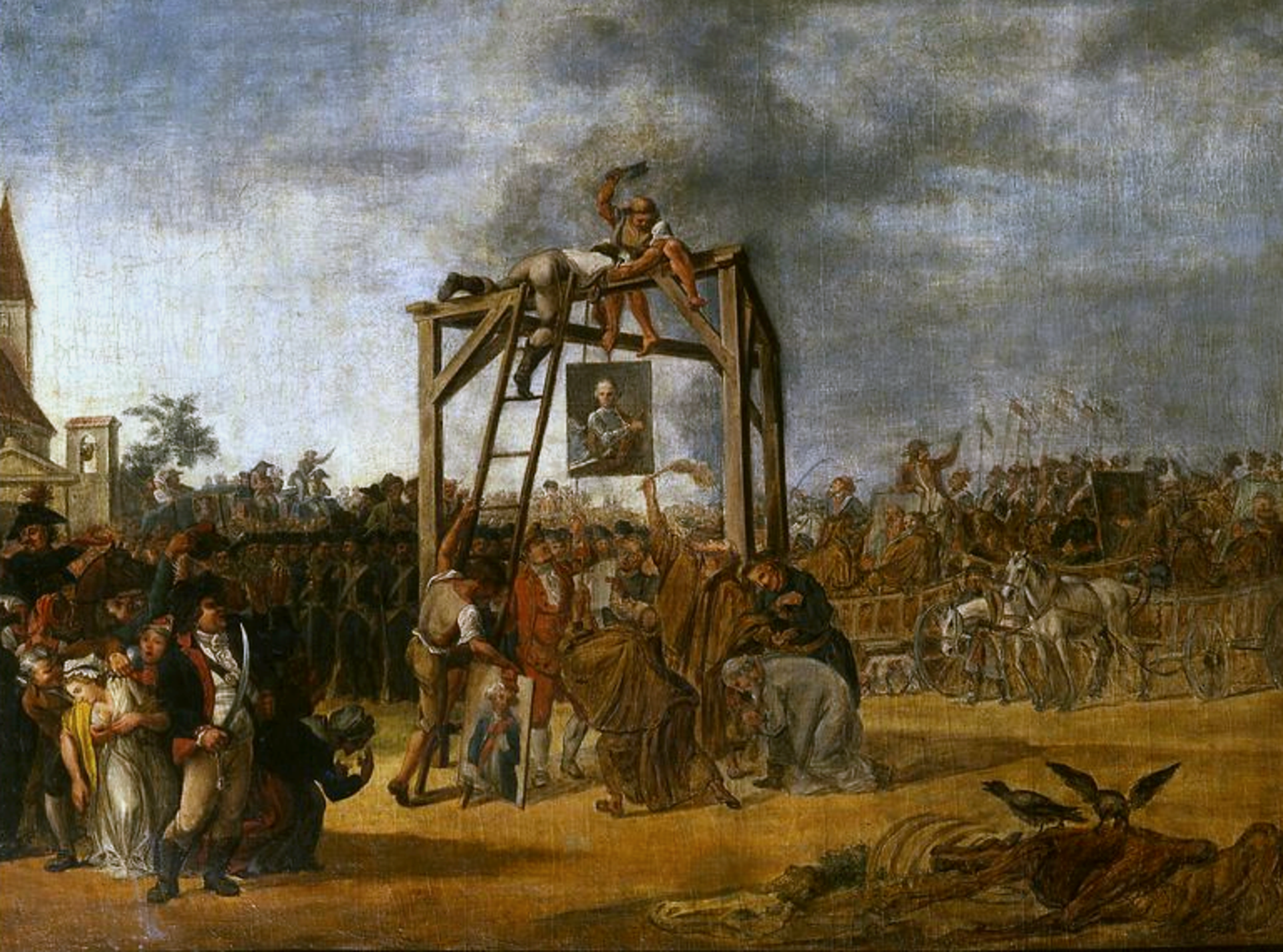
- The court proceeding would be pushed back until their capture.
- They would be sentenced to death together with their families.
- Their portraits would be hanged on the gallows.
- Their houses would be burned.
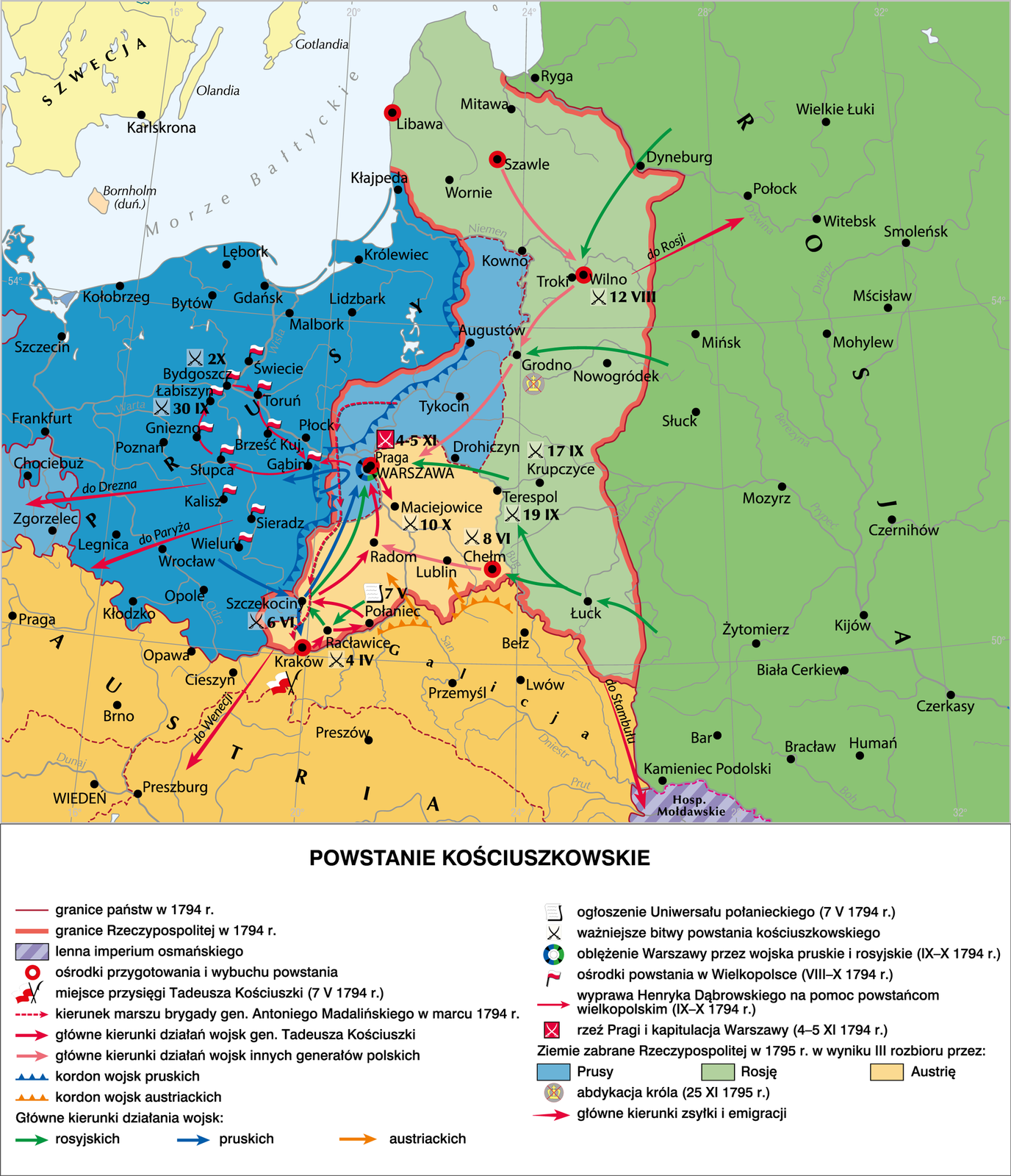
Fill the gaps.
Brest-Litovsk, Sandomierz, left, Warsaw, Cracow, right, Maciejowice, Navahrudak
Racławice are situated near ........................... The Russian army, while heading towards Warsaw, marched through ........................... One of the Uprising’s battles was fought near ........................... Warsaw’s Praga district is situated on the .......................... shore of the Vistula.
Listen carefully to the recording of Tadeusz Kościuszko’s Proclamation of Połaniec of 7 May 1794 and reflect upon the changes it introduced to the lives of the peasants.
Using color, mark the passages of text describing the way the Commander-in-Chief encouraged the peasants to take part in the Uprising.
green
[...] I am constantly receiving complaints from the recruits that not only their wives and children are left with no consolation – their husbands and fathers, serving Poland, are being exposed to great nuisances. Such deeds are, in many places, probably against the will of the heirs, but eslewhere, they must be the effect of bad will or foreign inspiration, aiming to completely ruin the morale of the people in order to prevent them from defending our Motherland. But the humanity, justice and benevolence of our Motherland provides us with simple and effective measures against domestic frustration and foreign manipulations. [...] Therefore, I command the Order Commitees of the Voivodeships and all lands of our country to issue the following order to the heirs of the possessions, as well as the stewards acting in their place:
First: Announce to the people, that according to the law they remain under the protection of the State Government.
Second: That any peasant is free, and may move wherever he wishes to,, as long as he notifies the Order Commitee of his Voivodeship of his destination and he pays his dues and state taxes.
Third: That the people shall work less,so that he who works five or six days per week.shall work two days less.He who works two, three, or four days per week, shall work one day less. He who works one day per week shall now work one day per two weeks. [...]
Fourth: The local authorities shall try to ensure thatthe lands of those who serve in the Polish armybe prevented from falling into ruin and that the land that is the source of our riches not lie unused, which should be ensured by estates and communities alike.
Fifth. Those called for mass mobilization,so long as they remain under armsshall not be demanded any socage until they return home.
[...]
Eighth. Should the heirs, which I do not expect them to do, commit similar exploitation, they shall be treated as if they commited acts of subversion against the uprising.
[...]
Twelfth. The concessions on the Government’s part made in order to lighten the burden on the people should encourage them to work, cultivate their land, and defend our Motherland. Thus, should anyone abuse the benevolence and justice of the Government, encourage the people to stop working, set them against the heirs, or refuse to defend the Motherland, [...] I order those subversives to be captured and tried as criminals. [...]
[...]
Fourteenth. The clergy of both Churches shall announce this decision from their pulpits for four weeks: apart from that, the Order Commitees shall select, either from among themselves or from citizens zealously striving for the Motherland’s wellbeing, people who shall visit village and parish communities, and read this decision aloud before them, so as to encourage them to repay the kindness of Poland and defend it out of their own, honest will.
Camp Połaniec,
7 May 1794,
Tadeusz Kościuszko
What was the result of Kościuszko’s efforts?
Drag and drop the elements in the correct places.
The peasants had obligatory 2 days of socage per week, The peasants had obligatory 4 days of socage per week, The peasants were dependent on their master, The peasants were bound to their land and could not leave it, The peasants were not conscripted, The peasants could move freely, The peasants have been placed under the state’s protection, The land of the conscripted peasants was to be cultivated by their neighbors
| The situation of the peasants before the Proclamation | |
|---|---|
| Proclamation of Połaniec |
Keywords
Tadeusz Kościuszko, Kościuszko Uprising, kosynierzy
Glossary
Kosynierzy – oddziały piechoty wywodzące się z chłopstwa, których bronią były postawione na sztorc kosy. Najbardziej znane oddziały kosynierów walczyły w powstaniu kościuszkowskim. Ich dewizą było hasło “żywią i bronią”.
Muszkiet – długolufowa broń palna, ładowana od przodu. Pojawił się w Europie w XVI wieku, wyparty przez karabiny w połowie XIX wieku.
Bateria – w artylerii oddział złożony z kilku armat.
Konfederacja – zawiązywany przez szlachtę, duchowieństwo lub miasta czasowy związek zbrojny (do osiągnięcia swoich celów), którego celem była realizacja własnych postulatów.
Kolonia – najczęściej zamorska, zagraniczna posiadłość państwa nazywanego metropolią podlegająca jego władzy gospodarczej i politycznej. Jest mu podporządkowana, a władzę w niej sprawują wyznaczeni i podporządkowani metropolii urzędnicy.
Naczelnik – Najwyższy Naczelnik Siły Zbrojnej Narodowej – tytuł nadany Tadeuszowi Kościuszce w 1794 roku jako dyktatorowi powstania, na czele którego stanął. Sprawował on najwyższą władzę wojskową.
Uniwersał połaniecki – akt prawny wydany przez Tadeusz Kościuszkę przyznający ograniczoną wolność osobistą chłopom. Nie przetrwał upadku powstania i nie miał żadnej mocy i wpływu na ich sytuację.
Insurekcja – dawniej powstanie zbrojne, np. insurekcja kościuszkowska.