The More and Less Remote Consequences of Colonial Conquest
exchange the most important manifestations of the resistance of the colonized population;
indicate the effects of the colonial policy of Europeans;
describe the history of colonized communities / countries.
In the reality of Africa, the greatest difficulties the colonizing nations had to face turned out to be the tough climate, no transport connections, and malariamalaria, a disease that decimated the whites. Despite the military and civilizational superiority, Europeans encountered resistance during colonial expansion. For an extended period, the British were resisted by the ZuluZulu tribes. They encountered similar difficulties in Egypt. It was only in 1898 when they were able to quell the uprising of the Islamic leader, Mahdi, in Sudan. Italy suffered defeat at the hands of Abissynia (Ethiopia). The Ethiopian Empire managed to keep its independence. In 1857‑1859 India, Britain’s most important Asian colony, was shaken by the SepoySepoy Mutiny. In 1899, China saw the eruption of the two‑year Boxer RebellionBoxer Rebellion directed against the foreigners and the weak Imperial monarchy. Apart from the pacificationspacifications of the resistance and acts of genocide (mass killings of the local populaces), the presence of the Europeans caused the collapse of the conquered nations’ own production (with India serving as the prime example). However, owing to the colonists’ presence, modernization processes took place as well (though the example of the conflict surrounding satisati shows that they were not always accepted). The French and the Portuguese were the nations to pay the most attention to the diffusion of their own culture. The British and the Germans sought, above all, to expand militarily and economically, much less so culturally. The europeization of the people living outside of Europe was superficial in character and did not result in the creation of “coloured Europeans”. Various spirituality decided about it. However, their shared experience was the acknowledgement of Europe’s domination, as well as taking for granted the conviction that its ideas and material culture deserved to be considered superior to the others. The assumption of the Western system as the common standard shaped (and keeps shaping) our perception and understanding of the other cultures.
The most evident piece of colonialism’s legacy is the presence of French, English and Portuguese as the official languages in the majority of the countires. Africa decidedly belongs to the spheres of influence of England and France, the two largest colonial powers that left the greatest cultural legacy to this continent. French is the official language in: Morocco, Algieria, Tunisia, Mauritania, Senegal, Mali, Burkina Faso, Niger, Chad, Guinea, Ivory Coast, Ghana, Togo, Benin, Cameroon, Gabon and the Congo. English is used by the inhabitants of Egypt, Sudan, Ethiopia, Sierra Leone, Liberia, Nigeria, Zimbabwe, Tanzania, South Africa, etc. Portuguese is present in a few enclaves (Guinea‑Bissau, Angola, Cape Verde), as is Spanish (Equatorial Guinea). The European languages remain a convenient alternative in situations where a newly‑created state has multiple coexisting African languages (as many as 250 in Nigeria). Owing to the presence of a single external language, none of the African languages are favored, and the administration may operate effectively in the entire territory of the state. Those countries use the European languages in culture and education as well. Every child of six years or older – that is, when starting school – begins learning the official language of the state, and studies the school subjects in it. Owing to this, Africa may take part in the world’s culture with no obstacles, both drawing from and contributing to it. One should also not forget about the strong return‑to‑the‑roots trend and the rebirth of local African languages, which are capable of expressing the Africans’ identities to the fullest. Over the past few years, more and more literary works have been written in native African languages, testifying to the efforts of African cultures for their own decolonization, as well as political and cultural independence.
source: Karolina Pasionek, http://miedzykulturowa.org.pl
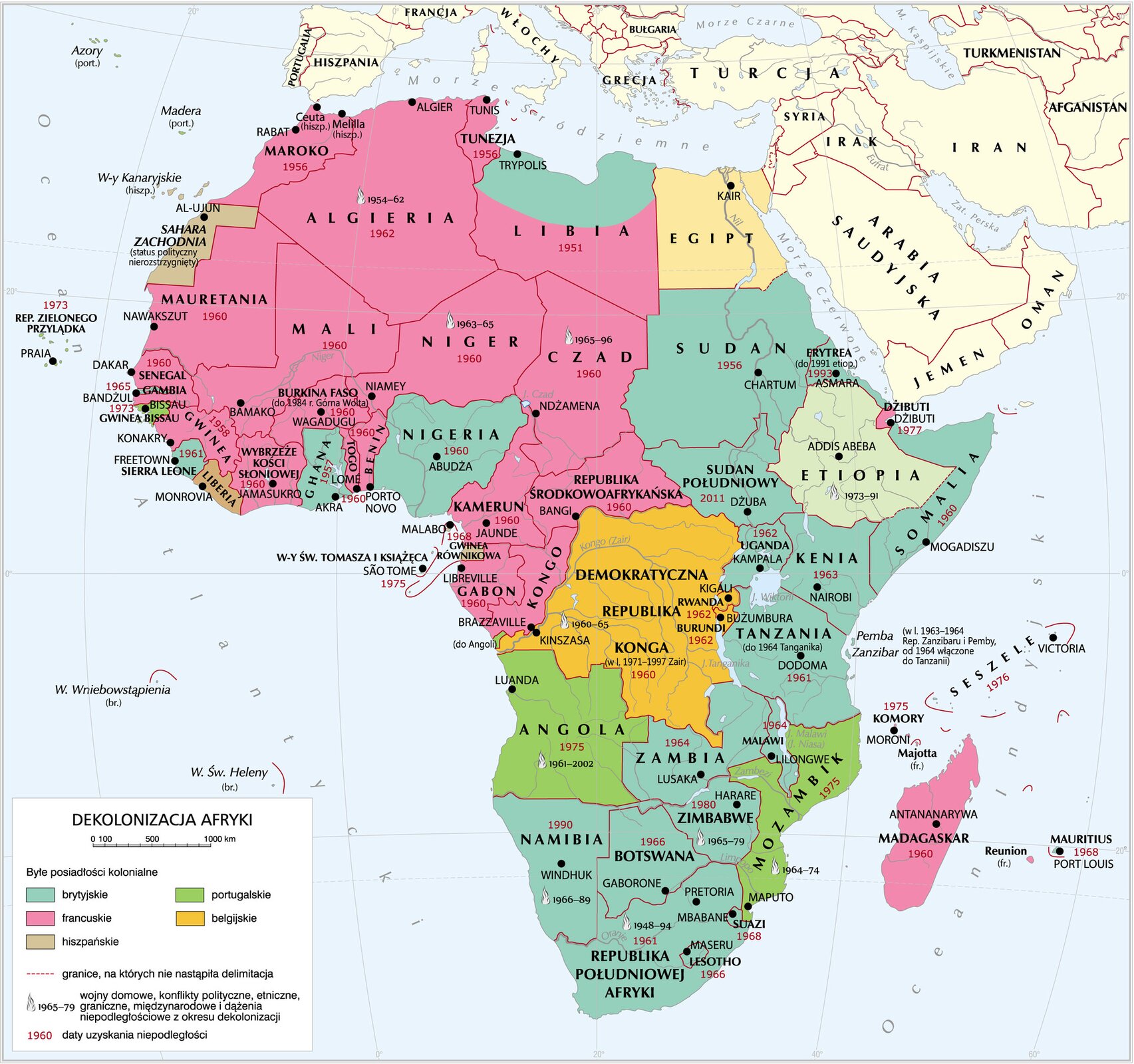
Mark the European languages that possess the official status in Africa
- English
- Polish
- German
- French
- Swedish
- Portuguese
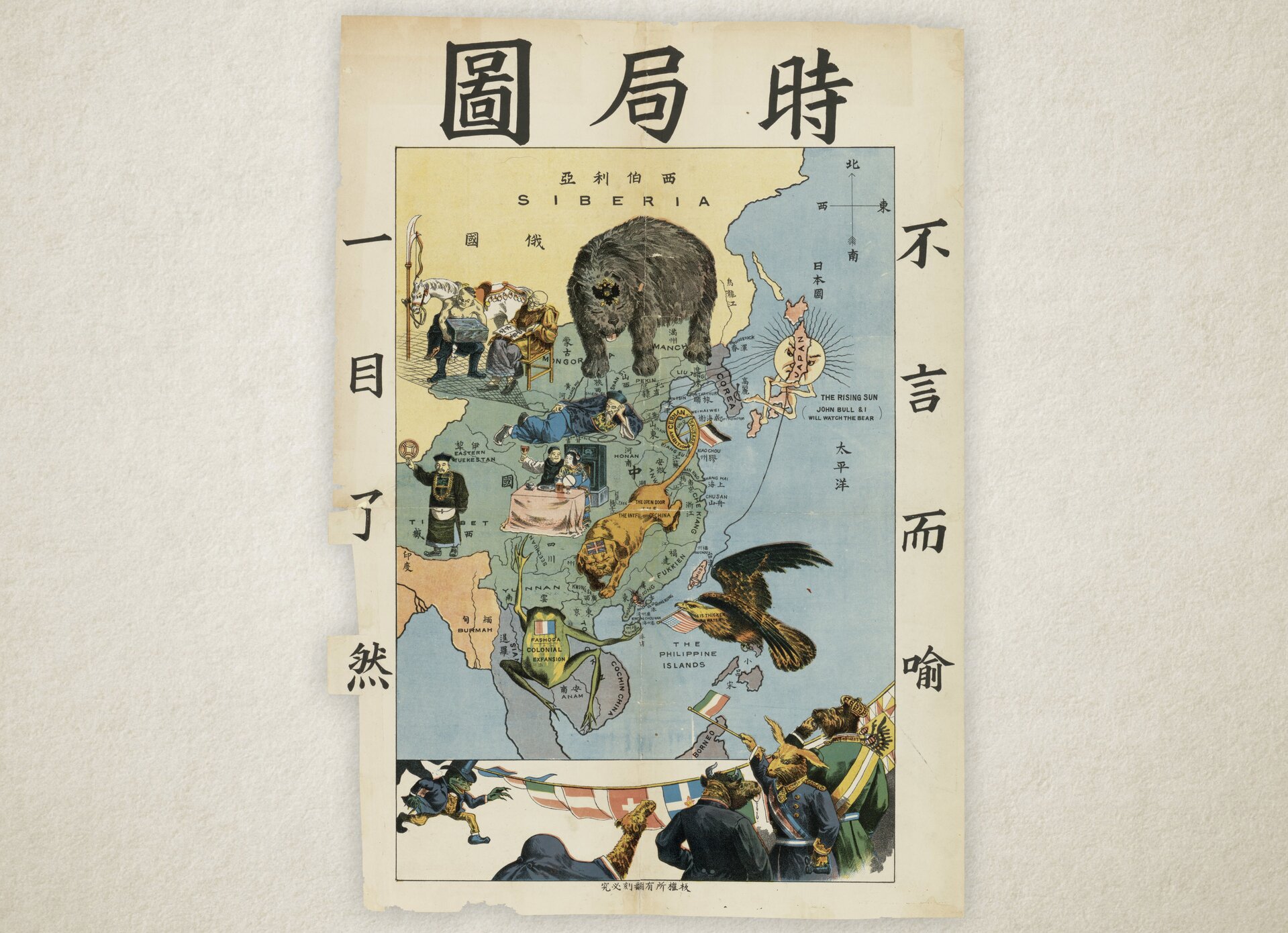
Study the Chinese map presenting the extent of the European and US influence ca. 1900. What were the symbols used to depict the colonial powers? Try to determine the characteristics that the Chinese ascribed to the Europeans.
Study the most important activities undertaken by the peoples subject to European influence. How did these struggles end?
Match the events below with their respective times and sites:
Sepoy Mutiny, Boxer Rebellion, Mahdist Revolt, The victory of the Zulu in the Battle of Isandlwana, The birth of the Indian National Congress, Ethiopia’s victory in the Battle od Adwa
| Africa in the second half of the nineteenth century | |
|---|---|
| Asia in the first half of the nineteenth century | |
| Asia in the second half of the nineteenth century |
Keywords
Sepoy, Zulu, Indian National CongressIndian National Congress, MuslimsMuslims, Boxer Rebellion, pacificationpacification, satisati, malaria, quininequinine
Glossary
Sipajowie – hinduscy żołnierze w służbie państw europejskich, szkoleni i dowodzeni przez Europejczykow, zwłaszcza Brytyjczyków.
Zulusi – lud afrykański, zamieszkujący południową Afrykę. Na początku XIX wieku stworzyli wiele militarnych państewek na południu Afryki, pod wodzą Czaki. Po klęsce w 1879 r. większość terytoriów Zulusów została włączona do Związku Południowej Afryki.
Indyjski Kongres Narodowy – partia polityczna, która stawiała sobie za cel zapewnienie Hindusom większego wpływu na sytuację polityczną kraju, z czasem ruch niepodległościowy.
muzułmanie – wyznawcy islamu
powstanie taipingów (bokserów) – masowe powstanie ludowe na południu Chin w XIX wieku, zakończone interwencją wielkich mocarstw europejskich, USA i armii chińskiej, w wyniku którego śmierć poniosło blisko 20 mln ludzi.
pacyfikacja – tłumienie siłą buntu, powstania; użycie sił zbrojnych; ekspedycja karna.
sati - praktykowany wśród pewnych społeczności w Indiach zwyczaj palenia wdowy na stosie pogrzebowym męża
malaria – ostra lub przewlekła choroba tropikalna, wywołana przez pasożyty; najczęstsza na świecie choroba zakaźna, dawniej prowadziła najczęściej do zgonu, także dziś w krajach biedniejszych zbiera śmiertelne żniwo; dawniej: febra
chinina - znany już w XIX wieku pierwszy skuteczny lek przeciw malarii; uzyskiwano ją z kory drzewa chinowego, rosnącego w Andach w Ameryce Południowej.