Fascinated with the new art Sigismund the Old brought to Krakow two artists: first Francesco Fiorentino and several years later Bartolommeo Berrecci. Remaking of the Wawel Royal Castle in the new “Italian style” was started on the initiative of King Sigismund the Old. In 1517‑1533, the mausoleumMausoleummausoleum of the Jagiellons - the „Sigismund's Chapel”. The Italian artists found their followers amongst the Poles. Building of burial chapels by the richest magnate families and commemoration of the deceased with impressive marble tombstones was especially popular. Similar to Italy, the most important places of the public life of the bourgeois were: the parish church, the town hall, the cloth hall, and then private houses. However, looking at the architectural masterpieces created for the courthouse circles, the bourgeois wanted to give new looks to their representative buildings. Rational considerations limited them just to some details stressing the new, fashionable looks, e.g. adding of an attic or a change of the architectural design of the façade. The town halls in Sandomierz and Tarnów and the Cloth House in Krakow were ornamented in this manner, as well as numerous tenaments of the bourgeois. One of scares examples of completely new investments was the town hall in Poznań.
Task 1
RGbIMmn9xPICI
Look at the timeline presenting the most important events for the Polish renaissance. Which of the events were the most important and why? 1517 The Ninety-five Theses of Martin Luther , 1519 The election of Charles V Habsburg for the Holy Roman Emperor , 1527 The establishment of the first in Germany protestant university in Marburg , 1534 - 1540 The foundation of the Jesuit order Illustration presenting the coat of arms of the order., 1542 Reforms of the Inquisition Illustration presenting Cardinal Gian Pietro Carafa, later Pope Paul IV, the first Grand Inquisitor of the Roman Inquisition from 1542., 1545 The start of the Council of Trent , 1563 The end of the Council of Trent , 1582 The Gregorian calendar
Look at the timeline presenting the most important events for the Polish renaissance. Which of the events were the most important and why? 1517 The Ninety-five Theses of Martin Luther , 1519 The election of Charles V Habsburg for the Holy Roman Emperor , 1527 The establishment of the first in Germany protestant university in Marburg , 1534 - 1540 The foundation of the Jesuit order Illustration presenting the coat of arms of the order., 1542 Reforms of the Inquisition Illustration presenting Cardinal Gian Pietro Carafa, later Pope Paul IV, the first Grand Inquisitor of the Roman Inquisition from 1542., 1545 The start of the Council of Trent , 1563 The end of the Council of Trent , 1582 The Gregorian calendar
Source: Elia Naurizio, licencja: CC BY 4.0.
Task 2
Wymyśl pytanie na kartkówkę związane z tematem abstraktu.
Wymyśl pytanie na kartkówkę związane z tematem abstraktu.
Based on the presented objects, list the features of the Renaissance style in architecture.
R1dFNTISLTk3q
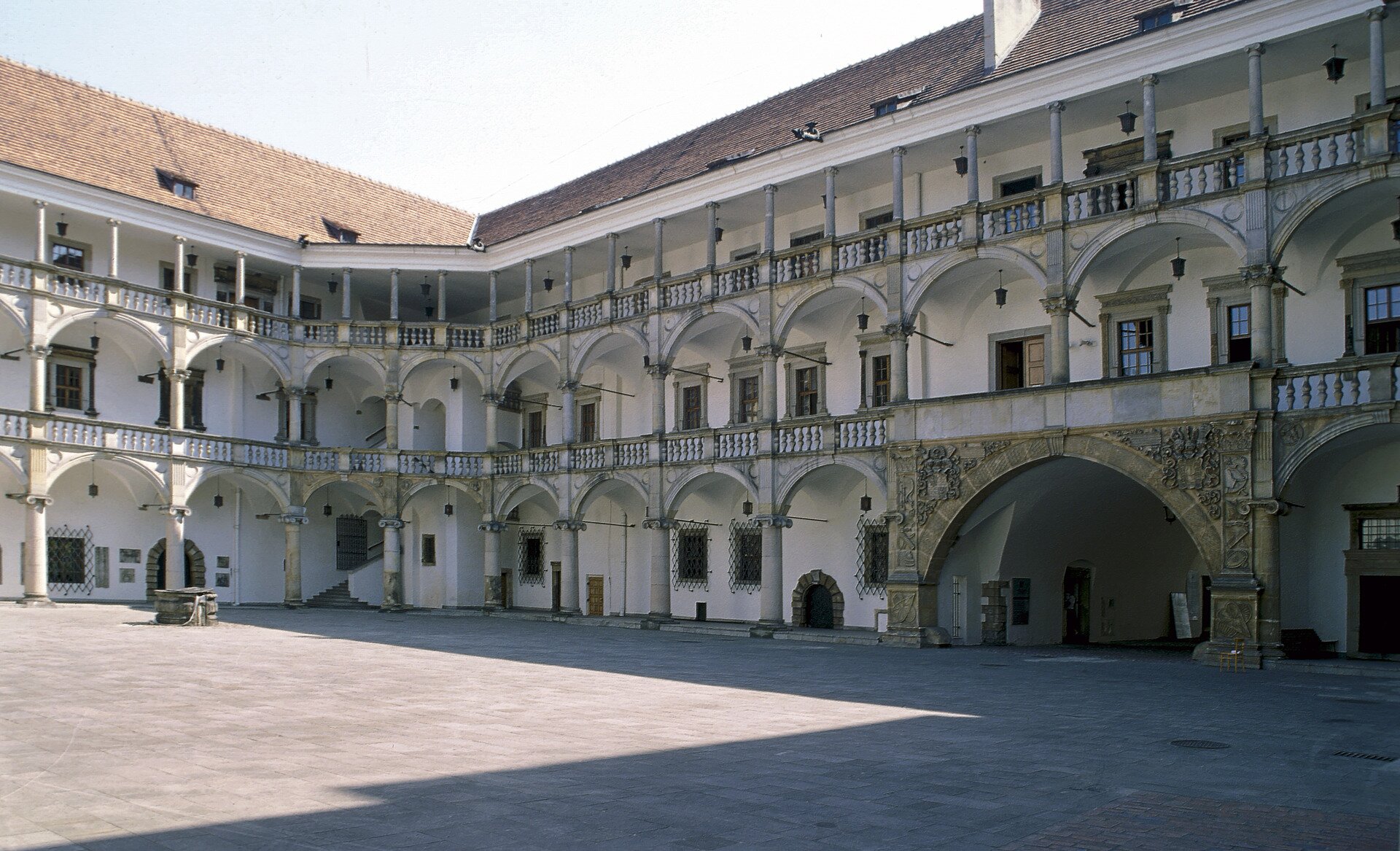
Fotografia barwna przedstawiająca Renesansowy, klasztorny dziedziniec zamku w Brzegu.
Renaissance, cloistered courtyard of the castle in Brzeg. Prince George II from the Piast dynasty in the middle of the 16th century rebuilt his headquarters in Brzeg in the Renaissance style. His idea was to reconstruct the Wawel castle of the Jagiellonian dynasty. The similarities resulted in giving the castle the name of the "Silesian Wawel". Works were continued by successive Piast dynasty members on the throne of the duchy: Frederic II and Jerzy II. In the years 1554-1560 a representative entrance gate was erected, decorated with statues of the founder and his wife and busts of his ancestors.
Source: Jerzy Strzelecki, Wikimedia Commons, licencja: CC BY-SA 3.0.
R1QQrO0wblijI
Fotografia barwna przedstawiająca bramę wejściową do Zamku w Brzegu - wspaniała renesansowa dekoracja będąca apoteozą Piastów Śląskich.
The entrance gate to the Castle in Brzeg - a magnificent Renaissance decoration which is the apotheosis of the Silesian Piasts.
Source: Barbara Maliszewska, Wikimedia Commons, licencja: CC BY-SA 3.0.
Rsdd9YmO1Daw6
Fotografia barwna przedstawiająca Dziedziniec zamku w Oleśnicy.
The courtyard of the castle in Oleśnica
Source: Jerzy Strzelecki, Wikimedia Commons, licencja: CC BY-SA 3.0.
R1WjQ8AEJVbaO
Fotografia barwna przedstawiająca Gotycko-renesansowy pałac w Wojnowicach koło Wrocławia.
A gothic-renaissance palace in Wojnowice near Wroclaw
Source: Sławomir Milejski, Wikimedia Commons, licencja: CC BY-SA 3.0.
Task 3
Wybierz jedno nowe słowo poznane podczas dzisiejszej lekcji i ułóż z nim zdanie.
Wybierz jedno nowe słowo poznane podczas dzisiejszej lekcji i ułóż z nim zdanie.
Whose work was the magnificent Renaissance frame on the tombstone of Jan Olbracht? Search the web for an answer.
R1aTm58Hw3PMZ
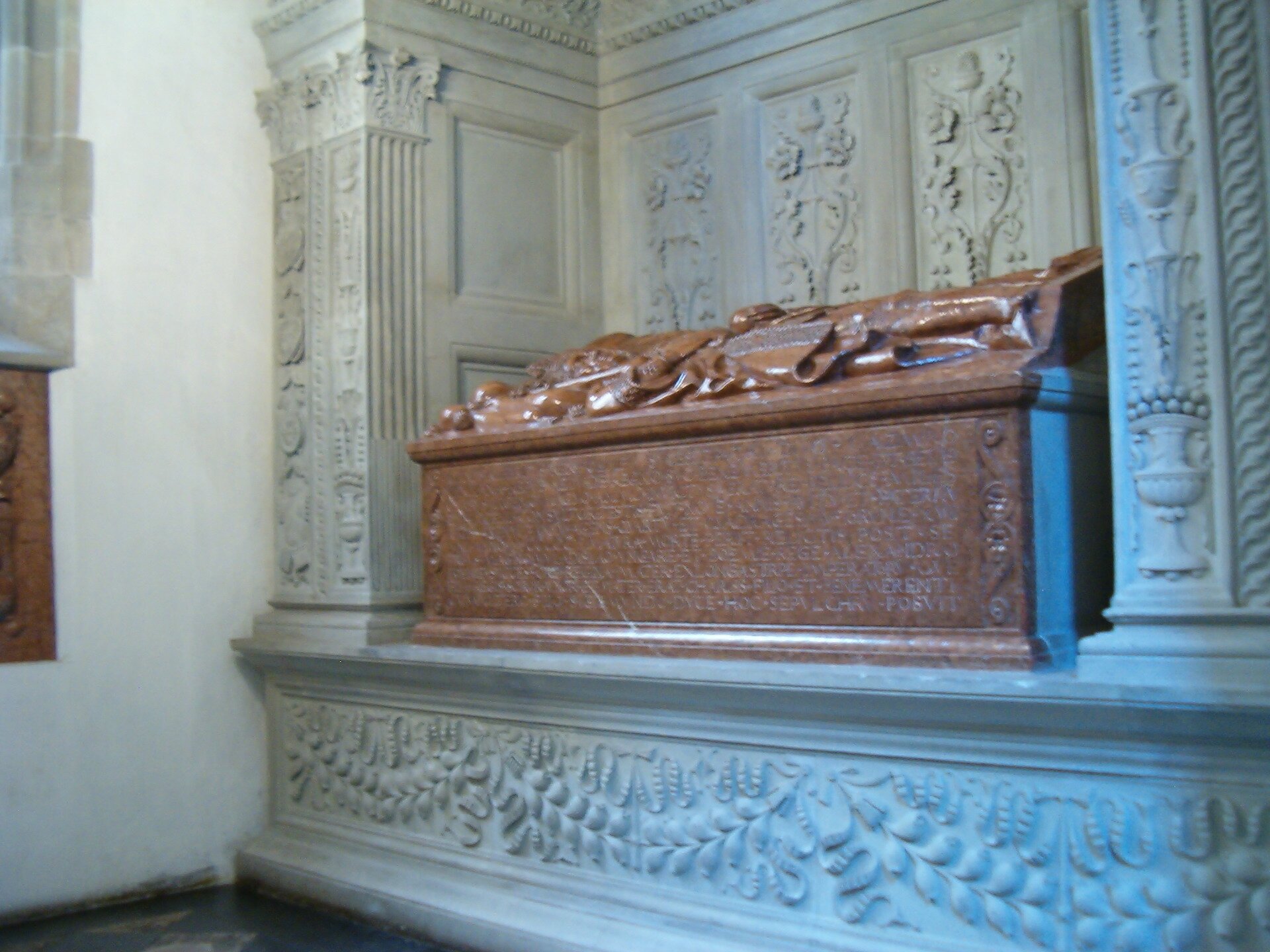
Fotografia barwna przedstawiająca nagrobek Jana Olbrachta w Królewskiej Katedrze Wawelskiej.
Tombstone of Jan Olbracht in the Royal Wawel Cathedral. A magnificent renaissance framing of the tombstone was created in 1502-1505. The work is considered one of the first manifestations of full renaissance art in Poland. The grave tomb itself is still a gothic work, derived from the workshop of Stoss.
Source: Poznaniak, Wikimedia Commons, licencja: CC BY-SA 2.5.
R7uMCtVQgotjS
Exercise 1
Match terms to definitions. Patronage Możliwe odpowiedzi: 1. mourning poetry, 2. suport to artists provided by rich art lovers, 3. a monumental tomb in the form of a free-standing, ornate building Laments Możliwe odpowiedzi: 1. mourning poetry, 2. suport to artists provided by rich art lovers, 3. a monumental tomb in the form of a free-standing, ornate building Mausoleum Możliwe odpowiedzi: 1. mourning poetry, 2. suport to artists provided by rich art lovers, 3. a monumental tomb in the form of a free-standing, ornate building
Match terms to definitions. Patronage Możliwe odpowiedzi: 1. mourning poetry, 2. suport to artists provided by rich art lovers, 3. a monumental tomb in the form of a free-standing, ornate building Laments Możliwe odpowiedzi: 1. mourning poetry, 2. suport to artists provided by rich art lovers, 3. a monumental tomb in the form of a free-standing, ornate building Mausoleum Możliwe odpowiedzi: 1. mourning poetry, 2. suport to artists provided by rich art lovers, 3. a monumental tomb in the form of a free-standing, ornate building
Match terms to definitions.
a monumental tomb in the form of a free-standing, ornate building, mourning poetry, suport to artists provided by rich art lovers