The new place of Poland and Lithuania in Europe
to define what foreign policy was carried out by the Jagiellonians;
to list what threats the rulers of Poland and Lithuania had to face;
to explain how it happened that a ruler of Poland once again sat on the throne of Hungary;
to describe why the myth of Poland as a bulwark of Christianity was born.
Entering the 15th century, Poland was a stable state. Its position was strengthened by the unions with Lithuania – the Union of Krewo (1385) and the Union of Horodło (1413). The political alliance of the two countries, despite the separateness of lands and societies, brought not only benefits, but also challenges and problems.
The defeat of the common enemy – the State of the Teutonic OrderTeutonic Order in the Great War (1409–1411), and in subsequent clashes, ensured relative peace at the northern borders. Nevertheless, relations between the two countries remained tense. A new conflict broke out in 1454, when there were anti‑Teutonic riots and when an act was issued on the incorporation of Prussia and Pomerania into the Crown (the Kingdom of Poland). The war, which lasted 13 years, ended in the victory of the king of Poland and conclusion of the Second Peace of Toruń Treaty (1466), which incorporated Pomerelia, Żuławy, and Warmia into the Polish state. Obtaining free access to the sea was of the greatest importance for Poland. Subsequent years were marked by disputes over the observance of the provisions of the peace treaty and attempts to regain the former power by the Teutonic OrderTeutonic Order. However, the defeat of the Order in the war with Poland in 1519–1525 finally resulted in Grand Master Albert of Prussia paying homage to the Polish king Sigismund I the Old, and, soon afterwards, Albert’s conversion to Protestantism and transformation of the monastic state into the secular Duchy of Prussia.
Back when fights against the Teutonic OrderTeutonic Order were still being waged, a new power began to emerge on the eastern borders of Lithuania, which soon became a threat not only to Lithuania, but also to the whole union. That was the Grand Duchy of Moscow. The growing position of Moscow was already visible in the middle of the century, but the real breakthrough occurred during the reign of Ivan III the Great (1462–1505). Given the passivity of the Grand Duchy of Lithuania, he began the process of ‘gathering Russian lands’ and creating a centralized state. By defeating the army of the Golden HordeGolden Horde in 1480, he became independent from the Mongols and began conquests of the surrounding duchies. It was only the cooperation of Polish‑Lithuanian forces that stopped the march of the Moscow troops and led to making peace.
Another threat that the Polish‑Lithuanian army had to address in the east were the Mongols, whose plundering expeditions affected the southern lands of the Grand Duchy of Lithuania. In the late 14th century, these old enemies plunged into internal struggles for power. Vytautas made an attempt to use this situation to his advantage. Unfortunately, his expedition ended in a defeat in the Battle of the Vorskla River of 1399. Relations with the Tatars became even more complicated when, after the disintegration of the Golden HordeGolden Horde, a new state was created – the Crimean Khanate (1427), which began plundering raids in Podolia that lasted nearly until the 18th century.
On the other hand, the Ottoman Empire did not threaten the Polish‑Lithuanian lands for a long time. This situation changed only after the engagement of the king of Poland and Hungary – Władysław of Varna – in the crusade against the Turks. The Turks defeated his troops at Varna (1444), and Władysław died in battle. In 1485, a new war with the Turks broke out, which lasted until 1503 and ended in the Polish Crown losing control over Moldova.
Look at the seal of Dmitry Donskoy. Pay attention to the phrase on the seal and the iconography on the reverse. Read the biographical note about the prince and complete the following task.
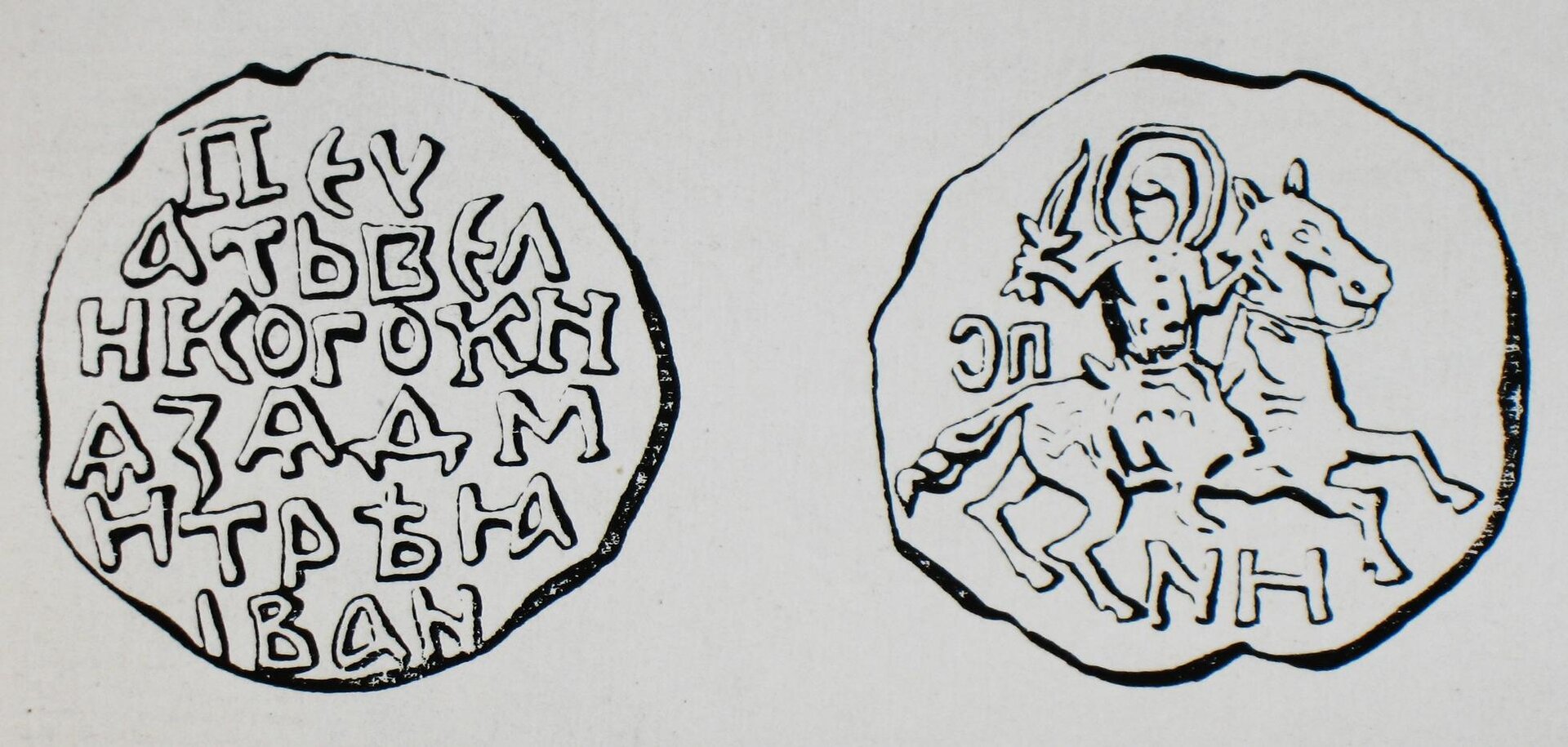
The depiction of Saint Demetrius on the seal of Dmitry Donskoy...
- served only to emphasize the care of the heavenly forces over the prince.
- emphasized the prince’s dependence on the Orthodox Church.
- indicated the knightly character of the prince and the care of the heavenly forces over him.
Look at the phrase and iconography on the seal. Then select below the correct definition of these foundations of the prince’s power.
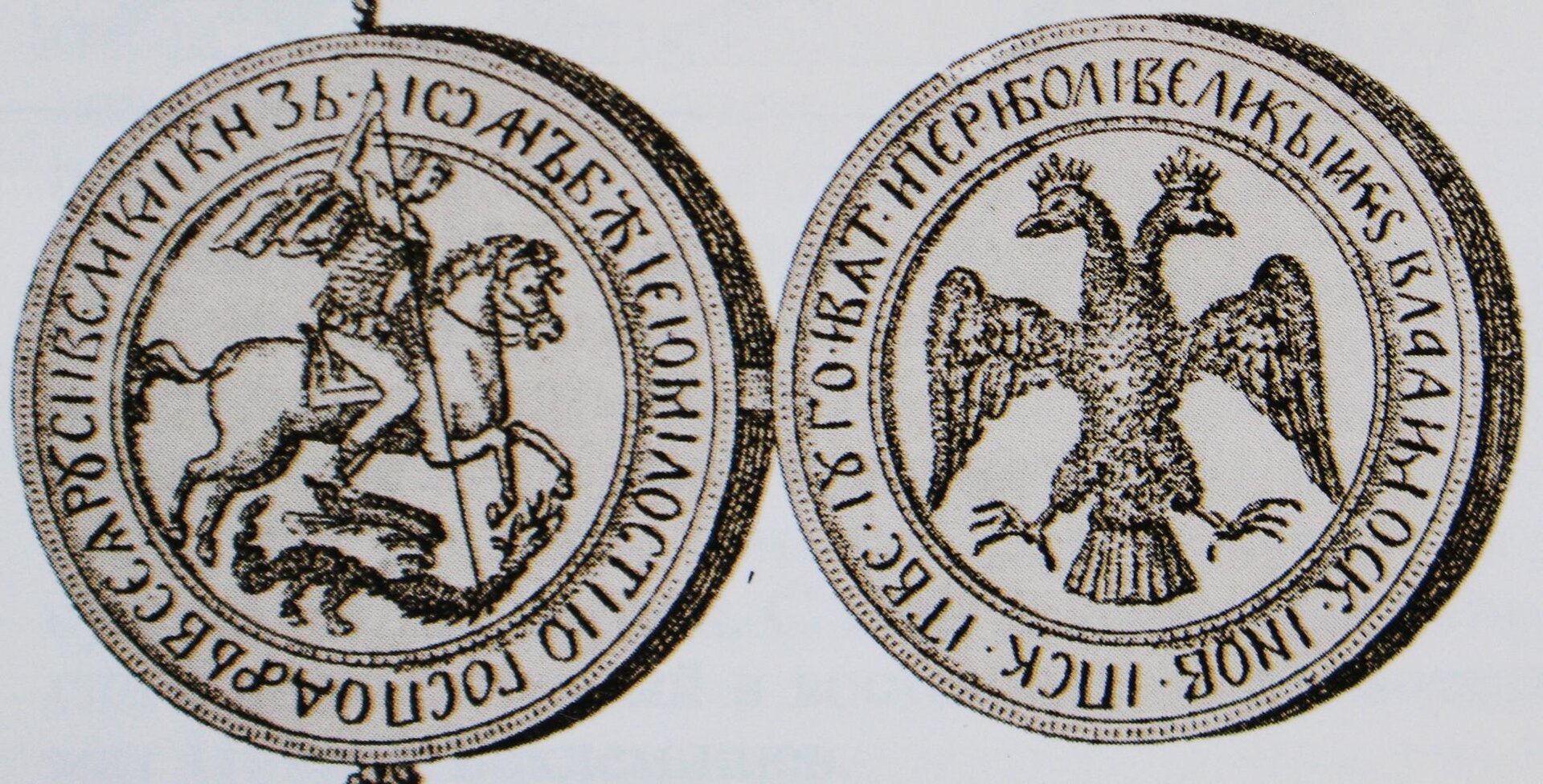
The power of Ivan III the Great was based on the following three ideas:
- the care of the saints, pride in the Tatar heritage, and political domination in Rus'.
- the care for the Roman Church, the imperial heritage, and political domination in Rus'.
- the care of the saints, imperial heritage, and political domination in Rus'.
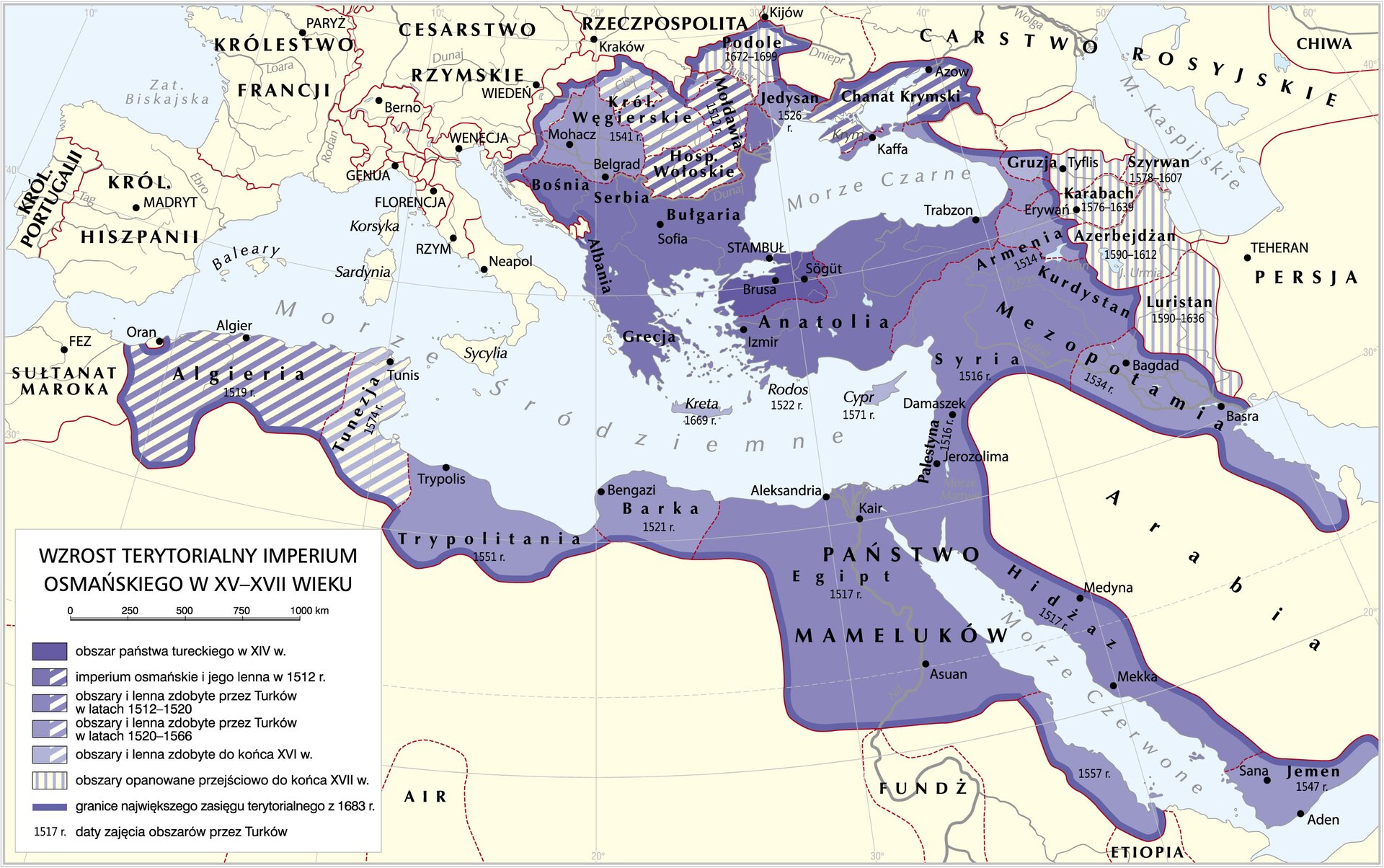
Until what century did significant conquests of European lands last?
- mid- 15th c.
- mid- 16th c.
- second half of the 17th c.
- mid- 14th c.
Read the official liege document and mark in it the sections that indicate the duties of the liegeman – the hospodar. Did the Moldovan hospodars keep their word?
Select the appropriate parts of the text.
duties of a vassal
W imię Pana, amen. [...] My, Jan Stefan, z Bożej łaski pan ziemi mołdawskiej, oznajmiamy [...] ponieważ z woli Boga jesteśmy władcą ziemi mołdawskiej, staramy się postępować według zwyczaju przodków naszych. I jak przodkowie nasi [...] byli przyjaznym najznakomitszym panom królom i świetnej Koronie Polskiej [...] to my w sposób podobny postępujemy. [...] z całym krajem naszym [...] będziemy okazywać wierność i posłuszeństwoJego Miłości, a po nim przyszłym królom i świętej Koronie Polskiej. Obiecujemy – my i nasi synowie i ich następcy [...] zachowywać wobec Jego Królewskiej Mości i przyszłych królów i Korony Polskiej wierność i służebność i posłuszeństwo i żadnego innego pana nie będziemy sobie szukać [...] [obiecujemy] wszystkimi siłami bronić ziemi podległej Jego Miłości, przeciw każdemu wrogowi [...] i doradzać jego miłości [we wszystkim]. [...] Obiecujemy również nigdy nie sprzeciwiać się [woli] Jego Miłości i następców jego i Korony Polskiej [...] Nie będziemy nigdy wojny żadnej zaczynać ani pokoju zawierać bez wiedzy Jego Królewskiej Mości.
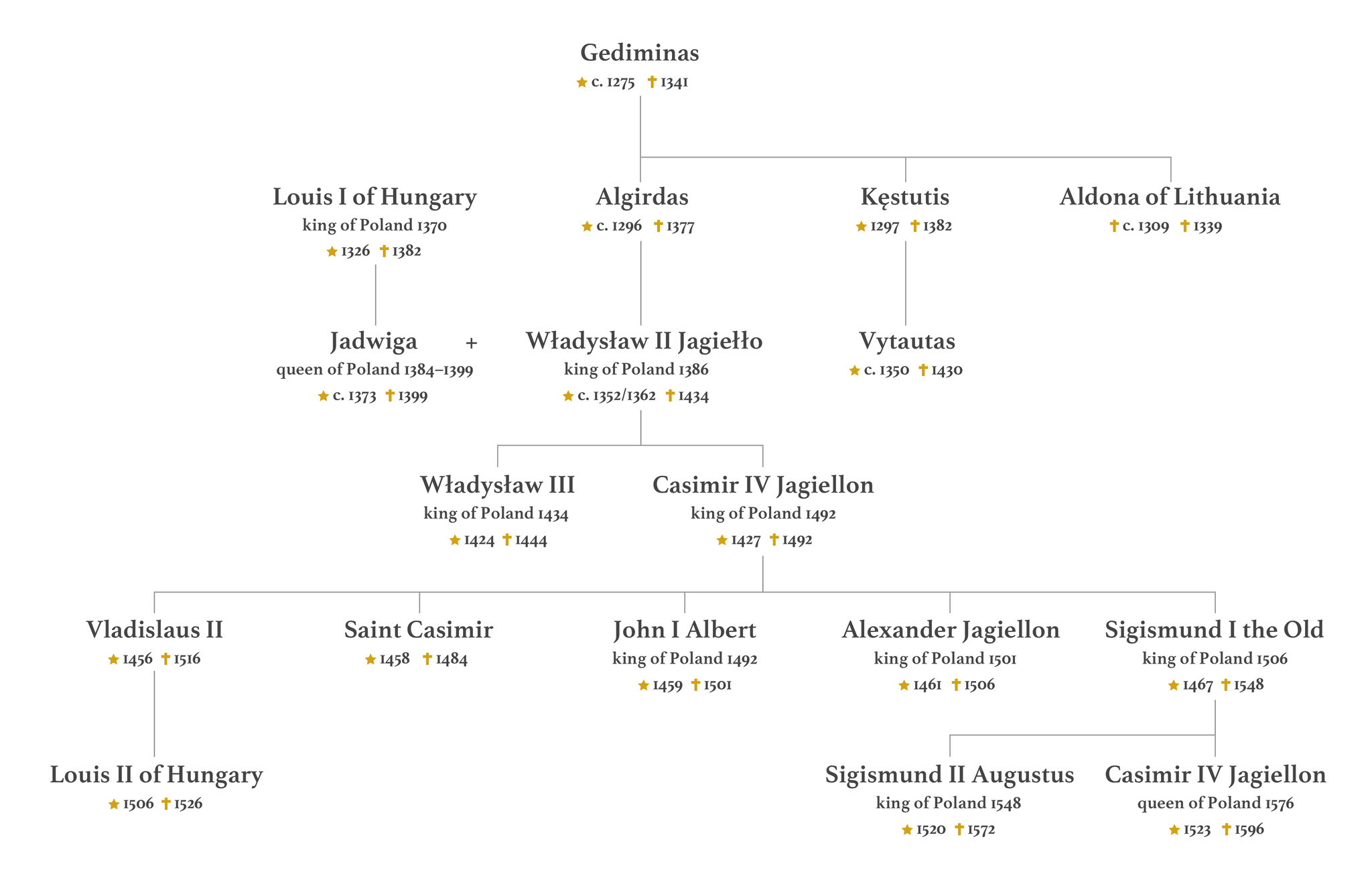
Fill the gaps.
Vytautas, brother, Władysław III of Poland, Jadwiga of Poland, Louis II of Hungary, Gediminas, Sigismund I the Old, over 45, Queen of Poland, Alexander Jagiellon, 1526, Lithuania, Poland, Algirdas, Grand Dukes, Bohemia and Hungary, Sigismund II Augustus, Bona, three
The founder of the dynasty from which the future king of Poland came was ................................................... His two sons – .................................................. and Kęstutis – ruled Lithuania as ................................................... Afterwards, power passed into the hands of their cousins – Jagiełło and ................................................... Jagiełło sat on the Polish throne thanks to his marriage with .................................................., who performed the function of ................................................... After the death of Władysław II Jagiełło, .................................................. became king, and, after his death at Varna, his .................................................. Casimir IV Jagiellon. At the time when he assumed the throne, he also held power in .................................................. as Grand Duke. He ruled the longest of the entire dynasty. He was the king of Poland for .................................................. years. His wife was Elizabeth of Austria, with whom he had thirteen children. She is called the mother of kings because .................................................. of them became kings of ................................................... These were John I Albert, .................................................., and Sigismund I the Old. The eldest of her sons, Władysław, assumed the throne of ................................................... After him, power was taken by .................................................., whose death in .................................................. in the Battle of Mohács ended the reign of the Jagiellons in these countries.
The last but one ruler from the Jagiellonian dynasty on Polish throne, .................................................., reigned for a record-breaking period of 42 years. His most famous wife was .................................................. from the Italian House of Sforza. It was from this relationship that the last Jagiellonian, king of Poland, was born. His name was .................................................., and he died in 1572.
Keywords
Homage, privilege, tsar, khan, sultan
Glossary
Krzyżacy – zakon rycerski, sprowadzony na Mazowsze przez Konrada Mazowieckiego w 1226 r., jego pełna nazwa brzmi: Zakon Szpitala Najświętszej Marii Panny Domu Niemieckiego w Jerozolimie.
Hołd lenny – uroczysta ceremonia podczas której wasal składał przysięgę posłuszeństwa i wierności swojemu seniorowi. Jednym z najsłynniejszych był hołd pruski z 1525 r. wielkiego mistrza krzyżackiego.
Przywilej – prawa nadawane przez władcę określonej grupie społecznej (szlachcie, duchowieństwu) obowiązujące na danym terenie lub w całym kraju.
Unia personalna – związek dwóch lub więcej państw posiadających wspólnego władcę przy zachowaniu odrębności państwowej.
Żmudź – region na Litwie (historycznej i współczesnej). Był często najeżdżany przez zakon krzyżacki.
Złota Orda – nazwa państwa mongolskiego istniejącego między XIII a XVI w.
Car – tytuł monarchy wywodzący się z tytułu cesarza używany w Rosji, Bułgarii i Serbii.
Chan – tytuł władców u dawnych ludów mongolskich i tureckich.
Sułtan – tytuł władcy używany w wielu państwach muzułmańskich. Początkowo oznaczał głównodowodzącego całym wojskiem kalifa.