The idea of bringing the Kingdom of Poland and the Grand Duchy of Lithuania closer emerged under the influence of the international situation and the co‑operation of both states facing the common threat posed by the Teutonic Knights. The primary purpose was to assure the safety of the borders. The first signed in treaty was the UnionUnionUnion of Krewo in 1385, announcing the marriage Jadwiga Anjou and Władysław Jagiełło, and mentioning the “incorporation” of Lithuania into Poland. Under the next UnionUnionUnion of Horodło (1413), BoyarBoyarsBoyar clans of Lithuania were accepted to Polish heraldic clans. Also the Polish offices of a voivode and castellan were implemented. The next UnionUnionUnion of Grodno extended in 1432 the privileged of the Catholic BoyarsBoyarsBoyars also on Orthodox clans. An important role in the propagation of the integration of different elements of the Polish–Lithuanian Commonwealth was played by the executionist movementExecutionist movementexecutionist movement. It was the movement of medium nobles aimed at the improvement of functioning of the state. One of its primary goals was to lead to the integration of the entire state. It was the reason that led to the incorporation of Mazovia to the Polish Crown in 1529. At the end of his reign, when his hope for legal offspring had disappeared, Sigismund Augustus decided to settle the issues of his succession and to integrate his state. The culmination of these efforts was the sejm convened in Lublin in 1569, which transformed the union of Poland and Lithuania into the real unionReal Unionreal union.
1
Task 1
Get acquainted with the events that led to thereal unionReal Unionreal unionof Poland and Lithuania and try to answer the questions.
What kind of population in Lithuania was interested in strengthening the union and who was opposed?
Why could the rulers of Poland incorporate Mazovia after the Piast dynasty had expired, whereas in relation to Silesia it was impossible?
R1P2D5OIrSL7X
Major events 1385 Polish-Lithuanian Union of Krewo Illustration presenting the Union of Krewo Act of 14 August 1385., 1413 The Union of Horodło Photograph presenting the mound erected in 1861 in Horodło to celebrate the 448th anniversary of the Union., 1432 The Union of Grodno Illustration showing Zbigniew Oleśnicki., 1529 Incorporation of Mazovia to the Polish Crown Illustration presenting the area of Mazovia until the 18th century overlaid on the present administrative division of Poland., 1540 Liquidation of separate Mazovian sejm , 1557 The “Volok Reform” ordered in Lithuania by Sugismund Augustus Illustration showing Sigismund II Augustus., 1565 Sejmiks in Lithuania , 1569 The Union of Lublin The Union of Lublin by Jan Matejko, 1869., 1577 Liquidation of the separate laws of Mazovia
Major events 1385 Polish-Lithuanian Union of Krewo Illustration presenting the Union of Krewo Act of 14 August 1385., 1413 The Union of Horodło Photograph presenting the mound erected in 1861 in Horodło to celebrate the 448th anniversary of the Union., 1432 The Union of Grodno Illustration showing Zbigniew Oleśnicki., 1529 Incorporation of Mazovia to the Polish Crown Illustration presenting the area of Mazovia until the 18th century overlaid on the present administrative division of Poland., 1540 Liquidation of separate Mazovian sejm , 1557 The “Volok Reform” ordered in Lithuania by Sugismund Augustus Illustration showing Sigismund II Augustus., 1565 Sejmiks in Lithuania , 1569 The Union of Lublin The Union of Lublin by Jan Matejko, 1869., 1577 Liquidation of the separate laws of Mazovia
Source: Uhm, en:Jogaila, licencja: CC 0.
Task 2
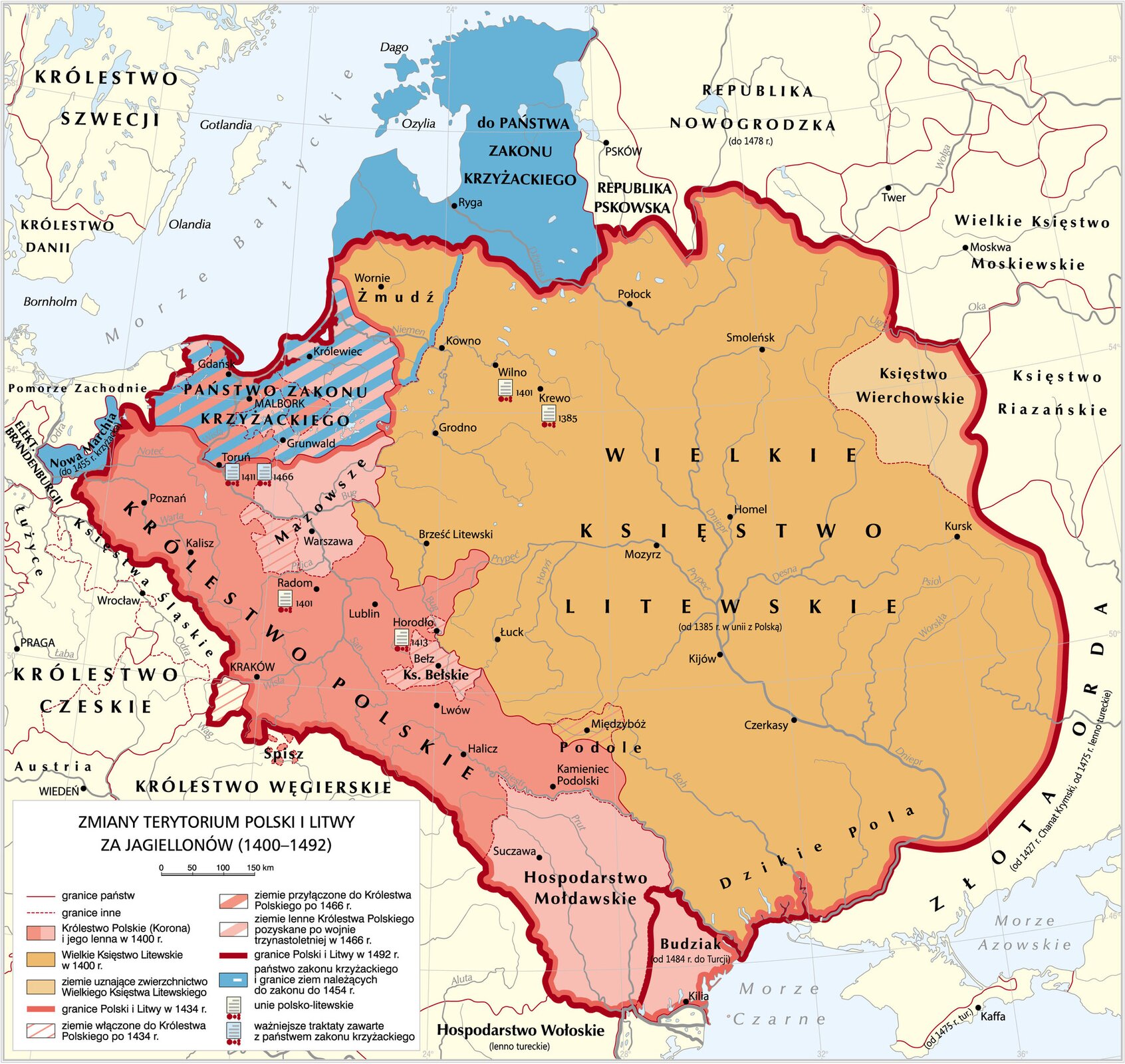
Pay attention to places where „Polish‑Lithuanian” agreements are concluded. What do you think, why are there no towns located in Greater Poland and Pomerania?
RQ60DRNpLU8yl
Grafika mapy przedstawiającej zmiany terytorium Polski i Litwy za Jagiellonów (1400-1492). Na mapie zaznaczone m.in. miejsca zawarcia unii polsko-litewskich, np. Krewo, Horodło, Wilno. Uzupełnienie stanowią informacje zawarte w Task 1.
Task 3
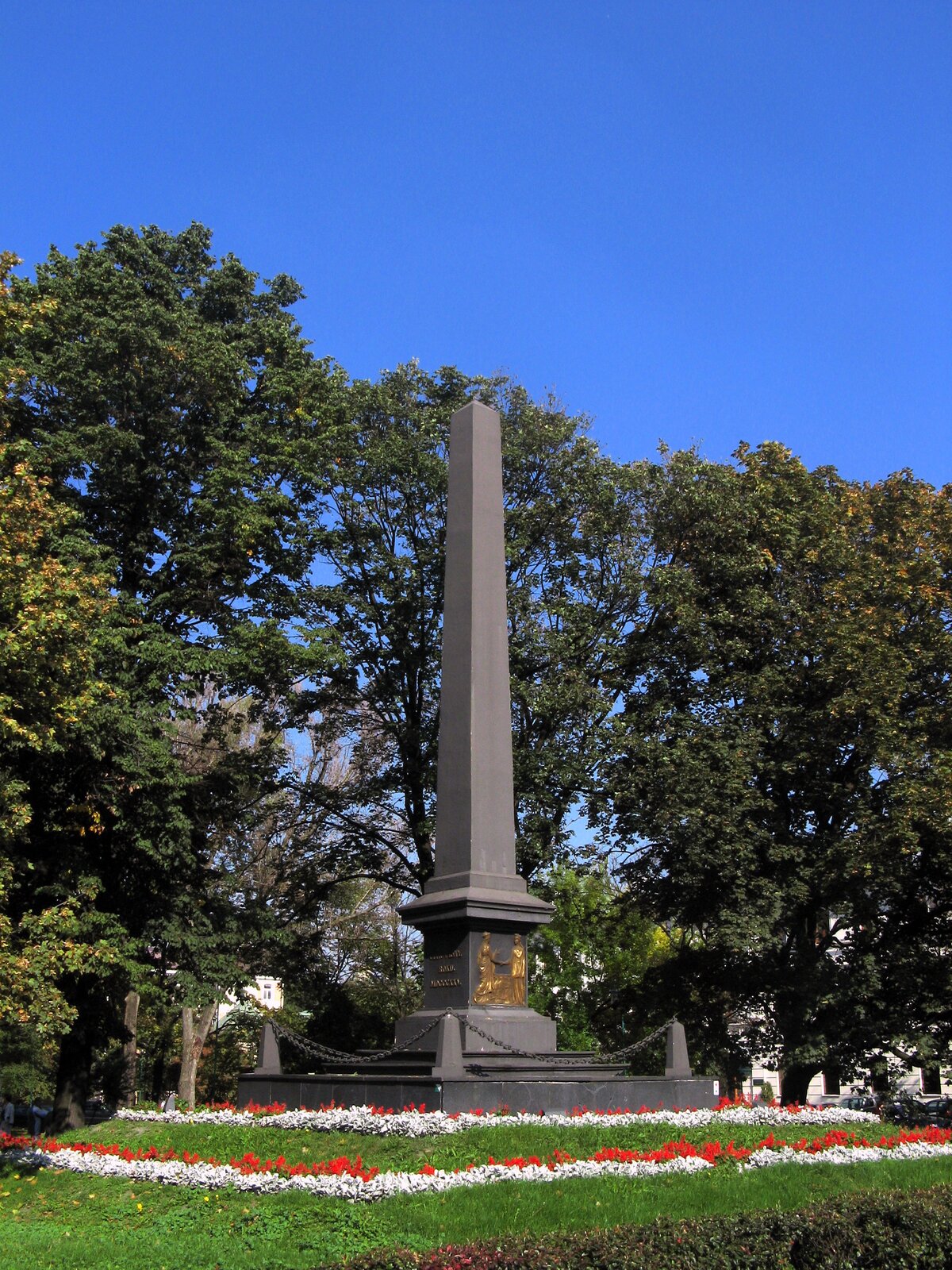
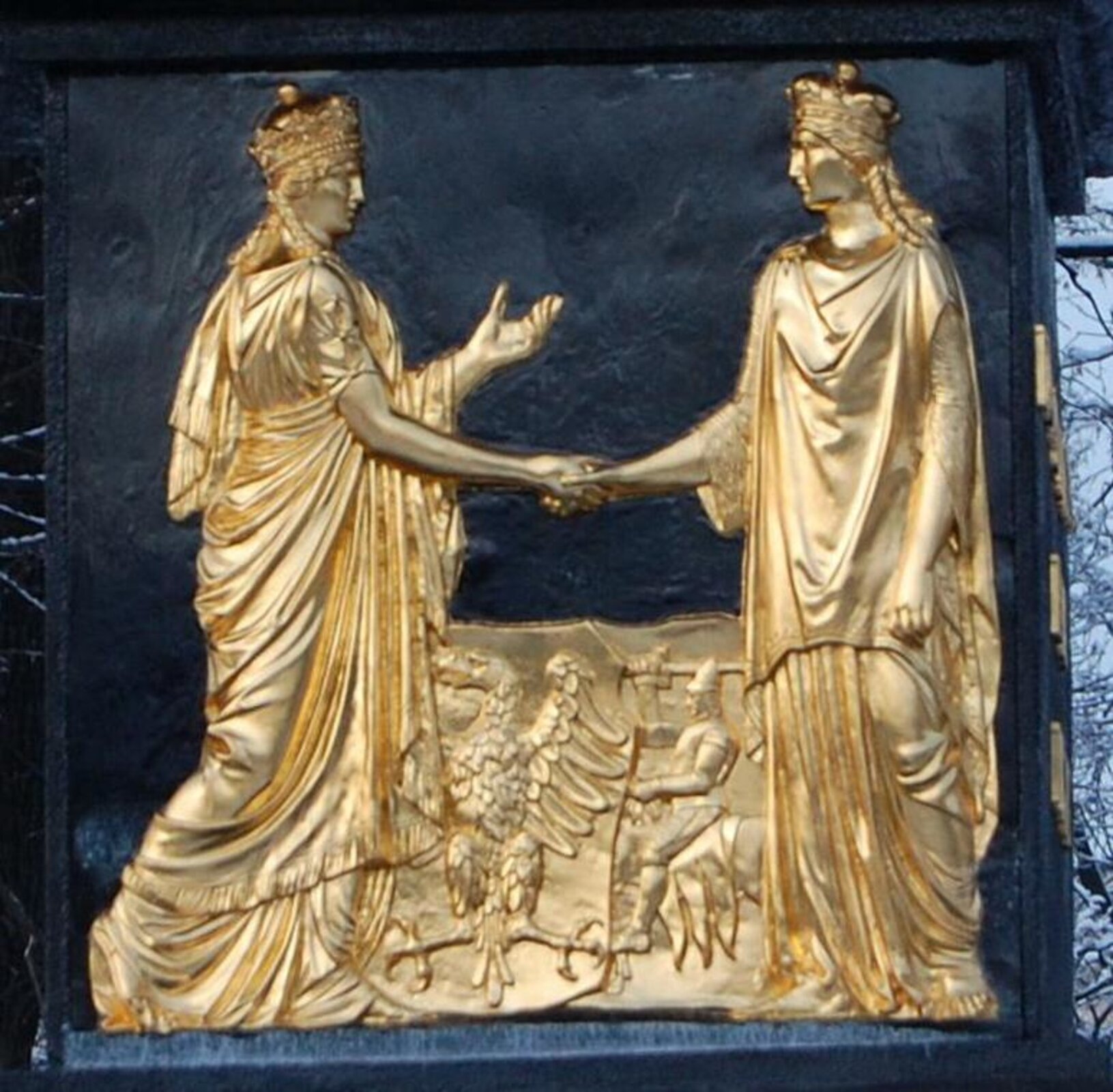
Try to read the symbolism on the monument of the Union of Lublin; to do this, look in the dictionaries for the following symbolic meanings:
Obelisk (especially in ancient times),
gesture of a handshake,
location of the object on the hill (mound).
RjdA9P7Ss8pp5
Fotografia barwna przedstawiająca Pomnik Unii Lubelskiej z 1826 r. Pomnik ma formę obelisku i stoi na niewielkim wzniesieniu.
Monument of the Union of Lublin, set in 1826. The initiative to issue the monument came from Stanisław Staszic; it was carried out in the place of the obelisk issued by Zygmunt August. The obelisk was destroyed at the turn of the 18th and 19th centuries
Source: Szater, domena publiczna.
R1I2PafL0qgwC
Fotografia barwna przedstawiająca płaskorzeźbę będącą częścią pomnika Związku Lubelskiego w Lublinie. Na płaskorzeźbie dwie postaci kobiece symbolizujące Polskę i Litwę podają sobie ręce, w tle herby obu państw.
Bas-relief at the monument of the Union of Lublin in Lublin depicting the Crown and Lithuania
Source: Szater, Wikimedia Commons, licencja: CC BY-SA 3.0.
R1ZTsQS6g72Ek1
Exercise 1
Match terms to definitions. Union Możliwe odpowiedzi: 1. the combination of states that have the same monarch, yet with separate institutions., 2. (volok --- unit of land equivalent to approximately to Polish Łan - 21.3 ha) --- implemented in Lithuania three-field system coupled with a new division of land, and the increase of profitability., 3. the division of land into three parts alternately sowed according to the the following plan: spring crops, winter crops, idle land., 4. the combination of states that have the same monarch and common for both states institutions., 5. the combination of at least two sovereign states combined by several common elements., 6. a political movement of Polish nobles in the 16th century (and later in the Polish-Lithuanian Commonwealth), the purpose of which was to pursue the reforms of the jurisdiction, finances and the military, and to limit the influence of magnates., 7. the higher class of Lithuanian community transformed in the 14th to the 16th century into nobles. Personal union Możliwe odpowiedzi: 1. the combination of states that have the same monarch, yet with separate institutions., 2. (volok --- unit of land equivalent to approximately to Polish Łan - 21.3 ha) --- implemented in Lithuania three-field system coupled with a new division of land, and the increase of profitability., 3. the division of land into three parts alternately sowed according to the the following plan: spring crops, winter crops, idle land., 4. the combination of states that have the same monarch and common for both states institutions., 5. the combination of at least two sovereign states combined by several common elements., 6. a political movement of Polish nobles in the 16th century (and later in the Polish-Lithuanian Commonwealth), the purpose of which was to pursue the reforms of the jurisdiction, finances and the military, and to limit the influence of magnates., 7. the higher class of Lithuanian community transformed in the 14th to the 16th century into nobles. Real union Możliwe odpowiedzi: 1. the combination of states that have the same monarch, yet with separate institutions., 2. (volok --- unit of land equivalent to approximately to Polish Łan - 21.3 ha) --- implemented in Lithuania three-field system coupled with a new division of land, and the increase of profitability., 3. the division of land into three parts alternately sowed according to the the following plan: spring crops, winter crops, idle land., 4. the combination of states that have the same monarch and common for both states institutions., 5. the combination of at least two sovereign states combined by several common elements., 6. a political movement of Polish nobles in the 16th century (and later in the Polish-Lithuanian Commonwealth), the purpose of which was to pursue the reforms of the jurisdiction, finances and the military, and to limit the influence of magnates., 7. the higher class of Lithuanian community transformed in the 14th to the 16th century into nobles. Three-field system Możliwe odpowiedzi: 1. the combination of states that have the same monarch, yet with separate institutions., 2. (volok --- unit of land equivalent to approximately to Polish Łan - 21.3 ha) --- implemented in Lithuania three-field system coupled with a new division of land, and the increase of profitability., 3. the division of land into three parts alternately sowed according to the the following plan: spring crops, winter crops, idle land., 4. the combination of states that have the same monarch and common for both states institutions., 5. the combination of at least two sovereign states combined by several common elements., 6. a political movement of Polish nobles in the 16th century (and later in the Polish-Lithuanian Commonwealth), the purpose of which was to pursue the reforms of the jurisdiction, finances and the military, and to limit the influence of magnates., 7. the higher class of Lithuanian community transformed in the 14th to the 16th century into nobles. Executionist movement Możliwe odpowiedzi: 1. the combination of states that have the same monarch, yet with separate institutions., 2. (volok --- unit of land equivalent to approximately to Polish Łan - 21.3 ha) --- implemented in Lithuania three-field system coupled with a new division of land, and the increase of profitability., 3. the division of land into three parts alternately sowed according to the the following plan: spring crops, winter crops, idle land., 4. the combination of states that have the same monarch and common for both states institutions., 5. the combination of at least two sovereign states combined by several common elements., 6. a political movement of Polish nobles in the 16th century (and later in the Polish-Lithuanian Commonwealth), the purpose of which was to pursue the reforms of the jurisdiction, finances and the military, and to limit the influence of magnates., 7. the higher class of Lithuanian community transformed in the 14th to the 16th century into nobles. Boyars Możliwe odpowiedzi: 1. the combination of states that have the same monarch, yet with separate institutions., 2. (volok --- unit of land equivalent to approximately to Polish Łan - 21.3 ha) --- implemented in Lithuania three-field system coupled with a new division of land, and the increase of profitability., 3. the division of land into three parts alternately sowed according to the the following plan: spring crops, winter crops, idle land., 4. the combination of states that have the same monarch and common for both states institutions., 5. the combination of at least two sovereign states combined by several common elements., 6. a political movement of Polish nobles in the 16th century (and later in the Polish-Lithuanian Commonwealth), the purpose of which was to pursue the reforms of the jurisdiction, finances and the military, and to limit the influence of magnates., 7. the higher class of Lithuanian community transformed in the 14th to the 16th century into nobles. Volok Reform Możliwe odpowiedzi: 1. the combination of states that have the same monarch, yet with separate institutions., 2. (volok --- unit of land equivalent to approximately to Polish Łan - 21.3 ha) --- implemented in Lithuania three-field system coupled with a new division of land, and the increase of profitability., 3. the division of land into three parts alternately sowed according to the the following plan: spring crops, winter crops, idle land., 4. the combination of states that have the same monarch and common for both states institutions., 5. the combination of at least two sovereign states combined by several common elements., 6. a political movement of Polish nobles in the 16th century (and later in the Polish-Lithuanian Commonwealth), the purpose of which was to pursue the reforms of the jurisdiction, finances and the military, and to limit the influence of magnates., 7. the higher class of Lithuanian community transformed in the 14th to the 16th century into nobles.
Match terms to definitions. Union Możliwe odpowiedzi: 1. the combination of states that have the same monarch, yet with separate institutions., 2. (volok --- unit of land equivalent to approximately to Polish Łan - 21.3 ha) --- implemented in Lithuania three-field system coupled with a new division of land, and the increase of profitability., 3. the division of land into three parts alternately sowed according to the the following plan: spring crops, winter crops, idle land., 4. the combination of states that have the same monarch and common for both states institutions., 5. the combination of at least two sovereign states combined by several common elements., 6. a political movement of Polish nobles in the 16th century (and later in the Polish-Lithuanian Commonwealth), the purpose of which was to pursue the reforms of the jurisdiction, finances and the military, and to limit the influence of magnates., 7. the higher class of Lithuanian community transformed in the 14th to the 16th century into nobles. Personal union Możliwe odpowiedzi: 1. the combination of states that have the same monarch, yet with separate institutions., 2. (volok --- unit of land equivalent to approximately to Polish Łan - 21.3 ha) --- implemented in Lithuania three-field system coupled with a new division of land, and the increase of profitability., 3. the division of land into three parts alternately sowed according to the the following plan: spring crops, winter crops, idle land., 4. the combination of states that have the same monarch and common for both states institutions., 5. the combination of at least two sovereign states combined by several common elements., 6. a political movement of Polish nobles in the 16th century (and later in the Polish-Lithuanian Commonwealth), the purpose of which was to pursue the reforms of the jurisdiction, finances and the military, and to limit the influence of magnates., 7. the higher class of Lithuanian community transformed in the 14th to the 16th century into nobles. Real union Możliwe odpowiedzi: 1. the combination of states that have the same monarch, yet with separate institutions., 2. (volok --- unit of land equivalent to approximately to Polish Łan - 21.3 ha) --- implemented in Lithuania three-field system coupled with a new division of land, and the increase of profitability., 3. the division of land into three parts alternately sowed according to the the following plan: spring crops, winter crops, idle land., 4. the combination of states that have the same monarch and common for both states institutions., 5. the combination of at least two sovereign states combined by several common elements., 6. a political movement of Polish nobles in the 16th century (and later in the Polish-Lithuanian Commonwealth), the purpose of which was to pursue the reforms of the jurisdiction, finances and the military, and to limit the influence of magnates., 7. the higher class of Lithuanian community transformed in the 14th to the 16th century into nobles. Three-field system Możliwe odpowiedzi: 1. the combination of states that have the same monarch, yet with separate institutions., 2. (volok --- unit of land equivalent to approximately to Polish Łan - 21.3 ha) --- implemented in Lithuania three-field system coupled with a new division of land, and the increase of profitability., 3. the division of land into three parts alternately sowed according to the the following plan: spring crops, winter crops, idle land., 4. the combination of states that have the same monarch and common for both states institutions., 5. the combination of at least two sovereign states combined by several common elements., 6. a political movement of Polish nobles in the 16th century (and later in the Polish-Lithuanian Commonwealth), the purpose of which was to pursue the reforms of the jurisdiction, finances and the military, and to limit the influence of magnates., 7. the higher class of Lithuanian community transformed in the 14th to the 16th century into nobles. Executionist movement Możliwe odpowiedzi: 1. the combination of states that have the same monarch, yet with separate institutions., 2. (volok --- unit of land equivalent to approximately to Polish Łan - 21.3 ha) --- implemented in Lithuania three-field system coupled with a new division of land, and the increase of profitability., 3. the division of land into three parts alternately sowed according to the the following plan: spring crops, winter crops, idle land., 4. the combination of states that have the same monarch and common for both states institutions., 5. the combination of at least two sovereign states combined by several common elements., 6. a political movement of Polish nobles in the 16th century (and later in the Polish-Lithuanian Commonwealth), the purpose of which was to pursue the reforms of the jurisdiction, finances and the military, and to limit the influence of magnates., 7. the higher class of Lithuanian community transformed in the 14th to the 16th century into nobles. Boyars Możliwe odpowiedzi: 1. the combination of states that have the same monarch, yet with separate institutions., 2. (volok --- unit of land equivalent to approximately to Polish Łan - 21.3 ha) --- implemented in Lithuania three-field system coupled with a new division of land, and the increase of profitability., 3. the division of land into three parts alternately sowed according to the the following plan: spring crops, winter crops, idle land., 4. the combination of states that have the same monarch and common for both states institutions., 5. the combination of at least two sovereign states combined by several common elements., 6. a political movement of Polish nobles in the 16th century (and later in the Polish-Lithuanian Commonwealth), the purpose of which was to pursue the reforms of the jurisdiction, finances and the military, and to limit the influence of magnates., 7. the higher class of Lithuanian community transformed in the 14th to the 16th century into nobles. Volok Reform Możliwe odpowiedzi: 1. the combination of states that have the same monarch, yet with separate institutions., 2. (volok --- unit of land equivalent to approximately to Polish Łan - 21.3 ha) --- implemented in Lithuania three-field system coupled with a new division of land, and the increase of profitability., 3. the division of land into three parts alternately sowed according to the the following plan: spring crops, winter crops, idle land., 4. the combination of states that have the same monarch and common for both states institutions., 5. the combination of at least two sovereign states combined by several common elements., 6. a political movement of Polish nobles in the 16th century (and later in the Polish-Lithuanian Commonwealth), the purpose of which was to pursue the reforms of the jurisdiction, finances and the military, and to limit the influence of magnates., 7. the higher class of Lithuanian community transformed in the 14th to the 16th century into nobles.
Match terms to definitions.
a political movement of Polish nobles in the 16th century (and later in the Polish-Lithuanian Commonwealth), the purpose of which was to pursue the reforms of the jurisdiction, finances and the military, and to limit the influence of magnates., the combination of states that have the same monarch and common for both states institutions., the combination of states that have the same monarch, yet with separate institutions., the division of land into three parts alternately sowed according to the the following plan: spring crops, winter crops, idle land., (volok --- unit of land equivalent to approximately to Polish Łan - 21.3 ha) --- implemented in Lithuania three-field system coupled with a new division of land, and the increase of profitability., the combination of at least two sovereign states combined by several common elements., the higher class of Lithuanian community transformed in the 14th to the 16th century into nobles.
Ruch egzekucyjny – ruch polityczny polskiej szlachty w XVI w., (a później w Rzeczypospolitej Obojga Narodów), którego celem było przeprowadzenie reform w dziedzinie sądownictwa, skarbowości i wojska oraz ograniczenie wpływów możnowładców.
Reforma pomiary włócznej – (włóka – wielkość 21,3 ha odpowiadała mniej więcej polskim łanom) – wprowadzona na Litwie trójpolówka z nowym podziałem gruntów i wzrostem dochodowości.