The Presidents of the Third Republic of Poland
The President is the head of the Polish state.
The competencies and responsibilities of the President of the Republic of Poland.
You will be able to name all the presidents of the Third Republic of Poland.
You will know facts from their biographies.
You will be able to put the presidents in order of their time in office.
According to the Constitution the President of the Republic is the supreme representative of Poland and the guarantor of the continuity of the state authority. It is a very responsible position. Do you know who can become the President of Poland? If you have trouble answering the question, watch the infographics below.
Lech Wałęsa
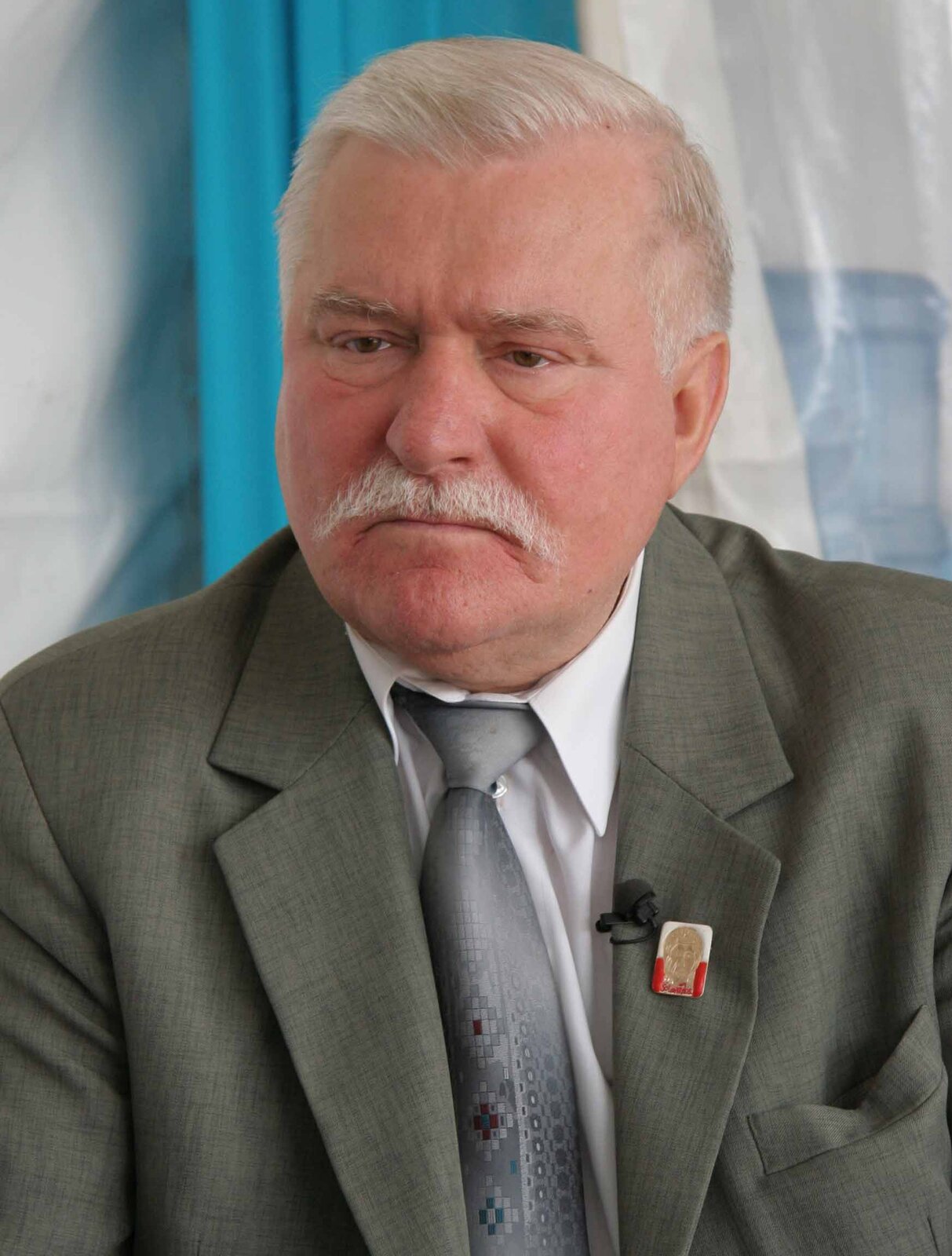
In 1990, when his presidential campaign started, Lech Wałęsa, a Nobel Peace Prize Laureate was, next to Pope John Paul II, one of the most famous Poles in the world. He was born in a poor family. After completing a vocational school he became an electrician at a shipyardshipyard in Gdańsk. Nine years later, in 1976 he was dismisseddismissed for criticizing the communist system. In August 1980 he became a leader of the strikes at the shipyard in Gdańsk, took part in the negotiations with the communist government, and helped work out a solution known as the Gdańsk Agreement. Part of the agreement was the creation of the “Solidarity” movement, of which Wałęsa became the first president. After the impositionimposition of the martial lawmartial law in Poland, Wałęsa was detaineddetained in prison, and the “Solidarity” movement was delegalized. In December, 1983 he was honoured the Nobel Peace Prize. It was collected by his wife, Danuta, because the communist government would not grant Wałęsa his passport, and allow him to leave the country. In a free Poland, Lech Wałęsa decided to run for the presidency. His main counter‑candidatecounter‑candidate was Tadeusz Mazowiecki. Lech Wałęsa gained almost 40% of the votes in the first round, but to everybody’s surprise it wasn’t Mazowiecki, who came as second, but Stan Tymiński – little‑known businessman from Canada. However, in the second round, Wałęsa triumphed – he won 74% of the votes. On 22, December 1990 Lech Wałęsa as the first President in the Third Republic of Poland elected by direct universal suffrage, took the following oath in the presence of the National Assembly: “AssumingAssuming, by the will of the Nation, the office of the President of the Republic of Poland, I do solemnly swear to be faithful to the provisions of the Constitution; I pledge that I shall steadfastly safeguard the dignity of the Nation, the independence and security of the State, and also that the goo of the Homeland and the prosperity of its citizens shall forever remain my supreme obligation.” The oath may also be taken with the additional sentence “So help me, God.” (The Constitution of the Republic of Poland, Article 130)
Aleksander Kwaśniewski
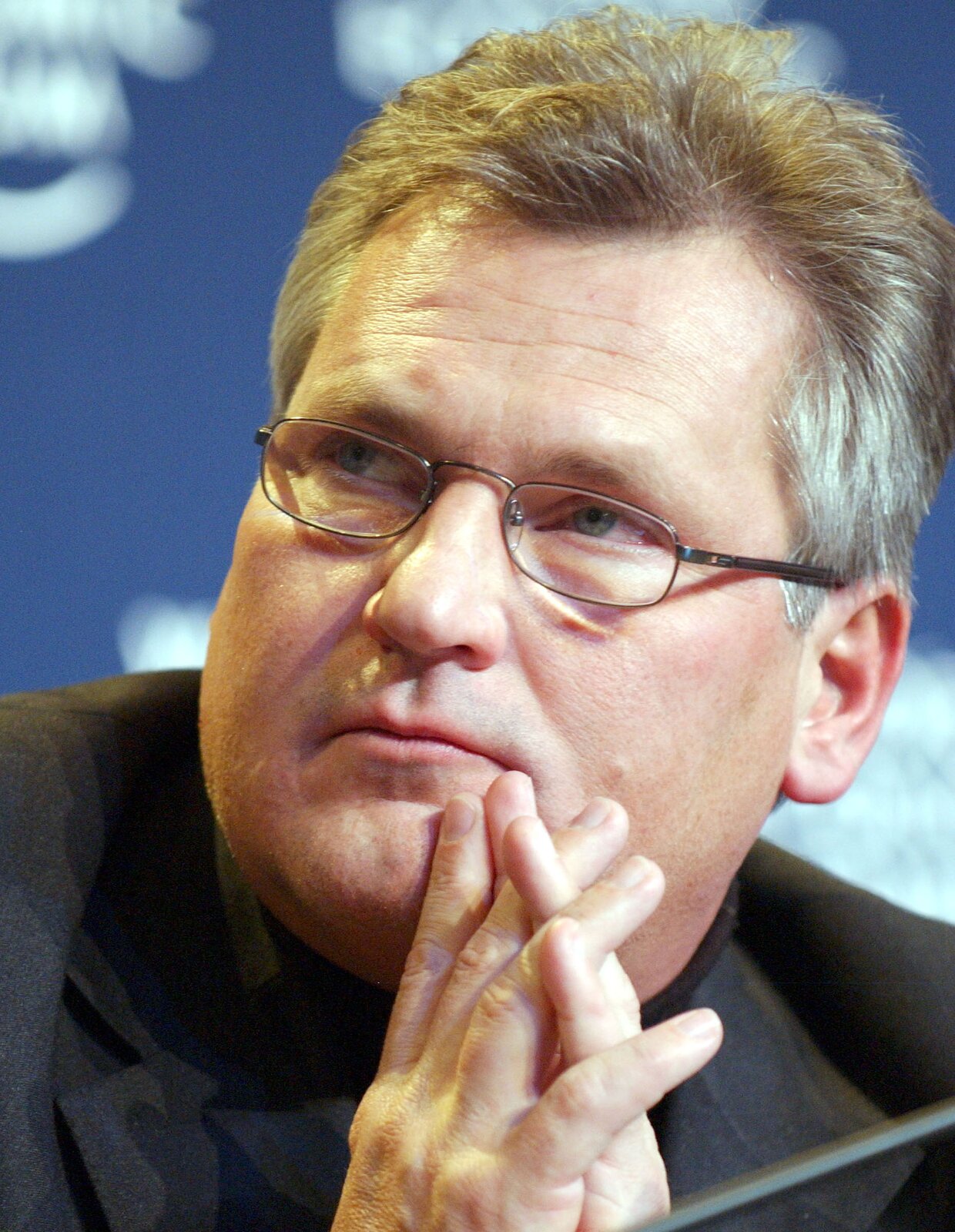
During his studies at Gdańsk University he was already active in a pro‑governmental communist youth organisation, Socialist Polish Students’ Association. At the age of 23, he joined the Polish United Workers’ Party (PUWP), and he remained a member until its dissolution in 1990. He never graduated at the University, but became editor‑in‑chief of “ITD”, and later on of a daily paper – “Sztandar Młodych”.
As of 1985, he worked for the communist government, serving as a Minister of Youth among others. He was also a president of the Polish Olympic Committee. He took part in the Round Table Talks. After the dissolution of PUWP together with Leszek Miller and Józef Oleksy he establishedestablished a political party called Social Democracy of the Republic of Poland, and was elected its leader. Kwaśniewski won the presidential elections twice. In 1995 he beat Lech Wałęsa, who was running for reelection. In 2000 he won the election already in the first round, gaining almost 54% of the votes.
Lech Kaczyński
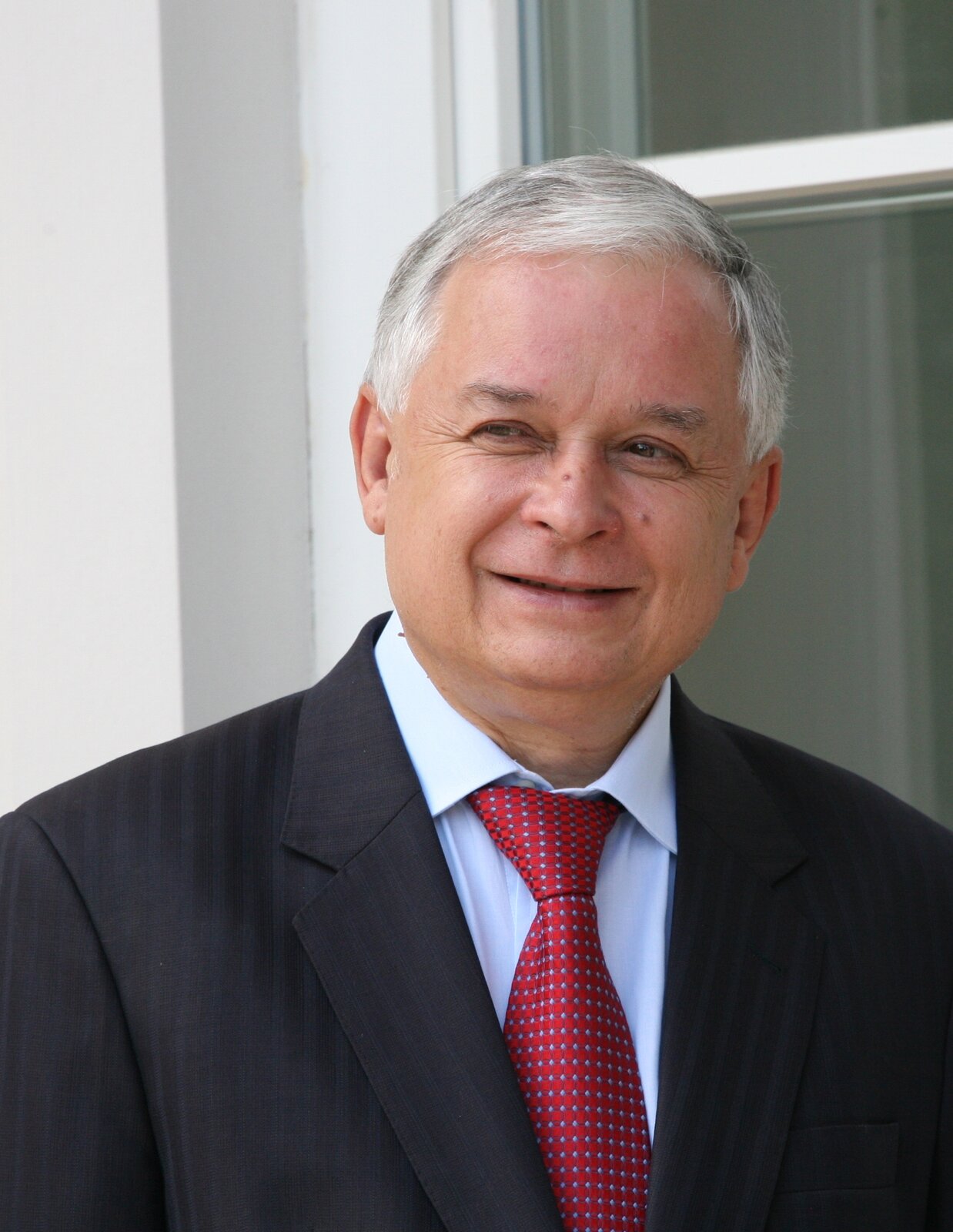
At the time when he was a Minister of Justice and State Attorney GeneralState Attorney General in Jerzy Buzek’s cabinet, 70% of Poles supported him. He was perceived as a sheriff, who fights the mafia, corruption, injustice. The social trust allowed him for the creation of a new party a couple years later – the Law and Justice party – and later on, a start in presidential elections. Lech Kaczyński with his twin brother, Jarosław, were active in politics for ages, but they first became popular as actors – as children, they played the roles of Jacek and Placek in a movie “The Two Who Stole the Moon”. They both graduated from the University of Warsaw at the Faculty of Law and Administration. In 1980 Lech was awarded a PhDPhD title at the University of Gdańsk. Before that, in 1976 he became active in the Workers’ Defense Committee, the Free Trade Unions, and advised the Inter‑Enterprise Strike Committee. He was also a delegate to the First Independent Self‑governing Labour Union “Solidarity” Congress. During the martial law, he was detained in prison. Later he came back to underground opposition activities. In 1989 he took part in the Round Table Talks. He became a senator, and later on a deputy. From 1992 to 1995 he served as the President of the Supreme Chamber of ControlSupreme Chamber of Control. In November 2002 he won the elections for the President of Warsaw. During his time in office, the Warsaw Uprising Museum was created. In 2005 Lech Kaczyński became the President of the Republic of Poland. Watch a short reportage prepared right after the elections and the moment of Kaczyński taking an oath in the presence of the National Assembly. President Lech Kaczyński died in a plane crash on 10, April 2010. In compliance with the Constitution, his responsibilities were overtaken by the Marshal of the Sejm – Bronisław Komorowski. The next presidential elections were organised sooner – not in the autumn, as usual, but in June (1st round) and July (2nd round).
Bronisław Komorowski
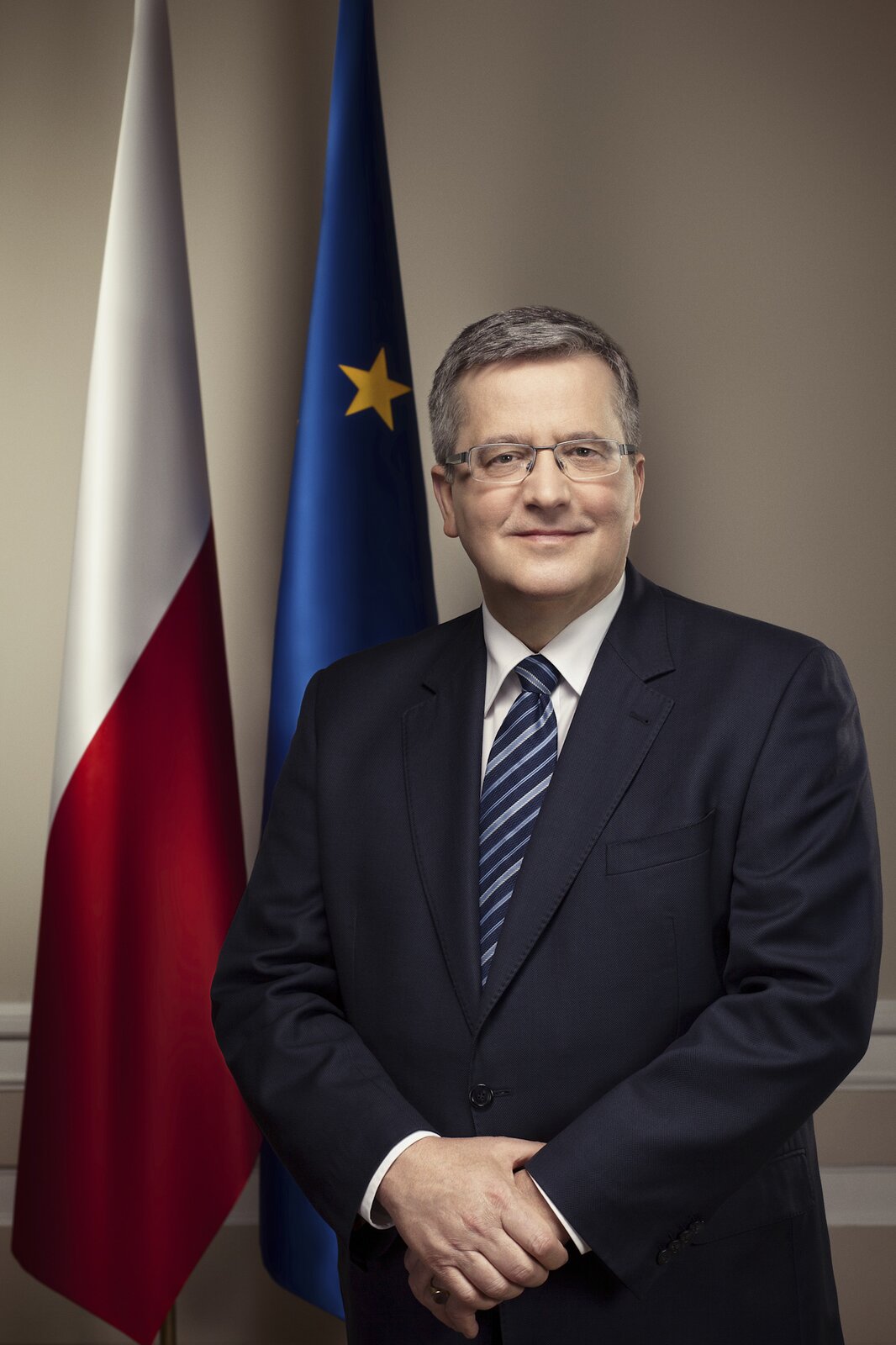
The decision to run for President was made in the beginning of 2010. Komorowski beat Radosław Sikorski in the primaries in the Civic Platform party. He could not have known at that time, that he would serve as President even before he became elected…
Bronisław Komorowski became involvedbecame involved in the opposition movement as a teenager. At the age of 16 he took part in the March manifestations of 1968, then as a student at the University of Warsaw Faculty of History, he was an active member of the Movement for Defense of Human and Civic Rights and the Workers’ Defense Committee. During the martial law in Poland, he was detained in prison. In the 90s he worked as a lecturer of history in a seminary in Niepokalanów. In 1991 he became a deputy, and remain one, representing different parties, for the next 19 years, until he was elected President.
On top of that he served a couple of times in the government in the Ministry of Defence – three times as a deputy minister, and once as a Minister of Defence himself. Bronisław Komorowski was sworn in as a President on 6, August 2010.
Andrzej Duda
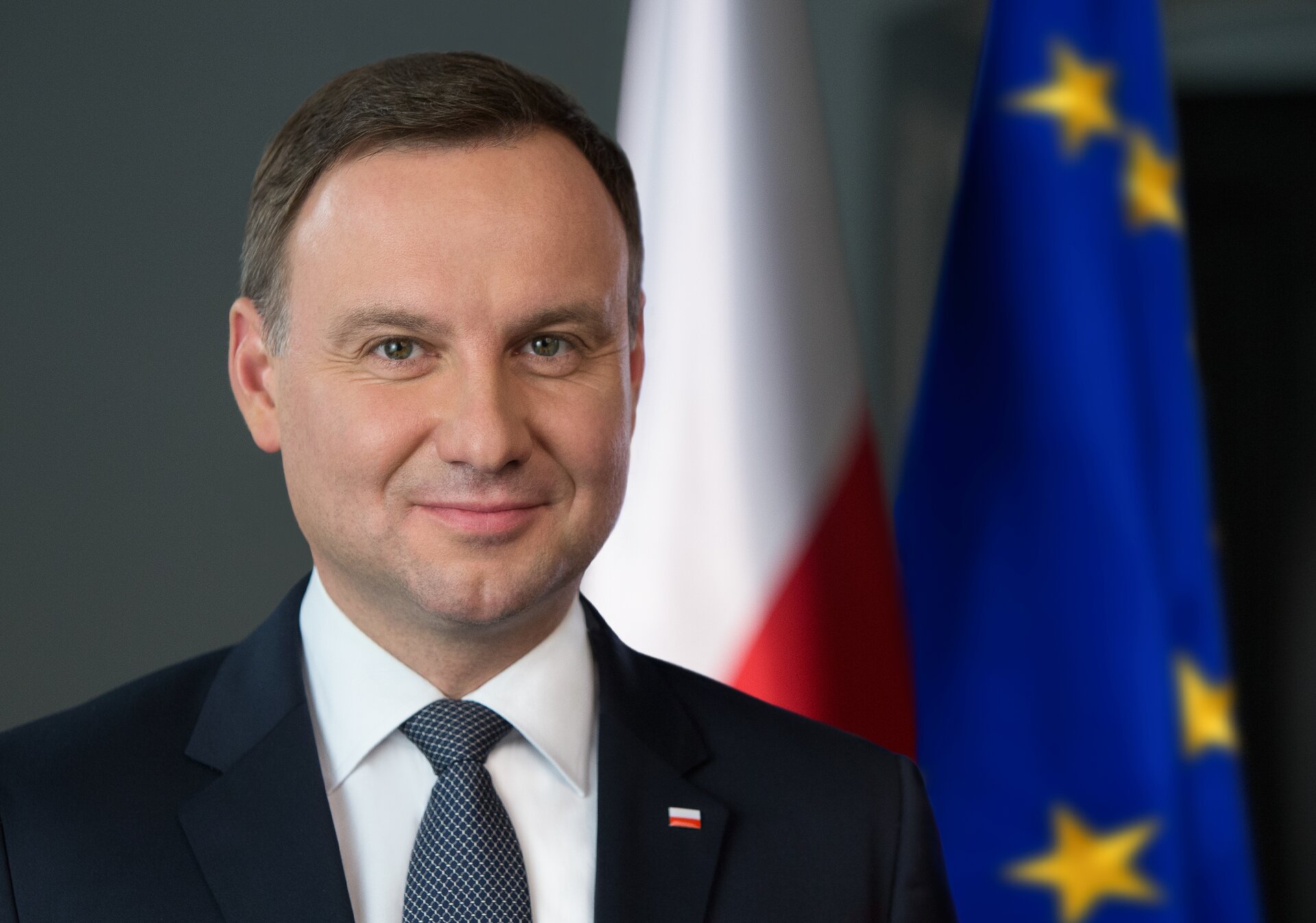
When five years later Bronisław Komorowski decided to run for reelection, his position seemed unthreatened – according to opinion polls his support was around 60% at the beginning of the year. Not many people have heard about Andrzej Duda, his main counter‑candidate. Andrzej Duda is a lawyer. He graduated from the Jagiellonian University in Cracow. In 2005 he was awarded a PhD in Law. On 1, August 2006 he became a deputy minister in Jarosław Kaczyński’s government, later he was a member of the Tribunal of State. From the beginning of 2008 until the death of President Lech Kaczyński he was an undersecretary in the Chancellery of the President of the Republic of Poland. In 2011 he was elected to the Sejm as a Law and Justice deputy, and in May 2014 he became a member of the European Parliament. When the presidential campaign of 2015 began his support was as little as 15%, but eventually, he beat Bronisław Komorowski in the second round, winning almost 52% of the votes. Andrzej Duda took an oath before the National Assembly on 6, August 2015.
Which of the Presidents of the Third Republic served as President twice?
- Lech Wałęsa
- Aleksander Kwaśniewski
- Lech Kaczyński
- Bronisław Komorowski
Put the names of the Polish Presidents in order of their time in office starting from the one who served as President the earliest.
- Andrzej Duda
- Lech Kaczyński
- Aleksander Kwaśniewski
- Bronisław Komorowski
- Lech Wałęsa
Which of the politicians have never been the President of Poland?
- Bronisław Komorowski
- Jarosław Kaczyński
- Aleksander Kwaśniewski
- Tadeusz Mazowiecki
- Lech Kaczyński
- Lech Wałęsa
Listen to the abstract recording to review the material and new vocabulary. Then do the vocabulary exercise. Match the pairs: English and Polish words.
stan wojenny, zaangażować się, zwolniony, obejmując, internować, kontrkandydat, Najwyższa Izba Kontroli, prokurator generalny
| dismissed | |
| martial law | |
| to detain | |
| counter‑candidate | |
| assuming | |
| State Attorney General | |
| Supreme Chamber of Control | |
| to become involved |
Keywords
presidential elections, counter‑candidate, take an oath, the National Assembly, run for President
Glossary
stocznia
zwolniony
wprowadzenie
stan wojenny
internować
kontrkandydat
utworzyć
obejmując
prokurator generalny
doktorat
Najwyższa Izba Kontroli
zaangażować się