The Renewed Empire of the Ottons
to describe who Otto I was and what were his achievements;
to indicate when did the Holy Roman EmpireEmpire come into being;
to describe the idea pursued by Otto III;
to explain why the plans of Otto III are called the first sketch of a united Europe.
The main goal of Henry I was to reinforce his own power and limit the role of the dukes in the state. In order to achieve his goal, he sought to set the inheritance of power in order. Parting ways with the principle stating that the country would be divided among all of his male descendants, he selected his eldest son, Otto, as his successor. As a result, the subsequent rulers reigned over an indivisible territory of their predecessors, now able to focus on strengthening the international standing of the German state.
Otto I, called “the Great” by his successors, continued his father’s policies. Basing his authority on family ties and the Church, he created a strong state. With time, his authority as the ruler permitted him to mediate in disputes and defend the Christian values, especially after his victory over the pagan, nomadic tribes of Hungarians at Lechfeld in 955. His greatest success, however, was the acquisition of the Emperor’s crown (962), conferred upon him by PopePope John XII, as a token of gratitude for having helped him defeat the magnates that revolted against him. From that moment, the German monarchy became the protector of the Church and Christendom, and the German kings would receive the title of Emperor upon entering Rome, bearing the title of Holy Roman EmperorRoman Emperor of the German Nation.
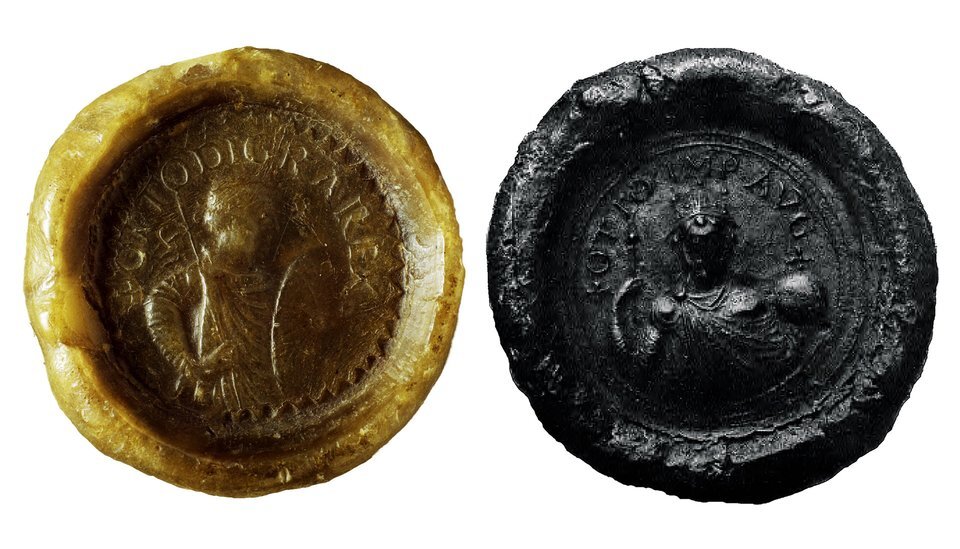
Otto I was succeeded by his son, Otto II. After taking over after his father, he unsuccessfully tried to regain southern Italy from the hands of the Saracens (Arabs). Owing to his marriage with the Byzantine princess Theophanu, he tightened the ties to the Byzantine Emperor, and, above all, confirmed his title of Emperor. In order to secure the throne in case he died, during his lifetime he crowned his son, Otto III, as German King. It was an exceptionally fortunate decision to make, as one year after that event Otto II died, leaving the Imperial authority in the hands of Empress Adelaide and Princess Theophanu, respectively the grandmother and the mother of his still‑underage son. Despite the support of his allies, the young King was barely acknowledged in Germany; the Duke of Bavaria, Henry II the Wrangler, attempted to take the crown for himself. After having come of age and being crowned Emperor, Otto III embarked on a grand quest: to build a universal, Christianity‑based Empire. As an earthly emissary of God, the Emperor could appoint Christian rulers himself; thus, for example, he named Bolesław I the Brave a “friend and ally of the Roman people” and gave his permission for Stephen I to become the first King of Hungary. In exchange, he expected their support and collaboration building a united Europe, which would constitute a political unity and be represented by four equal kingdoms: Germany, Gaul, Italy, and that of the Western Slavs. Unfortunately, the premature and heirless death of the Emperor foiled the universal Empire project. The new monarch – Henry of Bavaria – who came into power after a brief struggle, had no intention to continue the policy of his predecessor.
Read the description of Otto I being crowned Emperor. Pay attention to how Thietmar described the scope of the Emperor’s power.
Die Chronik des Bischofs Thietmar von Merseburg und ihre Korveier ÜberarbeitungThietmar z Merseburga
[Po pokonaniu Berengara z Ivrei] następnie z uzbrojonym wojskiem udał się do Rzymu, dwukrotnie pokonał tutejszych mieszkańców stawiających mu opór i w chwale wkroczył do miasta roku Pańskiego 961. Następnie otrzymał wraz z małżonką błogosławieństwo cesarskie [to jest został koronowany na cesarza] od papieża Jana, na którego prośbę tu przybył, w 29 roku swego panowania [962] oraz został uczyniony opiekunem rzymskiego Kościoła [...]. Za jego czasów zajaśniał wiek złoty, przez nas odkryta została najpierw żyła srebra [tj. nastał wiek srebrny].
Source: Die Chronik des Bischofs Thietmar von Merseburg und ihre Korveier Überarbeitung, t. 9, II,13, tłum. Przemysław Wiszewski, Berlin 1935, s. 52.
According to Thietmar, having been crowned Emperor, Otto I became, above all else:
- the protector of the Church.
- the ruler of Italy.
- the ruler of Germany.
The chronicler saw as the better times:
- his own times, as beautifully mature – with the silver of grey hair.
- of Otton, as the golden era, according to the Antique tradition of the three ages of humanity.
- the future, as the Final Judgment drew closer.
Study the illustration and learn more about the territories united into the Empire of Otto III.
Read the excerpt from the Italian chronicle describing how Otto III quelled the Roman’s revolt against him. Note the measures used by the Emperor to reclaim his authority.
Liber gestorum recentiumPewien grecki duchowny – Jan Philogathos – z otoczenia Theophanu został biskupem Piacenzy. Następnie chciał przekazać godność cesarską w ręce Bizantyńczyków. Wspólnie z możnym rzymskim, Krescencjuszem, w 998 r. najechał Rzym, wygnał papieża i został uznany za nowego biskupa Rzymu – Jana XVI. Po zasięgnięciu opinii możnych królestwa Otto [III] bez zwłoki udał się w drogę z armią mieszkańców Italii i Germanów, szerząc strach wśród sąsiadów. Cały Rzym był zdumiony jego przybyciem. Grecy krzyczeli o zmiłowanie. Krescencjusz przygotowywał bunt chroniony murami zamku św. Anioła. Cesarz obległ go ze wszystkich stron, atakował go codziennie maszynami oblężniczymi, aż pewne porozumienie zostało jakoś zawarte. Krescencjusz oddał się w ręce cesarza. Został natychmiast skazany na ścięcie na łące Nerona. Jego żona Stefania została wydana na pohańbienie w ręce Germanów. Natomiast grecki pseudo‑papież, po wyłupieniu oczu i obcięciu nosa oraz uszu, został posadzony na ośle twarzą do tyłu i prowadzony przez miasto, a on trzymał w ręku ośli ogon. W ten sposób Rzym, wcześniej burzący się, stał się spokojny pod okiem króla.
Source: Arnulf z Mediolanu, Liber gestorum recentium, tłum. t. 67, tłum. Przemysław Wiszewski, Liber gestorum recentium, [w:] , Monumenta Germaniae Historica, Scriptores rerum Germanicarum Hannover 1994..
How did Otto III punish the rebelling Romans?
mutilation, disgrace, beheading
| John XVI | |
| Stephanie | |
| Crescentius |
Keywords
Empire, pagans, Pope
Glossary
Cesarstwo Rzymskie – forma ustroju państwa rzymskiego, w której panujący obdarzony jest tytułem cezara. Cesarstwo rzymskie zostało zapoczątkowane przez Oktawiana Augusta.
Cesarstwo – forma ustroju państwa, monarchii, w której panujący obdarzony jest tytułem cesarza. Zgodnie z tradycją jest ono wyższej rangi i prestiżu niż królestwo.
Stolica Apostolska – określenie urzędów papieża i podległych mu instytucji jako najważniejszej władzy w Kościele katolickim. Najważniejszym jej zadaniem jest podejmowanie decyzji w sprawach wiary katolickiej. Czasem określana jest jako rząd Państwa Kościelnego i Watykanu.
Państwo Kościelne – ziemie w środkowej Italii podległe władzy papieży. Oficjalnie władza na tym terenie należała do cesarzy to formalnie sprawowali ją niezależni papieże. Istniało od 755 do 1870 roku.
Papież – biskup Rzymu, głowa Kościoła katolickiego. Sprawuje najwyższą władzę w Kościele oraz stoi na czele Państwa Watykańskiego. Wybierany jest przez kolegium kardynalskie na konklawe.
Lenno – ziemie nadawane przez seniora (zwierzchnika) swojemu poddanemu.
Poganie – określenie stosowane przez chrześcijan wobec wyznawców innych religii i wierzeń. Określnie to od zawsze miało charakter obelgi i oznaczało osobę gorszą, mniej znaczącą.
Saraceni – w średniowieczu, nazwa Arabów, a później również wszystkich wyznawców islamu, w szczególności walczących z chrześcijanami.
Święte Cesarstwo Rzymskie Narodu Niemieckiego – nazwa państwa będącego kontynuacją cesarstwa zachodniorzymskiego. Za jego twórcą uważa się Ottona I Wielkiego. Istniało w latach 962‑1806.