The rich and the poor… European society in the first half of the 19th century
how the cities in industrial era looked like;
what were and how functioned new social strata in the era of industrial revolution.
In the first half of the 19th century, the population of Europe grew by more than 40%. Growing social contrasts were much more visible in urban reality than in rural areas. It was not only the landscape that changed in the countries affected by the industrial revolution. New social forces were born under the pressure of capitalist changes. One of the most noticeable changes was the emergence of the large‑scale industrial bourgeoisie. In the first half of the 19th century, as the prestige of intellectual work increased, a separate stratum of a representative of liberal professions formed. Laborers employed in the numerous opened industrial plants were a new social stratum in the structure of European societies —= just like the bourgeoisie and the intelligentsia. In the working‑class environment there were also divisions related to different material situations. The elite of this environment was qualified employees, on the margin there were lumpenproletariatproletariat and the unemployed. IndustrialisationIndustrialisation gave birth to a Europe‑wide movement of philanthropy, i.e. privately organized care for the poor.
Read the following text and explain the concept of a demographic explosion. What was the term used in the 19th century to describe this phenomenon?
Slow population growth, a phenomenon typical of the previous eras, finally became a thing of the past in the first half of the 19th century. Within half a century, Europe's population grew from 187 million (in 1801) to 266 million (in 1850), constituting an increase of more than 40%. In England, for example, the population grew from 7.7 million (in 1760) to 21 million in the mid‑19th century, i.e. tripled in nearly a hundred years. This process — called the demographic explosion —= initially covered only Western Europe. After 1850, it spread to the eastern part of the continent. It is not without reason that the concept of masses was born in this era. For the first time, it was consciously used in Britain around 1840 to describe a large number of people as a new social phenomenon accompanying rapid urban development. In front of one or two generations, villages became cities, and cities became—metropolises.
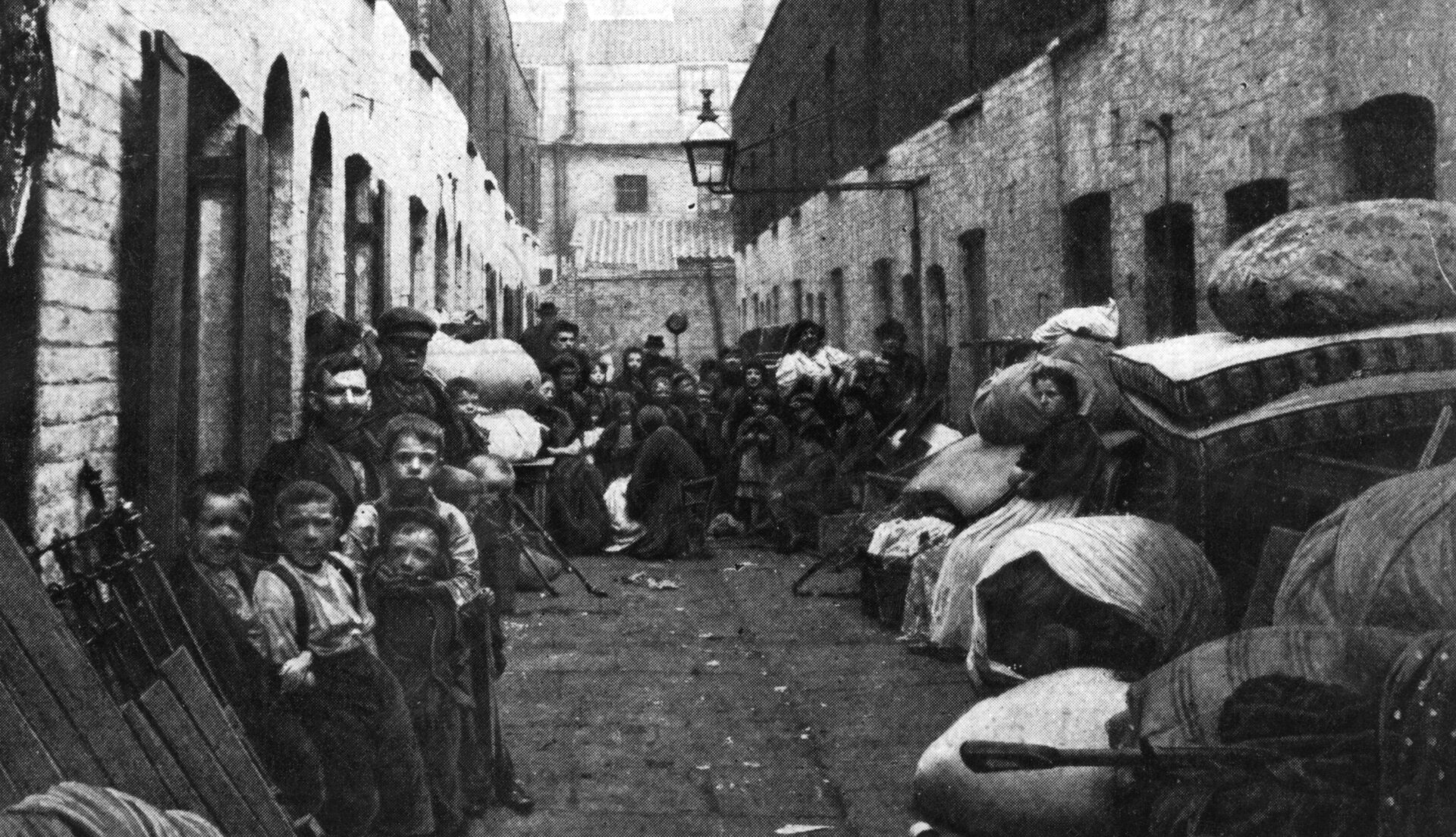
New industrial and mining cities, such as the British Manchester, Silesian Katowice and Łódź belonging to the Kingdom of Poland, were established in suburban and rural areas all over Europe. Settlement caused by the development of new areas of the capitalist economy was a phenomenon common for the whole continent, and migration from rural to urban centres was of a mass nature. However, in Central and Eastern Europe (including most Polish lands), urbanisationurbanisation was much slower than in Western Europe. It accelerated only in the second half of the 19th century.
Analyse the table below and write down your conclusions. Also find out which metropolis had more than one million inhabitants in the middle of the century. In which cities did the population growth reach its highest pace? To which countries did the cities included in the chart belong?
Europe's largest cities in terms of population (in thousands) in the years 1800 and 1850.
City | 1800 | 1850 |
Berlin | 172 | 419 |
Budapest | 54 | 178 |
Glasgow | 77 | 357 |
Hamburg | 130 | 132 |
London | 1,117 | 2,685 |
Moscow | 250 | 365 |
Paris | 547 | 1,053 |
Saint Petersburg | 220 | 485 |
Warsaw | 80 | 160 |
Vienna | 247 | 444 |
Analyse the data in the table. Which city joined this group in the mid-19th century, distancing Moscow?
- Budapest
- Glasgow
- Berlin
- Warsaw
Listen to the recording and learn more about the contrasts of the era of industrial revolution.
The industrial revolution – with its rapid changes and mass migration of people in search for work – is becoming the fastest noticeable in the cities. Differences in the level of wealth were much more visible in urban reality than in rural areas. The arrangement of fast‑growing urban spaces faithfully reflects the division of society into the rich and the poor.
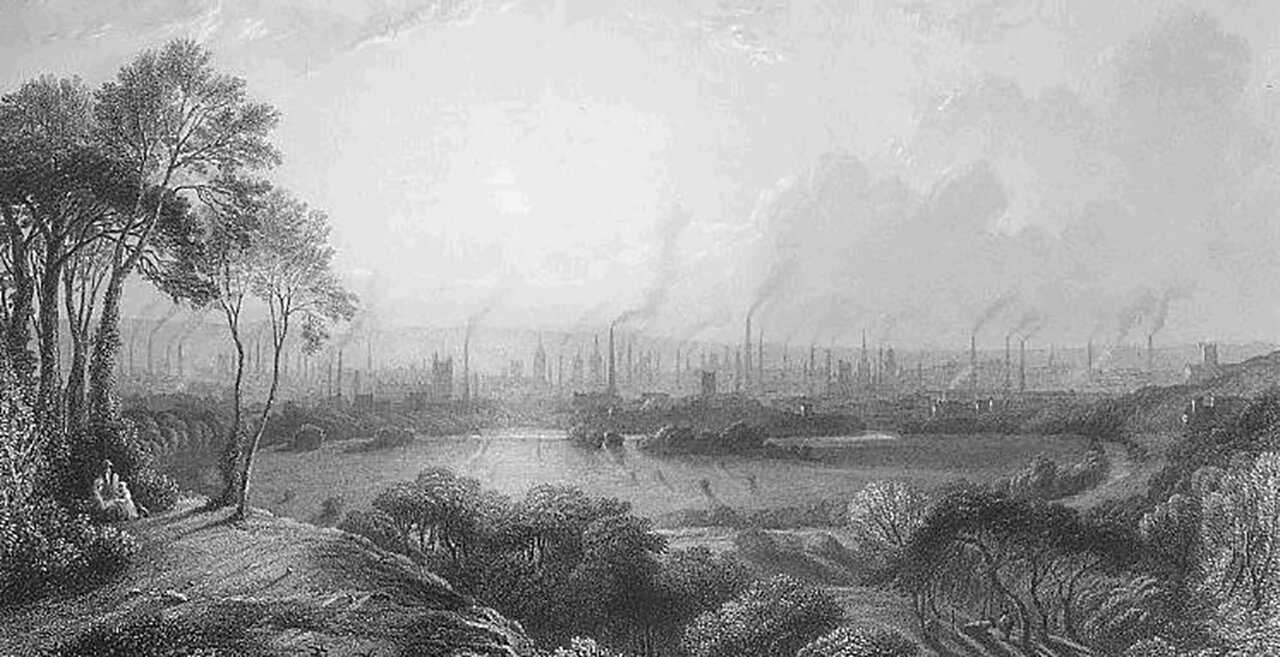
The process of urban development is suddenly making the urban landscape unattractive. This phenomenon is a concern for all observers. Meanwhile, the rural population does not stop flowing into them. It does so in the search for happiness and for work, in order to break out of rural poverty.
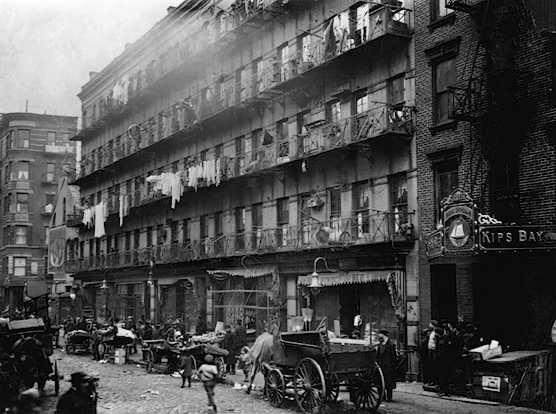
The first slums, i.e. the poverty‑stricken districts, are found in cities - the fastest in Great Britain. Poverty, beggary, robbery, crime, homeless children, epidemics, crime – these all increase as more and more people come into the increasingly tight city walls. The poor living there vegetate in narrow alleys, in barracks and makeshift hovels. Many cities still have streets dating back to the Middle Ages, and a widespread lack of hygiene makes them habitat for diseases. However, it is no better in the new workers' settlements. They are built on the outskirts of cities and around newly opened factories, and their sanitary condition leaves much to be desired and is systematically deteriorating. It usually depends on the initiative and goodwill of private owners, which is usually lacking. Over time, rentals, i.e. tenement houses with flats for rent, are beginning to be built in working districts. They are located around tight, poorly lit courtyards. Although the workers' wages gradually increase in the mid‑19th century, not everyone can afford them anyway. Typically, the rooms occupied by workers are overcrowded. In the first half of the 19th century, European governments show no interest in factory infrastructure or new urban centres. It is only in the second half of the century that decisions will be taken in many European cities to demolish poverty‑stricken districts and to widen the streets.
Meanwhile, rich people live in representative city districts with wide squares, tall buildings and parks. They visit cafés and restaurants, theatres and museums which are being built up in increasing numbers.
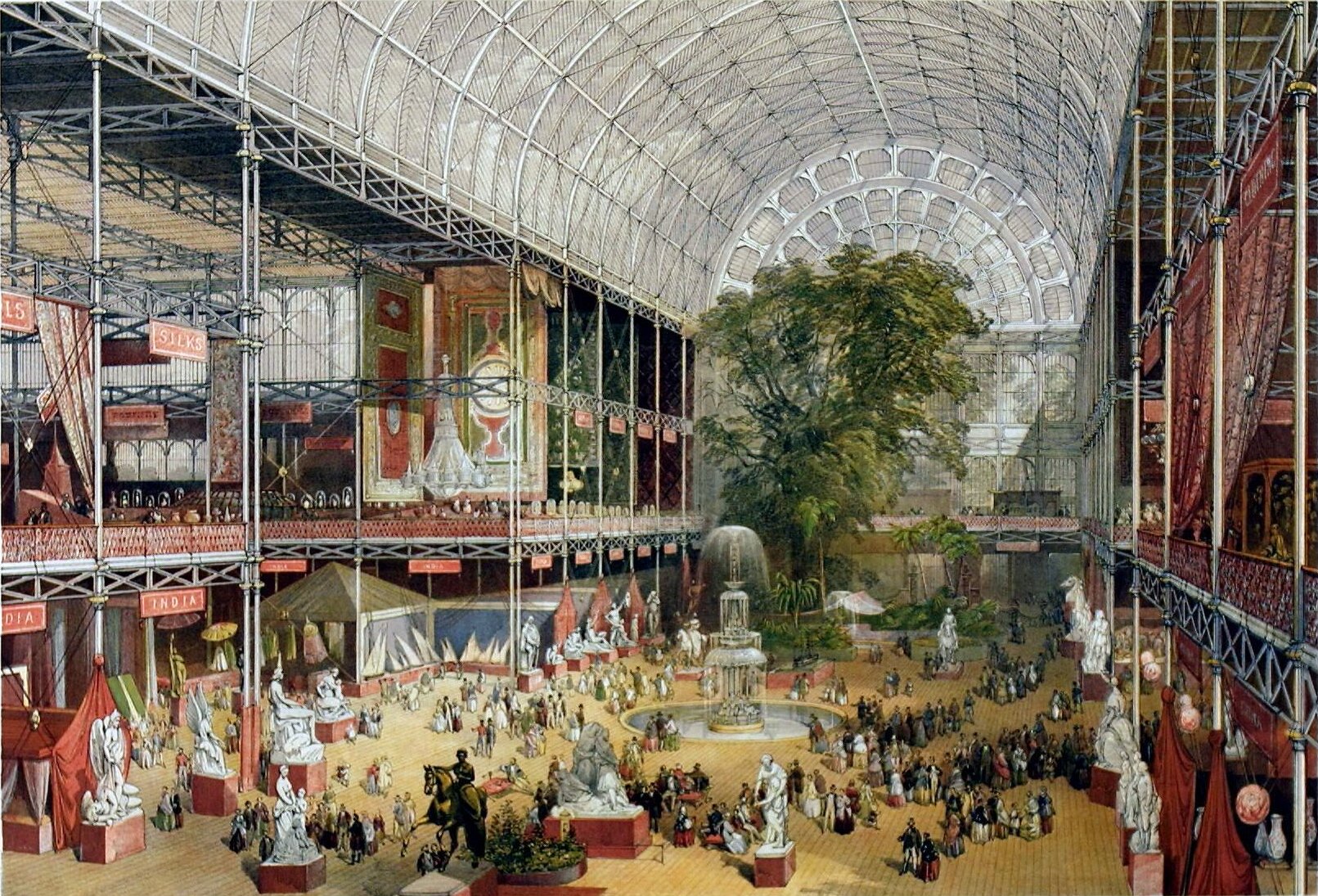
As noted by Heinrich Heine, a German Romantic poet, during his travel across Europe in 1827,„cudzoziemiec, który przewędruje duże ulice Londynu i nie trafia do dzielnic zaludnionych wyłącznie przez pospólstwo, nie dostrzega nic albo przynajmniej bardzo niewiele z tej nędzy, tak bardzo rozpowszechnionej w Londynie. Tylko tu i ówdzie przy wejściu do ciemnej uliczki stoi w milczeniu obdarta kobieta z niemowlęciem przy wychudzonej piersi i oczyma prosi o jałmużnę. Jeżeli te oczy są jeszcze piękne, to może ktoś w nie spojrzy – i przerazi się bezmiarem zawartego w nich cierpienia. Żebrakami są tu zazwyczaj starcy, w lwiej części Murzyni. Stoją na rogach ulic i co jest w zabłoconym Londynie bardzo pożyteczne, oczyszczają ścieżki dla przechodniów za jakimś drobnym wynagrodzeniem.
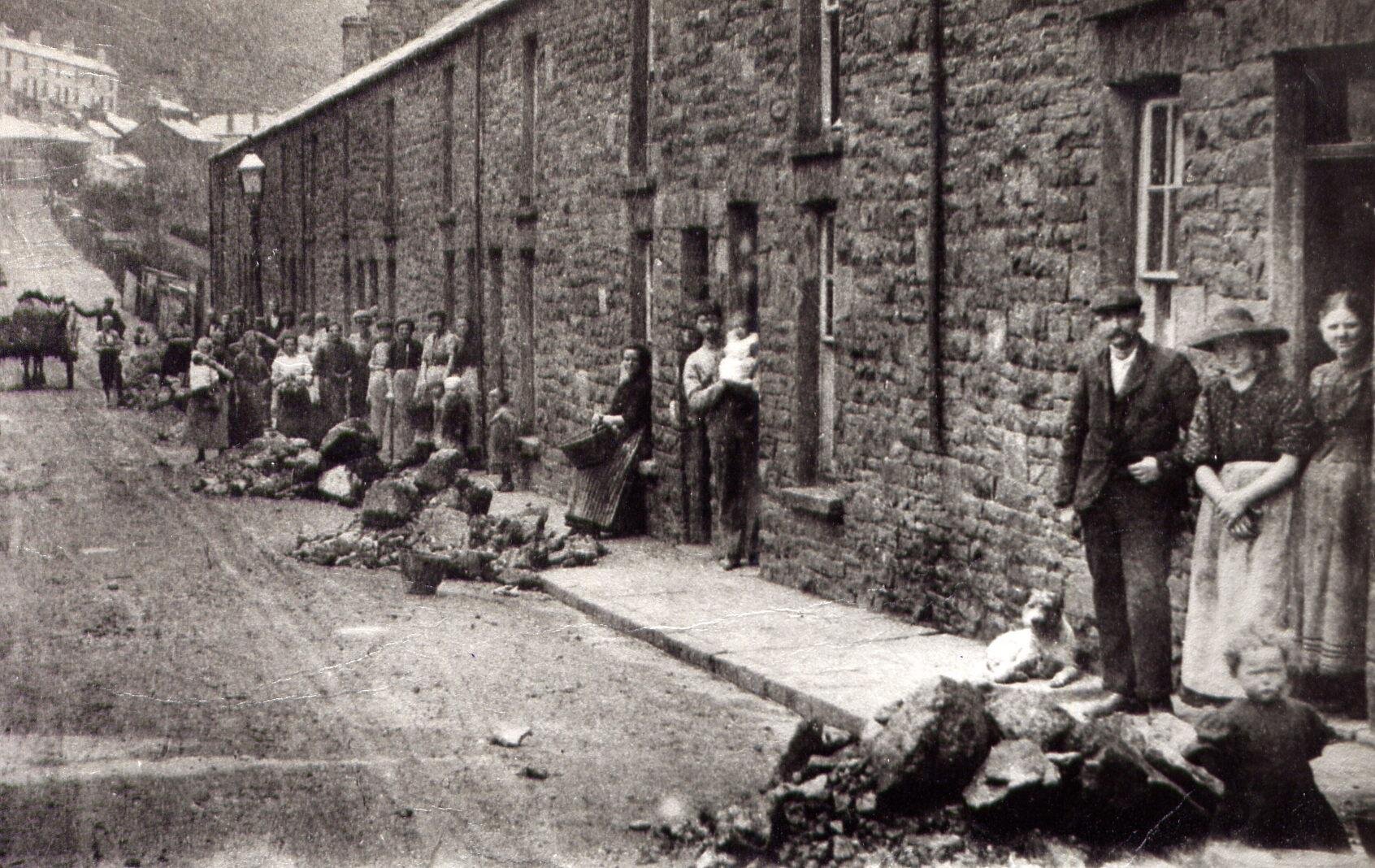
Nędza pospołu z występkiem i zbrodnią dopiero pod wieczór wyłazi ze swoich kryjówek; tym bardziej boi się dziennego światła, im straszliwszy zachodzi kontrast pomiędzy nią a błyszczącym dokoła wyniosłym przepychem; tylko głód czasem wyciągnie ją z ciemnego zaułka w porze obiadowej i stoi oto z niemymi, ale wymownymi oczyma, i błagalnie patrzy na bogatego kupca, który brzęcząc pieniędzmi, zaaferowany przebiega obok, albo na próżniaczego lorda, co niczym syty bożek jedzie na wysokim rumaku i niekiedy rzuca obojętnie dumne spojrzenie na kręcący się u jego nóg tłum ludzi […]. Dlatego że nad tą hołotą, która mocno przylgnęła do ziemi, angielscy arystokraci unoszą się niby wyższe istoty, uważając małą Anglię za swoją tymczasową siedzibę, Włochy – za swój letni ogród, Paryż – za swój salon, a cały świat – za swoją własność”.
Read the text below. Write down examples of socially‑oriented activities of philanthropists and supporters of socialism. What solutions for the fight against the poverty were used? How do you assess them from today's perspective? Were they in your opinion sufficient? Think about what did the poor lack in those days?
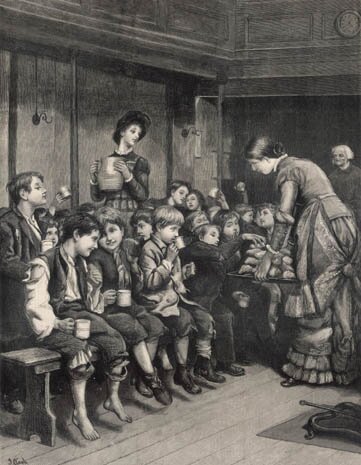
In the first half of the 19th century, the so‑called benevolent societies, i.e. philanthropic associations, which operated under the honorary patronage of rulers or influential members of the urban community, were established in European cities. They collected funds and set up care facilities for the most vulnerable in society: orphans, disabled people and the elderly. They were financially supported by the municipal self‑government or state authorities. The general social insurance system was not yet known and only a small proportion of those in need were covered by charitable activities. Gradually, apart from orphanages, kindergartens (so‑called shelters) and crèches — were opened for workers' children. The philanthropists were also involved in hospital construction and prison reform. Physicians, on behalf of benevolent societies, provided free medical assistance to the poor. Ad hoc feeding actions were also organized for the poor in moments of famine, often affecting the population.
Some employers also took care to ensure that the workers they employed had decent living and working conditions. They offered them worker’s flats in the area of factories, a school for their children, benefits or participation in profits on a cooperative basis. They were interested in the postulates of the first socialists, implementing them on their own.
What distinguished philanthropists from socialists were the conclusions they drew from the observation of the surrounding reality. Philanthropists looked for solutions in liberal concepts of the Enlightenment. They tried to base their ways of helping the poor on rational and economic premises. The utopia socialists noted that the problem lies in the social structure and system of capitalism. They believed that the industry was creating more and more wealth, and this was mainly due to the masses of workers, who were living and working in awful conditions without using the goods they produced. Their attempts to change the situation were humanitarian in nature, but usually financially unrealistic.
Sum up the conclusions that you have drawn after reading the text and complete the table using the SWOT method.

Search the Internet or other available sources for information and indicate the pros and cons of urban life. Explain what was the reason for the bad reputation of cities in the first half of the 19th century. Is the city controversial today? Justify your answer.
Keywords
society, proletariat, pauperism, industrialisation, urbanisation
Glossary
proletariusze – pracownicy najemni, zatrudniani w licznie powstających zakładach przemysłowych (robotnicy)
pauperyzm – ubóstwo epoki rewolucji przemysłowej
industrializacja – uprzemysłowienie
urbanizacja – powstawanie i rozwój miast, także: powiększanie się obszarów miejskich