The nobility originally came from the class of knights. They had the right to own land, and to benefit from it. A nobleman’s duty was, first and foremost, to defend the country, help in case of disasters, build roads and bridges. The nobilityNobilitynobility was also supposed to ensure that the secular law and church law are obeyed. It was the most important class in 17th‑century Poland.
Catholicism was the dominant religion in the Republic. The importance of the Catholic clergy was enormous. It was a separate class that enjoyed special considerations. It had its own judiciary, and tax privileges. Bishops held high state offices and were members of the Senate. Usually, clergymen originally came from the noble class.
The burgesses were a separate class, which was governed by its own laws too. It had its own courts and separate taxes.
The most numerous social class were the peasants. The most important and the largest group of peasants were the landed commonersLanded commonerlanded commoners – users of royal, church, or nobility‑owned land. It was a poor class burdened with serfdomSerfdomserfdom – performance of labor for a master.
As a result of warfare, a new social class was formed in Poland – the CossacksCossacksCossacks. They turned out to be a great problem for the Kingdom of Poland. Their lofty aspirations and aggressive attitude to the Polish nobilityNobilitynobility caused serious conflicts.
In Poland, apart from Catholics, there also lived followers of other religions such as the Orthodox faith, and Judaism.
Jews were not only a religious minority, but also a national minority. It was a relatively small social group that dealt in trade and small‑scale farming.
A separate group in Poland was the army, whose ranks were joined by the nobility, thus creating a formation called Pospolite ruszenie (literally meaning ‘mass mobilization’). The nobilityNobilitynobility were rather opposed to the creation of the so‑called professional army.
Exercise 1
RtRkcJYq6eWqy
Wysłuchaj nagrania abstraktu, ułóż do niego pytania i zadaj je koledze.
Wysłuchaj nagrania abstraktu, ułóż do niego pytania i zadaj je koledze.
Task 1
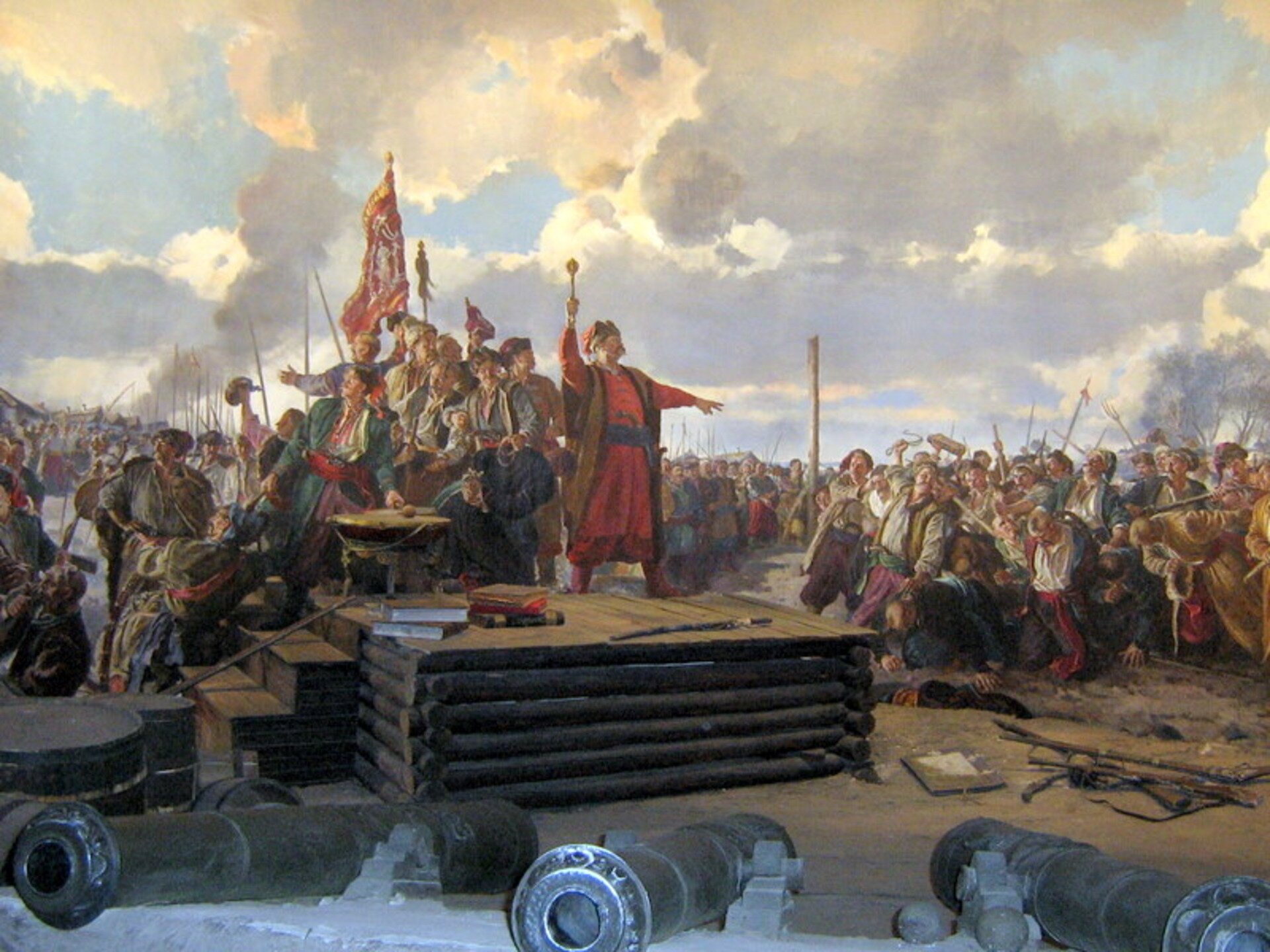
Take a look at the following illustration referring to the Cossacks and answer the question: for what reasons the various types of weapons were exhibited so strongly on the represented image?
Ro5wJjmBvxx2o
Rada kozacka na Siczy. Obraz A. Owieczkina prezentowany był w Muzeum na wyspie Chortycy.
The Cossack Council in Sicz. The painting by A. Owieczkina was presented at the Museum on the island of Chorter.
Source: a. nn., domena publiczna.
Exercise 2
R1QGIOpishhep
Create a crossword based on the terms used in the lesson. The solution may be, for example, the word "privileges".
Create a crossword based on the terms used in the lesson. The solution may be, for example, the word "privileges".
Create a crossword based on the terms used in the lesson. The solution may be, for example, the word "privileges".
Task 2
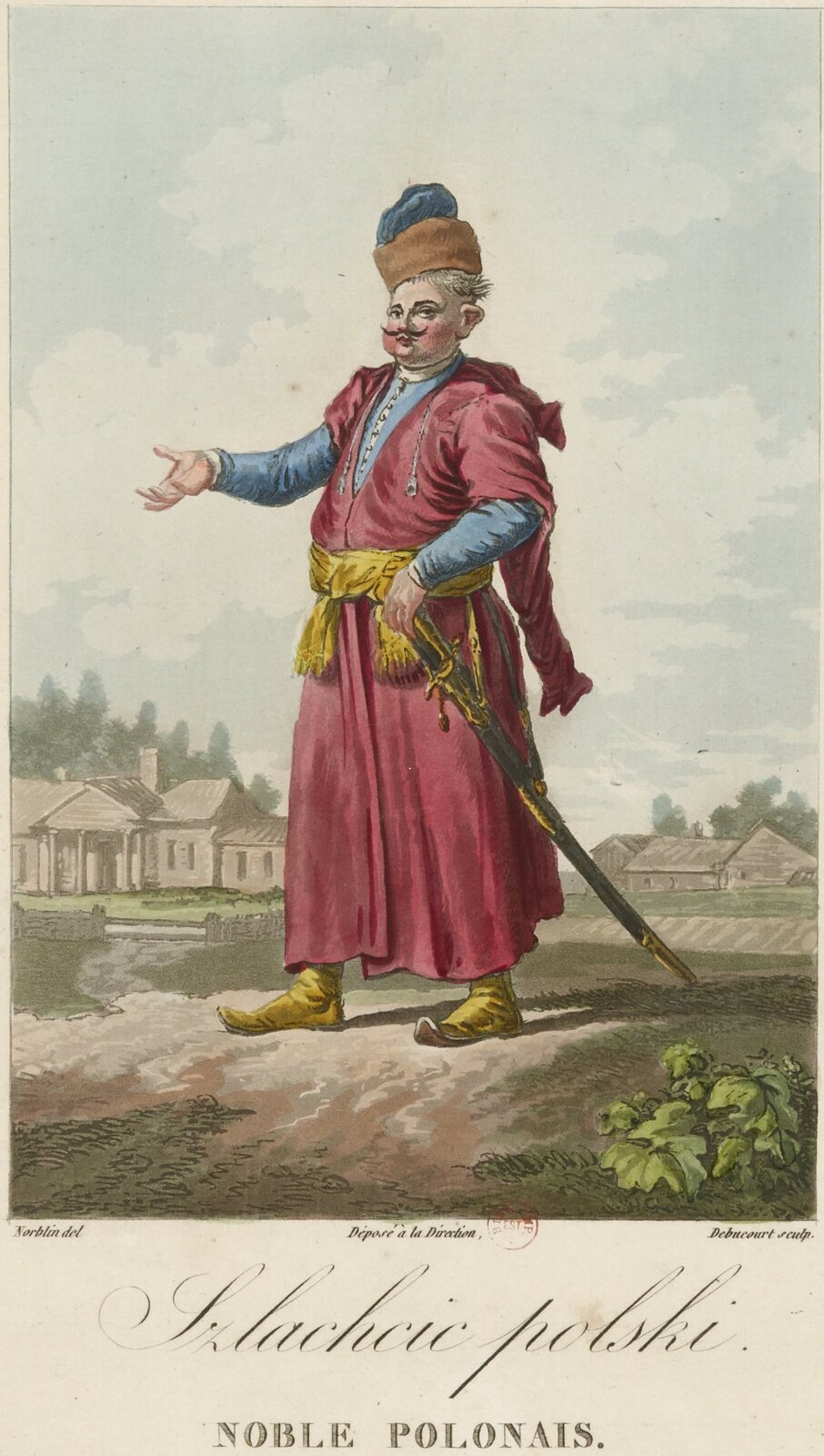
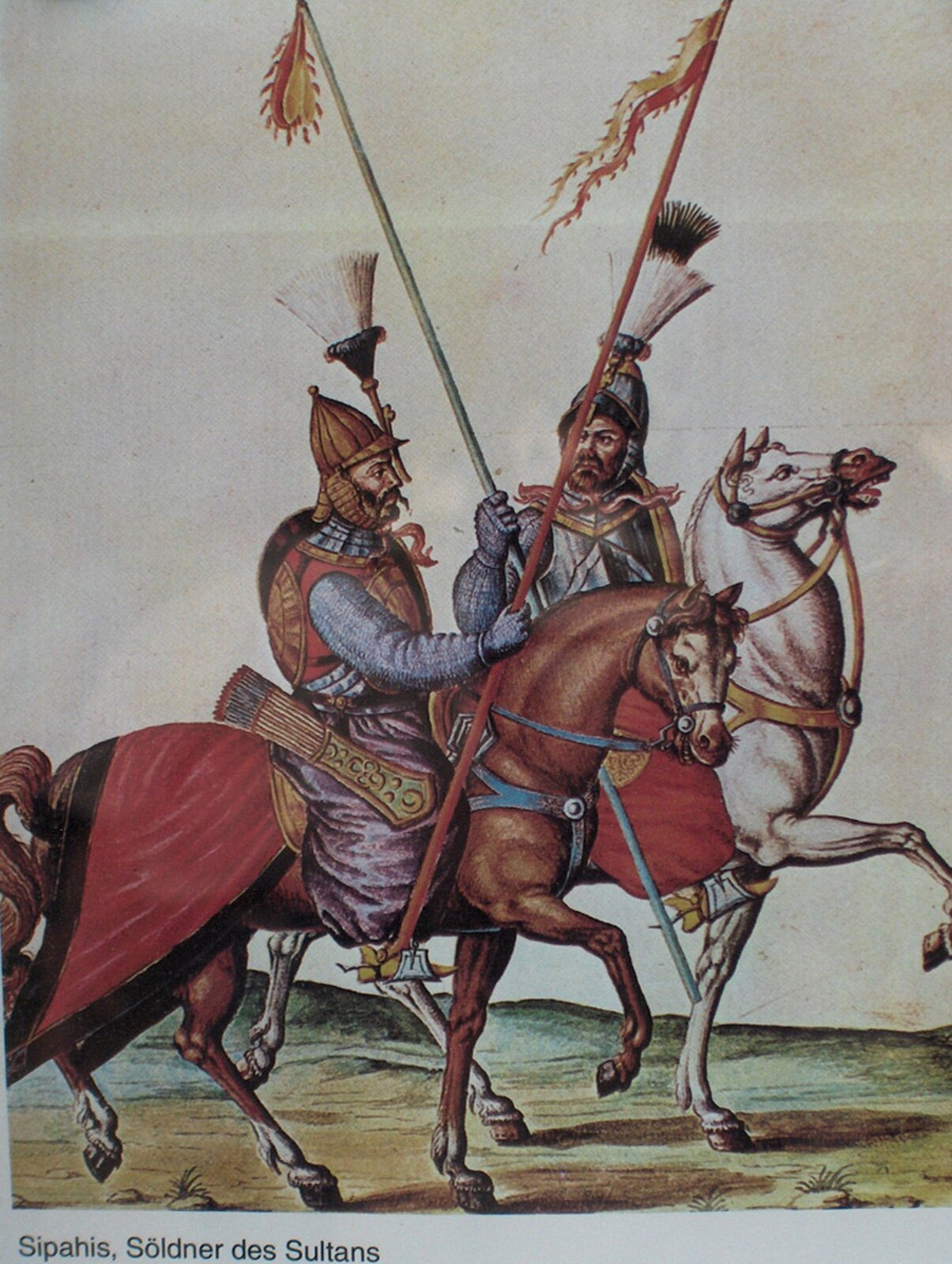
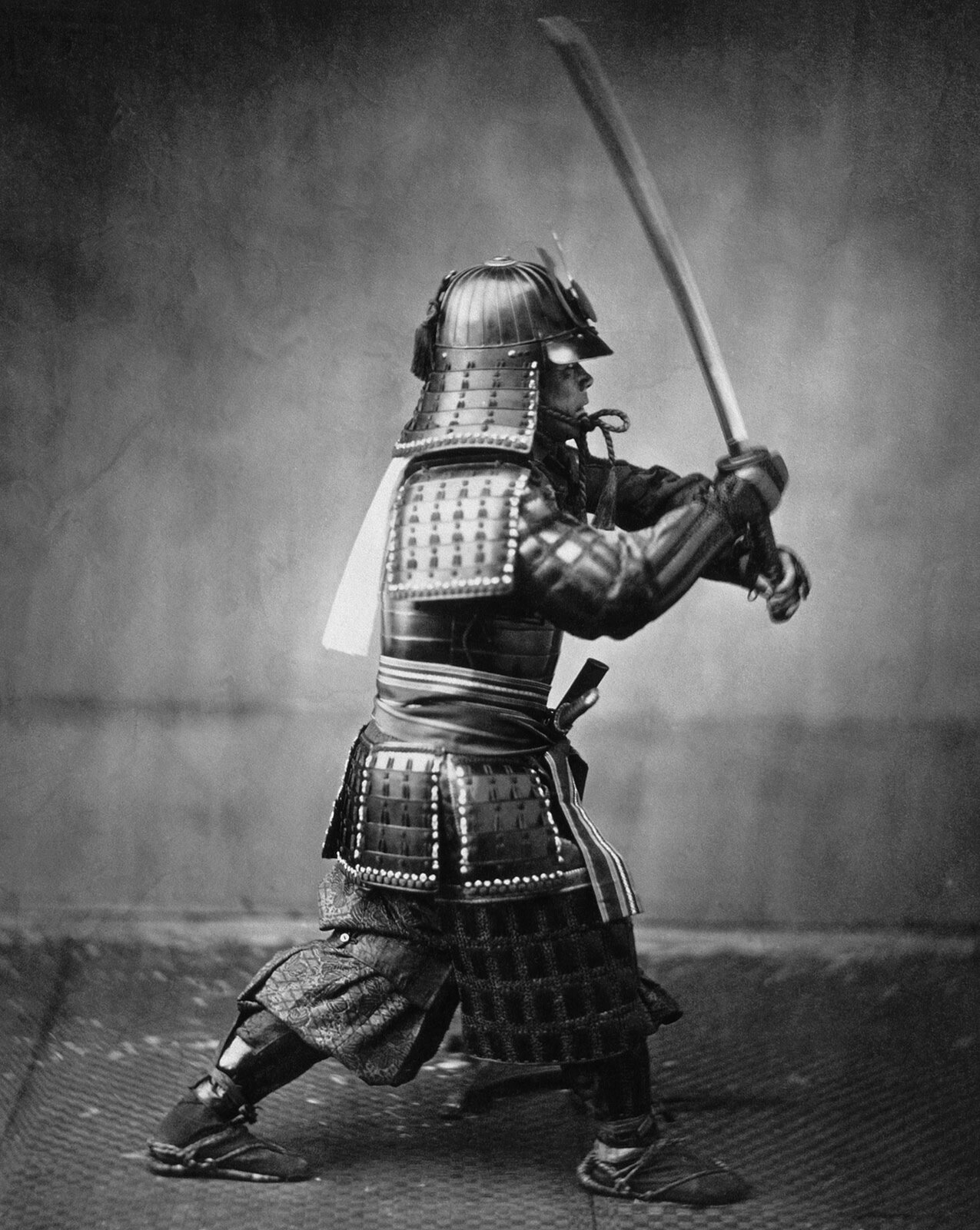
Why did the authors of the image seem to consider the weapon as the most important element of the dress associated with the elites? Try to elaborate further on the topic taking into consideration the social roles known to you, such as a knight or victorious leader in ancient Rome.
RO0Pv5yZ60ShS
Obraz przedstawiający Polskiego szlachcica w XVIII wieku.
Polish nobleman in the eighteenth century
Source: Jean-Pierre Norblin de La Gourdaine, domena publiczna.
Rj9BnOlJIpgKs
Obraz przedstawiający Spahisów - wojownicy ciężkiej tureckiej kawalerii drugiej połowy XVII wieku.
Spahisi - warriors from a heavy Turkish cavalry of the second half XVII century
Source: a. nn., domena publiczna.
RbunGHMIWeO8J
Fotografia czarno-biała przedstawiająca Samuraja w zbroi do walki mieczem; zdjęcie z XIX wieku.
Samurai in armor to fight with swords; photo from the 19th century
Source: Felice Beato, Wikimedia Commons, licencja: CC BY 3.0.
R23sYvLfMWgnG
Exercise 3
Match the terms to the definitions. Landed commoner (kmieć) Możliwe odpowiedzi: 1. petty nobility that was poor and did not have property., 2. unpaid work on the land of one’s master., 3. the richest group of Polish nobility., 4. historically in Poland; a social group that originally came from the class of knights., 5. a group of people, mostly of Tatar nationality, living in Russia and partly in the territory of Poland (mainly in Ukrainian areas)., 6. a well-off farmer; a peasant who had his own farm, in return for which he paid rent to a feudal lord and did agricultural work on his land. Cossacks Możliwe odpowiedzi: 1. petty nobility that was poor and did not have property., 2. unpaid work on the land of one’s master., 3. the richest group of Polish nobility., 4. historically in Poland; a social group that originally came from the class of knights., 5. a group of people, mostly of Tatar nationality, living in Russia and partly in the territory of Poland (mainly in Ukrainian areas)., 6. a well-off farmer; a peasant who had his own farm, in return for which he paid rent to a feudal lord and did agricultural work on his land. Magnates Możliwe odpowiedzi: 1. petty nobility that was poor and did not have property., 2. unpaid work on the land of one’s master., 3. the richest group of Polish nobility., 4. historically in Poland; a social group that originally came from the class of knights., 5. a group of people, mostly of Tatar nationality, living in Russia and partly in the territory of Poland (mainly in Ukrainian areas)., 6. a well-off farmer; a peasant who had his own farm, in return for which he paid rent to a feudal lord and did agricultural work on his land. Serfdom Możliwe odpowiedzi: 1. petty nobility that was poor and did not have property., 2. unpaid work on the land of one’s master., 3. the richest group of Polish nobility., 4. historically in Poland; a social group that originally came from the class of knights., 5. a group of people, mostly of Tatar nationality, living in Russia and partly in the territory of Poland (mainly in Ukrainian areas)., 6. a well-off farmer; a peasant who had his own farm, in return for which he paid rent to a feudal lord and did agricultural work on his land. Nobility Możliwe odpowiedzi: 1. petty nobility that was poor and did not have property., 2. unpaid work on the land of one’s master., 3. the richest group of Polish nobility., 4. historically in Poland; a social group that originally came from the class of knights., 5. a group of people, mostly of Tatar nationality, living in Russia and partly in the territory of Poland (mainly in Ukrainian areas)., 6. a well-off farmer; a peasant who had his own farm, in return for which he paid rent to a feudal lord and did agricultural work on his land. Naked nobility (gołota) Możliwe odpowiedzi: 1. petty nobility that was poor and did not have property., 2. unpaid work on the land of one’s master., 3. the richest group of Polish nobility., 4. historically in Poland; a social group that originally came from the class of knights., 5. a group of people, mostly of Tatar nationality, living in Russia and partly in the territory of Poland (mainly in Ukrainian areas)., 6. a well-off farmer; a peasant who had his own farm, in return for which he paid rent to a feudal lord and did agricultural work on his land.
Match the terms to the definitions. Landed commoner (kmieć) Możliwe odpowiedzi: 1. petty nobility that was poor and did not have property., 2. unpaid work on the land of one’s master., 3. the richest group of Polish nobility., 4. historically in Poland; a social group that originally came from the class of knights., 5. a group of people, mostly of Tatar nationality, living in Russia and partly in the territory of Poland (mainly in Ukrainian areas)., 6. a well-off farmer; a peasant who had his own farm, in return for which he paid rent to a feudal lord and did agricultural work on his land. Cossacks Możliwe odpowiedzi: 1. petty nobility that was poor and did not have property., 2. unpaid work on the land of one’s master., 3. the richest group of Polish nobility., 4. historically in Poland; a social group that originally came from the class of knights., 5. a group of people, mostly of Tatar nationality, living in Russia and partly in the territory of Poland (mainly in Ukrainian areas)., 6. a well-off farmer; a peasant who had his own farm, in return for which he paid rent to a feudal lord and did agricultural work on his land. Magnates Możliwe odpowiedzi: 1. petty nobility that was poor and did not have property., 2. unpaid work on the land of one’s master., 3. the richest group of Polish nobility., 4. historically in Poland; a social group that originally came from the class of knights., 5. a group of people, mostly of Tatar nationality, living in Russia and partly in the territory of Poland (mainly in Ukrainian areas)., 6. a well-off farmer; a peasant who had his own farm, in return for which he paid rent to a feudal lord and did agricultural work on his land. Serfdom Możliwe odpowiedzi: 1. petty nobility that was poor and did not have property., 2. unpaid work on the land of one’s master., 3. the richest group of Polish nobility., 4. historically in Poland; a social group that originally came from the class of knights., 5. a group of people, mostly of Tatar nationality, living in Russia and partly in the territory of Poland (mainly in Ukrainian areas)., 6. a well-off farmer; a peasant who had his own farm, in return for which he paid rent to a feudal lord and did agricultural work on his land. Nobility Możliwe odpowiedzi: 1. petty nobility that was poor and did not have property., 2. unpaid work on the land of one’s master., 3. the richest group of Polish nobility., 4. historically in Poland; a social group that originally came from the class of knights., 5. a group of people, mostly of Tatar nationality, living in Russia and partly in the territory of Poland (mainly in Ukrainian areas)., 6. a well-off farmer; a peasant who had his own farm, in return for which he paid rent to a feudal lord and did agricultural work on his land. Naked nobility (gołota) Możliwe odpowiedzi: 1. petty nobility that was poor and did not have property., 2. unpaid work on the land of one’s master., 3. the richest group of Polish nobility., 4. historically in Poland; a social group that originally came from the class of knights., 5. a group of people, mostly of Tatar nationality, living in Russia and partly in the territory of Poland (mainly in Ukrainian areas)., 6. a well-off farmer; a peasant who had his own farm, in return for which he paid rent to a feudal lord and did agricultural work on his land.
Match the terms to the definitions.
historically in Poland; a social group that originally came from the class of knights., unpaid work on the land of one’s master., a group of people, mostly of Tatar nationality, living in Russia and partly in the territory of Poland (mainly in Ukrainian areas)., a well-off farmer; a peasant who had his own farm, in return for which he paid rent to a feudal lord and did agricultural work on his land., petty nobility that was poor and did not have property., the richest group of Polish nobility.
Landed commoner (kmieć)
Cossacks
Magnates
Serfdom
Nobility
Naked nobility (gołota)
Keywords
First Polish Republic, Cossacks, democracy of the nobility, magnates
Kozacy – grupa ludności, w większości narodowości tatarskiej, żyjącej na terenie Rosji oraz częściowo na obszarze Rzeczypospolitej (głównie na terenach ukraińskich).