Transgenic plants and animals
that transgenic plants can help to reduce the world hunger;
that the cultivation of transgenic crops and the introduction of foods derived from them should be continuously monitored.
to define the concept of a transgenic organism;
about the benefits and risks resulting from the modifying of organisms.
Transgenic plants
Currently, it is possible to select specific genes and insert them into plants. The created transgenic plants and products obtained from them are subjected to very rigorous tests to rule out, for example, the emergence of allergies in humans and possible harmful effects on other plants and animals.
Hopes and fears
The use of genetically modified plants can bring many benefits to humanity, one of which is the possibility of constructing varieties of plants that are resistant to adverse environmental conditions. Plants are also transformed in order to conduct scientific research on them. Their purpose is to produce plants containing, for example, vaccines or antibiotics. The use of GM plants enable to increase the crops and reduce the use of chemical insecticides. This lowers the cost of crop production. The food is also modified to improve its taste and extend its durability. GM plants various substances, e.g. medicines, which are isolated from the plant cells and used in the industry.
There are also concerns about the disadvantages of genetic modifications. Due to the relatively short time of using modified plants, it is not known whether human consumption of GM foods won’t cause some negative effects, for example allergies. Despite conducting many researches, no scientific data confirmed that products derived from transgenic plants aren’t toxic to humans, but there is also no evidence that they are harmful to the human body.
There are concerns that resistance genes may pass through herbicides or insects from GM plants to wild (unmodified) plants, affecting the ecosystem, and that all plants, especially those referred to as weeds, will become difficult to combat with currently used agents. Moreover, modified species might outcompete and replace the wild ones, which will have a negative impact on biodiversity.
Objectives of the genetic modification of animals
The purpose of creating transgenic animalstransgenic animals is, among others, obtaining an answer to the question: under which factors does a given gene become active? Disabling a specific gene enables to determine in which process the products made on the basis of a given gene take part in the cell. Animals are used in many studies on diseases where human experiments are not allowed.
In addition, GM animals may act as bioreactors, i.e. produce human proteins that can be used in medicine. They may appear in milk, blood, and, in the case of birds, eggs of modified organisms. The process of isolating proteins from animal products is no longer a problem. Examples of such animals are goats, whose milk contains human growth factor used to treat human dwarfism, or sheep, whose milk contains the human blood coagulation factor.
Animals, like plants, are modified to have the characteristics desired by humans, among others rapid weight gain, production of meat containing a small amount of fat, production of cow's milk with a high content of casein protein.
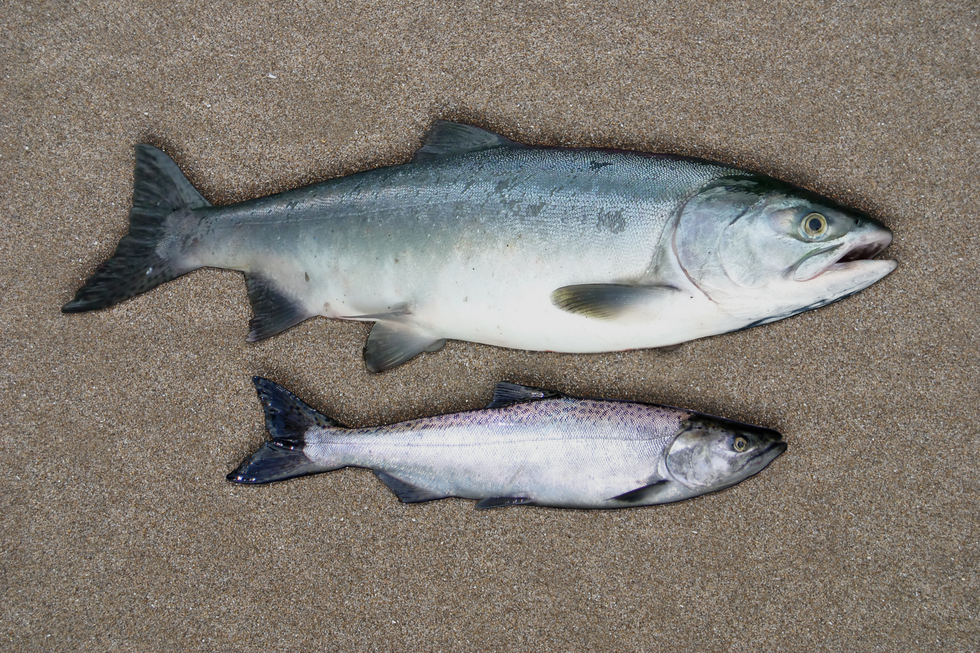
Model organisms
In biological studies, model organismsmodel organisms are used very frequently. Usually, they replace the human, who, for ethical reasons, cannot be an object of experimentation. Some examples of model organisms are: E. coli bacteria, mice, fruit flies, chimpanzees, and, among plants, tobacco and rice. Studying them helps, among others, to determine the causes of diseases and the effects of drugs.
Transplantation of tissues and organs between representatives of various species
The creation of genetically modified animals gives the possibility of xenotransplantationxenotransplantation, i.e. the transplantation of cells, tissues or organs between different species. The best model for the production of organs for human transplants are pigs, because their organs resemble the size of human organs (e.g. heart, kidneys, liver).
Difficulties in the genetic modification of animals
It is much easier to modify a plant than an animal, because animals, in contrast to plants, are more difficult to be propagated by cloning, more time is needed for breeding, and their reproduction is more difficult.
Green fluorescent protein
The green fluorescent protein (GFP) was isolated from a jellyfish living in waters off the coast of North America. Its role in jellyfish has not been explained so far. This protein, stimulated by light of appropriate length, glows green. It does not show any toxic effects on organisms, and the sequence of genes that encode it is well‑understood.
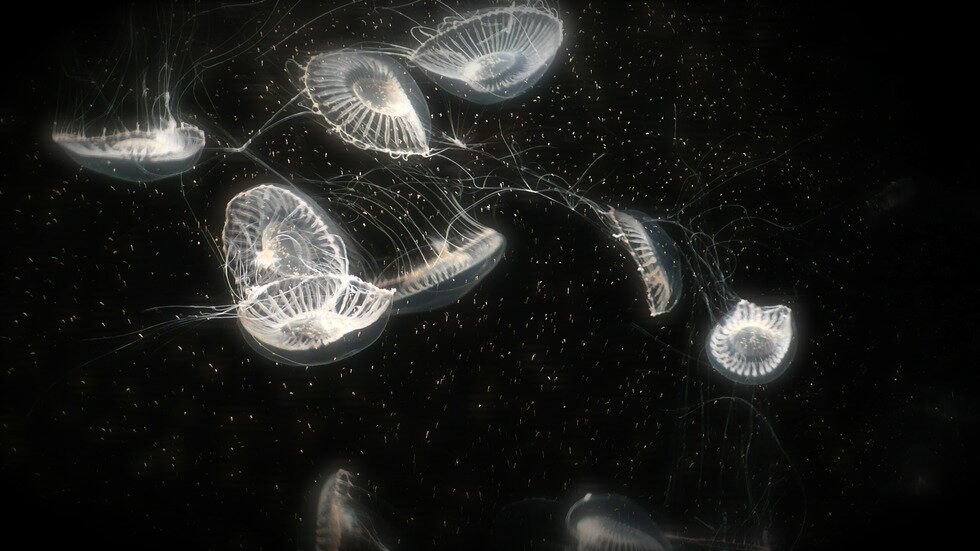
GFP is widely used as a molecule that tests the activity of a particular gene. When a nucleotide sequence encoding a GFP protein is attached to any of the human protein coding sequences, it enables to observe where it is produced. Such a protein combined with GFP, stimulated by light, emits a green light and indicates its location. Genes in the genome are located in a similar way.
Due to the enormous potential of the GFP protein, it has undergone a number of modifications. As a result, glowing proteins of different colours, e.g. yellow, blue, and red, were obtained. This allows for a simultaneous distinction of several genes and the observation of the products of their expression.
Move the items to the right category.
the possibility of obtaining large crops, the possibility of growing plants that contain vaccines or vitamins, the risk of outcompeting plants that are considered natural, the possibility of cross-breeding between wild and modified plants, the impact on the human body is not fully studied, the monopolistic practices of plant producers, the use of pesticides is limited
| advantages of genetically modified plants | |
|---|---|
| disadvantages of genetically modified plants |
Summary
Modified animals can produce drugs and other substances used in medicine.
Useful substances can be produced in genetically modified plant cells.
Keywords
transgenic organism, modification, GFP protein
Glossary
ksenotransplantacje – przeszczepianie komórek, tkanek lub narządów pomiędzy osobnikami różnych gatunków
organizm modelowy –- organizm posiadający szereg specyficznych cech, dzięki którym jest wykorzystywany w badaniach naukowych; charakteryzuje się znanym genomem, krótkim cyklem życiowym, małymi rozmiarami ciała, dużą liczbą potomstwa
transgeniczne zwierzęta – zwierzęta, które posiadaja w swoim genomie obcy DNA.