Urinary system
there are many processes in the cells during which products that are unnecessary and harmful to the body are formed;
the circulatory system transports various substances;
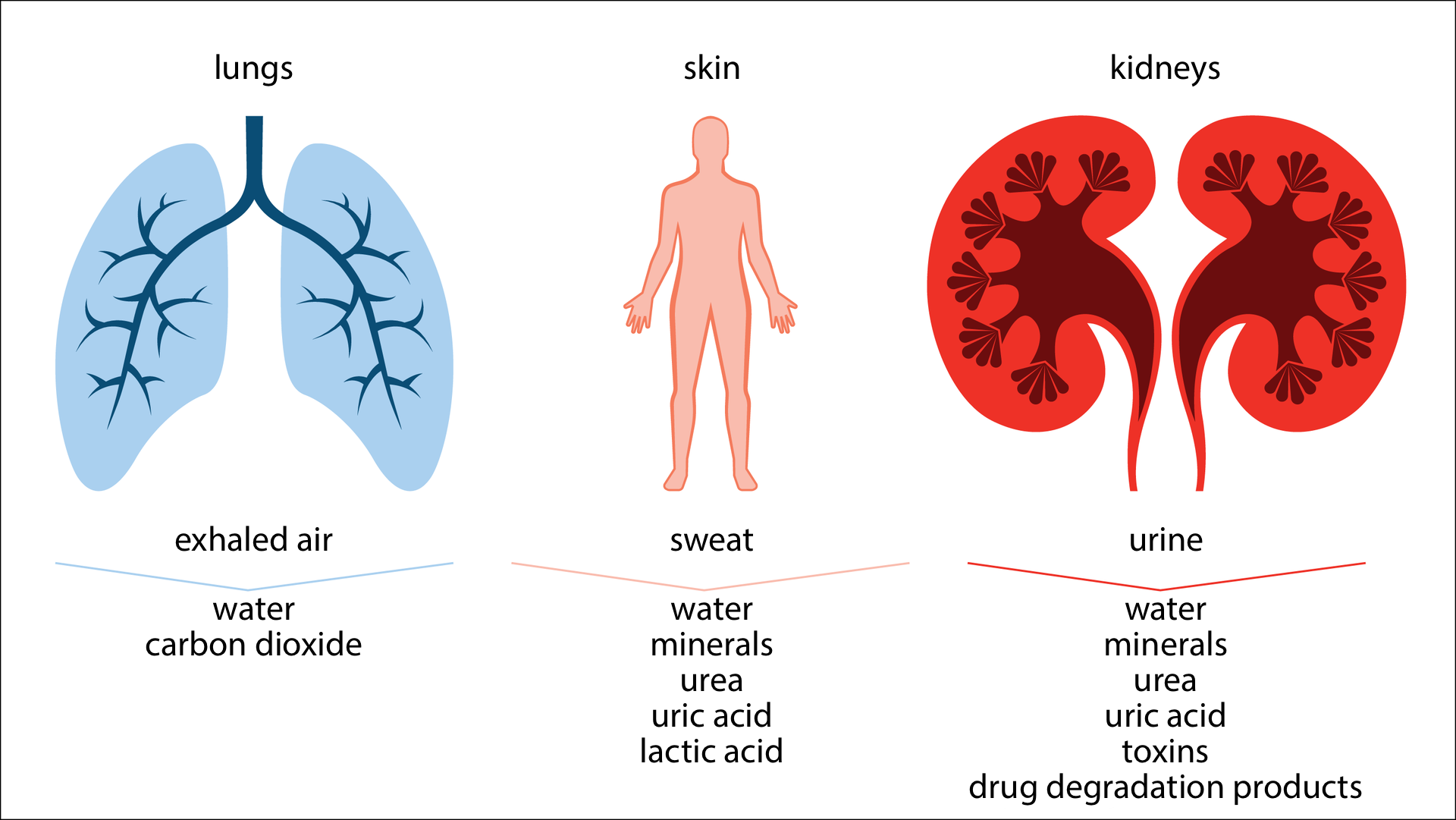
carbon dioxide is excreted through the lungs, and water - through the lungs and skin.
show the ways of eliminating of metabolic products from the organism;
indicate ways and means of removing metabolic products from the body;
identify excretory organs;
show the relationship between the structure of the urinary organs and their functions;
describe the urine formation process;
explain the causes of differences in the composition of primary and final urine.
Metabolic products and ways to remove them
As a result of metabolism in the cells, there are many waste materials created. These are not needed and can be damaging. These include toxic ammonia, a product of protein metabolism. It is transformed in the liver into urea. Then, along with blood it goes to the kidneys, where it reaches the urine with which it is excreted. Harmful products of metabolism and toxic substances taken with food, e.g. drugs or alcohol, first enter the liver, where they are changed into less toxic forms, and then to the kidneys and other organs that support excretion.
The kidneys, skin and lungs are involved in the removal of water. Mineral salts that are products of the body's mineral metabolism are excretedexcreted by the skin, which is why sweat has a salty taste. The removal of unnecessary and harmful metabolic products from the body is called excretion. The urinary system plays the most important role in this process.
Substances excreted both by the lungs and the skin are?
- urea
- glucose
- oxygen
- carbon dioxide
- water
- minerals
Group the composition and amount of primary urine and final urine.
small amount of mineral salts and vitamins, mineral salts, vitamins, 180 l per day, amino acids, sugars, 2 l per day
| primary urine | |
|---|---|
| final urine |
The nutrient degradation products that occur in cells are:
- protein
- water
- carbon dioxide
- urea
Unnecessary and poisonous breakdown products of nutrients are transported from tissues to the organs of excretion by:
- ureters
- blood vessels
- intestines
- skin
Explain why urine is tested for the presence of drugs or doping agents in the body.
Check if water is secreted through the skin.
your arm,
dry plastic bag,
ribbon.
Put your hand in the plastic bag.
Tightly tie the bag with the ribbon at the wrist so that there is no air there.
Watch the walls of the bag for 5 minutes.
Observe if and what changes occurred inside the bag.
Think and explain why the surface of the bag is covered with droplets of liquid.
Structure and functions of urinary organs
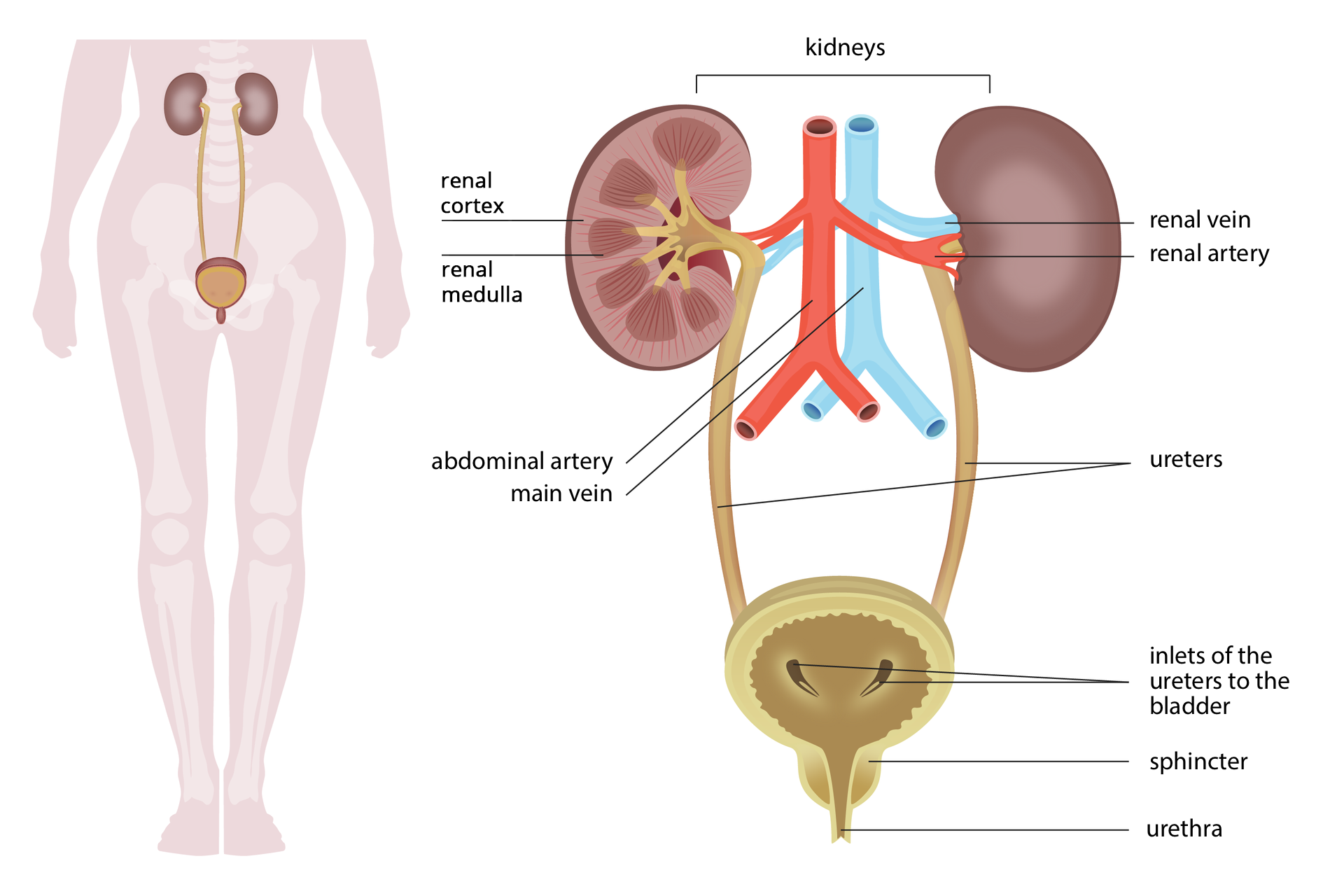
The urinary system, also known as the excretory system, includes the kidneys and the urinary tract: the ureters, the urinary bladder and the urethra. The kidneys are even bean‑shaped organs the size of a fist, located on both sides of the spine at the height of the lumbar vertebrae. They are made of nephronsnephrons in which blood is filtered, and its filtrate is concentrated to form urine. The ureter branches off from each kidney – a long tube inside of which the urine falls into the urinary bladder where it is periodically collected. Its smooth muscle walls are flexible and expand as the urinary bladder fills. The urethra is an odd tube that is used to excrete the urine outside from the urinary bladder. It is equipped with a sphincter muscle that closes the light of the urethra and allows controlling the excretion of urine from the body. In men, the urethra is longer than in women, because it is also used to excrete semen.
Film dostępny na portalu epodreczniki.pl
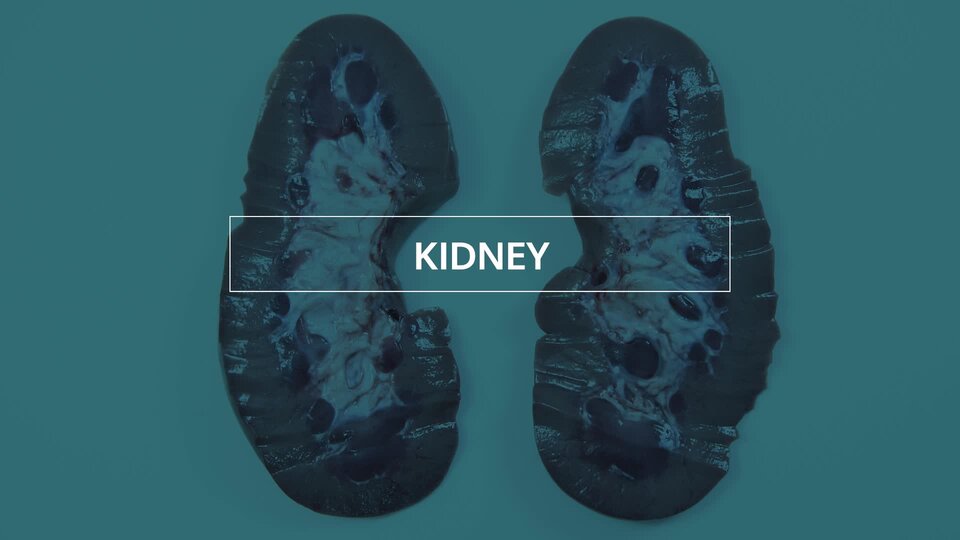
Film przedstawia budowę nerki. Na pierwszym ekranie nerka wieprzowa, pig’s kidney. Kształtem przypomina duże ziarno fasoli. W przekroju poprzecznym oznaczono tętnicę nerkową, renal artery, transporting the blood containing harmful and inclusive substances. Drugie oznaczenie to żyła nerkowa, renal vein, transporting a cleansed blood. Zewnętrzna warstwa nerki filtruje krew. Blood filtration, water, glucose and unnecessary substances separation. Compaction of urine. Recovery of water, salt minerals and glucose. Wewnętrzna warstwa nerki gromadzi urynę, collecting the final urine. Nerka wyposażona jest w artery and vein.
The urine formation process
The basic building and functional unit of the kidney is the nephron. It consists of a renal corpuscle (a thin‑walled capsule surrounding a dense network of capillaries) and a uriniferous tubule. Blood flows through the capillaries under high pressure. Blood plasma components such as water and substances dissolved in it, e.g. glucose, amino acids, sodium ions (NaIndeks górny ++) , chloride ions (ClIndeks górny --), go to the capsule as a result of filtration. Only the ingredients that fall into their pores get through its thin walls and the walls of the vessels. No proteins, blood cells or platelets are filtered. The filtrate formed in the capsule – primary urineprimary urine – flows down to the uriniferous tubule. From here, all substances needed by the body are absorbed into the capillaries surrounding the uriniferous tubule. In the final section of the tubule, urine takes the form of final urinefinal urine, which is excreted from the kidneys to the urinary bladder through the ureters.
Name the organs that work together when urinating.
Explain why the effect of drugs used in the treatment of hypertension is aimed at intensifying kidney functions.
Summary
The urinary system, the skin and the respiratory system participate in the removal of unnecessary and harmful metabolic products from the body.
The urinary system consists of the kidneys, ureters, urinary bladder and urethra.
The basic building and functional unit of the kidney is the nephron.
In the glomerulus the filtration process takes place, and in the uriniferous tubule – the process of recovering substances needed by the body.
The filtrate of blood plasma formed in the glomerular capsule is primary urine.
The kidneys regulate the amount of water and the concentration of mineral salts in the body.
Name organs that cooperate in the production and excretion of urine. Explain their role.
Keywords
urinary system, excretory system, kidneys
Glossary
mocz ostateczny – mocz usuwany z organizmu; powstaje w kanaliku nerkowym po odzyskaniu z moczu pierwotnego składników potrzebnych organizmowi.
mocz pierwotny – przesącz osocza krwi znajdujący się w torebce i początkowym odcinku kanalika nerkowego.
nefron – podstawowa jednostka budulcowa i czynnościowa nerki; zbudowany jest z ciałka nerkowego, w którym zachodzi proces filtracji, i kanalika nerkowego, w którym ma miejsce odzyskiwanie substancji potrzebnych organizmowi.
wydalanie – usuwanie z organizmu zbędnych i szkodliwych produktów przemiany materii.