As the economy grows, so does the amount of packaging and one‑use products we throw away. Waste lying around is an eyesore, it pollutes the environment, and some types of waste like plastic bags or chewing gum are a deadly hazard to animals.
Task 1
Poszukaj informacji w dostępnych ci źródłach (np. w internecie, encyklopedii lub specjalistycznych publikacjach) na temat zasad utylizacji artykułów spożywczych.
Poszukaj informacji w dostępnych ci źródłach (np. w internecie, encyklopedii lub specjalistycznych publikacjach) na temat zasad utylizacji artykułów spożywczych.
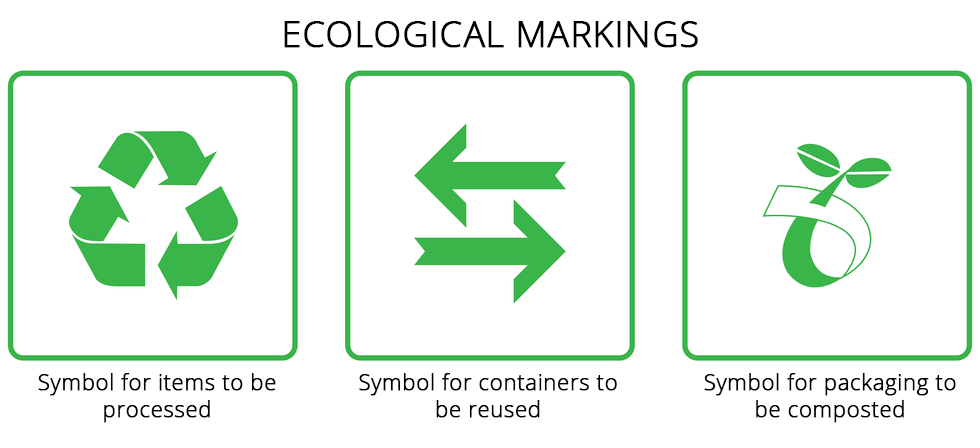
When unpacking groceries, take a look at the packaging they come in. Determine where packaging is necessary, and where it is not. Look for any disposal instruction markings on the packaging.
RD5irE2in39UN
Ilustracja przedstawia znaki ekologiczne, ecological markings. Znak 1.: zielone strzałki ułożone w trójkąt - znak produktów przeznaczonych do ponownego przetworzenia; : Symbol for items to be processed znak 2. 2 zielone strzałki skierowane w prawo i lewo - oznaczenie pojemników do ponownego wykorzystania, Symbol for containers to be reused; znak 3: symbolicznie przedstawiona roślina - oznaczenie produktów do kompostowania, Symbol for packaging to be composted.
Ecological markings
Source: Dariusz Adryan, licencja: CC BY 3.0.
Waste should be reprocessedwaste reprocessingreprocessed, that is used to recover as many secondary raw materials as possible.
Important!
Waste reprocessing reduces the need to extract raw materials from the environment, the amount of waste, and the amount of water and energy needed to produce them.
Task 2
Terms such as waste reprocessing and waste recyclingrecyclingwaste recycling are often used interchangeably. Look them up in dictionaries and determine whether they are synonymous.
Organic waste such as leftovers, mowed grass, fallen leaves, straw and sawdust should be composted. Compostable waste is used to build piles, with every layer having oxygen access. This way, soil micro‑organisms decompose such waste and turn it into fertiliser. During waste fermentation, some micro‑organisms give off methane, a fuel gas. Methane is produced in landfills, in water treatment plants, and in fertiliser and compost piles. Some landfills are equipped with degassing facilities, sometimes connected to systems of methane reclamation from biogasbiogasbiogas. Methane production during organic waste fermentation is also used in biogas plants: facilities for the production of methane, which can be used as a power source. As a substrate in biogas plants, organic components of municipal solid waste, agricultural waste, or sludge from water treatment plants may be used.
Many types of waste are incinerated in waste incineration plants. This reprocessing method is expensive but faster than recycling or composting ever‑growing piles. Incinerators burn waste in 1100°C. turning it into components that are relatively safe for the environment. The small amounts of hazardous substances are intercepted by filters and neutralised. Ashes are used for building materials. Waste incineration provides energy as well. Incineration plants have to comply with very high security standards.
Substances and equipment that may contaminate the environment may not be disposed along with municipal solid waste.
Energy‑saving lightbulbs, fluorescent lamps, batteries, and electronic devices are known as electronic waste. They contain certain amounts of very hazardous compounds, and should be turned in at municipal waste selective collection points to recover rare and valuable elements.
A category of waste that requires special processing is out‑of‑date medicine. Expired drugs may not be combined with mixed waste or flushed down the toilet; this way, they will not be reprocessed, and their component substances can end up in water reservoirs, groundwater, and drinkable water inlets.
Municipal solid waste management is a problematic matter in Poland as most of the waste is dumped at landfills.
Many landfills are simply depressions in the ground or excavation sites that were used to dump waste over the years. Due to its direct contact with the environment, noxious substances are leached by water and moved to soil and watercourse, and dust and gases, including methane, are released into the atmosphere. The surrounding area is also contaminated as some of the waste is blown away outside of the landfill by the wind.
Waste is easier to manage if it is segregated. This is why it is crucial to sort and collect different types of waste separately—paper, plastic, metal, glass, organic waste and hazardous waste such as depleted batteries, fluorescent lamps, electronic equipment, and chemicals. Thanks to selective collection, some of the waste will be reprocessed for raw materials, and some, incinerated. The goal of waste management is to minimise the amount of waste stored.
RTv8ibNSxJUJA
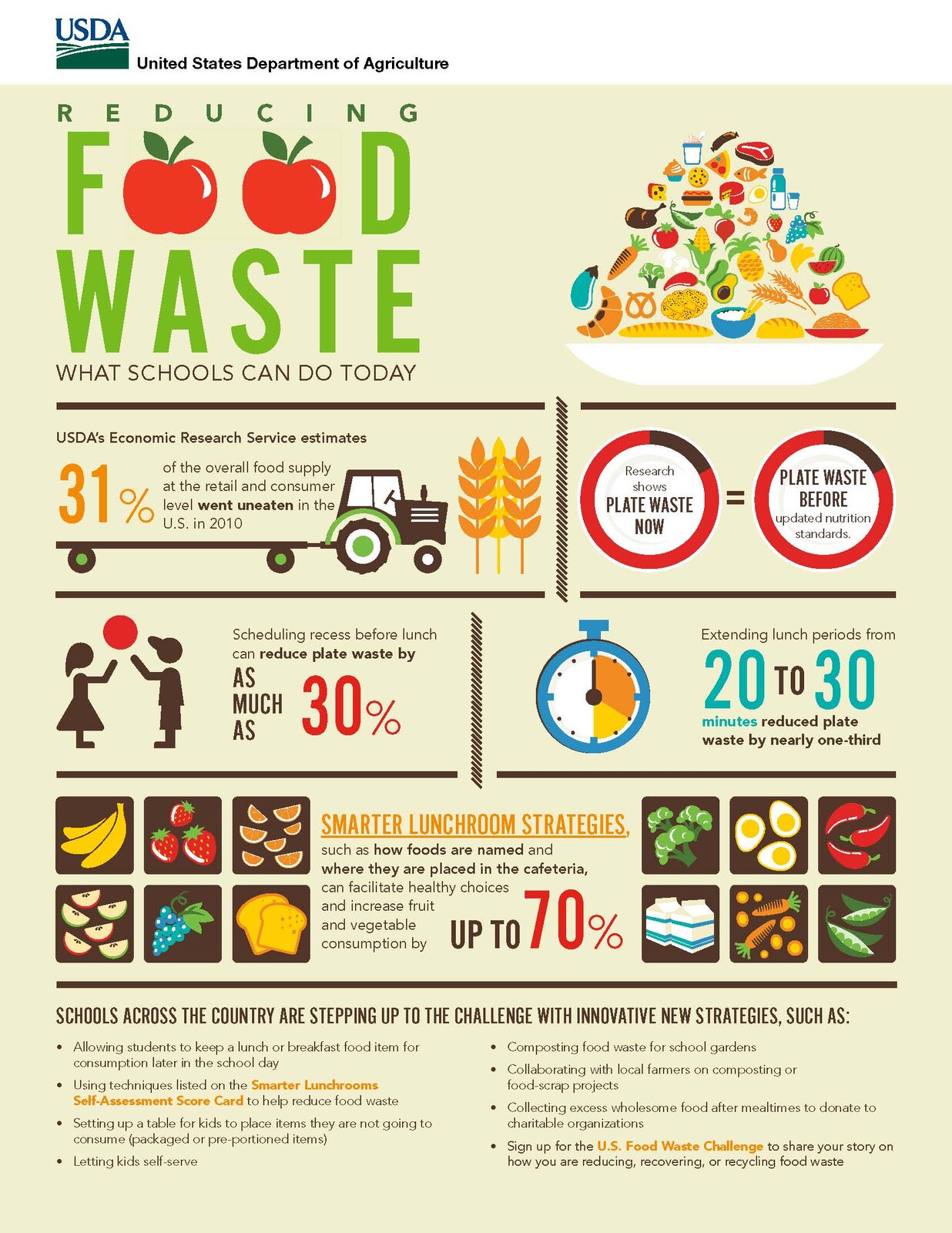
Infografika dotycząca redukcji marnowanej żywności. Nagłówek: reducing food waste, what schools can do today. Ilustracja przedstawiająca traktor I zboża. Towarzyszy jej tekst: USDA's Economic Research Service estimates 31% of the overall food supply at the retail and consumer level went uneaten in the U.S. in 2010. Ilustracja przedstawiająca twa talerze, między nimi znak równania. Na pierwszym talerzu napis: Research shows Plate waste now, na drugim talerzu napis: plate waste before updated nutrition standards. Ilustracja przedstawiająca chłopca i dziewczynkę bawiących się piłką. Obok tekst: Scheduling recess before lunch can reduce plate waste by as much as 30%. Grafika stopera. Obok tekst: Expanding lunch periods from 20 to 30 minutes reduced plate waste by nearly one-third. Grafika różnych produktów spożywczych: truskawek, tostów, winogron, jabłek, jajek, kartonów mleka, marchewek I papryki. Smarter lunchroom strategies such as how foods are named and where they are placed in the cafeteria, can facilitate healthy choices and increase fruit and vegetable consumption up to 70%.
Reducing food waste
Source: U.S. Department of Agriculture Follow, www.flickr.com, licencja: CC BY 2.0.
RJtgptkj0lSpQ
Exercise 1
Select all causes for the growing amount of waste in developed countries. Możliwe odpowiedzi: 1. buying single-use or unnecessary items, 2. fast replacing already owned items with more fashionable ones, 3. ineffective laws on waste processing and management, 4. fixing or repurposing parts of used-up items on one's own
Select all causes for the growing amount of waste in developed countries. Możliwe odpowiedzi: 1. buying single-use or unnecessary items, 2. fast replacing already owned items with more fashionable ones, 3. ineffective laws on waste processing and management, 4. fixing or repurposing parts of used-up items on one's own
Select all causes for the growing amount of waste in developed countries.
buying single-use or unnecessary items
fast replacing already owned items with more fashionable ones
ineffective laws on waste processing and management
fixing or repurposing parts of used-up items on one's own
RQtf4iZ013SNh
Exercise 2
Match each term with its definition. waste segregation Możliwe odpowiedzi: 1. waste processing to recover raw materials, 2. separation of waste into categories, which makes them easier and faster to manage, 3. multiple processing and reusing of waste. waste reprocessing Możliwe odpowiedzi: 1. waste processing to recover raw materials, 2. separation of waste into categories, which makes them easier and faster to manage, 3. multiple processing and reusing of waste. recycling Możliwe odpowiedzi: 1. waste processing to recover raw materials, 2. separation of waste into categories, which makes them easier and faster to manage, 3. multiple processing and reusing of waste
Match each term with its definition. waste segregation Możliwe odpowiedzi: 1. waste processing to recover raw materials, 2. separation of waste into categories, which makes them easier and faster to manage, 3. multiple processing and reusing of waste. waste reprocessing Możliwe odpowiedzi: 1. waste processing to recover raw materials, 2. separation of waste into categories, which makes them easier and faster to manage, 3. multiple processing and reusing of waste. recycling Możliwe odpowiedzi: 1. waste processing to recover raw materials, 2. separation of waste into categories, which makes them easier and faster to manage, 3. multiple processing and reusing of waste
Match each term with its definition.
separation of waste into categories, which makes them easier and faster to manage, multiple processing and reusing of waste, waste processing to recover raw materials
waste segregation
waste reprocessing
recycling
R1c2R3CdZkK6c
Exercise 3
Wyjaśnij, w jaki sposób można wykorzystać w codziennym życiu zawarte w abstrakcie informacje.
Wyjaśnij, w jaki sposób można wykorzystać w codziennym życiu zawarte w abstrakcie informacje.
Categorise the items according to the waste segregation rules.
PET bottles, broken plates, jars, paint cans, organic waste, cardboard, tin cans, newspapers, juice boxes, oil bottles, wallpaper scraps, tattered books, plastic bags, soda bottles
paper container
plastic and aluminium container
glass container
mixed waste container
R1YczgCq7vqoK
Exercise 4
What should you do with used-up batteries, lightbulbs and fluorescent lamps? Select the correct answer. Możliwe odpowiedzi: 1. I will put them all into the mixed-waste container., 2. I will put the batteries into the aluminum container, and the lightbulbs and fluorescent lamps, into the glass container, 3. I will put them into containers marked for their collection., 4. I will put them all into a compost pile.
What should you do with used-up batteries, lightbulbs and fluorescent lamps? Select the correct answer. Możliwe odpowiedzi: 1. I will put them all into the mixed-waste container., 2. I will put the batteries into the aluminum container, and the lightbulbs and fluorescent lamps, into the glass container, 3. I will put them into containers marked for their collection., 4. I will put them all into a compost pile.
What should you do with used-up batteries, lightbulbs and fluorescent lamps? Select the correct answer.
I will put them all into the mixed-waste container.
I will put the batteries into the aluminum container, and the lightbulbs and fluorescent lamps, into the glass container
I will put them into containers marked for their collection.
I will put them all into a compost pile.
Summary
Waste should be reprocessed.
Waste must absolutely be segregated.
Keywords
waste, recycling, storing, reprocessing
R1USFoUOVn65P
Grafika przedstawiająca tablicę szkolną, na której znajdują się zdania do dokończenia. Finish selected sentences. 1 It was easy for me (uzupełnij). 2 It was difficult for me (uzupełnij). 3 Today I learned (uzupełnij). 4 I understood that (uzupełnij). 5 It surprised me (uzupełnij).
Grafika przedstawiająca tablicę szkolną, na której znajdują się zdania do dokończenia. Finish selected sentences. 1 It was easy for me (uzupełnij). 2 It was difficult for me (uzupełnij). 3 Today I learned (uzupełnij). 4 I understood that (uzupełnij). 5 It surprised me (uzupełnij).
How was this lesson? Did you like it? Finish selected sentences.
recykling – systemowe działania związane z obiegiem materiałów, które mogą być wielokrotnie przetwarzane i wykorzystywane; skuteczna forma ochrony środowiska przez ograniczenie zużycia surowców naturalnych i powstawania odpadów