What is science fiction?
you will indicate the science‑fictionscience‑fiction genres
you will find information in the popular‑science text
you will use wthe ords that belong to the scientific stylescientific style
It is not easy to formulate the definitiondefinition of the science‑fiction. The literatureliterature researchers, writers, fans and the ordinary readers use different - sometimes even mutually exclusive - terms. Definitions formulated too hasty, in practice very often turn out to be completely wrong. The precise definitions formulated by the specialists usually do not cover the whole diversity of science fiction. And although in the experiencing, understanding and the literature valuation, definitions are not the most important, the attempts to create them help us to understand the literature that attracts us.
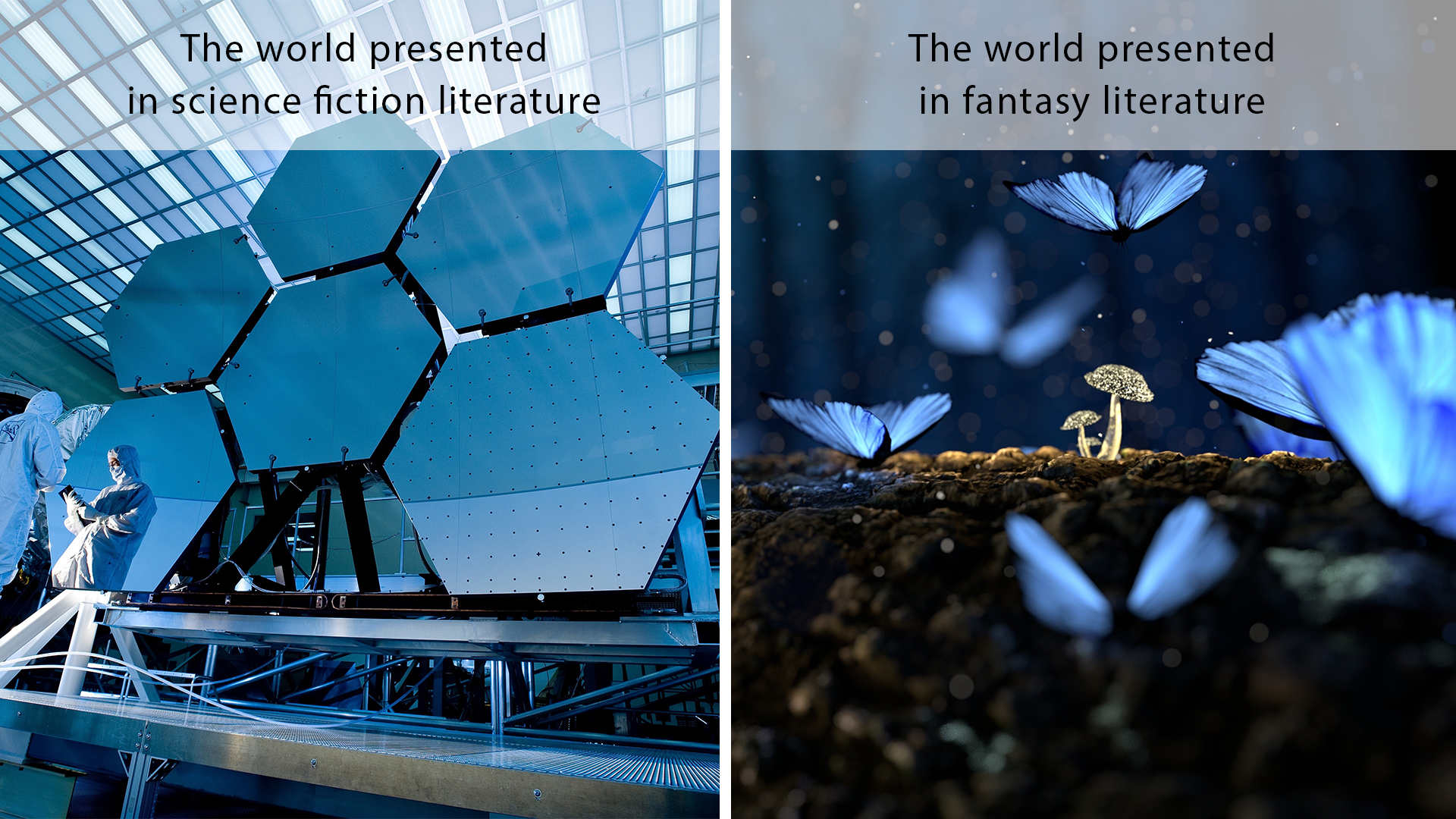
Decide which elements of the world presented are typical for the science-fiction literature and which for the fantasy literature. Justify your choice. Discuss the possible differences in class.
Read the Fantastic Voyage by Isaac Asimov and answer the questions under the text.
Niezwykłe podróżeJedną z ulubionych gier intelektualnych, jakim oddają się miłośnicy science fiction – pisarze, wydawcy, fani, czytelnicy – jest definiowanie gatunku. Cóż to, u licha, jest?! Jak odróżnić go od fantasy? Od literatury w ogóle?
Definicji jest zapewne tyle, ilu definiujących, a uporządkować je można od tych skrajnie wykluczających, które chcą, by science fiction była jak najczystsza i jak najbardziej jednoznaczna, do skrajnie ogarniających, które chcą, by obejmowała wszystko, co znajduje się w zasięgu wzroku.
Oto moja, skrajnie wykluczająca definicja: „Science fiction opisuje naukowców zajmujących się nauką przyszłości”.
A oto skrajnie ogarniająca definicja Johna Campbella: „Opowiadania science fiction są tym, co kupują wydawcy science fiction”.
Definicja umiarkowana (znowu mojego autorstwa) brzmi: „Science fiction to gałąź literatury, która opisuje ludzkie reakcje na zmiany w rozwoju nauki i technologii”. Otwarta pozostaje więc kwestia, czy zmiany te oznaczają postęp czy regres tudzież, czy kładąc nacisk na „ludzkie reakcje”, trzeba zrobić coś więcej niż tylko przelotnie i bez zagłębiania się w szczegóły wspomnieć o samych zmianach.
W samej rzeczy, niektórzy pisarze odczuwają tak nieznaczną potrzebę dyskutowania na tematy naukowe, że protestują nawet przeciwko używaniu słowa „nauka” jako określenia gatunku. Swoją literaturę wolą określać mianem „fantastyki spekulatywnej” (speculative fiction), zachowując tym samym bez zmian skrót „SF”.
Od czasu do czasu nachodzi mnie pragnienie, by przemyśleć całą tę kwestię na nowo, dlaczego więc nie podejść do definicji czysto historycznie? Na przykład...
Jaki był pierwszy utwór w dziejach europejskiej literatury, który zachował się w nienaruszonym stanie do naszych czasów i który, zgodnie z ogarniającymi definicjami, stanowiłby przykład science fiction?
A może by tak Odyseja Homera? Nie ma w niej co prawda nauki, ponieważ świat, w którym się zrodziła, jeszcze jej nie wymyślił, ale można w niej znaleźć odpowiedniki pozaziemskich potworów, jak Polifem, oraz istoty dysponujące ekwiwalentem wysoko rozwiniętej nauki, jak Kirke.
Większość ludzi będzie wszakże wolała nazwać Odyseję „opowieścią podróżniczą”.
Nie ma w tym jednak żadnej sprzeczności. Te dwa terminy bynajmniej się nie wykluczają. „Opowieść podróżnicza” mimo wszystko była kiedyś pierwotną fantastyką, naturalną fantastyką. Dlaczego nie? Aż do naszych czasów podróż była żmudnym luksusem nielicznych, którzy mogli oglądać rzeczy niedostępne szerokim rzeszom.
Jeszcze niedawno większość ludzi żyła i umierała w tym samym mieście, tej samej dolinie, na tym samym skrawku ziemi, gdzie się rodziła. Dla nich wszystko, co leżało za horyzontem, stanowiło fantastykę. A mogło to być naprawdę wszystko – cokolwiek opowiedziano o tej krainie czarów odległej o pięćdziesiąt mil, było równie wiarygodne. Nawet Pliniusz nie był na tyle realistą, aby nie uwierzyć w fantazje, które opowiadano mu o dalekich krajach, a czytelnicy przez następne tysiąc lat wierzyli Pliniuszowi. Sir John Mandeville nie musiał się specjalnie starać, by przekonać czytelnika, że jego fikcyjne opowieści podróżnicze dotyczą sytuacji jak najzupełniej prawdziwych.
Przez dwadzieścia pięć stuleci, które dzielą nas od czasów Homera, każdy, kto chciał napisać opowieść fantastyczną, pisał opowieść podróżniczą.
Wyobraźcie sobie człowieka, który wyrusza w morze, przybija do nieznanej wyspy i odkrywa cuda. Czy nie jest to przypadek Sindbada Żeglarza i jego opowieści o Ptaku‑Roku oraz starym człowieku z morza? Czy nie jest to przypadek Lemuela Guliwera i jego spotkań z Lilipucjanami oraz mieszkańcami Brobdingnagu? W rzeczy samej, czy nie jest to przypadek King Konga?
Czyż nie dałoby się zakwalifikować Władcy Pierścieni wraz z rzeszą dzieł, które z pewnością będą jego niewolniczym naśladownictwem, jako opowieści podróżniczej?
Czy jednak te opowieści podróżnicze nie należą raczej do fantastyki niż do science fiction? Gdzie rozpoczyna się „prawdziwa” science fiction?
Zastanówmy się nad pierwszym profesjonalnym pisarzem science fiction, pierwszym pisarzem, który zarabiał na życie, pisząc wyłącznie niekwestionowaną science fiction – nad Juliuszem Verne’em. Sam Verne nie myślał nigdy o swoich książkach jako o science fiction, ale tylko dlatego, że termin ten wówczas jeszcze nie istniał.
Przez kilkanaście lat z niezmiennym powodzeniem pisał dla francuskiego czytelnika. Wcześniej wszakże był zawiedzionym podróżnikiem i odkrywcą, dopiero zaś w roku 1863 trafił na żyłę złota swoją książką Pięć tygodni w balonie. Uważał ją za opowieść podróżniczą, lecz nie do końca zwyczajną, wykorzystywała bowiem urządzenie, którego istnienie umożliwił postęp naukowy.
Verne zdyskontował jej sukces, wykorzystując w swojej prozie inne urządzenia, z teraźniejszości i możliwej przyszłości, które podczas kolejnych voyages extraordinaires niosły jego bohaterów coraz dalej i dalej w rejony podbiegunowe, na dno mórz, do wnętrza ziemi, na Księżyc.
Twórcy opowieści podróżniczych pisali o Księżycu już od czasów Lukiana z Samosat, czyli od II wieku n.e. Był on dla nich po prostu kolejnym z wielu dalekich krajów. Verne różnił się od nich tym, że próbował wysłać nań swych bohaterów, korzystając z zasad naukowych, które nie weszły jeszcze w życie (chociaż metoda, jaką w tym celu opisał, była dysfunkcjonalna).
Po nim wielu innych pisarzy zabierało ludzi w coraz dalsze podróże – na Marsa i inne planety, ostatecznie zaś w roku 1928 E. E. Smith w swojej książce The Skylark of Space zerwał wszystkie więzi dzięki wynalazkowi „napędu inercyjnego” i powiódł ludzkość ku najdalszym z gwiazd.
Science fiction wyrosła więc z opowieści podróżniczej, od której zasadniczo różniła się tym, że przedstawione w niej pojazdy zazwyczaj nie istniały, aczkolwiek istnieć mogły, gdyby tylko dokonać dostatecznie dalekosiężnej ekstrapolacji w przyszłość rozwoju nauki i technologii.
Z pewnością jednak nie całą science fiction można uważać za opowieść podróżniczą. Skoro już o tym mowa, co z powieściami, które dzieją się tu i teraz na Ziemi, a dotyczą robotów, katastrofy ekologicznej bądź nuklearnej tudzież nowych interpretacji odległej przeszłości?
Żadna z nich nie rozgrywa się w istocie „tu i teraz” na Ziemi. Wzorem powieści Verne’a, cokolwiek dzieje się na Ziemi, możliwe jest dzięki ciągłym zmianom (zazwyczaj progresywnym) w rozwoju nauki i technologii, tak więc wydarzenia opowieści faktycznie muszą zachodzić „tu i teraz”, ale na Ziemi w przyszłości.
Cóż zatem pomyślelibyście o następującej definicji: „Historie science fiction są niezwykłymi podróżami do dowolnego nieskończonego obszaru dających się pomyśleć przyszłości”?Source: Isaac Asimov, Niezwykłe podróże, [w:] tegoż, Magia i złoto. Eseje, tłum. Jolanta Kowalczyk, Poznań 2000, s. 62–66.
Read the text by Isaac Asimov and decide which of the following statements are true and which are false. Correct the false sentences.
According to Isaac Asimov, the first writer of the “real science-fiction” is Jules Verne., Edward Elmer Smith is a scientist who created an inertial drive that is used in the modern astronautics., Researchers, writers and readers agree on the definition of the science fiction literature., In his work, the author gives the example of both, "extremely excluding" definition and the "extremely covering” definition., The plot of the science-fiction works may be set on Earth., In his considerations, Isaac Asimov refers to the examples of ancient creators., A “travel story” and the “science-fiction” are mutually exclusive., The definition formulated by the author at the end of the text suggests that there is a wide range of possibilities that the science-fiction literature can use., The author of the cited in the text: “moderate definition” is John Campbell.
| True | |
|---|---|
| False |
Use the information from different sources and find the examples of the literary works that represent the motives listed in the Isaac Asimov’s text (motives of: a journey, an artificial intelligence, a disaster). Discuss them in the class.
Mark the features that are necessary in the science-fiction literature (features that will be present in every literary work classified as science fiction) and should be included in its definition. Remember, that some elements may appear in the science-fiction literature, but they are not necessary in the definition. Mark the right answers.
- Often tackles issues related to the technological progress consequences and its impact on man and civilization.
- It is always serious.
- Science fiction writers often introduce magic or fantastic creatures to their works.
- It can be purely entertaining or problematic, intellectually demanding.
- It is marked by humour.
- The writer makes up freely the laws that govern the presented in his work reality and does not care about the credibility of the presented world.
- It belongs to lyric.
- The plot of this type of the literary works is usually set in the imagined, possible future, but it can also be set in the past of the world we know.
- It is a variation of fantasy.
- Its dominant literary form is prose.
- The world presented is fictional (the work is a literary fiction).
- The writer creates the reality inspired by the science and technology achievements; he cares - at least to a certain extent - about the conformity of the rules that govern the world presented with the laws formulated by science.
Work in groups. Use all the correct examples from the previous exercise and create a dictionary‑like definition of the science‑fiction. Compare your definition to the definitions of other groups. Choose the best one (the most precise, the best written) and write it down in your notebooks.
The scientific text reception requires the reader to know the words that are marked with erudition. Check if you understand all of them. Replace the selected words or phrases with their synonyms.
reject, moving backwards, forward, fall, to look, rejected, a substitute, harmful, imitation, benefited from
The question is if those changes mean progress or regress. ................................
There are creatures here that possess an equivalent of highly developed science. ................................
Verne discounted the success of his first novel. ................................
It was necessary to make a far-reaching extrapolation into the science and technology future. ................................
Whatever happens on Earth, it is possible due to the constant changes, usually progressive , in the science and technology development. ................................
Use the Internet and find the information on the most prestigious literary awards in the science fiction writers world. Find out what is the most important Polish award in the fantasyfantasy literature (including its various conventions).
Keywords
fantasy, science‑fiction, genre, literature, definition
Glossary
fantasy
science fiction
literatura faktu
literatura
definicja
esej
styl naukowy
regres
postęp
ekstrapolacja
ekwiwalent
zdyskontować
progresywny