Suggest methods for verifying the following hypothesis: possibility of volcanic phenomena occurring on planets other than the Earth.
R1ZWzoIudFtoI
hypothesis verification methods (Uzupełnij).
hypothesis verification methods (Uzupełnij).
RFH0S535oo88S
Ilustracja przedstawia mapę świata i układ najwiekszych wulkanów, Arrangement of the largest volcanoes. Na mapie świata oznaczono rozmieszczenie wulkanów z nazwą i rokiem erupcji, The active volcano with the name and year of a major eruption. Ameryka Północna, Mt St Helens 1980, El Chichon 1982, Ameryka Środkowa, Soufriere Hills 1997, Ameryka Południowa Nevado del Ruiz 1985, El Llaima 1984, Afryka, Nabro 2011, Lake Nyos 1986, Europa, Etna, Santoryn, Hekla 1991, Azja, Oyama 1983, Mayon 1993, Antarktyda. Opisano również oceany: Arktyczny, Spokojny, Indyjski, Atlantycki, Spokojny. Największe skupiska czynnych wulkanów znajdują się wzdłuż zachodnich wybrzeży obu Ameryk, na Islandii i południu Europy, w środkowej Afryce oraz wzdłuż wschodnich wybrzeży Azji, na wyspach Oceanu Spokojnego i w rejonie Archipelagu Malajskiego
Ilustracja przedstawia mapę świata i układ najwiekszych wulkanów, Arrangement of the largest volcanoes. Na mapie świata oznaczono rozmieszczenie wulkanów z nazwą i rokiem erupcji, The active volcano with the name and year of a major eruption. Ameryka Północna, Mt St Helens 1980, El Chichon 1982, Ameryka Środkowa, Soufriere Hills 1997, Ameryka Południowa Nevado del Ruiz 1985, El Llaima 1984, Afryka, Nabro 2011, Lake Nyos 1986, Europa, Etna, Santoryn, Hekla 1991, Azja, Oyama 1983, Mayon 1993, Antarktyda. Opisano również oceany: Arktyczny, Spokojny, Indyjski, Atlantycki, Spokojny. Największe skupiska czynnych wulkanów znajdują się wzdłuż zachodnich wybrzeży obu Ameryk, na Islandii i południu Europy, w środkowej Afryce oraz wzdłuż wschodnich wybrzeży Azji, na wyspach Oceanu Spokojnego i w rejonie Archipelagu Malajskiego
Source: licencja: CC BY 3.0.
Most active volcanoes (on the land) on the Earth are located within a huge ring that encircles almost the entire Pacific Ocean. It is associated with the zones of subduction and spreading. This area includes volcanoes of the western coasts of South America and North America, the eastern coasts of Asia, and especially the archipelagos of the Aleutian Islands, Kuril Islands, the Japanese archipelago, the Philippines, and Indonesia, all the way to New Guinea, the archipelagos of Oceania, and New Zealand. It is called the Pacific Ring of Fire. About 90% of all active volcanoes on Earth occur there. There are far fewer volcanoes in the volcanically active areas of Europe (mainly in Iceland and on the Mediterranean Sea), Africa (the East African Rift and the Canary Islands), Hawaii, and the Caucasus Mountains. Individual volcanoes can also be found in other parts of the globe. Extinct volcanoes, i.e., ones that no longer show any activity, can be found in many parts of the world, including Poland.
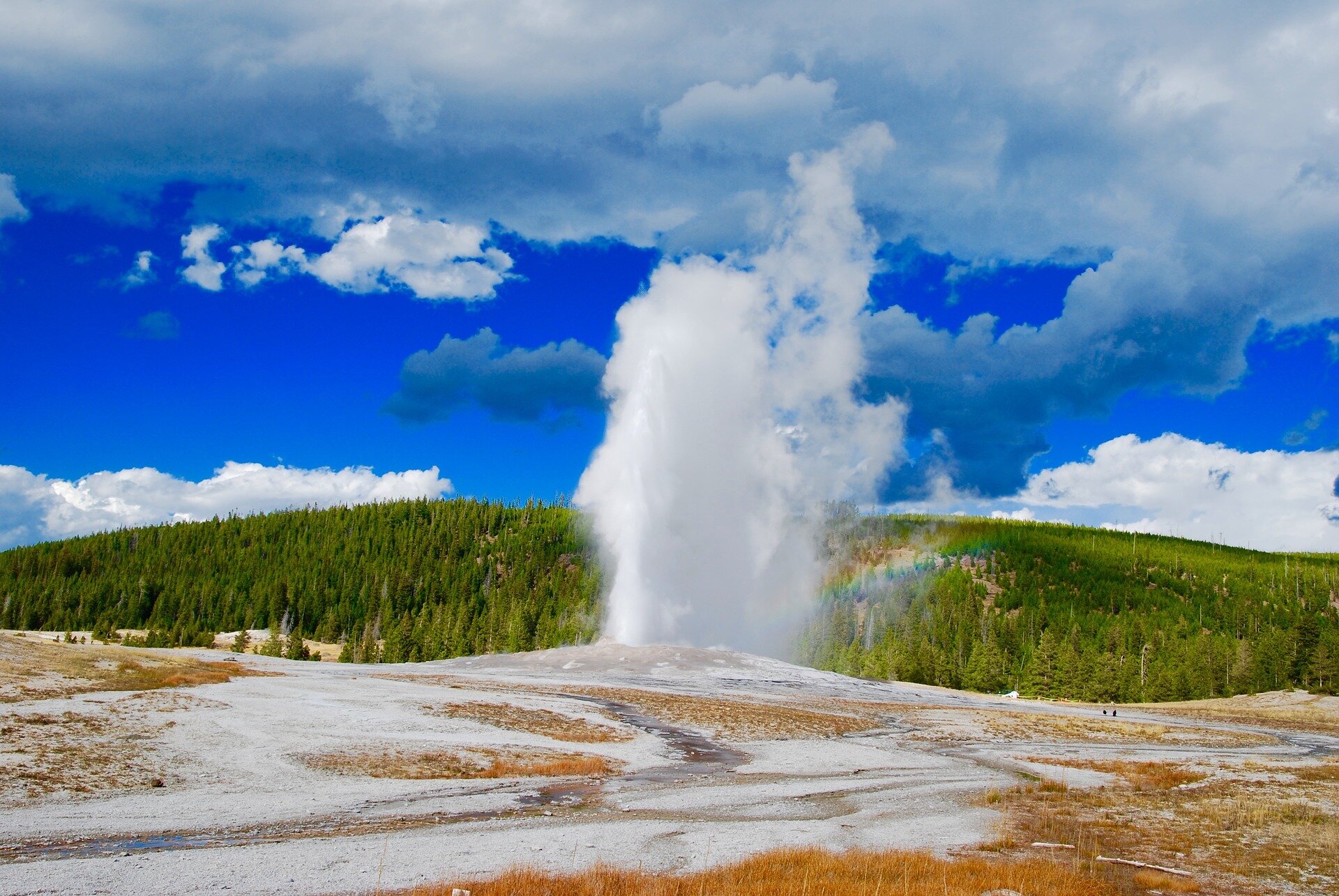
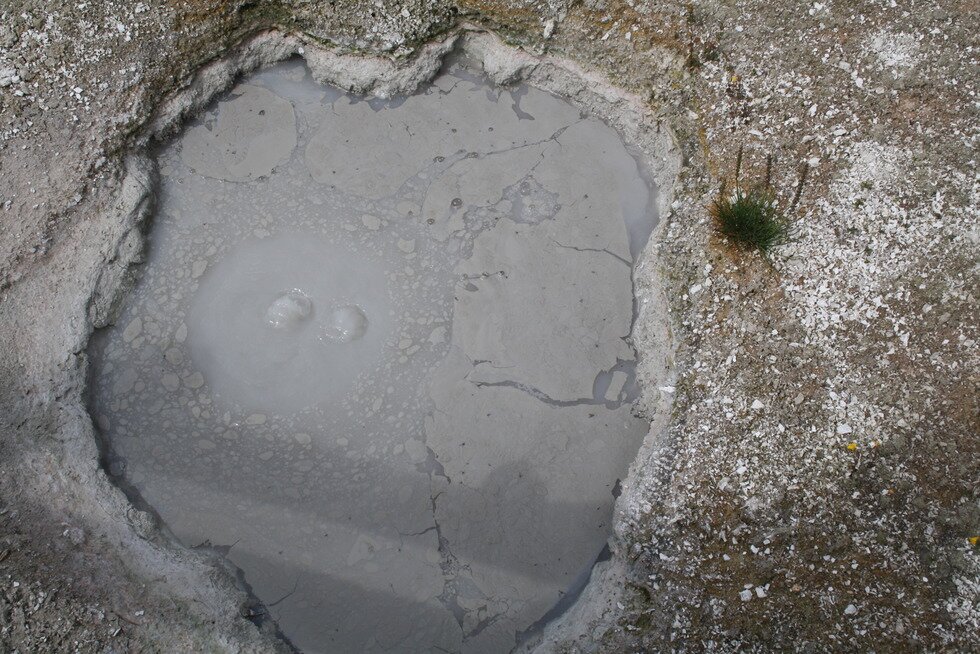
In volcanically active areas as well as where volcanoes have recently expired, many accompanying phenomena can be observed. Especially impressive are geysersgeysergeysers, which are a kind of hot spring from which, every time and again, boiling‑hot water with steam escapes rapidly, reaching heights of even several dozen meters. Other commonly occurring phenomena are hot groundwaters (thermal waters) and hot springs where water, without the participation of high pressure, flows calmly to the surface. In many places, gases escape from the still hot interior of the Earth. They have different names depending on their location, temperature, and chemical composition. For example, exhalations of gases that have high or very high temperatures are called fumarolesfumarolefumaroles.
R1Xgrz19zm6BN
Fotografia pokazuje gejzer w trakcie wybuchu. Na szczycie niewielkiego pagórka z ziemi wydobywa się pióropusz wody. Pagórek pozbawiony jest roślinności. Widać brunatne pozostałości po obumarłych roślinach. W miejscach, którymi spływa woda widoczne są osady mineralne. W tle widać większe wzgórze porośnięte lasem.
Geyser
Source: licencja: CC 0, [online], dostępny w internecie: https://pixabay.com.
RSriqqh6zsSA1
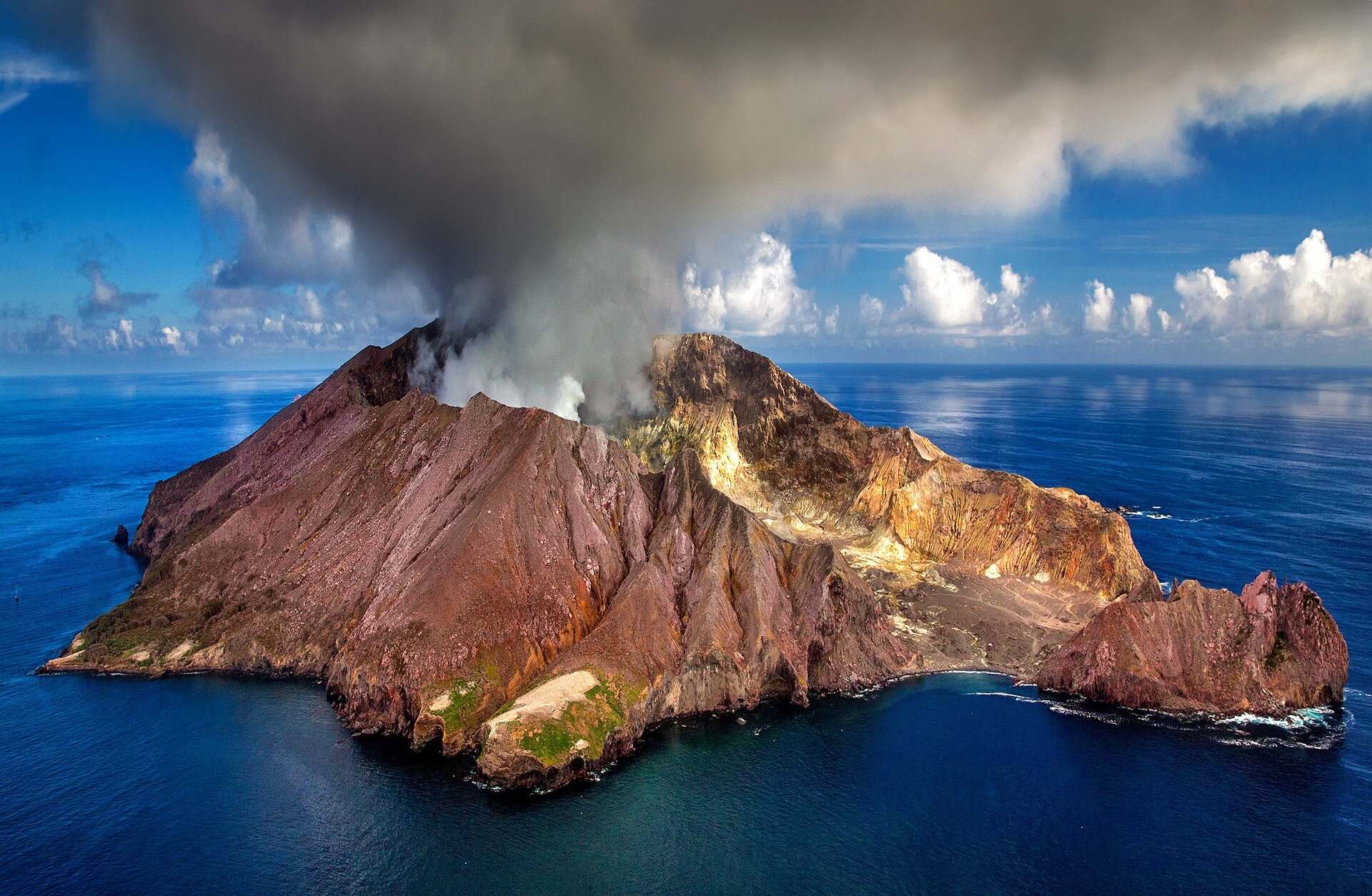
Fotografia przedstawia wulkan wyłaniający się z morza. Wulkan wznosi się stromo w górę. Nad kraterem unosi się dym. Z prawej strony w tej wulkanicznej górze znajduje się wąwóz prowadzący bezpośrednio do morza.
Volcano
Source: licencja: CC 0, [online], dostępny w internecie: pixabay.com.
RfJJtsLcKoFK0
Na zdjęciu ukazano fumarolę. W zagłębieniu zebrała się brudna woda pokryta kożuchem, widoczne bąbelki gazu.
Fumarole
Source: licencja: CC 0.
RWmc7A8LSUrBJ
Exercise 1
Zaznacz wszystkie obszary występowania aktywności wulkanicznej. Możliwe odpowiedzi: 1. Islandia, 2. północne Indie, 3. Australia, 4. Ryft Wschodnioafrykański, 5. zachodnie wybrzeża obu Ameryk, 6. basen Morza Śródziemnego
Zaznacz wszystkie obszary występowania aktywności wulkanicznej. Możliwe odpowiedzi: 1. Islandia, 2. północne Indie, 3. Australia, 4. Ryft Wschodnioafrykański, 5. zachodnie wybrzeża obu Ameryk, 6. basen Morza Śródziemnego
Mark all areas of volcanic activity.
Iceland
Northern India
Australia
East African Rift
West coasts of the Americas
Mediterranean Basin
RR9sxz3BPKdco
Exercise 2
Match the term to the right definition. magma Możliwe odpowiedzi: 1. molten hot rock mass mixed with water and various gases, 2. hot springs periodically expelling hot water and steam, 3. a place where hot volcanic gases get to the surface fumarole Możliwe odpowiedzi: 1. molten hot rock mass mixed with water and various gases, 2. hot springs periodically expelling hot water and steam, 3. a place where hot volcanic gases get to the surface geyser Możliwe odpowiedzi: 1. molten hot rock mass mixed with water and various gases, 2. hot springs periodically expelling hot water and steam, 3. a place where hot volcanic gases get to the surface
Match the term to the right definition. magma Możliwe odpowiedzi: 1. molten hot rock mass mixed with water and various gases, 2. hot springs periodically expelling hot water and steam, 3. a place where hot volcanic gases get to the surface fumarole Możliwe odpowiedzi: 1. molten hot rock mass mixed with water and various gases, 2. hot springs periodically expelling hot water and steam, 3. a place where hot volcanic gases get to the surface geyser Możliwe odpowiedzi: 1. molten hot rock mass mixed with water and various gases, 2. hot springs periodically expelling hot water and steam, 3. a place where hot volcanic gases get to the surface
Match the term to the right definition.
a place where hot volcanic gases get to the surface, hot springs periodically expelling hot water and steam, molten hot rock mass mixed with water and various gases