Władysław Jagiełło, a king of great possibilities
to recognize how and why Poland formed a union with Lithuania, and what the relations between Poland and Lithuania in the 14th and 15th centuries looked like;
to explain why Władysław Jagiełło granted privilegesprivileges to the nobility;
to describe the course of the Polish–Teutonic wars;
to explain how kings were elected by the nobility during the rule of the Jagiellonian dynasty.
The choice of the Lithuanian Jogaila as the royal husband for the Polish monarch Jadwiga was not easy neither for the Poles nor the Lithuanians. The elites of Christian Europe also considered it a controversial choice. The ruler of the people who until very recently were laying waste to the Polish lands and fighting against Christian knights was now to be crowned king of Poland. The Lithuanians were also afraid that the Union of Krewo of 1385 would turn out to be unfavourable for them, putting the Lithuanian state and society in a secondary position.
From the very beginning, attempts at closer cooperation and tightening the alliance were met with considerable resistance from the Lithuanians, in the form of resistance against christianisationchristianisation and the ambitions of Vytautas, Jagiełło’s brother’s son. For years, he strove to rule the duchy of Lithuania independently, even if it meant entering into alliance with the enemy, the Teutonic Knights. The situation became even more complicated after Jadwiga’s death, as Jagiełło’s claim to the Polish throne no longer had any basis. Eventually, the Polish nobles accepted Władysław Jagiełło as an independent king of Poland and entrusted him with full powers. His connections with Lithuania were also reinforced by the reaffirmation of the union in 1401. The separateness of the two states was accepted within the political union of the two communities. This union allowed them to support one another in conflicts against mutual enemies, especially the Teutonic KnightsTeutonic Knights.
The victory in the great war of 1409–1411 and the conclusion of the Peace of Thorn made the benefits of the union very clear. This led to another union, established in 1413 in Horodło, according to which both countries were to cooperate closely in the scope of foreign policy and neither was permitted to form alliances with states hostile towards the other. In addition, Lithuanian noble families (boyarsboyars) gained the same privilegesprivileges as Polish nobility. Despite problems in mutual relations, both countries have avoided the deadly threat of the Teutonic Knights. The continuing war with the order, which dates back to 1409, ended in 1422. The peace between Poland, the Grand Duchy of Lithuania and the Teutonic Knights at Lake Melno limited the previous power of the order and its expansive intentions. Lithuania gained a lot - the Teutonic Knights renounced their demands towards Samogitia. The established Prussian‑Lithuanian border survived until 1919. This allowed Władysław Jagiełło to focus on the most important problem of his final years: securing the succession for his son. Władysław Jagiełło was not an heir to the Polish throne, so in order to ensure the rule will be passed on to his son, he had to win the support of the nobility. By granting them two [privileges], in Jedlnia (1430) and Cracow (1433), he guaranteed the Polish nobles personal and property inviolability, while depriving himself of some of his power. However, he succeeded in confirming his son’s heredity of the crown. Thus began the reign of the Jagiellonian dynasty in Poland, which would last for the next 140 years.
Read the text describing the provisions of the Union of Krewo, and do the exercise.
Mowa posłów litewskich do Elżbiety Bośniaczki, matki JadwigiNajjaśniejsza Pani, pełnij to zbawienne polecenie, przyjmij wielkiego księcia Jagiełłę za syna i oddaj mu w małżeństwo najukochańszą córkę swoją Jadwigę, królową polską. [...] Nim zaś to, o czym mowa, do końca stosownego dojdzie, wielki książę Jagiełło ze wszystkimi swoimi braćmi [...], ze szlachtą, ziemianami większymi i mniejszymi [...] chce, życzy i pragnie przyjąć wiarę katolicką świętego Rzymskiego Kościoła. [...] obiecuje wielki książę Jagiełło złożyć i wydać wszystkie swoje skarby dla odzyskania strat, które poniosły tak Polska, jak Litwa [...]. Wielki książę obiecuje sumę zaręczoną między królową węgierską a księciem Austrii [...] złożyć i wpłacić [z tytułu odszkodowania za zerwanie narzeczeństwa Wilhelma Habsburga i Jadwigi]. [...] Tenże wielki książę Jagiełło obiecuje wrócić pierwotną wolność wszystkim chrześcijanom, zwłaszcza ludziom obojej płci z ziemi polskiej obyczajem wojennym zabranym i przesiedlonym. [...] Nareszcie tenże wielki książę Jagiełło obiecuje ziemie swoje litewskie i ruskie na wieczne czasy do Korony Królestwa Polskiego przyłączyć.
Source: Jan Długosz, Mowa posłów litewskich do Elżbiety Bośniaczki, matki Jadwigi, [w:] Teksty źródłowe do ćwiczeń z historii Polski średniowiecznej, s. 246–247.
Select the promises of Jagiełło that appeared in the text.
- Join Lithuania to Poland.
- Ensure the safety of merchants.
- Be christened along with the nobles of the Grand Duchy.
- Free Polish captives.
- Take crown jewels out of pledge.
- Modernise the Wawel Castle.
- Pay compensation to the House of Habsburg.
- Build a Dnieper–Vistula canal.
- Recover the lost lands of Lithuania and Poland.
- Build castles along the border with the Teutonic Order.
Arrange the provisions from most to least important from the point of view of the situation of Lithuania and the Crown. Compare your proposals with the class and justify your choices. After the other students present their proposals, you can make changes to yours. Did you achieve unanimity?
Mark in the text those passages that talk about the effort to unify the situation of elites in both countries.
unification of the elite
[...] my, Władysław, z Bożej łaski król Polski [...] najwyższy ksiązę litewski [...] i Aleksander, czyli Witold, wielki książę litewski [...] oznajmiamy brzemieniem niniejszego [...] ziemie [litewskie], które zawsze pełną władzą i wszelkim prawem dotąd posiadaliśmy i posiadamy od przodków naszych i z porządkiem urodzenia naszego, jako prawy pan [...] rzeczonemu Królestwo Polskiemu powtórnie znowu wcielamy, do wnętrzności kładziemy, przywłaszczamy, złączamy [...] i na wieki przywiązujemy. Stanowimy jednocześnie, aby takowe [ziemie] ze wszystkimi swoimi księstwami [...] ze wszystkim prawem na wieczne czasy nieodwołalnie i nierozerwalnie z Koroną Królestwa Polskiego były złączone. Wszystkie kościoły ziem królewskich [...] mocą niniejszego pisma zgodnie z obyczajem Królestwa Polskiego zachowamy we wszystkich ich wolnościach, przywilejach [...]. Panowie, szlachta i bojarowie ziem naszych litewskich mają na równi z panami i szlachtą Królestwa Polskiego używać i korzystać ze wszystkich udzielonych im przez nas nadań i przywilejów, o ile są katolikami i poddanymi Kościoła rzymskiego oraz mają nadane klejnoty herbowe. Przyrzeczeni panowie i szlachta mają dzierżyć dobra swoje ojczyste jednakowym prawem, jak panowie Królestwa Polskiego swoje dzierżą [...]. Z powyższych wolności, przywilejów i łask ci tylko z panów i szlachty ziem litewskich korzystać mają, którym są nadane herby i klejnoty szlachty Królestwa Polskiego i którzy są chrześcijańskiej wiary, podlegli Rzymskiemu Kościołowi, nie zaś schizmatycy lub niewierni.
To enjoy the privileges laid down by the Union of Horodło, the nobles of the Grand Duchy had to:
- be Catholic and be “adopted” by a Polish noble family and allowed to use their coat of arms.
- speak Polish.
- speak Polish, regardless of their religion.
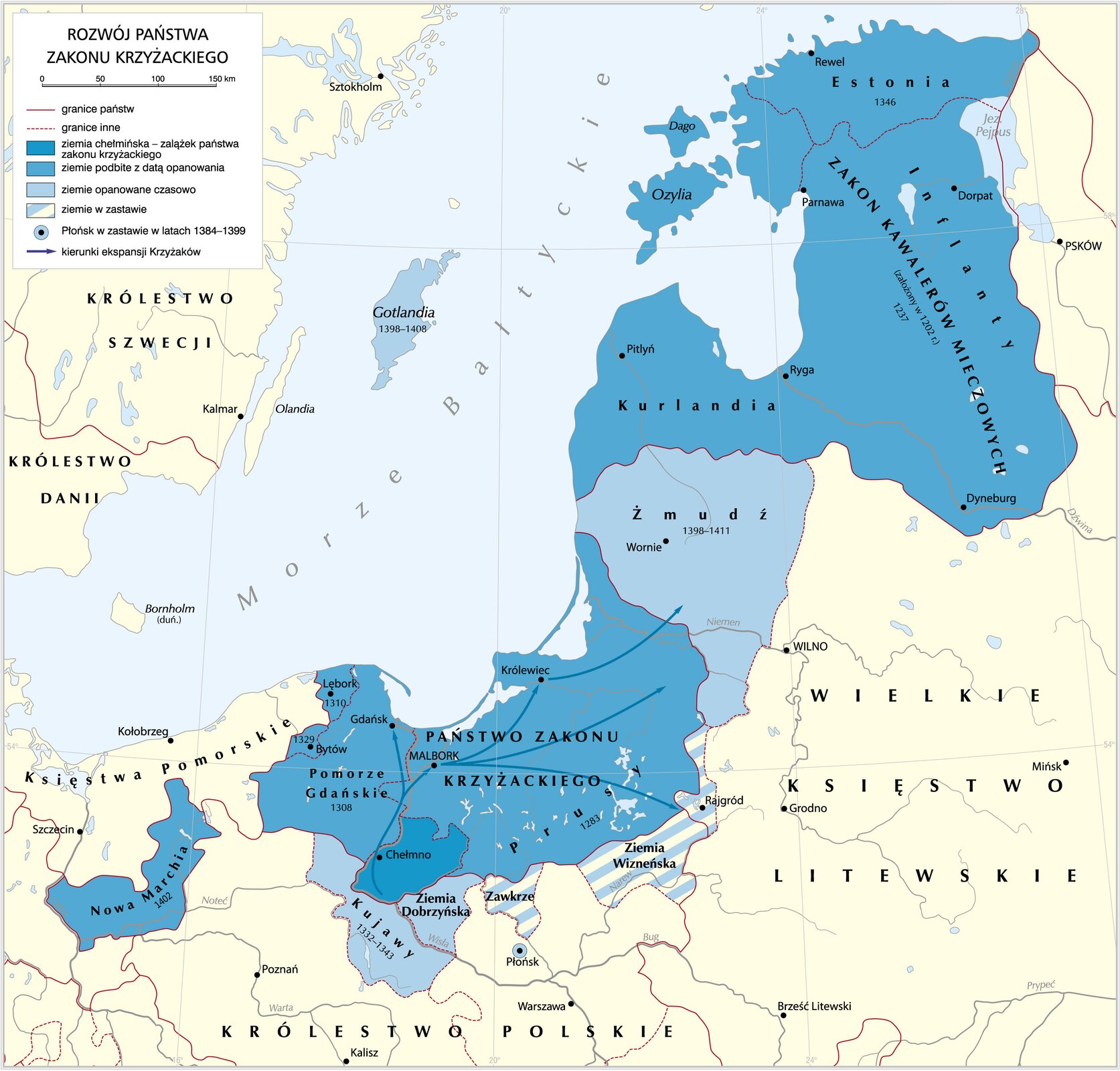
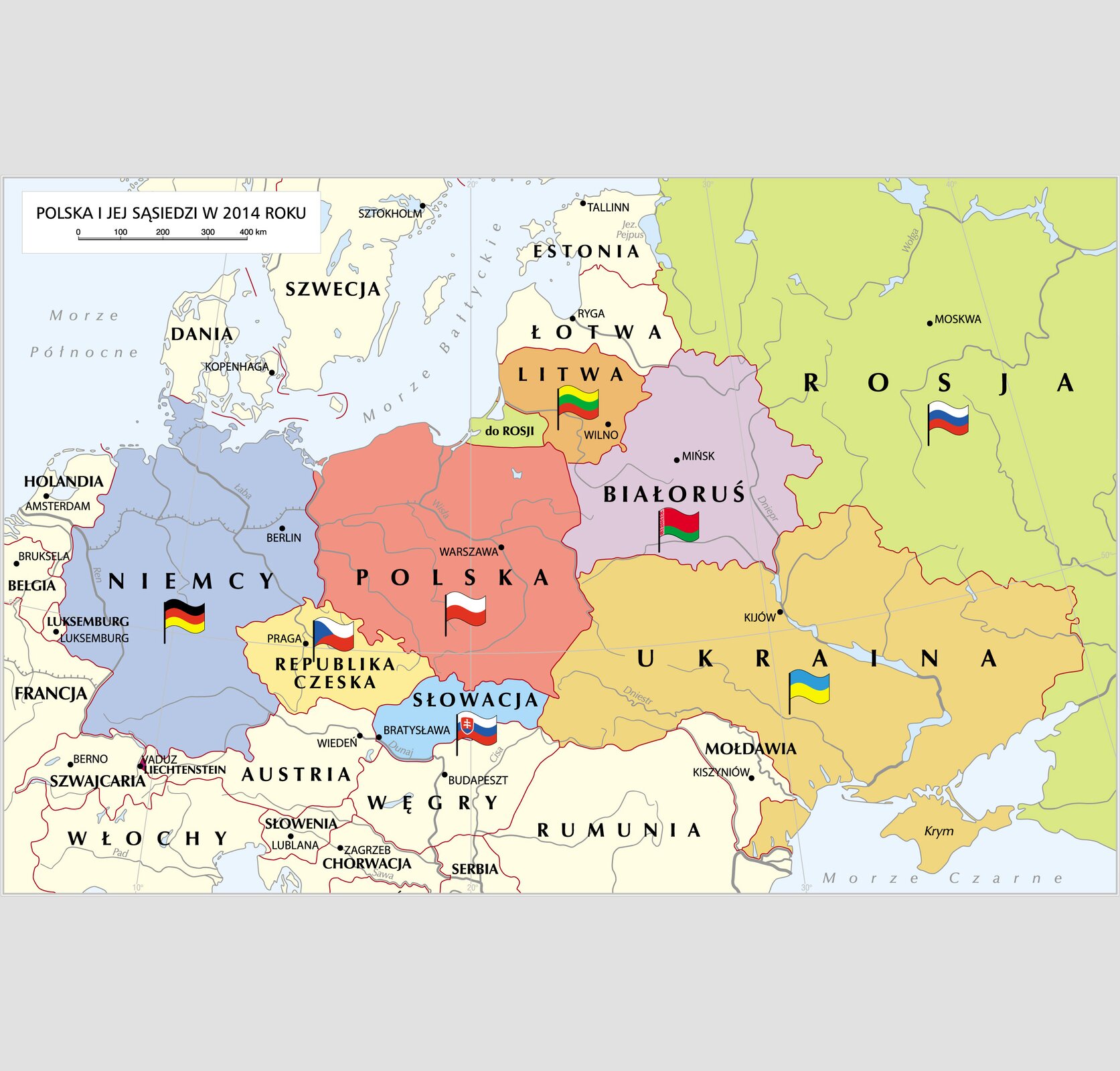
Mark the modern states the lands of which were under control of the Teutonic Order in the 15th century.
- Greece
- Latvia
- Germany
- Hungary
- Estonia
- Lithuania
- Austria
- Poland
- Belgium
- Russia
Mark in the passage quoted in the text of the peace room of Torun, which indicates Polish territorial claims towards the Order.
Polish territorial claims
"Władysław, król polski, najwyższy ksiązę Litwy, [...] wraz ze swym bratem Witoldem, wielkim księciem Litwy [...] z jednej strony, oraz brat Henryk von Plauen, wielki mistrz Niemieckiego Zakonu Jerozolimskiego Marii Panny z drugiej, oświadczają zgodnie, że [...]
1. ziemię żmudzką król polski i wielki książę Witold mogą dzierżyć w posiadaniu, po śmierci ich jednak Zakon obejmie tę ziemię w prawowite posiadanie bez przeszkód,
2. ziemia dobrzyńska pozostanie przy Koronie Królestwa Polskiego, lecz Pomorze, ziemie chełmińska, michałowska [...] zostaną przy Zakonie,
3. kupcy obu stron mają prawo wolnego handlu na terytorium stron przeciwnych wedle dawnego obyczaju [...],"
(S. K. Kuczyński, Wielka wojna z zakonem krzyżackim w latach 1409-1411, Warszawa 1980, s. 533-535)
Organise the family tree of Władysław, arranging his wives and children in chronological order.
Wives, Children
| Dates of marriage | 1386–1399 | 1402–1416 | 1417–1420 | 1422 |
|---|---|---|---|---|
| Wives | ||||
| Children | ||||
Connect the appropriate title to the person. Remember that one person can have many titles.
Grand Duke of Lithuania, King of Poland, King of Poland, King of Poland, Queen of Hungary, Prince of Poland, King of Poland, Queen of Poland, King of Hungary, King of Poland, Grand Duke of Lithuania, Grand Prince of Lithuania
| Władysław I the Elbow-high | |
|---|---|
| Casimir the Great | |
| Louis I of Hungary | |
| Jadwiga of Anjou | |
| Elisabeth of Poland | |
| Vytautas the Great | |
| Władysław Jagiełło |
Keywords
union, personal union, Teutonic Knights, Jagiełło, Jadwiga, Vytautas, Jagiellonians, pagans, christianisation, religion, boyar, privilege
Glossary
Poganie – określenie stosowane przez chrześcijan wobec wyznawców innych religii i wierzeń. Określnie to od zawsze miało charakter obelgi i oznaczało osobę gorszą, mniej znaczącą.
Chrystianizacja – proces przyjmowania symboli i wiary chrześcijańskiej oraz zastępowanie nią wierzeń pogańskich.
Zakon – zgromadzenie religijne, którego członkowie składają śluby i żyją według przyjętych reguł.
Krzyżacy – zakon rycerski, sprowadzony na Mazowsze przez Konrada Mazowieckiego w 1226 r., jego pełna nazwa brzmi: Zakon Szpitala Najświętszej Marii Panny Domu Niemieckiego w Jerozolimie.
Przywilej – prawa nadawane przez władcę określonej grupie społecznej (szlachcie, duchowieństwu) obowiązujące na danym terenie lub w całym kraju.
Unia personalna – związek dwóch lub więcej państw posiadających wspólnego władcę przy zachowaniu odrębności państwowej.
Kniaź – wódz, władca państwa u Litwinów, a w późniejszym czasie dziedziczny honorowy tytuł szlachecki w Wielkim Księstwie Litewskim.
Bojar – w Wielkim Księstwie Litewskim przedstawiciel niższej i średniej warstwy szlachty, na Rusi wielki właściciel ziemski.