We’re going on a trip
that outdoor exercise is important to maintain well‑being and health;
that it is worthwhile visiting new places in your free time.
to properly plan and prepare equipment needed for a hike;
to walk on the street as a pedestrian in accordance with traffic rules;
to use caution during field observations.
See everything
On every hike, you can see many phenomena, animals and plants. Nature is full of surprises waiting to be discovered. You just need to know how to find them. When going on a hike, it is worth equipping yourself with a few helpful instruments that will make it easier for you to observe nature.
One such object is the magnifying glass. For example, you may use it take a close look at small insects or plant leaves.
Remember that while observing nature you cannot interfere in the environment of organisms or disturb their natural rhythm of life. Therefore, to take a closer look at objects far away from you, take your binoculars on the trip. These are particularly useful when observing animals. You don't have to approach or worry them.
If you are planning to observe objects that are very far away, a telescope is certainly a good choice. Thanks to it, you can see not only animals (e.g. birds on a large lake or roe deer grazing far in the field), but also the Moon and stars. The telescope offers magnification even several times greater than that of binoculars, so it won't work in areas where visibility is limited, e.g., in the forest.
If you want to go on a hike, in addition to the instruments for nature observation, you should also prepare other aids. These are atlasesatlases and guidebooksguidebooks, in which you will find a lot of interesting information about the surrounding plants and animals. If you go on a tour of areas of great natural value, such as nature reserves or national parks, you can find out in advance what plants and animals you can encounter there from books or the Internet. You may also find tips on where to look for sites for species that interest you.
It is worth documenting your observations. That's why a naturalist always takes their notebook and pen with them. A photo camera may also come in handy, even if it is very simple. Photographs are a valuable proof of conducted research and, at the same time, a nice souvenir.
What valuable natural areas are there close to where you live? With your group, prepare a poster presenting one of the places that are worth visiting.
Safety on the trip
For a hike to be a source of pleasure and many interesting observations, you need to prepare for it properly. This is why it is worth taking care of appropriate clothing, especially shoes. Remember that ordinary sneakers are not suitable for long walks in the field. For such expeditions it is best to wear laced boots reaching above the ankles. This will help you avoid injuries in the event of a fall. The sole should be grooved – to prevent slippage. And don't forget to wear a waterproof jacket – so you won't get wet when surprised by rain. Also, get a pair of sunglasses and a hat to protect you from the sun.
Valuable natural areas often lie far from cities and villages. This is why it is very important to plan your transport. Remember that buses and trains follow a timetable. It is therefore good to note at which time our means of transport departs. This will help you to plan the rest of the trip. To ensure that your trip does not end in a hospital visit, you must follow a few basic rules related to traffic safety.
Observe the traffic rules already on your way to the starting point of your trip – cross the road in the places designated for doing so. If there are traffic lights at the crossing – do not cross on a red light.
Before stepping onto the roadway, carefully look around and let the passing cars go first.
Walk on the sidewalk and, if there isn't one – on the left shoulder of the road.
If you are, e.g., in a reserve, do not leave the trail – it is illegal to do so and it may have a negative impact on nature.
Look at your feet! Large stones, boulders or branches lying on the trail can cause tripping or even serious injury.
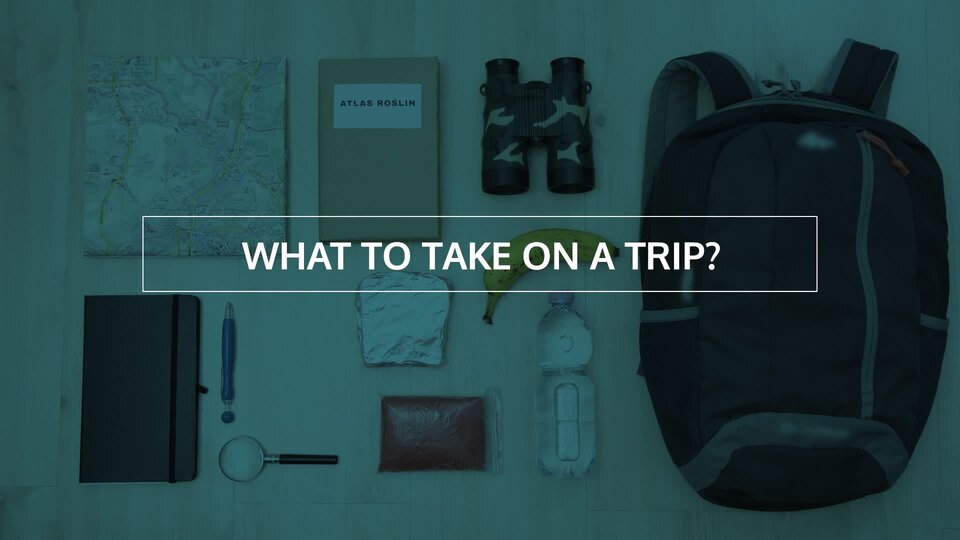
Film dostępny na portalu epodreczniki.pl
Nagranie video przedstawia rzeczy które, należy zabrać ze sobą na wycieczkę. Plant Atlas, sandwitch, fruit, notebook, pen, binocular, water, magnifier, smartphone, raincoat, map, backpack, terrain boots, long trousers, t shirt, hoodie, jakiet, cap.
It is very important to be careful when observing wild animals – they are rarely aggressive for no reason, but when defending themselves or their young, they can become very dangerous. This also applies to animals that seem to be completely harmless!
Not only animals, but also plants can be dangerous. Many of them contain poisonous compounds that can cause illness or even death. Never eat plants unknown to you, even if their fruits (e.g. berries) look appetizing. Remember that some plants can be dangerous, even if you don't eat them – even contact with them can cause irritation, rash or shortness of breath, for example.
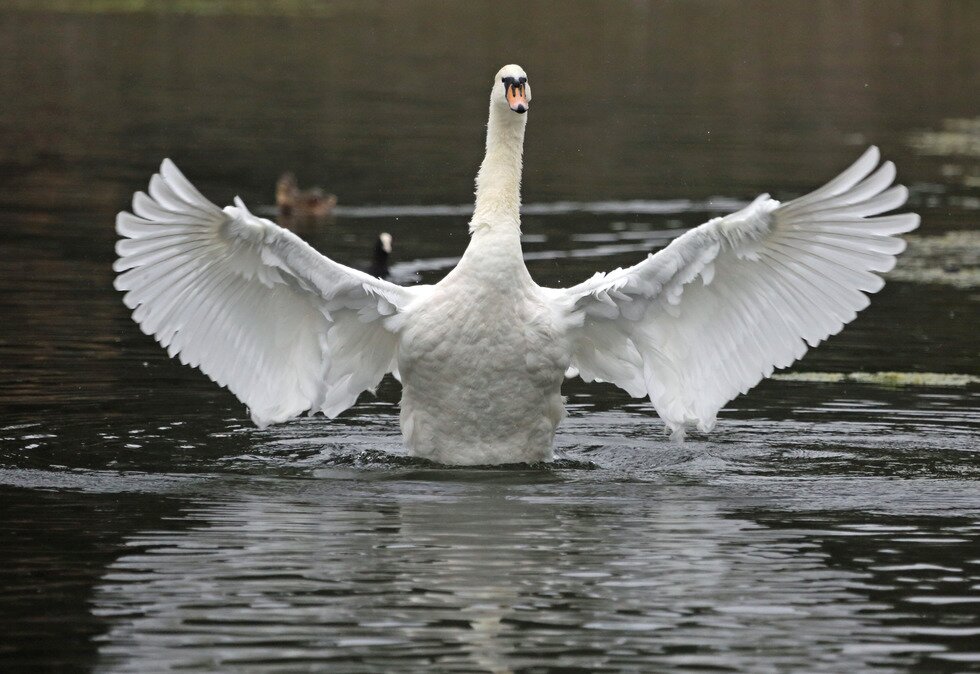
What should you take with you on a hike?
- waterproof jacket
- high-heel shoes
- observation equipment
- nail polish
- mp3 player and headphones
- carbonated drink
- good laced boots
Select the instruments that allow to make outdoor observations.
- microscope
- proper boots
- guidebook
- magnifying glass
- binoculars
Summary
The magnifying glass, binoculars and telescope help you make field observations.
You can refer to guidebooks and atlases for information on observed plant and animal species.
Remember to prepare clothes and equipment suitable for the terrain you will be trekking across.
Be careful when walking outdoors.
Find out what conditions exist in the nearest reserve or national park. Describe what interests you there and how you can get there.
Keywords
trip, terrain, observation
Glossary
atlas – publikacja będąca zbiorem map, ilustracji lub zdjęć dotyczących określonego tematu; może być to atlas zawierający mapy Polski, ale też atlas grzybów
przewodnik – publikacja zawierająca dokładny opis danego obszaru lub umożliwiająca rozpoznawanie roślin i zwierząt po ich charakterystycznych cechach