Ancient Greece – Revision
to characterize the social structure and belief system of Ancient Greece;
to define various systems of governance and organization of the society of Ancient Greece;
to list the most important achievements of Greek culture.
The history of Ancient Greece started in the 2nd century BC, when the tribes of Ionians, Achaeans and Dorians arrived in that area. The first great Greek civilisations were the Minoan civilisation which developed on the island of Crete and the Mycenaean civilization. They came to their end about the 12th century BC, when they gave way to a period which historians call the Dark Ages.
In the history of Ancient Greece, two city‑states polispolis occupy an important place. Those were Ancient Athens and Sparta. Despite the differences in customs, the form of government or education between their inhabitants, all Hellenes shared the sense of community and the common culture, religion and language.
Situated in the Southern part of the Peloponnese, Sparta was distinguished by a distinct model of government and education, which was different than that of the other polis. The model citizen was a capable soldier who could defend his polis at any time. The basic army unit was heavy infantry whose soldiers were called hopliteshoplites. They fought in the phalanx formation and were invincible on battlefields for decades. Spartans considered themselves equals, which they expressed in the form of compulsory military service for every man and participation in votes during assembliesassemblies.
Athens was the other important Greek polis. It was first ruled by kings and the privileged, and richest class – the oligarchythe oligarchy. Over the course of time, as a result of the reforms and internal transformations introduced by Solon, Peisistratos and Cleisthenes in the 6th and the 5th century BC, democracydemocracy emerged there, allowing all men who were citizens of Athens to have an impact on the fate of that city‑state. Athens witnessed the pinnacle of its development during the reign of Pericles in the 5th century BC.
The life of Greeks was inextricably linked to the faith in Twelve Olympian Gods. They influenced every aspect of the Ancients’ lives and were present in virtually their every field. Zeus – the lord of the sky and the earth was the most important god. The other important gods included Poseidon – the lord of seas and oceans, Hades -- the lord of the underworld, Hera, the wife of Zeus – the protectress of married couples and the family, and Athena – the patroness of wisdom and learning.
The religion and the gods had an influence on many areas of the lives of Ancient Greeks, including sport. They believed that a healthy and beautiful body, combined with good deeds, constitutes the fullness of humanity, given by the gods. Sport was an important element of education and civic life. In the majority of Greek polis, there were special buildings – gymnasionsgymnasions, where men could not only practice sports but also train their bodies and minds. Sport competitions called the Olympic GamesOlympic Games also emerged in Ancient Greece. The first of those were held in Olympia in 776 BC.
Greek mythsmyths became an inspiration for numerous poets and artists whose works extolled the stories and adventures of gods. A theatre performance was one of the forms in which myths were presented. Theatre emerged from public ceremonies held in honour of Dionysus, the god of grapevine. Popular comediescomedies and tragediestragedies, which brought up religious, social and educational issues, developed from those ceremonies. The most eminent authors of Greek tragedies were Aeschylus, Sophocles and Euripides.
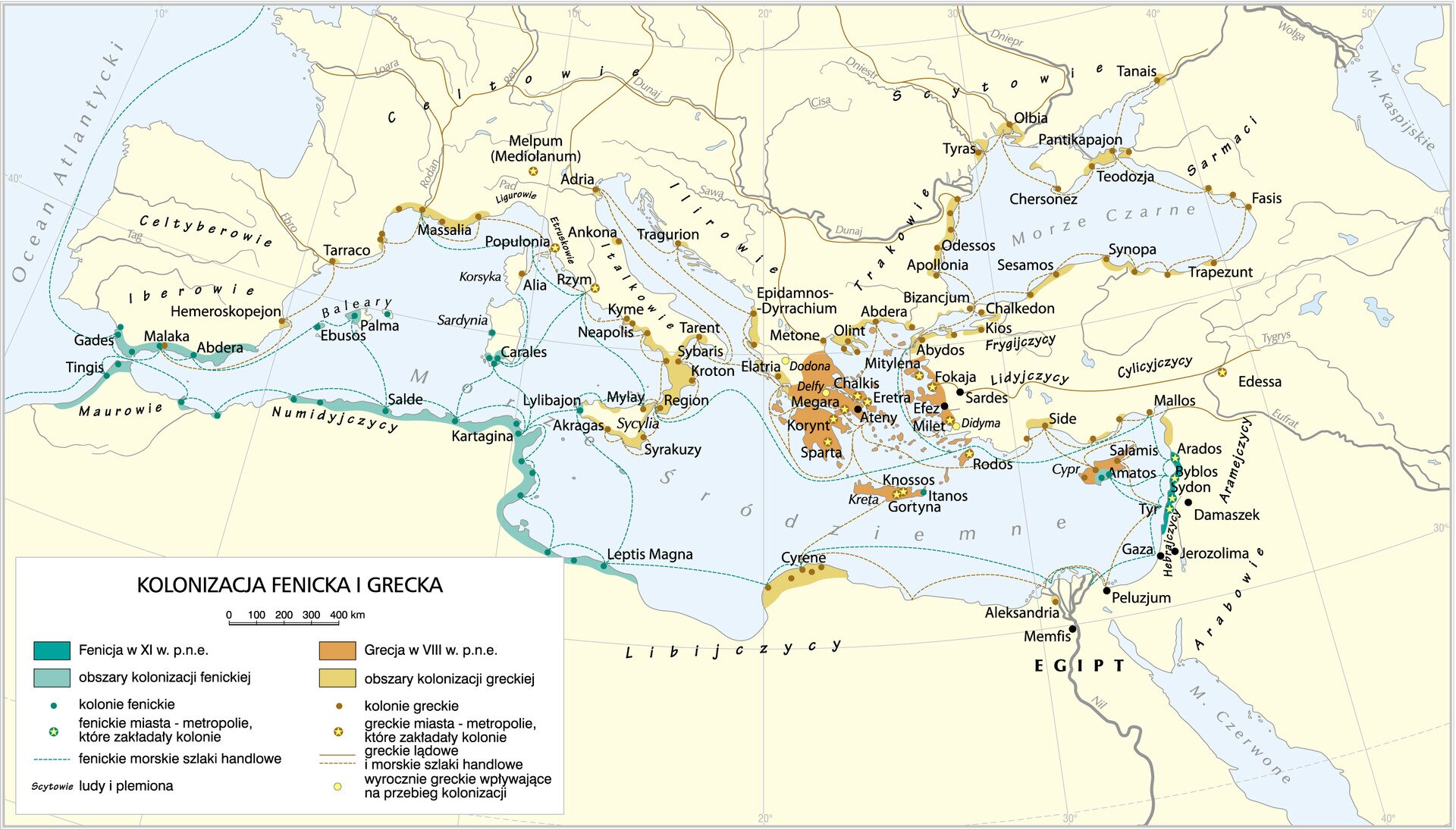
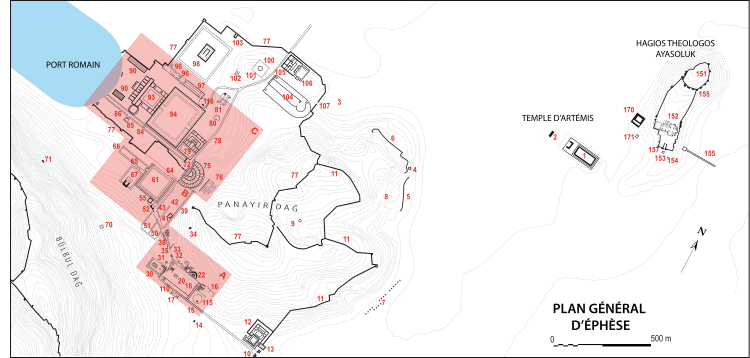
In the ancient world, numerous lists of the most wonderful and important structures were prepared to appreciate their extraordinary architecture. The oldest surviving list is the list from the 3rd century BC, drawn up by the Greek poet Callimachus from Cyrene. The number seven itself was not accidental, either. It was considered to be a symbol of perfection in Ancient Greece.
Read the profiles of the most famous Greek philosophers.
- the election of officers by all out of all
- all should rule over each, and each in his turn over all
- the appointment to all offices, or to all but those which require experience and skill, should be made by lot
- no property qualification should be required for offices, or only a very low one
- a man should not hold the same office twice, or not often, or in the case of few except military offices
- the tenure of all offices, or of as many as possible, should be brief,
- all men should sit in judgment, or that judges selected out of all should judge, in all matters, or in most and in the greatest and most important- such as the scrutiny of accounts, the constitution, and private contracts
- the assembly should be supreme over all causes, or at any rate over the most important, and the magistrates over none or only over a very few
Read carefully the text of Aristotle's Politics, and indicate what are the attributes of Athenian democracy and the rules governing it.
features of Athenian democracy governing rules
The basis of a democratic state is liberty; which, according to the common opinion of men, can only be enjoyed in such a state; this they affirm to be the great end of every democracy. One principle of liberty is for all to rule and be ruled in turn, and indeed democratic justice is the application of numerical not proportionate equality; whence it follows that the majority must be supreme, and that whatever the majority approve must be the end and the just. Every citizen, it is said, must have equality, and therefore in a democracy the poor have more power than the rich, because there are more of them, and the will of the majority is supreme.
Such being our foundation and such the principle from which we start, the characteristics of democracy are as follows:
- the election of officers by all out of all
- all should rule over each, and each in his turn over all
- the appointment to all offices, or to all but those which require experience and skill, should be made by lot
- no property qualification should be required for offices, or only a very low one
- a man should not hold the same office twice, or not often, or in the case of few except military offices
- the tenure of all offices, or of as many as possible, should be brief,
- all men should sit in judgment, or that judges selected out of all should judge, in all matters, or in most and in the greatest and most important- such as the scrutiny of accounts, the constitution, and private contracts
- the assembly should be supreme over all causes, or at any rate over the most important, and the magistrates over none or only over a very few
Arystoteles, Polityka, Księga VI
Match the pairs: English words with Polish definition.
dosłownie miejsce zgromadzeń, rynek w miastach w starożytnej Grecji. Toczyło się tam życie społeczne, polityczne, gospodarcze i towarzyskie., zgromadzenie obywateli (mężczyzn), najważniejszy organ demokracji ateńskiej, decydujący o sprawach polis ateńskiego., w religiach politeistycznych zbiór bóstw, w które wierzy się w danej religii., doroczna procedura tajnego głosowania w starożytnych Atenach, podczas którego wolni obywatele typowali zagrażającego demokracji i funkcjonowania polis polityka. Musiał on opuścić Ateny na 10 lat., dosłownie panowanie nielicznych; forma rządów niewielkiej grupy ludzi wywodzącej się z warstw uprzywilejowanych., dowódca wojskowy w starożytnej Grecji, w starożytnych Atenach również najwyższy rangą urzędnik. Wybierano ich raz do roku., w starożytnej Grecji miasto lub jego część znajdująca się na wzgórzu. Najbardziej znanym akropolem jest akropol ateński ze świątynią Ateny Partenonem na szczycie., rodzaj miasta‑państwa w starożytnej Grecji, które ograniczało się do miasta i pobliskich osad.
| Polis | |
| Acropolis | |
| Oligarchy | |
| Strategos | |
| Pantheon | |
| Ostracism | |
| Popular Assembly | |
| Agora |
Keywords
polis, AcropolisAcropolis, phalanxphalanx, hoplite, oligarchy, democracy, strategosstrategos, polytheismpolytheism, myth, pantheonpantheon, comedy, tragedy, Olympic Games, gymnasion, ostracismostracism, Popular Assembly, agoraagora
Glossary
Polis – rodzaj miasta‑państwa w starożytnej Grecji, które ograniczało się do miasta i pobliskich osad.
Akropol – w starożytnej Grecji miasto lub jego część znajdująca się na wzgórzu. Najbardziej znanym akropolem jest akropol ateński ze świątynią Ateny Partenonem na szczycie.
Falanga – oddział piechoty greckiej tworzony przez hoplitów ustawionych w 8‑16 szeregach.
Hoplita – ciężkozbrojna piechota grecka walcząca w szyku falangi. Hoplitami najczęściej byli wolni i zamożni obywatele greckich polis.
Oligarchia – dosłownie panowanie nielicznych; forma rządów niewielkiej grupy ludzi wywodzącej się z warstw uprzywilejowanych.
Demokracja – forma sprawowania władzy, w której udział mają wszyscy obywatele.
Strateg – dowódca wojskowy w starożytnej Grecji, w starożytnych Atenach również najwyższy rangą urzędnik. Wybierano ich raz do roku.
Politeizm – wiara w wielu bogów, którzy zajmują się odrębnymi sferami życia.
Mit – opowieść o bogach, herosach i nadprzyrodzonych stworzeniach.
Panteon – w religiach politeistycznych zbiór bóstw, w które wierzy się w danej religii.
Komedia – utwór, którego celem jest rozśmieszenia i zabawa widzów.
Tragedia – utwór, w którym bohatera spotykają konflikty i trudności, które prowadzą do jego klęski. Tragedie wystawiano z okazji świąt na cześć boga Dionizosa.
Igrzyska olimpijskie – międzynarodowe zawody sportowe odbywające się co 4 lata na cześć jednego z bogów. Na czas ich trwania zawieszano wszelkie wojny. Pierwsze igrzyska miały miejsce w starożytnej Olimpii w 776 r.p.n.e.
Gimnazjon – zespoły budynków przeznaczone do ćwiczeń sportowych i rozwoju umysłowego. Obejmowały przede wszystkim obiekty sportowe.
Ostracyzm – doroczna procedura tajnego głosowania w starożytnych Atenach, podczas którego wolni obywatele typowali zagrażającego demokracji i funkcjonowania polis polityka. Musiał on opuścić Ateny na 10 lat.
Zgromadzenie Ludowe – zgromadzenie obywateli (mężczyzn), najważniejszy organ demokracji ateńskiej, decydujący o sprawach polis ateńskiego.
Agora – dosłownie miejsce zgromadzeń, rynek w miastach w starożytnej Grecji. Toczyło się tam życie społeczne, polityczne, gospodarcze i towarzyskie.