Deformation as self-creation, deformation as a mask
to talk about a grotesquegrotesque
to discuss the works of Konstanty Ildefons Gałczyński
to recognise caricaturecaricature and the grotesque
to discuss the use of humour as a way to depict pressing social problems
Before the lesson
Search for contemporary opinions about the work of K. I. Gałczyński (questionnaire, internet). On their basis, determine the state of knowledge about the author's output and the way of receiving his works.
An avant‑garde creator of moods
Artistic deformationsdeformations of the world, or transformations of reality, are often aimed at revealingrevealing what is difficult to see at first glance (this is the case, for example, of Gombrowicz or Kafka). They may also have a completely different goal, becoming an element of the strategy of hiding, masking, escaping from boredom and unambiguity. Art can also cheat. When for some creators it becomes a weapon in the search of the truth, others make it a tool of self‑creationself‑creation game with recipients. Sometimes as recipients we can not decide whether we are dealing with a manifestation of truth or a game of appearances. This is a trait of work (and life) of Konstanty Ildefons Gałczyński.
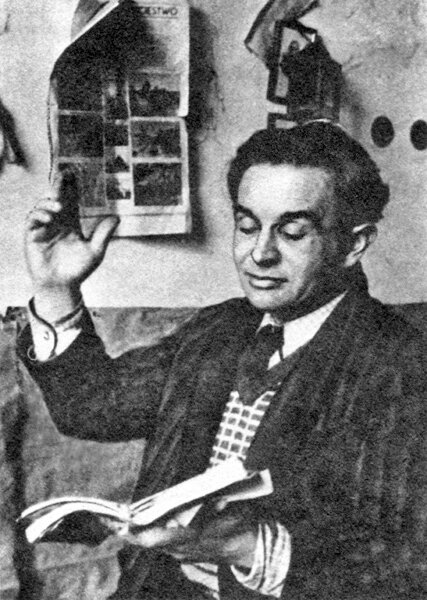
Konstanty Ildefons Gałczyński (1905 – 1953) was one of the most popular Polish poets of the 20th century.
At the end of the 1920s, Gałczyński joined the Kwadryga group. This cooperation resulted in the acquiring of a number of new friends and publishing some pieces, but in fact Gałczyński’s poetry and personality did not fall within the framework of the socially oriented and rather vague program of the group. In 1937, in a weekly magazine „Prosto z Mostu”, a collection of Gałczyński's poems Utwory poetyckie (Poetical Pieces) was published.
Gałczyński was enlisted at the end of August 1939, and not long after the outbreak of the war he was taken prisoner. From this period, poems like his famous Pieśń o żołnierzach z Westerplatte (A Song about Soldiers from Westerplatte), reflecting the moods of that time, came. After the war Gałczyński travelled around Europe, and in 1946 he finally returned to the country. In the “Szpilki” magazine, he printed a famous series of absurdabsurd, humorous genre scenes, published as Teatrzyk Zielona Gęś (Green Goose Theatre).
In the summer of 1950, Gałczyński left for Masuria, where he created several of his poetic ideas, some of which – including poems Niobe and Wit Stwosz and a lyrical series Pieśni(Songs) – are considered by researchers as his greatest achievements.
In a Dictionary of Literary Terms or any other available resource, check what grotesque means.
Grotesque is an aesthetic category, which seems to play the fundamental role in Gałczyński’s poetry. In his poetry, an everyday experience is continually open to the reversal of the normal order of roles and values and the various deformations of reality and subject. The poet flees from seriousness into a joke, from involvement – into distance, from poetics – into colloquiality, from everyday life – into masquerade and vise versa.
Check your comprehension of the text. Fill in the gaps.
Caricature, Delicate, tragic, pathos, comical, catastrophic, Portrait, satirical, exaggerated, irony
The grotesque in Gałczyński's poems is often ......................... The poet effectively uses humour, mockery,........................, the absurd and purnonsense. ........................, often satirically oriented, defines the character of reality in his works. In some of them (e.g.”Koniec świata” (The End of the World), “Bal u Salomona” (Bal at Salomon’s) the poet combined the grotesque, absurd and humour with ........................ motifs. Attitudes and aspects of reality become the subject of ridiculing, celebrated with ........................ gravity and pompousness.
The climax of the grotesque in Gałczyński's work is „the smallest theatre in the world”, i.e. the famous Zielona Gęś (Green Goose Theatre). These genre scenes were filled with preposterous humour, inspired by both contemporary reality and literary tradition, which continued to ridicule situations and attitudes.
Read Konstanty Ildefons Gałczyński’s poem entitled „Skumbrie w tomacie” and complete the following exercises:
Skumbrie w tomacieRaz do gazety „Słowo Niebieskie”
(skumbrie w tomacie skumbrie w tomacie)
przyszedł maluśki staruszek z pieskiem.
(skumbrie w tomacie pstrąg)– Kto pan jest, mów pan, choć pod sekretem!
(skumbrie w tomacie skumbrie w tomacie)
– Ja jestem król Władysław Łokietek.
(skumbrie w tomacie pstrąg)Siedziałem - mówi - długo w tej grocie,
(skumbrie w tomacie skumbrie w tomacie)
dłużej nie mogę... skumbrie w tomacie!
(skumbrie w tomacie pstrąg)Zaraza rośnie świątek i piątek.
(skumbrie w tomacie skumbrie w tomacie)
Idę na Polskę robić porządek.
(skumbrie w tomacie pstrąg)Na to naczelny kichnął redaktor
(skumbrie w tomacie skumbrie w tomacie)
i po namyśle powiada: - Jak to?
(skumbrie w tomacie pstrąg)Chce pan naprawić błędy systemu?
(skumbrie w tomacie skumbrie w tomacie)
Był tu już taki dziesięć lat temu.
(skumbrie w tomacie pstrąg)Także szlachetny. Strzelał. Nie wyszło.
(skumbrie w tomacie skumbrie w tomacie)
Krew się polała, a potem wyschło.
(skumbrie w tomacie pstrąg)– Ach, co pan mówi? - jęknął Łokietek;
(skumbrie w tomacie skumbrie w tomacie)
łzami w redakcji zalał serwetę.
(skumbrie w tomacie pstrąg)– Znaczy się, muszę wracać do groty,
(skumbrie w tomacie skumbrie w tomacie)
czyli że pocierp, mój Władku złoty!
(skumbrie w tomacie pstrąg)Skumbrie w tomacie, skumbrie w tomacie!
(skumbrie w tomacie skumbrie w tomacie)
Chcieliście Polski, no to ją macie!
(skumbrie w tomacie pstrąg)Source: Konstanty Ildefons Gałczyński, Skumbrie w tomacie, [w:] tegoż, Wybór poezji, Wrocław 1983, s. 105–106.
The text of Skumbrie w tomacie is of a humorous nature, but provoked quite serious disputes among critics. Decide whether humour in such form can be an effective tool in discussing social and political matters.
Read the poem „Na dziwny a niespodziewany odjazd poety Konstantego” and follow the instructions:
a) Revise what elegyelegy as a literary genre is. Should you have any doubts use „Dictionary of Literary Terms”.
b) Indicate the features that determine the elegiac character of the poem. Then, discuss the way the poem collaborates with the tradition of an elegy.
c) Identify the speaker and the addressee of the poem and discuss the lyrical subject’s construction of the speech.
d) In detail, characterise the image of the protagonist‑addressee that emerges from the statement of the lyrical subject. Refer to the quotes from the poem.
e) In the poem, indicate fragments in which the poet's pompous ethos is deconstructed. Justify what deconstructiondeconstruction is about and what its function is.
Na dziwny a niespodziewany odjazd poety Konstantegoelegia
Żandarmom RepublikiWięc odjeżdżasz, oszuście, słodki szarlatanie,
któryś kochał alkohol, cygara i czaple.
któryś był taumaturga, bufon i hochsztapler,
odjeżdżasz, a więc jedźże na karku złamanie!Ach, znamy, dobrze znamy twoje promenady
od „Kresów” do „Ziemiańskiej”, z „Ziemiańskiej” do „Kresów”,
dżdżyste rajdy autami z córkami mechesów,
noce w mrocznych winiarniach, komersze i szpady.Faktycznie, pamiętamy „noce infernalne”
i „Poemat o piekle”, i liścik Lechonia,
twoje usta za duże, spalone przez koniak
i przez miłości słotne, a fenomenalne.O, poeto najsłodszy, hodujący kwiatki,
robiący tricki lepsze niż święty Franciszek,
pustkę serca wyleczył ci pełny kieliszek
i krawat, w którym lśniła duża łza twej matki.A kiedy przychodziły noce niepogody,
po Nalewkach się błąkał twój kabriolet stary,
noc zmieniała się w strofy, a strofy w dolary…
hélas! strofy są zawsze, honoraria — w środy.I takeś, o Konstanty, gwizdał po Warszawie,
jak jakiś wzniosły Rilke albo zgoła Irzek;
prawie co noc w „Empirze” grywałeś na lirze,
rachunki dobrzy ludzie płacili łaskawie.Ale wszystko się kończy i odjeżdżasz oto,
łzy Eleonory zmieszały się z deszczem,
odjeżdżasz… never, never! Zostań chwilę jeszcze,
lubiła cię hołota, więc zostań z hołotą.O pociągu jesienny, jadący w szarugę,
o, koła roztrzęsione strachem i malarią!
Kochałem cię naprawdę, Stanisławie Mario,
a ty szaleństwa moje i moją papugę.Source: Konstanty Ildefons Gałczyński, Na dziwny a niespodziewany odjazd poety Konstantego, [w:] tegoż, Wybór poezji, Wrocław 1983, s. 5–7.
Which answer characterises the convention in which the image of the protagonist of the poem was created?
- The protagonist’s image was created on the convention of tragedy.
- The protagonist’s image was created on the convention of heroisation.
- The protagonist’s image was created on the convention of satirical caricature.
- The protagonist’s image was created on the convention of fantasy.
Read the fragment of Jan Błoński’s critical sketch entitled „Prawda uczuć” (The Reality of Emotions). Then determine the qualities perceived by the researcher in Gałczyński’s poetry.
Prawda uczuć(fragmenty)
Gałczyński był poetą estrady. Sam wspaniale deklamował własne wiersze. Prawdziwego poetę estrady poznajemy jednak po tym, że stara się estradę zburzyć. Gałczyński pragnął za wszelką cenę znieść dystans dzielący go od czytelnika. Wychodził doń rozchełstany, nieporządny. Kokietował artystycznym bałaganem. Mowa potoczna jest fundamentem jego poezji; jej niedokładności, zacięcia, powtórzenia. Stąd zdania cięte, rwane, nerwowe, stąd niekończące się frazy, gdzie ani początku, ani końca, nieprzerwany potok słów. […]
Gałczyński jest poetą łatwo zrozumiałym, ale nie prostym. Nie buduje swej prostoty z tradycji; przeciwnie; burzy ją, jak może: stylizacją sentymentu, mistyfikacją ironii. […]
Gałczyński szczerze nie lubił awangardy poetyckiej. […] On sam wybrał inną drogę. Inną, ale równoległą. Nie dynamizował skojarzeń, ale nastroje. Prowokowanie przemiennością uczuć wywoływało oburzenie; nie obojętność, na którą skazywało „pseudonimowanie” rzeczy, zalecane przez Peipera. Łatwiej bowiem spotkać wrażliwe serce niż wygimnastykowaną wyobraźnię. Gałczyński był – awangardzistą nastrojów.
W wierszach Przybosia nieustannie zmieniają się i przekształcają obrazy; ale sam Przyboś pozostaje zawsze jednaki: spokojny, opanowany, rozważny. Uczucie, którym dzieli się z czytelnikami, jest jednorodne: komplikacja obrazów prowadzi do prostoty wzruszenia. U Gałczyńskiego odwrotnie: prostota, nawet banalność obrazów – do komplikacji wzruszeń. Właśnie wzruszeń. Rekwizyty Gałczyńskiego znamy z góry; uczuć – nigdy. […] Wieloznaczność sytuacji osobistej, społecznej dawała nie tylko różne wiersze: raz nihilistyczne, raz intymistyczne, raz – po prostu niespokojne. Warunkowała także styl konsekwentnego chaosu. Inna sprawa po wojnie; przemienność wzruszeń przestała być znakiem niepewności społecznej; zaczęła służyć temu, o czym zawsze Gałczyński marzył: uściśleniu kontaktu z czytelnikiem. Gałczyński ujarzmił w końcu chaos; zmienił go w bogactwo.
Gałczyński był zafascynowany przeciwieństwem. Łzy i grymas. Sentyment i ironia. Marzenie o mieszczańskim szczęściu i utajona weń niewiara. Programowa Pieśń cherubińska i drwiąca historia biednego Lola. Jakby rozchwianie widzenia rzeczywistości, jakby poczucie winy wobec własnej niepewności poznawczej.
[…] Gałczyński tradycję podejmuje po to, aby ją obrażać. Bierze najprostsze schematy poetyckie i miesza je ze strzępami codziennych rozmów. I jedne, i drugie, są łatwo dostępne dla czytelnika; tym swobodniej można nimi igrać. Tak udaje mu się być zrozumiałym, a nie banalnym.
[…]
Gałczyński jest w wojnie z samym sobą. Z własnym wzruszeniem, z własną myślą. Jest w sobie samym zaprzeczony. Może wykręca się od jednoznaczności, może nie umie jej znaleźć? Kompromituje nie tylko świat, także siebie. Rozbija własne uczucia. Dewaluuje własne wzruszenie liryczne.
[…]
[…] cała poezja Gałczyńskiego przesycona jest niespodzianką i przeciwieństwem.
[…]
Zdaje się, że jedną z głównych przyczyn popularności poety należy widzieć w jego niezwykłej zdolności ujarzmiania trudnych i poważnych spraw przez wiązanie ich z codziennością życia ludzkiego. Wszystko dlań staje się „świętą powszedniością”. […] uczucia, nawet wielkie […] sprowadza genialnie do skali odczuwania prostego człowieka. Nikt lepiej nie czuł wielkości i uroku codziennego ludzkiego życia. Dlatego poeta dysponował niesłychaną skalą gatunków: umiał wierszem gawędzić, opowiadać, żartować, nawet pisać listy. […] Gałczyński wszędzie widział poezję; dlatego mógł wszystko napisać wierszem. Poezja była dlań naturalnym środkiem wypowiadania się […].
Jednak nie wirtuozeria techniki pozwala Gałczyńskiemu na opanowanie chaosu kłębiącego się w jego wierszach. Ożywia je przecie niezwykła prawda uczuć. Wszystko dla Gałczyńskiego poety może być zmyśleniem, dziwactwem, błędem: uczucia jedne są prawdziwe. Styl może być pogmatwany; widzenie świata – rozłamane; myśli – ślepe i błędne; uczucia jednak zawsze pozostają pewne. W jego wierszach galopują chmary nonsensów; uczucia, które w nich żyją, są jednak proste.
Source: Jan Błoński, Prawda uczuć, [w:] Andrzej Drawicz, Konstanty Ildefons Gałczyński, Warszawa 1972, s. 204–206.
Indicate the sentence describing the specificity of Gałczyński’s works.
- Gałczyński's poetic practice is characterized by internal ambivalence: the dynamic coexistence of the opposites.
- Gałczyński's poetic practice was inspired by the achievements of the poetic avant-garde.
- Gałczyński's poetic practice consisted in the persistent implementation of a uniform, aesthetically consistent model of creativity.
- Gałczyński's poetic practice conformed to the principle of emotional abstinence.
Analyze Jan Błoński's comments on Gałczyński's poetry and refer them to the poet’s works you already know. In the poems previously analysed, indicate those elements that can be used as evidence to justify the observations made by the researcher.
Listen to the abstract recording to review the material and new vocabulary. Then do the vocabulary exercise. Match the pairs: English and Polish words.
drwina, demaskacja, prowokacja, autokreacja, elegia, ambiwalencja, mistyfikacja, ludyczność
| revealing | |
| self-creation | |
| mockery | |
| ludicity | |
| ambiguity | |
| elegy | |
| mystification | |
| provocation |
Draw up a crossword with the hidden word being "grotesque".
Keywords
deformation, grotesque, irony, mystification
Glossary
absurd
ambiwalencja
karykatura
karnawał
przeciwieństwa
dekonstrukcja
deformacja
elegia
groteska
ironia
ludyczność
maska
drwina
mistyfikacja
prowokacja
demaskacja
autokreacja