Przeczytaj
The picture below shows a woman from about a century ago, so it probably won’t surprise anyone that if she went to work she made much less money than a man. But how much less? Do you know? That’s history though, and we’ve come a long way since then in terms of equal rights for women. Right? Well... Read the text to find out how far we’ve come and what the situation on the job market is right now.
Poniższe zdjęcie przedstawia kobietę żyjącą około sto lat temu, więc pewnie nie będzie zaskoczeniem, że jeśli pracowała, to zarabiała ona znacznie mniej niż mężczyzna. Ale o ile mniej? Domyślasz się? To już jednak zamierzchła historia i od tego czasu przeszliśmy długą drogę, jeśli chodzi o równe prawa dla kobiet, prawda? Cóż... Przeczytaj tekst, aby dowiedzieć się, jak daleko faktycznie zaszliśmy i jak wygląda obecnie sytuacja na rynku pracy.
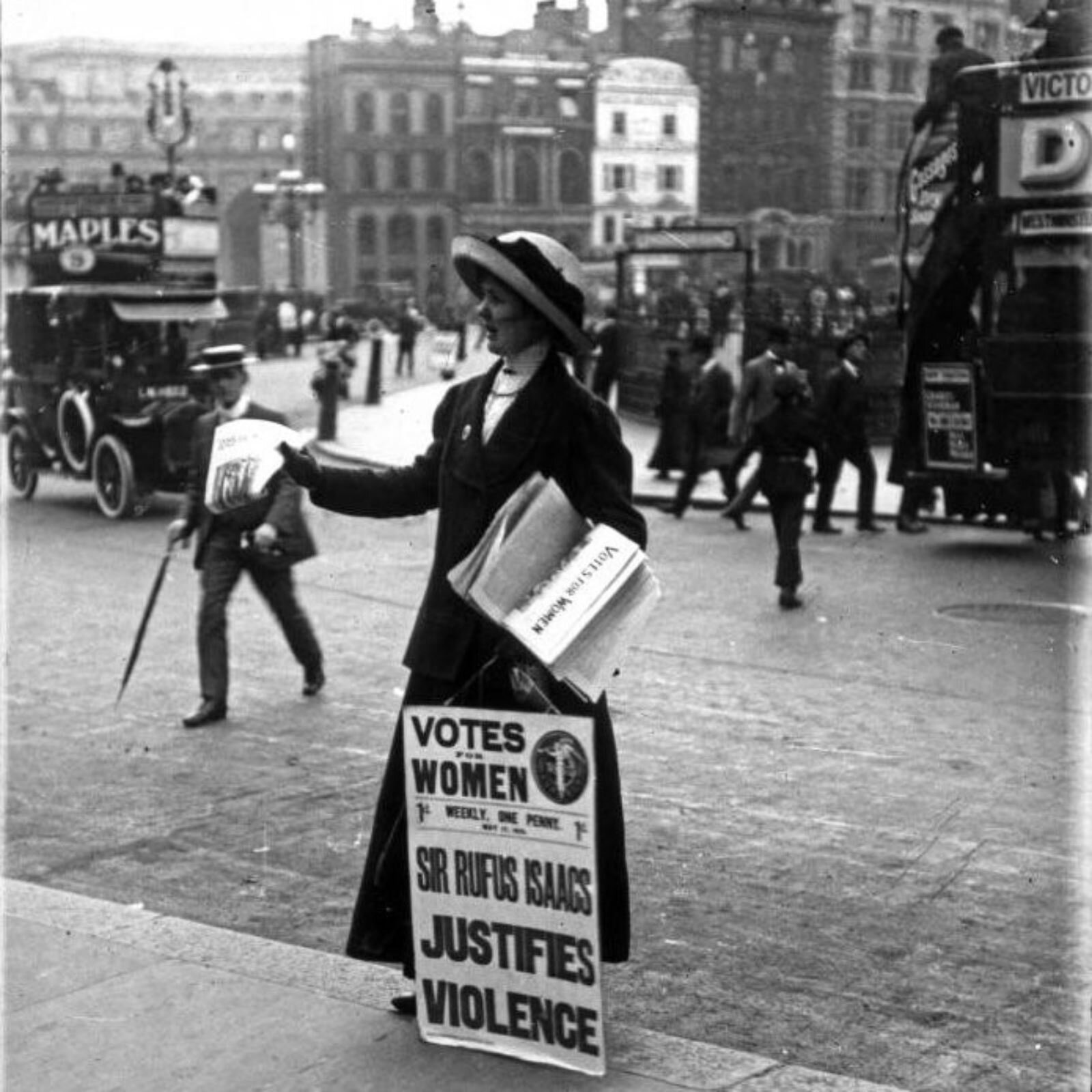
Read the interview and do the exercises below.
Gender Wage Gap 101
by Jill Sanders
This week I’ve decided to interview a few economics students at our university to find out a bit more about the situation on the job market that we women will be facing as soon as we graduate. Though I’m sure many of us are already in it, if you’re supplementingsupplementing your scholarship or parents’ budget with a few euros earned on your own. As we’re sitting around the table in our favourite coffee place, my interviewees start by telling me that what I’m about to learn won’t be pretty.
Monica: Everyone’s talking about waves of feminism and emancipationemancipation, but when we look at the job market, there’s one thing that screams “we’re not there yet!”, and that’s the gender wage gapgender wage gap. It’s there, even in the most developeddeveloped and liberal countries and, unfortunately, for the time being it’s not going away.
Brie: No, it’s not. We’ve got our plans and ambitions but financially, you have to factor that infactor that in – you’re going to be making less than a man in your position.
Jill Sanders: Wait, what? That’s so last century. Can they still do that?
Brie: Oh, come on. The glass ceilingglass ceiling is still going stronggoing strong. This mental barrier that stops women from seeking high‑power jobs and men from giving the highest positions to women is still present in many professions. Why should you be surprised that we also make less money for the same jobs and qualifications? Pay transparencytransparency is still uncommonuncommon, so many people don’t realise that it’s going on in their companies.
Sammy: Funny you should mention last century. Do you know there are studies of pay inequitypay inequity that go back many centuries? They found data showing that 700 years ago men used to make twice as much as women in Southern Europe. It wasn’t much better in the north, and it went on like that till the 19th century.
Monica: Yeah, but consider when women really went to work in great numbers – after the Second World War. You can’t talk about women in higher positions before the 70’s and 80’s and the waves of feminism. We made great progress then. Apparently, the wage gap went down to women making ‘only’ 30% less than men.
Jill Sanders: Wait, so it means that when a man got a dollar, a woman got 70 cents?
Sammy: Yep. And that was progress, mind you.
Brie: You can’t be so cynical, Sammy. Rome wasn’t built in a dayRome wasn’t built in a day. We have centuries of the ‘women are good for nothinggood for nothing’ mindset behind us.
Sammy: Some people are still back there.
Sammy was ready to get all riled upriled up, but Brie looked at her sternlysternly and cut her offcut her off.
Brie: Yes, but what I mean is that everything was changing. Women were starting to get better education, including professional training and university degrees. We were beginning to develop ambitions and looking for different jobs, but the job market was made up of men whose mentality had to change. It takes... well… generations. So the fact that the gap closed by halfclosed by half over just three decades actually means it’s going well.
Jill Sanders: OK, I get that. But it’s been another 30 years down that roaddown that road, so why is it still a problem? And how big of a problem, by the way?
This is where they all either laughed or looked at me with apologeticapologetic faces, then they all started talking at once, until Monica won the floorwon the floor.
Monica: I’m not even going to go into the ‘why’ because you can figure that out on your own. And no, Sammy, we’re not going there!
They all nodded, except for Sammy who really wanted to say something, but they hushed her.
Monica: Anyway, the answer to the ‘how big’ question is rather complex. We’ve just spent two weeks of our classes talking about it, so explaining it in one hour is difficult but… OK, look at it like this. The easiest thing to do is to take the so‑called raw dataraw data, that’s all the wages and salaries of all men and women, and just compare them. You know, mathematically. How much does an averageaverage woman make a week or a year compared to an average man.
Jill Sanders: OK, fair enough. And what will we get?
Brie: Both in the EU and in the US the wage gap is going to be a bit below 20%. That’s to say for every dollar or euro that a man makes, a woman makes a bit over 80 cents.
Monica: Yes, but it varies between countries, for instance in Luxemburg it’s over 98 cents, in Poland over 90, but in Estonia below 80.
Brie: Except raw data, like all general statistics, doesn’t show how it varies for different people. It’s much better to do the adjusted dataadjusted data, where you look at a particular social group. It might be white women with higher education, or women in a given company, or in a particular profession or region or area, e.g. a big city or a small town. Because the wage gap varies greatly between them.
Monica: That’s true and, unfortunately, it exists no matter how you slice the cakeno matter how you slice the cake. It’s just sometimes the disparitydisparity is worse and sometimes it’s better.
Sammy: Can I say something now? Don’t worry, I’m not going to talk about male chauvinismchauvinism. I don’t like that you want to dismissdismiss the ‘why’ of it. There are many factors at play here and I think society should be made aware of them so that they can be counteracted. There’s a bias against women in certain professions, like STEMSTEM or business, and women empowermentwomen empowerment could help them break it. There’s the fact that women generally choose to work different schedules and have different priorities than men. Another factor is that women are the ones who bear childrenbear children and still mostly the ones who take maternity leavematernity leave, and then it all affects the jobs we choose and the kind and amount of job experience we gain. These are all very important reasons why the wage gap still exists.
They all nodded their heads at that point and it dawned on meit dawned on me that we had only just covered the tip of the icebergthe tip of the iceberg. For instance, I’d love to know if anyone is trying to implement measures against such unfair treatment. So, I suggested we meet the following week for another round of coffee, carrot cake, and explanations of the world of economics and women’s place in it. And I’m going to turn this into a series of articles.
Źródło: Joanna Sobierska‑Paczesny, licencja: CC BY-SA 3.0.
1. compares pay discrimination to promoting discrimination against women? Tu uzupełnij 2. explains why it doesn’t make much sense to talk about wage gap before a certain point in history? Tu uzupełnij 3. explains why raw analysis isn’t very telling? Tu uzupełnij 4. gives an overview of the reasons why the wage gap still exists? Tu uzupełnij 5. implies it takes a long time to change the way people think? Tu uzupełnij 6. says that one article is not enough to give readers a decent picture of the problem? Tu uzupełnij 7. lists some factors that helped to decrease the wage gap? Tu uzupełnij 8. provides the simplest way of understanding how to compute the wage gap? Tu uzupełnij 9. suggests some students are already earning money? Tu uzupełnij
Słownik
/ əˈdʒʌstɪd ˈdeɪtə /
skorygowane dane (corrected figures)
/ əˌpɒləˈdʒetɪk /
przepraszające [przepraszający/przepraszająca] (expressing regretful acknowledgment of an offence or failure)
/ ˈævərɪdʒ /
przeciętny/przeciętna, uśredniony/uśredniona (showing typical value in a set of data)
/ ˈbeə ˈtʃɪldrən / / ˈbeə ˈtʃɪldrən /
rodzą dzieci [rodzić dzieci] (to give birth to a child)
/ ˈʃəʊvɪnɪzəm /
szowinizm (excessive or prejudiced support for one group or sex)
/ kləʊzd ˈbaɪ hɑːf / / kləʊs ˈbaɪ hɑːf /
zmniejszyła się o połowę [zmniejszyć się o połowę] (to limit by half)
/ kʌt hər 'ɒf / / kʌt ˈsʌmbədi 'ɒf /
przerywają jej [przerywać komuś] (to stop someone from doing something)
/ dɪˈveləpt /
rozwinięte [rozwinięty/rozwinięta] (advanced or elaborated to a specified degree)
/ dɪzˈmɪs /
zbagatelizować (to treat lightly)
/ dɪˈspærɪti /
dysproporcja (a great difference)
/ 'daʊn ðæt rəʊd /
w tę stronę (in that way/in the future)
/ ɪˌmænsɪˈpeɪʃn̩ /
emancypacja (the fact or process of being set free from legal, social, or political restrictions)
/ ɪmˈpaʊə /
wzmocnić pozycję (to give someone the authority or power to do something)
/ ˈfæktə ðæt ɪn /
wliczyć to (to include)
/ ˈdʒendə ˈweɪdʒ ɡæp /
zróżnicowanie wynagrodzeń według płci (the difference between median earnings of men and women)
/ glɑ:s ˈsiːlɪŋ /
szklany sufit (an unacknowledged barrier to advancement in a profession, especially affecting women)
/ ˌgəʊɪŋ strɒŋ / / ˈɡəʊ strɒŋ /
ma się dobrze [mieć się dobrze] (to be successful, healthy and do well)
/ gʊd fər 'nʌthetaɪŋ /
do niczego się nie nadają (of no use or value)
/ hʌʃ / / hʌʃ /
uciszają [uciszać] (to make someone be quiet)
/ ˌɪnsɪɡˈnɪfɪkənt /
nieistotny/nieistotna (unimportant to be worth considereation)
/ ˈɪt dɔːnd ˈɒn miː / / dɔːn ˈɒn ˈsʌmbədi /
dotarło do mnie [dotrzeć do kogoś] (to begin to be understood or realized by someone for the first time)
/ ˈɪts ðə ˈtɪp əv ði ˈaɪsbɜːɡ /
to czubek góry lodowej (a small part of something e.g. a problem)
/ məˈtɜːnɪti liːv /
urlop macierzyński (a period of absence from work granted to a mother before and after the birth of her child)
/ ˈnəʊ ˌmætər ˌhaʊ ju slaɪs ðə keɪk /
niezależnie od tego, od której strony na to popatrzysz (no matter what your perspective is; no matter how you try to portray something)
/ ˈpeɪ ˈekwɪti /
nierówność płac (the situation when employees do not receive the same pay for performing the same or similar job duties)
/ rɔː ˈdeɪtə /
dane pierwotne, nieprzetworzone (data that has not been processed for use)
/ raɪld ʌp / / raɪl ʌp /
poirytowany/poirytowana [poirytować] (to make somebody agitated and angry)
/ rəʊm ˈwɒznt bɪlt ɪn ə ˈdeɪ /
nie od razu Rzym zbudowano (duże zmiany, projekty wymagają czasu) (it takes a long time to create something complicated or impressive)
/ ˈstɜːnli /
stanowczo (in a serious and severe manner)
/ stem / / ˈsaɪəns tekˈnɒlədʒi ˌendʒɪˈnɪərɪŋ ˌmæthetaəˈmætɪks /
nauki ścisłe, technologia, inżynieria i matematyka, jako wspólne dziedziny nauczania (abbreviation for Science, Technology, Engineering and Mathematics as subjects of study)
/ ˈsʌplɪmentɪŋ / / ˈsʌplɪment /
uzupełniacie [uzupełniać] (to add an extra element or amount to something)
/ trænsˈpærənsi /
przejrzystość (the quality of being done in an open way without secrets)
/ ʌnˈkɒmən /
rzadko spotykany/ rzadko spotykana (out of the ordinary; unusual)
/ ˈweɪdʒ dɪˈspærɪti /
dysproporcja płac (the difference between the average pay of two different groups of people)
/ ˈwɪmɪn ɪmˈpaʊəmənt /
wzmocnienie pozycji kobiet (promoting of women’s sense of self‑worth)
/ wɒn ðə flɔː / / wɪn ðə flɔː /
przebiła się, zdobyła głos [przebić się, zdobyć głos] (to win the vote)