Przeczytaj
The picture below shows a bullied student. In this section you are going to read an article with some advice on how to prevent such situations.
Na zdjęciu widać nękaną uczennicę. Ta lekcja zawiera tekst, w którym znajdziesz wskazówki, w jaki sposób zapobiec takim sytuacjom.
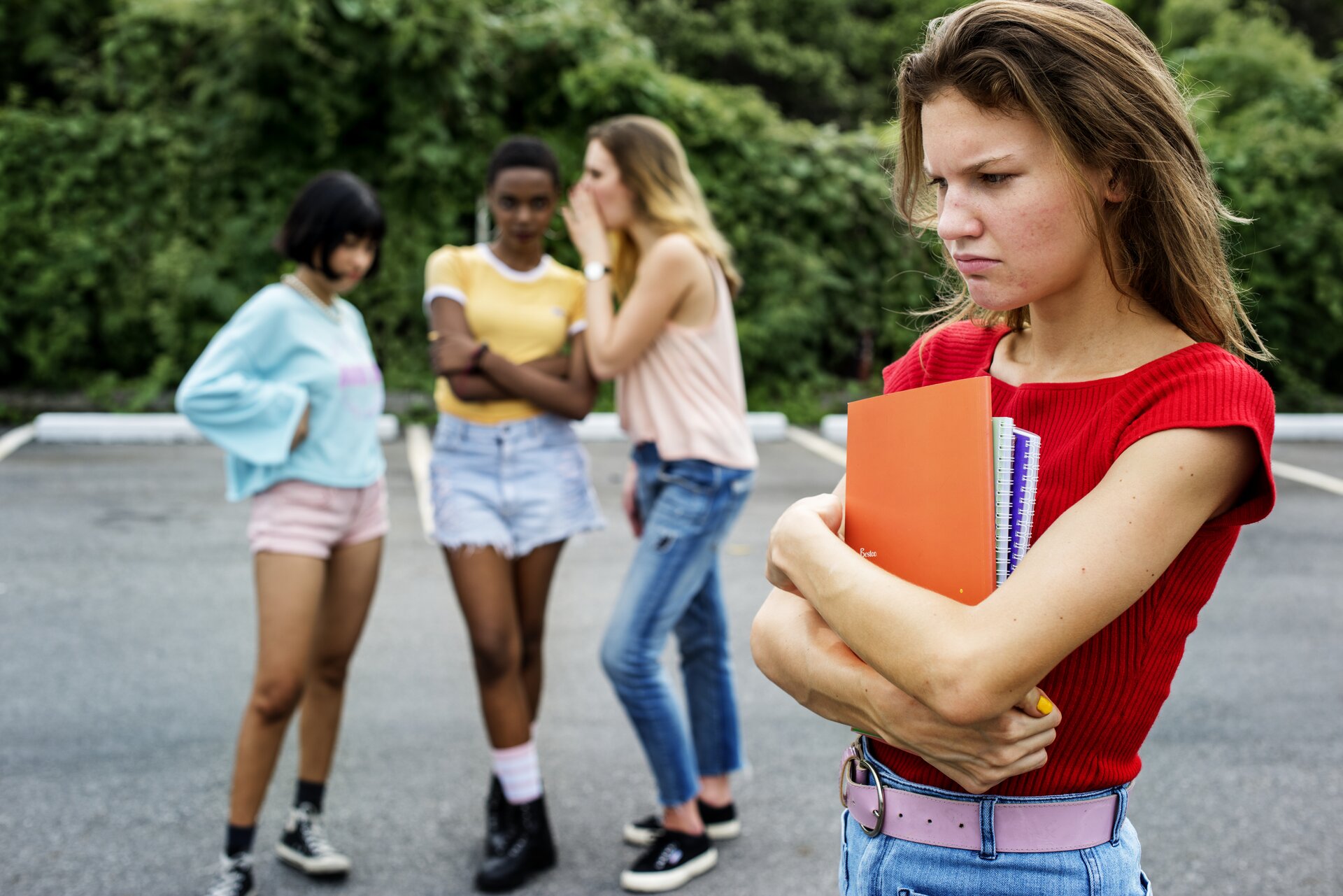
What are the three types of bullying? Study the first two paragraphs of the text to find out. Type in your answers in the gaps.
Jakie są trzy rodzaję nękania? Przeanalizuj pierwsze dwa akapity tekstu i wpisz swoje odpowiedzi w luki.
Read the text below and do the exercises.
Przeczytaj poniższy tekst i wykonaj ćwiczenia.
Stop bullying!Have you heard of bullying at school? UnfortunatelyUnfortunately, this phenomenon is not uncommonuncommon in schools all over the world. BullyingBullying means hurting other people repeatedlyrepeatedly and on purposeon purpose. The person who is always mean to someone is called a bully. Bullying usually stretches over a long period of time and may bring the victimvictim a lot of painpain.
Types of bullying
There are three main kinds of bullying. Verbal bullying is about teasingteasing or calling bad names. Physical bullying involves physical violencephysical violence such as pushing, kicking or pinchingpinching to name just a few. Sometimes physical bullying is about destroying other students’ propertyproperty, breaking or hiding their phones, clothes, or school suppliesschool supplies. Finally, there is emotional bullying. This may be difficult to see because it can take many forms. There’s spreading false rumoursfalse rumours and ignoring or laughing at somebody behind their back. Such behaviour makes the victims feel they don’t belong to the group.
Bullying victims may start dealing with many serious issues from skipping lessons to severe depressionsevere depression.
Causes
Why do some students become bullies in the first place? Many of them lack self‑confidenceself‑confidence and bullying gives them the feeling of being someone important. Very often they simply feel lonely and want to draw other people’s attentionattention. They may feel bad and want other people to feel the same way. Finally, they might have a lot of angeranger in them, and bullying others helps them let the anger go.
Bystanders and their actions
Whatever the reasonreason for bullying, none of it can be accepted. Hurting other people can never be justifiedjustified. We should stop it as soon as possible. If you see bullying in your school or class, you are a bystanderbystander. Bystanders can do three things about the situation. Some are afraid the bully will pick onpick on them, so out of fear of being bullied, they join the bully. In this way, they become bullies themselves. Another very common attitudeattitude is to ignore the whole situation and pretendpretend you don’t notice the bully or the victim. But it’s no good because if you do nothing, you say that bullying is ok. In this situation the bully wins, everyone in the class is worried and the victim keeps suffering. The only way outway out is to try and stop the bully. It may be very difficult and you need a lot of couragecourage to change things.
Solutions
The best way to stop the bullying and stay safe is to actact as a group. People say you should get together and say something or do something. Luckily, nowadays there are many organisations that give adviceadvice to bystanders and victims of bullying. They tell you what to say and what to do in your situation. There are psychologists and other experts you can turn toturn to. Their mission is to raise peoples’ awareness and make students realiserealise how important the role of bystanders is. Some schools even hold a special anti‑bullying week each November. They organize different workshopsworkshops and invite special guests who talk about their bullying experiences. Let’s all work together to stop bullying.
Źródło: Anna Lech, licencja: CC BY-SA 3.0.
Read the sentences below and choose all the correct answers. Sometimes only one answer is correct.
Przeczytaj poniższe zdania, a następnie wybierz wszystkie poprawne odpowiedzi. Czasami tylko jedna odpowiedź jest prawidłowa.
- A bully is
a) a person who gives advice on bullying.
b) a person who is the victim of abuse.
c) a person who's bad to other people.
- Pushing or kicking are examples of
a) emotional violence.
b) verbal violence.
c) physical violence.
- Spreading false rumours is an example of
a) emotional violence.
b) verbal violence.
c) physical violence.
- A bystander is a person who
a) is the victim of bullying.
b) sees bullying.
c) is an expert on bullying.
- If you ignore a bully, ...
a) you accept the situation.
b) you help the victim.
c) you stay safe.
Read the text again and decide if the following sentences are true or false.
Przeczytaj tekst ponownie, a następnie zdecyduj czy podane zdanie są prawdziwe, czy fałszywe.
- Bullying in schools is not very common.
TRUE FALSE
- Many people who act as bullies are not very self-confident.
TRUE FALSE
- Bystanders very often ignore bullying.
TRUE FALSE
- The best way to stop a bully is to act alone.
TRUE FALSE
- Schools organize anti-bullying weeks once a year.
TRUE FALSE
Drag and drop the expressions into the correct category. There should be three elements in each.
Przeciągnij wyrażenia do odpowiedniej grupy. w każdej z nich powinny znaleźć się 3 wyrażenia.
Słownik
/əˈbjuːs/
nadużycie, przemoc
/ ækt /
zachowywać się
/ ədˈvaɪs /
rada
/ ˈæŋɡə /
gniew
/ əˈʃeɪmd /
zawstydzony
/ əˈtenʃn̩ /
uwaga
/ ˈætɪtjuːd /
postawa
/ ˈbʊli /
nękanie
/ ˈbaɪstændə /
obserwator, świadek
/ ˈkʌrɪdʒ /
odwaga
/ ɪmˈbærəsɪŋ /
żenujące, krępujące
/ ˈfɔːls ˈruːməz /
fałszywe pogłoski, plotki
/ ˈɡəʊ ˈvaɪrəl /
stać się popularnym w internecie
/ ɡest /
gość
/ ɪnˈtɪmɪdeɪtɪŋ /
zastraszające
/ ˈdʒʌstɪfaɪd /
usprawiedliwiony
/ læk /
brak
/ mɔːr ɪmˈpɔːtntli /
co więcej
/ ˈnɑːsti /
złośliwy, niemiły
/ ˈɒn ˈpɜːpəs /
celowo
/ peɪn /
ból
/ ˈfɪzɪkl̩ ˈvaɪələns /
przemoc fizyczna
/ ˈpɪk ɒn /
czepiać się (kogoś)
/ ˈpɪɡi nəʊz /
świński nos
/ ˈpɪntʃɪŋ /
szczypanie
/ prɪˈtend /
udawać
/ prɪˈvent /
zapobiegać
/ ˈprɒpəti /
własność
/ reɪz əˈweənəs /
podnosić świadomość
/ ˈredɪ meɪd /
gotowe
/ ˈrɪəlaɪz /
zdać sobie sprawę
/ ˈriːzən /
powód
/ rɪˈpiːtɪdli /
wielokrotnie
/ rɪˈkwaɪə /
wymagać
/ sku:l səˈplaɪz /
przybory szkolne
/ ˈsi: ə ˈspeʃəlɪst /
konsultować się ze specjalistą
/ self ˈkɒnfɪdəns /
pewność siebie
/ sɪˈvɪə dɪˈpreʃn̩ /
ciężka depresja
/ ʃeə /
udostępniać, dzielić
/ skɪp /
opuszczać
/ səˈluːʃn̩ /
rozwiązanie
/ spred /
propagować, szerzyć
/ stænd juˈnaɪtɪd /
być zjednoczonym
/ stretʃ /
rozciągać się, trwać
/ ˈsʌfə /
cierpieć
/ ˌsuːɪˈsaɪdəl əˈtempt /
próba samobójcza
/ teɪl /
ogon
/ ˈtiːzɪŋ /
dokuczanie
/ tekˈnɒlədʒi ɡiːk /
osoba zwariowana na punkcie technologii
/ tekst ˈmesɪdʒ /
sms, wiadomość tekstowa
/ tu ˈmeɪk ˈthetaɪŋz wɜːs /
na domiar złego
/ ˈtɜ:n tuː /
zwrócić się do
/ twaɪs /
dwa razy
/ ʌnˈkɒmən /
niepopularny
/ ʌnˈfɔːtʃʊnətli /
niestety
/ ʌnˈwɒntɪd bɪˈheɪvjə /
niechciane zachowania
/ ˈvɪktɪm /
ofiara
/ ˈweɪ aʊt /
droga wyjścia
/ ˈwɪtnəs /
być świadkiem
/ ˈwɜːkʃɒps /
warsztaty
Źródło: GroMar Sp. z o.o., licencja: CC BY‑SA 3.0