Nagranie dźwiękowe dotyczące rozwoju i zdrowia człowieka
Family planning
Prospective parents, when deciding to conceive a child, should be prepared to perform one of the most important roles of their lives. It involves responsibility for the child from the moment of its conception. In order not to become parents by accident, it is worth consulting a gynecologist who will present methods of birth control. They are divided into natural and artificial ones. Natural methods are based on the observation of the woman's sexual cycle and the accompanying symptoms on the basis of which fertile and infertile days can be determined. These methods allow the woman to know how her body functions. However, the irregularity of cycles and factors such as illness, physical exertion, and stress can disrupt the functioning of the body, disturb the course of the cycle and change the date of ovulation. For these reasons, natural methods are unreliable.
R1WxTIgUtCUaS
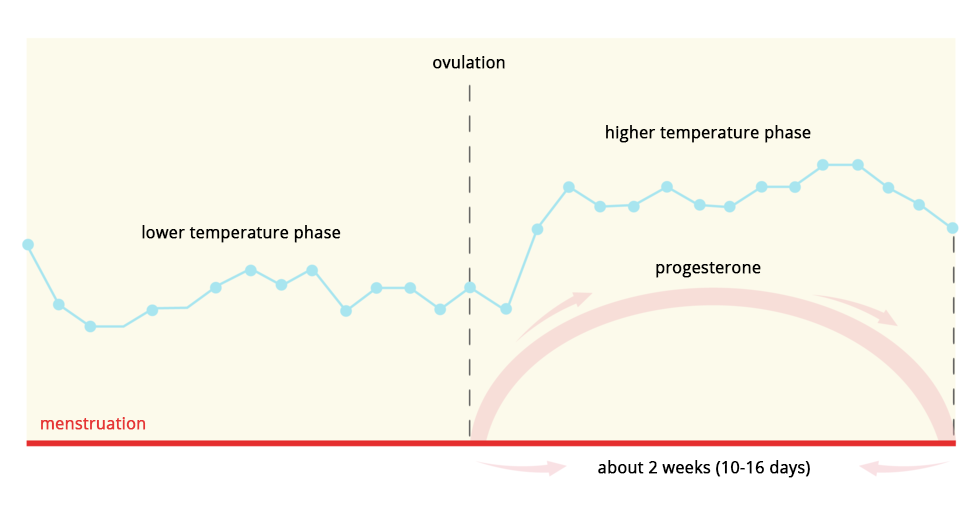
Ilustracja przedstawia zmiany temperatury ciała kobiety (niebieska linia z punktami) w czasie cyklu miesiączkowego. Od lewej na czerwonej linii u dołu podpisana miesiączka. W środku przerywana linia, oznaczająca owulację. Za nią liliowy łuk, symbolizujący poziom progesteronu w czasie od dziesięciu do szesnastu dni. Temperatura w tym czasie jest podwyższona. Na ilustracji są podpisy: owulacja, faza obniżonej temperatury, menstruacja, faza wyższej temperatury, progesteron, około 2 tygodnie (10-16 dni). Ilustracja pokazuje zmiany temperatury ciała (niebieska linia z punktami) podczas cyklu miesiączkowego. The illustration shows changes in body temperature (blue line with points) during the menstrual cycle. From the left on the red line at the bottom signed menstruation. In the middle, a dotted line, signifying ovulation. Behind her, a lilac bow, symbolizing the level of progesterone in ten to sixteen days. The temperature is elevated at this time. The captions are: ovulation, lower temperature phase, menstruation, higher temperature phase, progesterone, about 2 weeks (10-16 days).
Body Temperature Changes in the Menstrual Cycle
Source: Tomorrow Sp. z o.o., licencja: CC BY 3.0.
RgFK9mX7lytHu
Exercise 1
Ćwiczenie wybierz prawidłową odpowiedź. How the ovulation affects the temperature of the woman's body Możliwe odpowiedzi: 1. it results with a sudden drop in temperature immediately after ovulation, 2. it results with a slow reduction in temperature between ovulation and menstruation, 3. it results with a sudden increase in temperature immediately after ovulation, 4. it results with a slow increase in temperature between ovulation and menstruation
Ćwiczenie wybierz prawidłową odpowiedź. How the ovulation affects the temperature of the woman's body Możliwe odpowiedzi: 1. it results with a sudden drop in temperature immediately after ovulation, 2. it results with a slow reduction in temperature between ovulation and menstruation, 3. it results with a sudden increase in temperature immediately after ovulation, 4. it results with a slow increase in temperature between ovulation and menstruation
Based on the illustration of "Body Temperature Changes in the Menstrual Cycle", determine how the ovulation affects the temperature of the woman's body
it results with a sudden drop in temperature immediately after ovulation
it results with a slow reduction in temperature between ovulation and menstruation
it results with a sudden increase in temperature immediately after ovulation
it results with a slow increase in temperature between ovulation and menstruation
R6Skc6fxKHUsp
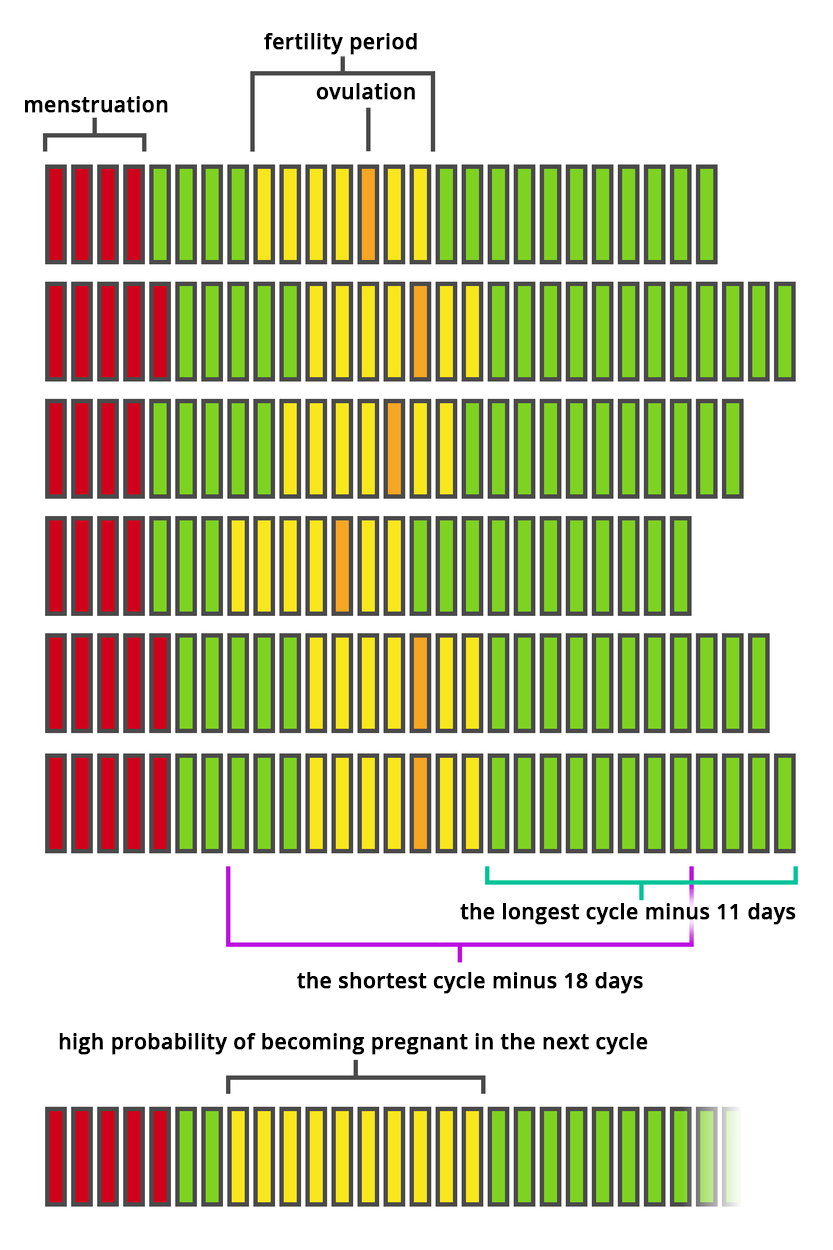
Znając długość poszczególnych cykli menstruacyjnych w ciągu ostatnich sześciu miesięcy, można obliczyć, w których dniach następnego cyklu prawdopodobieństwo zajścia w ciążę będzie najwyższe. Podpisano: menstruation; fertility period; ovulation; the longest cycle minus 11 days; the shortest cycle minus 18 days; high probabity of becoming pregnat in the next cycle. Knowing the length of individual menstrual cycles during the last six months, it is possible to calculate in which days of the next cycle the probability of becoming pregnant will be the highest.
Knowing the length of individual menstrual cycles during the last six months, it is possible to calculate in which days of the next cycle the probability of becoming pregnant will be the highest.
Source: GroMar Sp. z o.o., licencja: CC BY-SA 3.0.
When determining the days in which intercourse is likely to lead to pregnancy, the presence of a viable ovum and sperm life in the woman's reproductive tract should be considered. The ovum is capable of fertilization for 24‑48 hours. Sperm in female reproductive tracts lives for 3‑4 days. Therefore, fertilization may occur when sexual intercourse occurred up to 4 days before ovulation and up to 2 days after ovulation.
If ovulation falls on the 14th day of the cycle, then pregnancy can occur between the 10th and 16th day. In the case of irregular menstrual periods, the length of the shortest and longest cycle in the last six months is taken into account. 11 days are deducted from the longest cycle and 18 days from the shortest. The numbers obtained indicate the days of the cycle between which conception is very likely.
Type of method
The way to prevent pregnancy – refraining from intercourse when
thermal
daily body temperature measurements (in the case of full health) just before ovulation show a temperature drop of 0.2‑0.3°C, followed by an increase of 0.3‑0.4 degrees.
symptomatic
mucus secreted by the cervix observed over the next days is sticky and stretchy.
thermal‑symptomatic
at least 2 indicators of fertility confirm that the woman entered the fertile period.
Artificial methods consist in applying measures that interfere with the functioning of a woman's body. They can change the course of the menstrual cycle, prevent sperm from entering the female genital tract, destroy sperm, impede fertilization or prevent the implantation of the embryo in the uterus. Studies show that the most effective are hormonal contraceptivescontraceptioncontraceptives. Their use should be under strict medical supervision, as they may cause side effects and various ailments, also outside the reproductive system.
RRqJm4jTovKzh
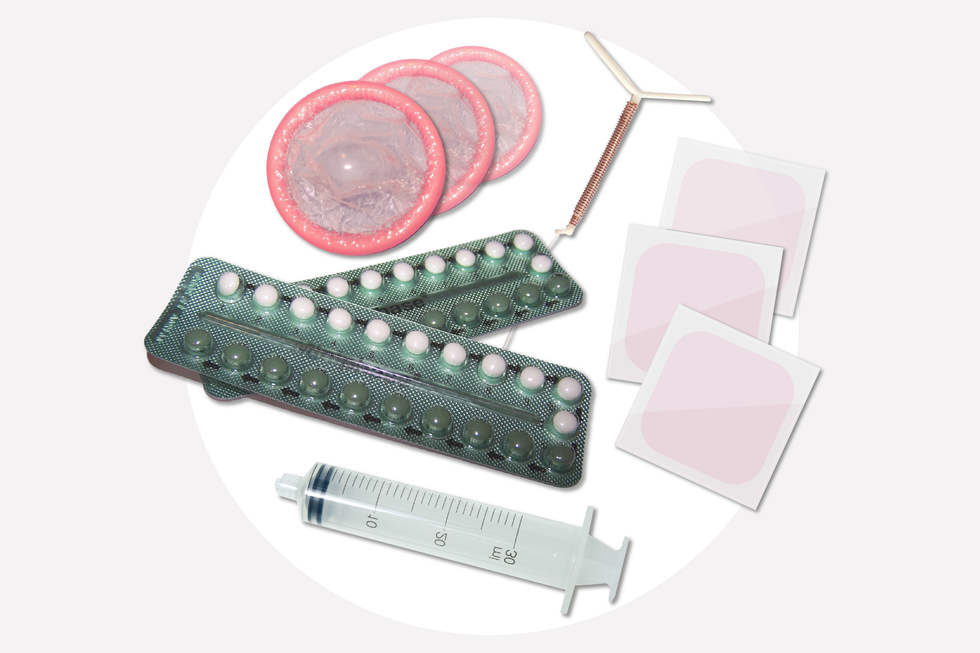
Fotografia przedstawia środki antykoncepcyjne. U góry z lewej 3 różowe, zwinięte prezerwatywy. Obok biała kształtka z nawiniętym miedzianym drucikiem, czyli spirala. W prawo 3 bladoróżowe plastry hormonalne. W centrum dwa blistry z tabletkami hormonalnymi. U dołu plastikowa strzykawka, symbolizująca zastrzyk hormonalny. The photograph shows contraceptives. At the top left 3 pink, rolled up condoms. Next to it is a white shape with a copper wire wound around it, ie a spiral. Right 3 pale pink hormonal patches. In the center two blisters with hormonal tablets. At the bottom, a plastic syringe, symbolizing a hormonal injection.
Contraceptives
Source: Nadina Wiórkiewicz, Autor nieznany, Ceridwen, Tomorrow Sp. z o.o., hsedolivia, http://commons.wikimedia.org, licencja: CC BY-SA 2.0.
Contraceptives
The principle
condom
A rubber barrier preventing the sperm from entering the uterus; it also limits the risk of sexually transmitted diseases.
cervical cap
A rubber barrier preventing the sperm from entering the uterus.
spermicides
Neutralize sperm and also contain agents protecting against sexually transmitted diseases.
intrauterine device
Prevent the implantation of the embryo in the uterus.
hormonally active agents
Contain hormones that mainly prevent the maturation of ovarian follicles.
Task 1
What are the advantages and disadvantages of natural and artificial methods of contraception?
RYNf5YY2EW87O
Exercise 2
Complete the text. The natural methods of (tu uzupełnij) 1. birth, 2. cervix, 3. doctor, 4. temperature control consist in the observation of changes accompanying the woman's sex cycle. Based on symptoms such as body (tu uzupełnij) 1. birth, 2. cervix, 3. doctor, 4. temperature change or change in the mucus properties secreted by the (tu uzupełnij) 1. birth, 2. cervix, 3. doctor, 4. temperature, fertile and infertile days can be determined. However, these methods can be unreliable - according to the current state of knowledge, the use of hormonal contraceptives is considered the most effective method of preventing pregnancy. However, due to the possibility of undesirable effects, the use of these agents is possible only after prior consultation with a (tu uzupełnij) 1. birth, 2. cervix, 3. doctor, 4. temperature.
Complete the text. The natural methods of (tu uzupełnij) 1. birth, 2. cervix, 3. doctor, 4. temperature control consist in the observation of changes accompanying the woman's sex cycle. Based on symptoms such as body (tu uzupełnij) 1. birth, 2. cervix, 3. doctor, 4. temperature change or change in the mucus properties secreted by the (tu uzupełnij) 1. birth, 2. cervix, 3. doctor, 4. temperature, fertile and infertile days can be determined. However, these methods can be unreliable - according to the current state of knowledge, the use of hormonal contraceptives is considered the most effective method of preventing pregnancy. However, due to the possibility of undesirable effects, the use of these agents is possible only after prior consultation with a (tu uzupełnij) 1. birth, 2. cervix, 3. doctor, 4. temperature.
Complete the text.
cervix, doctor, birth, temperature
The natural methods of ...................... control consist in the observation of changes accompanying the woman's sex cycle. Based on symptoms such as body ...................... change or change in the mucus properties secreted by the ......................, fertile and infertile days can be determined. However, these methods can be unreliable - according to the current state of knowledge, the use of hormonal contraceptives is considered the most effective method of preventing pregnancy. However, due to the possibility of undesirable effects, the use of these agents is possible only after prior consultation with a .......................
R9kZIDCkFh9Hj
Exercise 3
Move the names of contraception to the appropriate group Natural methods: Możliwe odpowiedzi: 1. thermal and symptomatic method, 2. use of condoms, 3. use of cervical caps, 4. use of intrauterine devices, 5. hormonal contraception, 6. symptomatic method, 7. thermal method, 8. use of spermicides Artificial methods: Możliwe odpowiedzi: 1. thermal and symptomatic method, 2. use of condoms, 3. use of cervical caps, 4. use of intrauterine devices, 5. hormonal contraception, 6. symptomatic method, 7. thermal method, 8. use of spermicides
Move the names of contraception to the appropriate group Natural methods: Możliwe odpowiedzi: 1. thermal and symptomatic method, 2. use of condoms, 3. use of cervical caps, 4. use of intrauterine devices, 5. hormonal contraception, 6. symptomatic method, 7. thermal method, 8. use of spermicides Artificial methods: Możliwe odpowiedzi: 1. thermal and symptomatic method, 2. use of condoms, 3. use of cervical caps, 4. use of intrauterine devices, 5. hormonal contraception, 6. symptomatic method, 7. thermal method, 8. use of spermicides
Move the names of contraception to the appropriate group
hormonal contraception, use of cervical caps, use of condoms, use of intrauterine devices, symptomatic method, thermal and symptomatic method, use of spermicides, thermal method
Natural methods:
Artificial methods:
Summary
Estrogens and progesterone affect the uterus, preparing it for embryo implantation.
RyLYD4FalyrN8
Dokończ zdania. How was this lesson? Did you like it? Finish selected sentences. Propozycje It was easy for me (uzupełnij), It was difficult for me (uzupełnij), Today I learned (uzupełnij), I understood that (uzupełnij), It surprised me (uzupełnij).
Dokończ zdania. How was this lesson? Did you like it? Finish selected sentences. Propozycje It was easy for me (uzupełnij), It was difficult for me (uzupełnij), Today I learned (uzupełnij), I understood that (uzupełnij), It surprised me (uzupełnij).
How was this lesson? Did you like it? Finish selected sentences.
How was this lesson? Did you like it? Finish selected sentences.
Homework
Task 2.1
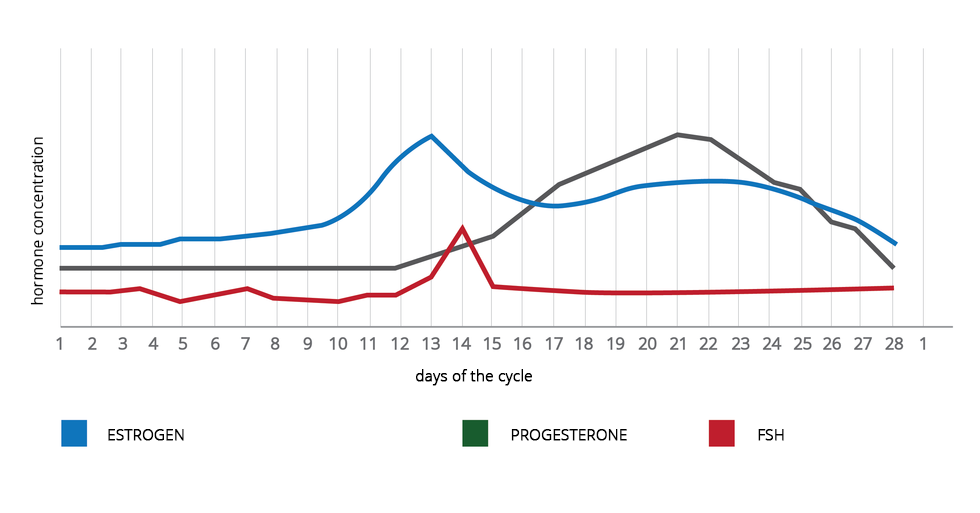
Analyze the change in hormone levels in the woman's sexual cycle. Specify the date of ovulation. Determine if the egg cell has been fertilized in this cycle. Justify your answer with one argument.
R1ej8VmYUjmGt
Schemat przedstawiający regulację hormonalną cyklu menstruacyjnego wskazujący na zapłodnienie komórki jajowej. Na schemacie są opisy: stężenie hormonów, dni cyklu, estrogeny, progesteron, FSH. Diagram showing the hormonal regulation of the menstrual cycle indicating the fertilization of an egg. The diagram includes descriptions of: hormone concentration, days of the cycle, estrogen, progesterone, FSH . Co to jest estrogen?
Hormonal regulation of the menstrual cycle
Source: Tomorrow Sp. z o.o., licencja: CC BY 3.0.
Keywords
methods of contraception, contraception, ovulation
antykoncepcja – metody zapobiegające zajściu w ciążę; polegają na niedopuszczaniu do zapłodnienia lub zagnieżdżania się zapłodnionej komórki jajowej w macicy
a period of relative infertility
a period of relative infertility
RgWNn5eA8WZum
Nagranie dźwiękowe słówka a period of relative infertility
Nagranie dźwiękowe słówka a period of relative infertility
Nagranie dźwiękowe słówka a period of relative infertility
okres względnej niepłodności – okres, który trwa od początku menstruacji do kilku dni po niej, kiedy jajeczkowanie nie powinno mieć miejsca; jednak z powodu zaburzeń cyklu płciowego może dojść do uwolnienia gotowej do zapłodnienia komórki jajowej