Przeczytaj
Border collies are considered to be one of the most talented and hardworking dogs. They can easily impress with their intelligence and eagerness to please people. Did you know that those smart creatures also make great search and rescue dogs? The picture below shows a border collie jumping over an obstacle. Why is it doing that? What other obstacles are there for it? Read the text to find out.
Border collie są uważane za jedne z najbardziej utalentowanych i pracowitych psów. Z łatwością mogą zaimponować swoją inteligencją i chęcią przypodobania się człowiekowi. Czy wiesz, że te mądre stworzenia są również świetnymi psami poszukiwawczymi i ratowniczymi? Na poniższym zdjęciu widać psa rasy border collie przeskakującego przez przeszkodę. Dlaczego to robi? Jakie inne przeszkody na niego czekają? Przeczytaj tekst, aby się tego dowiedzieć.
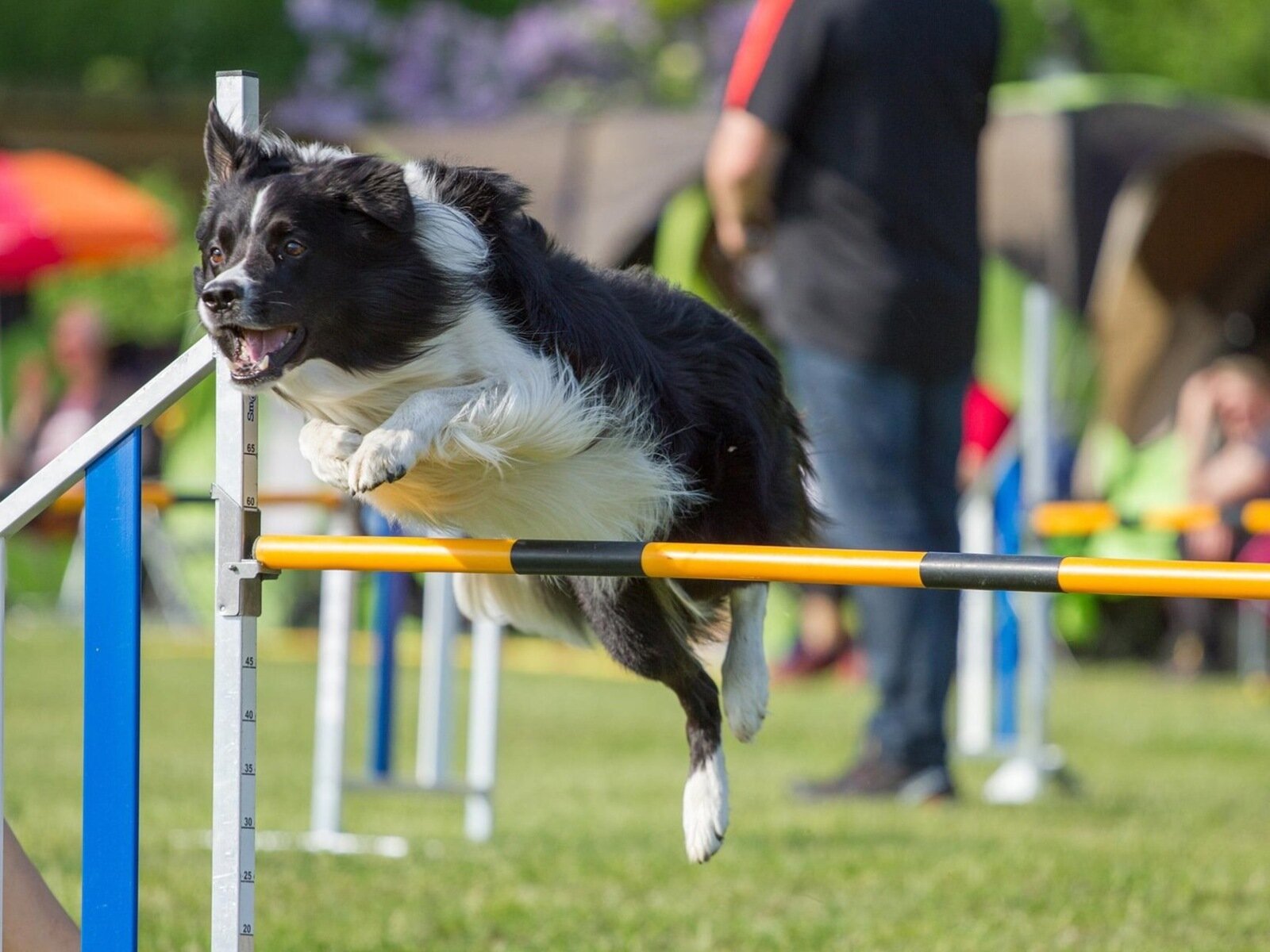
Read the text to learn more about a sport called dog agility. Have you heard about it?
Sport For DogsDog agilityDog agility can be traced back to an event at the Crufts Dog Show in the United Kingdom in the late 1970s. During the break, dogs were running around a course similar to horse jumping coursescourses to entertainentertain the audience. It has now become very popular, with big tournamentstournaments taking place all over the world. Dog agility is a dog sport in which a handlerhandler guides a dog through an obstacle courseobstacle course in a time and accuracy competition. Dogs are allowed to run off leadoff lead, but they don’t get treats or toys as rewards. The handler is not allowed to touch either the dog or the obstacles. 1..... . It means that the level of communication between the handler and the dog must be exceptionalexceptional.
An agility course is made up of a collection of standard obstacles which are arranged by a judge in a design of his or her choice in a designateddesignated area. Grass, rubberrubber, dirtdirt, or special mattingmatting can be used as the surface. The obstacles may be labelledlabelled with numbers indicating the order in which they must be performedperformed, depending on the type of competition. Courses are complexcomplex enough that a dog would be unable to complete them without human assistanceassistance. In a competition, the handler must evaluateevaluate the course, choose appropriate handling methodshandling methods, and guide the dog through the course with precision and speed. 2..... . This also refers to the strengths and weaknesses of different dogs and handlers.
Before the competition begins, handlers are given a short walk‑throughwalk‑through (usually 5 to 25 minutes) due to the fact that each course is uniqueunique. 3..... . In this way, they can see how they can best guide their dogs to get the most accurate and quickest pathpath through the obstacles. Because the handler's path differs from the dog’s, the handler may spend a significant amount of time planning for the whole route, which in a competition is only a briefbrief run.
Contact obstacles are made up of planksplanks and rampsramps, and they require dogs to climb and descenddescend the obstacle while placing a paw on a “contact zone,” which is a coloured area. Other obstacles include crossoverscrossovers, tunnels, towers, or seesawseesaw. Dogs are also expected to perform different jumps and cross over various hurdleshurdles. 4..... .RibbonsRibbons, rosettesrosettes, trophiestrophies and medals are common rewards for dogs.
According to handler surveyssurveys, between 32 to 41.7% of dogs are injured while participating in agility events. StrainsStrains, sprainssprains, and contusionscontusions were the most prevalentprevalent types of injuries. Border Collies are more likely than other breedsbreeds to get hurt. According to reports, the injury rate varies by country, with Australia reporting the greatest percentage of injuries and the United States having the lowest.
Źródło: Dorota Giżyńska , licencja: CC BY-SA 3.0.
2. 1. He or she can only use spoken commands or body signals, 2. During this period, all handlers competing in a given class are allowed to walk around the course without their dogs, 3. There are numerous ways of making up for the natural differences in human and dog speeds, 4. The dog and the handler get one chance to complete the course, 5. They are assessed based on both speed and accuracy
3. 1. He or she can only use spoken commands or body signals, 2. During this period, all handlers competing in a given class are allowed to walk around the course without their dogs, 3. There are numerous ways of making up for the natural differences in human and dog speeds, 4. The dog and the handler get one chance to complete the course, 5. They are assessed based on both speed and accuracy
4. 1. He or she can only use spoken commands or body signals, 2. During this period, all handlers competing in a given class are allowed to walk around the course without their dogs, 3. There are numerous ways of making up for the natural differences in human and dog speeds, 4. The dog and the handler get one chance to complete the course, 5. They are assessed based on both speed and accuracy
TRUE FALSE
2. The course is designed in such a way as to make it possible for the dog to complete it on its own.
TRUE FALSE
3. Planning the route before a competition usually takes more time than the run itself.
TRUE FALSE
4. Dogs are awarded points for precision and flexibility.
TRUE FALSE
5. In the U.S.A. there are more dog injuries than in other parts of the world.
TRUE FALSE
a) a handler
b) a lead
c) an obstacle course
d) human assistance
2. The surface which can be used on an obstacle course can be:
a)rubber
b) dirt
c) matting
d) path
3. Obstacles may include:
a) planks
b) ramps
c) towers
d) seesaws
4. The most common rewards for dogs are:
a) snacks
b) rosettes
c) ribbons
d) trophies
5. Dogs can suffer from the following injuries:
a) strains
b) sprains
c) breeds
d) contusions
Słownik
/ ˈækjərəsi /
dokładność
/ əˈsɪstəns /
pomoc
/ bɑːk /
szczekać
/ briːdz / / briːd /
rasy [rasa]
/ briːf /
krótki/krótka
/ klɔːz / / klɔː /
pazury [pazur]
/ ˈkɒlə /
obroża
/ ˈkɒmpleks /
skomplikowany/skomplikowana
/ kənˈtjuːʒn̩z / / kənˈtjuːʒn̩ /
stłuczenia [stłuczenie]
/ ˈkɔːsɪz / / kɔːs /
tu: tory [tor] (trasa, po której coś lub ktoś się porusza)
/ ˈkrɒsəʊvəz / / ˈkrɒsəʊvə /
przejścia [przejście], tunele [tunel] (rodzaj przeszkody)
/ dɪˈsend /
schodzić z czegoś
/ ˈdezɪɡneɪtɪd /
wyznaczony/wyznaczona
/ dɜːt /
ziemia, gleba
/ dɒg əˈdʒɪləti /
agility (sport dla psów polegający na jak najszybszym pokonaniu toru przeszkód)
/ ˌentəˈteɪn /
zabawiać, zapewniać rozrywkę
/ ɪˈvæljʊeɪt /
oceniać
/ ɪkˈsepʃn̩əl /
wyjątkowy/wyjątkowa
/ˈhænd.lər/
treser/treserka
/ ˈhændl̩ɪŋ ˈmethetaədz / / ˈhændl̩ɪŋ ˈmethetaəd /
metody prowadzenia [metoda prowadzenia]
/ ˈhɑːnəs /
tu: szelki dla psa
/ ˈhɜːdl̩z / / ˈhɜːdl̩ /
płotki [płotek] (rodzaj przeszkody)
/ ˈleɪbl̩d / / ˈleɪbl̩ /
oznaczony/oznaczona [oznaczać]
/ liːd /
smycz
/ ɒf liːd /
bez smyczy
/ ˈmætɪŋ /
mata
/ ˈɒbstəkl̩ kɔːs /
tor przeszkód
/ pɑːtheta /
ścieżka
/ pɔː /
łapa
/ pəˈfɔːmd / / pəˈfɔːm /
wykonany/wykonana [wykonywać]
/ plæŋks / / plæŋk /
deski [deska]
/ ˈprevələnt /
przeważający/przeważająca
/ ræmps / / ræmp /
rampy [rampa]
/ ˈrɪbənz / / ˈrɪbən /
wstęgi [wstęga]
/ rəʊˈzets / / rəʊˈzet /
kotyliony [kotylion]
/ ˈrʌbə /
guma (materiał)
/ ˈsiːsɔː /
huśtawka
/ snaʊt /
pysk
/ spreɪnz / / spreɪn /
zwichnięcia [zwichnięcie]
/ streɪnz / / streɪn /
naderwania [naderwanie]
/ səˈveɪz / / səˈveɪ /
ankiety [ankieta]
/ ˈtɔːnəmənts / / ˈtɔːnəmənt /
turnieje [turniej]
/ ˈtrəʊfɪz / / ˈtrəʊfi /
trofea [trofeum], puchary [puchar]
/ juːˈniːk /
jedyny w swoim rodzaju
/ wæɡ /
machać, merdać
/ wɔːk thetaruː /
przećwiczenie, przejście
Źródło: GroMar Sp. z o.o., licencja: CC BY‑SA 3.0