Nationalist ideologies flourished and gained popularity at the end of the 19th century. The national community was perceived as a whole that was superior to the state and the individual, homogenous in terms of ethnicity, religion, spirituality and culture, as well as having its own distinctive language and (especially as far as Central and Eastern Europe are concerned) religion. There were many nationalist ideologies, as every nation developed their own variety. In the most radical forms of nationalist ideologies, the conviction of superiority of one's own nation over others was the intertwined with a sense of a strong threat to national interests. As a result, racist and antisemitic arguments were used.
R1ZlDNgfxvqLR
Exercise 1
Choose the statements which summarize the theories of Renan. Możliwe odpowiedzi: 1. Race determines national identity., 2. While defining a nation, the spiritual community (consciousness) prevails over language, religion or the geographical location., 3. Racial factors are correctly considered the most vital elements that define national identity., 4. Commong language and religion are the most important when defining a nation., 5. There are various forms of human communities (societies) bound by language, religion or territory and not all of them can be denominated as nations., 6. Racial factors are incorrectly considered the most vital elements that define national identity.
Choose the statements which summarize the theories of Renan. Możliwe odpowiedzi: 1. Race determines national identity., 2. While defining a nation, the spiritual community (consciousness) prevails over language, religion or the geographical location., 3. Racial factors are correctly considered the most vital elements that define national identity., 4. Commong language and religion are the most important when defining a nation., 5. There are various forms of human communities (societies) bound by language, religion or territory and not all of them can be denominated as nations., 6. Racial factors are incorrectly considered the most vital elements that define national identity.
Choose the statements which summarize the theories of Renan.
Race determines national identity.
While defining a nation, the spiritual community (consciousness) prevails over language, religion or the geographical location.
Racial factors are correctly considered the most vital elements that define national identity.
Commong language and religion are the most important when defining a nation.
There are various forms of human communities (societies) bound by language, religion or territory and not all of them can be denominated as nations.
Racial factors are incorrectly considered the most vital elements that define national identity.
RVwyuiw2Dj4Ha
Exercise 2
According to social Darwinism... Możliwe odpowiedzi: 1. international competition and conficts are reflect the forces of nature., 2. international conflicts run against the idea of national egoism., 3. nations evolve into states.
According to social Darwinism... Możliwe odpowiedzi: 1. international competition and conficts are reflect the forces of nature., 2. international conflicts run against the idea of national egoism., 3. nations evolve into states.
According to social Darwinism...
international competition and conficts are reflect the forces of nature.
international conflicts run against the idea of national egoism.
nations evolve into states.
Task 1
Listen to an excerpt of a popular science article. What were the results of the vicinity of different religions at the turn of the 19th and 20th century?
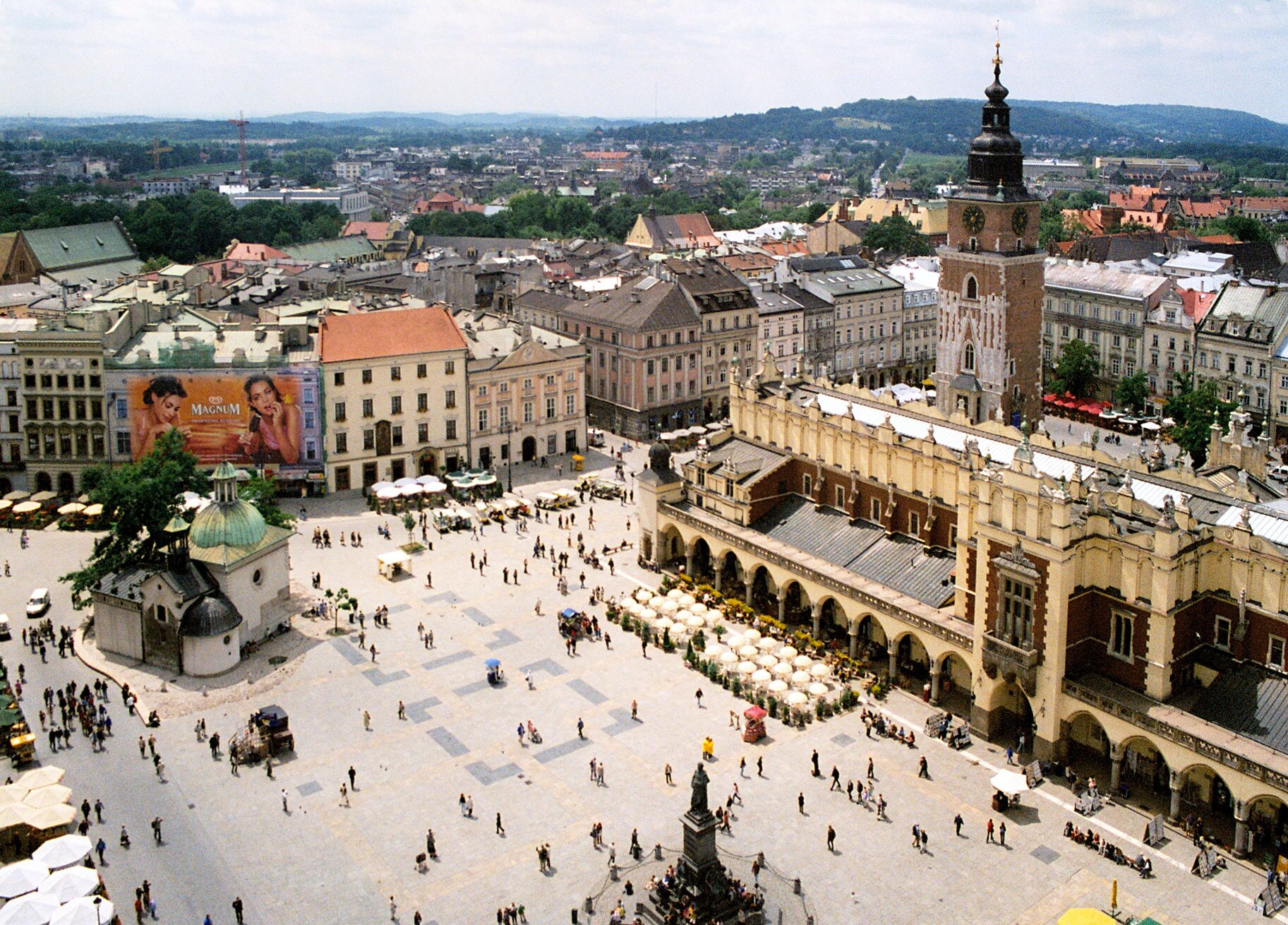
Fotografia barwna przedstawiająca rynek krakowski - widok z lotu ptaka.
Cracow Market Square - aerial view
Source: Pko, licencja: CC BY 2.5.
„Three regions of Europe with no definite borders [...] should be confronted with traditional cultural differences, resulting from religious differences between Western (Latin) Christianity (divided into Protestantism and Catholicism), Eastern Greco‑Slavic Christianity and the oriental influences from the Ottoman Empire (before World War I, Turkish lands shrunk into a small territory over the Bosphorus, but the tradition and structures stayed there for a long time). Borders between the cultures in Europe were visible in the local landscape, as in certain places Catholic churches were replaced by Greek Orthodox ones, elsewhere - by mosques. Where those places of worship were close to each other, it usually meant a threat of conflict, or even carnage. Such was the reality of this era, and, in some aspects, it doesn't look very different now.
In that period, with some exceptions, religion and the Church played an integrating and political role in the society. Churches were usually pillars of conservatism and the ally of prevailing European monarchies.”
żarnowski Source: Society of the 20-th century, [w:] J. Żarnowski, Society of the 20-th century, Wrocław 1999, s. 29.
Rt3tpH6D9PdvO
Exercise 3
Match the buildings to the religions below. Churches Możliwe odpowiedzi: 1. Greek Catholic Church, 2. Orthodox Christianity, 3. Protestantism, 4. Catholicism, 5. Islam Orthodox churches Możliwe odpowiedzi: 1. Greek Catholic Church, 2. Orthodox Christianity, 3. Protestantism, 4. Catholicism, 5. Islam Mosques Możliwe odpowiedzi: 1. Greek Catholic Church, 2. Orthodox Christianity, 3. Protestantism, 4. Catholicism, 5. Islam
Match the buildings to the religions below. Churches Możliwe odpowiedzi: 1. Greek Catholic Church, 2. Orthodox Christianity, 3. Protestantism, 4. Catholicism, 5. Islam Orthodox churches Możliwe odpowiedzi: 1. Greek Catholic Church, 2. Orthodox Christianity, 3. Protestantism, 4. Catholicism, 5. Islam Mosques Możliwe odpowiedzi: 1. Greek Catholic Church, 2. Orthodox Christianity, 3. Protestantism, 4. Catholicism, 5. Islam
Match the buildings to the religions below.
Orthodox Christianity, Protestantism, Greek Catholic Church, Catholicism, Islam
Churches
Orthodox churches
Mosques
RrGhAswFhGtqA
Exercise 4
Fill the gaps: In the most radical forms of nationalist ideologies, the conviction of 1. pseudo-scientific discourse, 2. superiority, 3. racial, 4. industrialization, 5. the lowest criterion, 6. threat of one's own nation over others was linked to a feeling of strong 1. pseudo-scientific discourse, 2. superiority, 3. racial, 4. industrialization, 5. the lowest criterion, 6. threat to the national interest. Such development of nationalism was fostered by tensions and conflicts typical for 1. pseudo-scientific discourse, 2. superiority, 3. racial, 4. industrialization, 5. the lowest criterion, 6. threat. In such cases, this ideology often used 1. pseudo-scientific discourse, 2. superiority, 3. racial, 4. industrialization, 5. the lowest criterion, 6. threat arguments. They gained popularity thanks to the European expansion into other continents, which clearly proved Western technological superiority over the native tribes. Moreover, there were attempts to justify the racists arguments by 1. pseudo-scientific discourse, 2. superiority, 3. racial, 4. industrialization, 5. the lowest criterion, 6. threat, which worked well, because of the strong faith in progress and science that people has at that time.
Fill the gaps: In the most radical forms of nationalist ideologies, the conviction of 1. pseudo-scientific discourse, 2. superiority, 3. racial, 4. industrialization, 5. the lowest criterion, 6. threat of one's own nation over others was linked to a feeling of strong 1. pseudo-scientific discourse, 2. superiority, 3. racial, 4. industrialization, 5. the lowest criterion, 6. threat to the national interest. Such development of nationalism was fostered by tensions and conflicts typical for 1. pseudo-scientific discourse, 2. superiority, 3. racial, 4. industrialization, 5. the lowest criterion, 6. threat. In such cases, this ideology often used 1. pseudo-scientific discourse, 2. superiority, 3. racial, 4. industrialization, 5. the lowest criterion, 6. threat arguments. They gained popularity thanks to the European expansion into other continents, which clearly proved Western technological superiority over the native tribes. Moreover, there were attempts to justify the racists arguments by 1. pseudo-scientific discourse, 2. superiority, 3. racial, 4. industrialization, 5. the lowest criterion, 6. threat, which worked well, because of the strong faith in progress and science that people has at that time.
Fill the gaps:
industrialization, racial, pseudo-scientific discourse, superiority, the lowest criterion, threat
In the most radical forms of nationalist ideologies, the conviction of ...................................................... of one's own nation over others was linked to a feeling of strong ...................................................... to the national interest. Such development of nationalism was fostered by tensions and conflicts typical for ....................................................... In such cases, this ideology often used ...................................................... arguments. They gained popularity thanks to the European expansion into other continents, which clearly proved Western technological superiority over the native tribes. Moreover, there were attempts to justify the racists arguments by ......................................................, which worked well, because of the strong faith in progress and science that people has at that time.
etnicyzacja religii – zjawisko, gdy religia, która z założenia jest uniwersalna, zostaje zawłaszczona przez jedną grupę etniczną (narodową), poprzez np. przeplatanie symboliki narodowej i religijnej w sanktuariach