People who can speak eloquently, interestingly and correctly have been valued for centuries. Also of great importance, especially today, is speaking effectively. However, a lot of success in life depends on the ability of the speaker to be convincing. Research shows that we more often attain a goal when we can justify our view, than when we limit ourselves to purely stating facts.
R1e6pMYrK6cGM1
"How to construct an effective statement". On an ongoing basis, add information that you gather from lesson to lesson.
"How to construct an effective statement". On an ongoing basis, add information that you gather from lesson to lesson.
Write notes on "How to construct an effective statement". On an ongoing basis, add information that you gather from lesson to lesson.
One of the first stages in constructing an argumentative text is to formulate the topic. A successful title will answer one of seven questions: who, what, where, when, with what, how, why.
In itself, the subject should send a message to the recipient as to what position the sender has. In this sense, we can say that the subject of a speech or a written text is also its thesisthesisthesis. It should be formulated in an attractive manner to capture the attention of the recipient and interest them and get them intrigued about the issue.
Exercise 1
Work in pairs and put together two opposing ideas for the problems below in such a way as to help the reader to discover the point of view of the writer.
Should adopted children be told that they have been adopted?
Should Poland have the death penalty?
Should euthanasia be legal?
Should the use of traditional letters be replaced by email?
Should Zakopane host the Winter Olympics?
Which is more important: construction of motorways or preservation of the regional ecosystem?
Should six‑year‑olds go to school?
R1DGWCNxOftYJ
Wykonaj ćwiczenie zgodnie z poleceniem.
Wykonaj ćwiczenie zgodnie z poleceniem.
Exercise 2
Formulate themes for media articles that come up from everyday life.
Formulate themes for media articles that come up from everyday life.
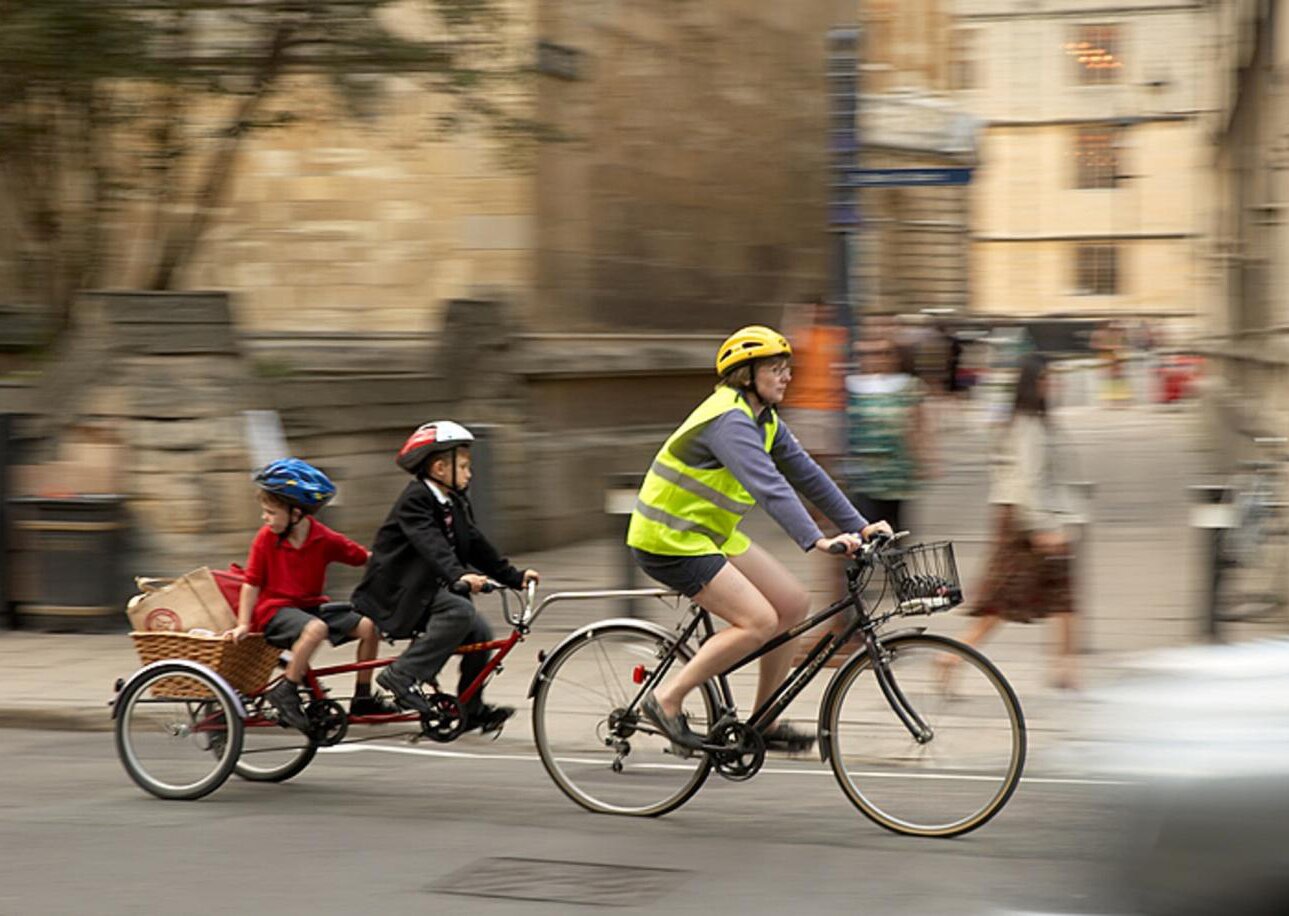
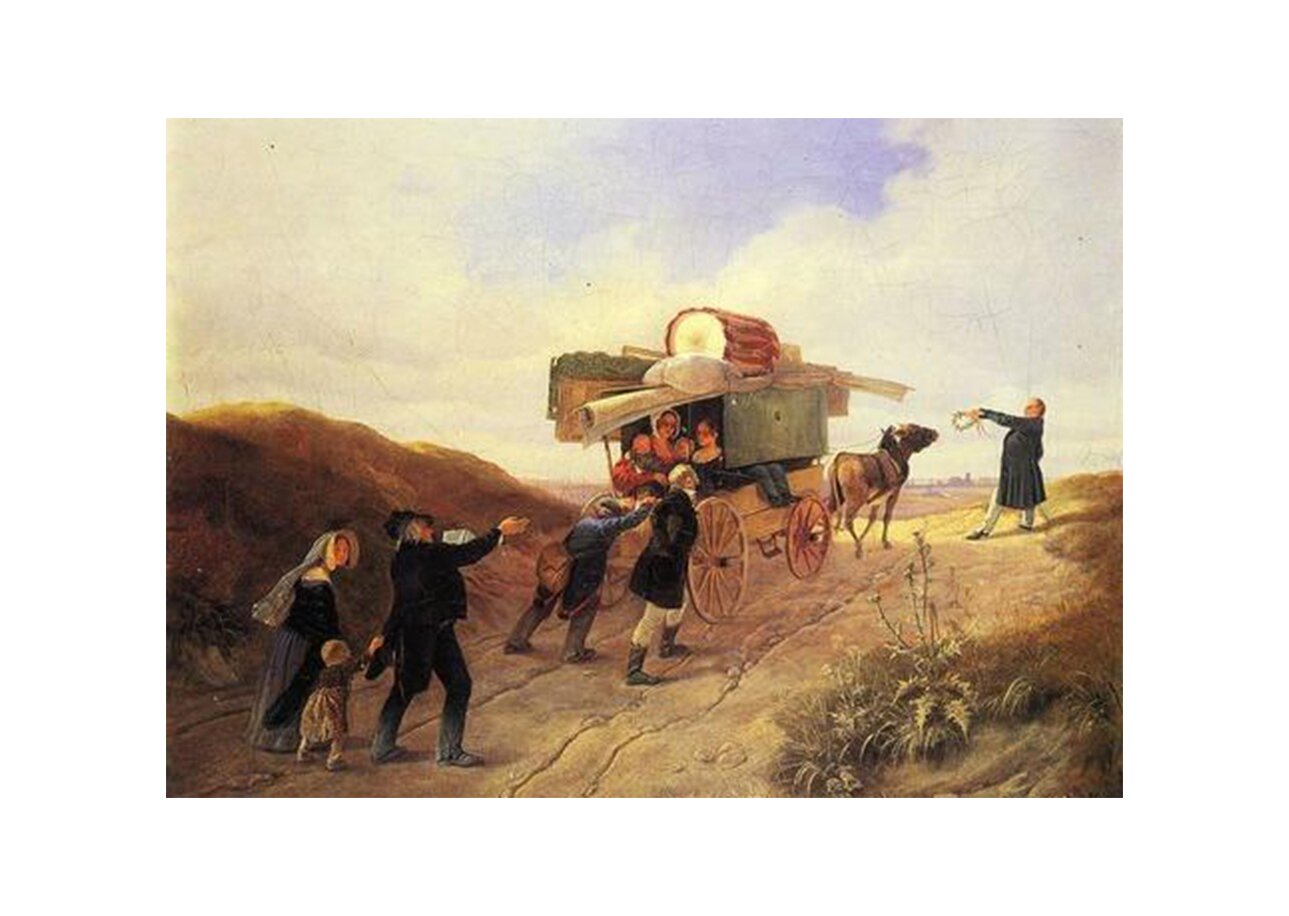
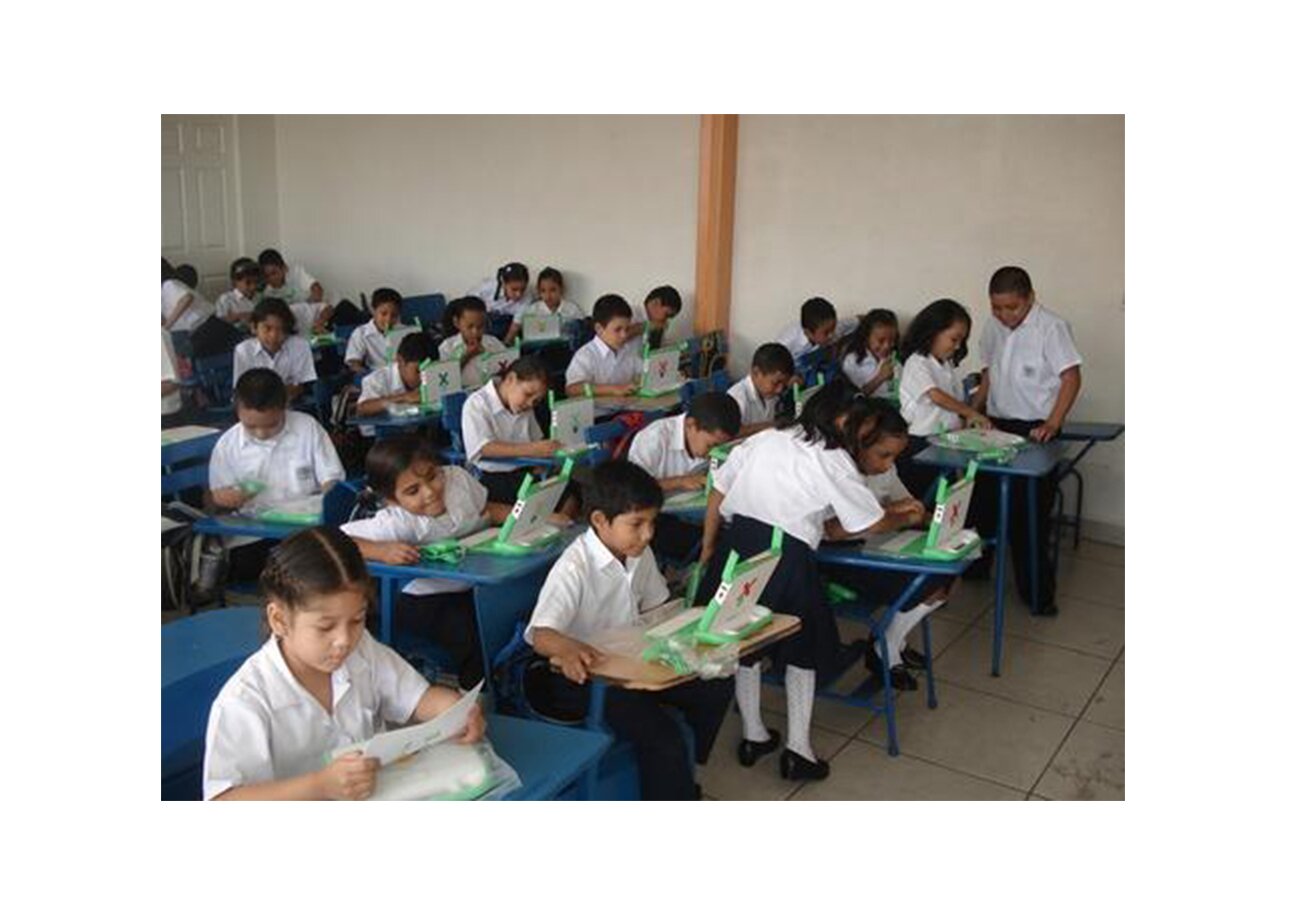
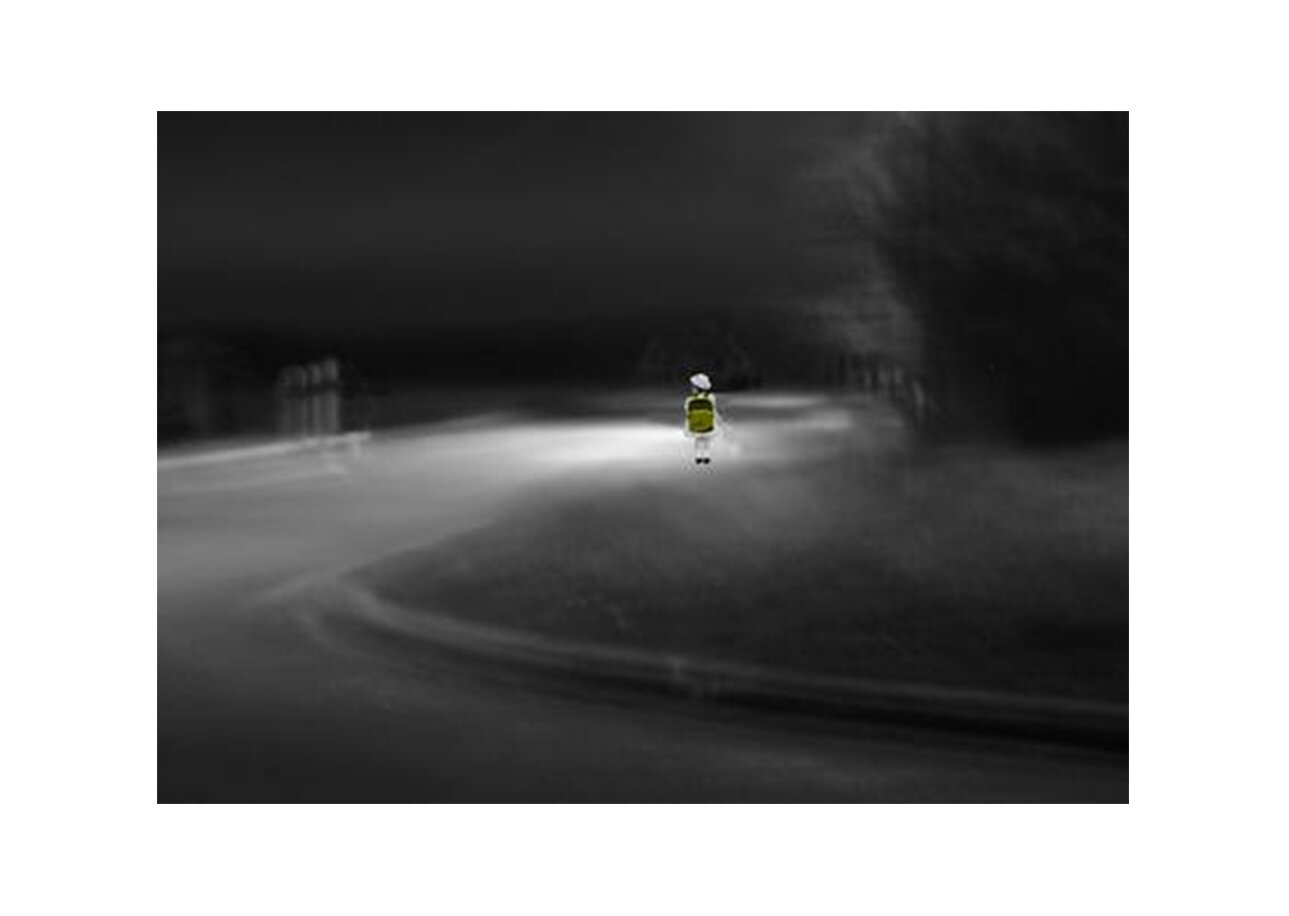
Formulate themes for the media articles that could be illustrated by the pictures below.
R4B00UHXFHhiz
Fotografia barwna. Kobieta w kamizelce odblaskowej i kasku na głowie jedzie rowerem, do którego jest przyczepiona przyczepka imitująca rower typu tandem dla dzieci. Z tyłu siedzi dwóch chłopców w kaskach na głowach. Za ostatnim siodełkiem znajduje się kosz z zakupami. Tło zdjęcia jest rozmazane, ale na widać, że rowerzyści poruszają się po ulicy miasta.
Source: Kamyar Adl, licencja: CC BY-SA 2.0.
RqQBooZXT5TOM
Obraz przedstawia scenę na wsi, prawdopodobnie w XVIII lub XIX wieku. Widoczny jest załadowany do granic możliwości wiejski wóz, na którym siedzą co najmniej cztery osoby, mając nad sobą prowizorycznie zrobiony dach, na którym znajdują się elementy dobytku. Wóz jest ciągnięty przez jednego konia, któremu trudno podjechać pod wzniesienie. Z przodu mężczyzna wabi konia smakołykiem, dwóch mężczyzn z tyłu pcha wóz, a za nimi stoi para z małym dzieckiem.
Olej na płótnie, kolekcja prywatna
Source: Carl Spitzweg, Wędrowni komedianci, 1838, domena publiczna.
Ravgx6cTLA684
Klasa szkolna. W pojedynczych ławkach siedzą około 10-letnie dzieci, dziewczynki i chłopcy. Dzieci mają przed sobą szkolne laptopy, w które patrzą. Jedna z dziewczynek czyta to, co jest napisane na kartce.
Source: Daniel Drake, licencja: CC BY 2.0.
R1Xcw6eYJsM7d
Fotografia edytowana. Ciemna noc, widać tylko oświetloną drogę, na której stoi tyłem dziecko z plecakiem na plecach. Nastrój zdjęcia jest tajemniczy, wywołuje lęk.
Source: domena publiczna.
R4ODT3dEQFmIW
Wykonaj ćwiczenie zgodnie z poleceniem.
Wykonaj ćwiczenie zgodnie z poleceniem.
In the introduction to an argumentative text, you should try to introduce the audience to your topic. Ensure that your speech attracts their attention: you can use words of wisdomwords of wisdomwords of wisdom, quotes, wordplaywordplaywordplay. Listeners will also be intriguedintrigueintrigued if you use paradoxparadoxparadox, so give some surprising information, point out something to shock them.
Exercise 3
From a variety of sources, find quotes that can be used as a basis for the themes below
It is worth smiling a lot.
Are antique cars just superfluous relics from the past?
Do not fear death!
RPcsNguCN8XQP
Wykonaj ćwiczenie zgodnie z poleceniem.
Wykonaj ćwiczenie zgodnie z poleceniem.
The sender, after presenting their thesis, that is, after acquainting the audience with their position, should support this with appropriate arguments. These can appeal to reason, knowledge, experience or the emotions of the audience.
Arguments must be adapted both to the theme of the speech and to the audience (e.g. their age and level of education). We decide on argumentation when we are presenting ideas that differ from those of our recipients. Our actions will only make sense where there are concepts that are accepted by both sides of an argument. One very important characteristic of argumentation is that the sender has to realise that the recipient is free to choose the position that is most convincing for them.
Exercise 4
Working in groups, prepare arguments for or against one of the following. Afterwards, present these to the whole class. As a group, evaluate their strength and persuasive usefulness.
Motorways in Poland should have tolls.
It is worth knowing the law.
The ban on smoking in public places in Poland should be repealed.
Television is harmful.
Organising statements and emphasising the logic in them are served by metatextual expressionsmetatextual expressionsmetatextual expressions, which not only link the text, but also allow the receiver to see the intention of the sender. It is thanks to such vocabulary that the audience knows what part of a speech they are listening to - the body or the end, arguments or conclusions.
Here are some examples: in summary, I come to the conclusion, firstly (...), secondly (...), then, this leads to the following, etc
Metatext is also a sign of subjectivism: I think that...in my opinion, in my view, and also allows the introduction of polemics Eg. I cannot agree with the previous speaker, because..., I respect the views of X, but...I hold a different view, which is....
R1TqUgXmt5j00
Exercise 5
In the passage below, list metetextual expressions that connect statements, and another for expressions that indicate subjectivism. There is no doubt that amongst the many features of the Polish language after 1989, a special place is held by the striking expressiveness and expansiveness in the language of our young generation. [..] As one who participated in the television program the Polish Dictionary, which has been shown in TVP Polonia since January 2009 , I conclude that that the number of questions pertaining to the most diverse lexical and morphological features of the young generation is growing [...]. Moving on to the register of grammatical and systemic facts, these can be attibuted - with few exceptions - to the status of long-term processes. Users of youth language are however always a social group where these processes change more rapidly. Our youngest generations certainly do not hesitate in the evolution of the phonetic realisation of soft labial consonants and nasal vowels. In relation to the first , asynchronous pronunciation such as pjasek, mjasto, wjara (particularly at the start of words) have been displaced by traditional, synchronised forms p'asek, m'asto, w'ara . As regards the latter , this is, according to the evolution of the vowel system of the Slavonic languages - a gradual reduction in their nasal quality. However this process is very gradual. Of particular note is the pronunciation of ą as ou before a break in speech, and so we have dziousło, mouż, idou, chodzou (dziąsło, mąż, idą, chodzą). The most concerning development from the point of view of the traditional typology of the Polish language is the growing trend of not changing the endings of names from official documents (eg -o, -a, -e) in everyday speech. From my observations, it follows that users of our language from the young generation are not critical of this process and statements like "my name doesn't change" are happening more and more often, even at author evenings as part of a dedication. Summing up, from these arguments we can say that we are experiencing a highly significant and tumultous period in the history of the Polish language. The events of 1989 took us to a totally new reality, and the advances in our civilisation, related to electronic realities, have generated communicational phenomena that we could not have dreamed about 20-30 years ago.
In the passage below, list metetextual expressions that connect statements, and another for expressions that indicate subjectivism. There is no doubt that amongst the many features of the Polish language after 1989, a special place is held by the striking expressiveness and expansiveness in the language of our young generation. [..] As one who participated in the television program the Polish Dictionary, which has been shown in TVP Polonia since January 2009 , I conclude that that the number of questions pertaining to the most diverse lexical and morphological features of the young generation is growing [...]. Moving on to the register of grammatical and systemic facts, these can be attibuted - with few exceptions - to the status of long-term processes. Users of youth language are however always a social group where these processes change more rapidly. Our youngest generations certainly do not hesitate in the evolution of the phonetic realisation of soft labial consonants and nasal vowels. In relation to the first , asynchronous pronunciation such as pjasek, mjasto, wjara (particularly at the start of words) have been displaced by traditional, synchronised forms p'asek, m'asto, w'ara . As regards the latter , this is, according to the evolution of the vowel system of the Slavonic languages - a gradual reduction in their nasal quality. However this process is very gradual. Of particular note is the pronunciation of ą as ou before a break in speech, and so we have dziousło, mouż, idou, chodzou (dziąsło, mąż, idą, chodzą). The most concerning development from the point of view of the traditional typology of the Polish language is the growing trend of not changing the endings of names from official documents (eg -o, -a, -e) in everyday speech. From my observations, it follows that users of our language from the young generation are not critical of this process and statements like "my name doesn't change" are happening more and more often, even at author evenings as part of a dedication. Summing up, from these arguments we can say that we are experiencing a highly significant and tumultous period in the history of the Polish language. The events of 1989 took us to a totally new reality, and the advances in our civilisation, related to electronic realities, have generated communicational phenomena that we could not have dreamed about 20-30 years ago.
In the passage below, mark in one colour metetextual expressions that connect statements, and another for expressions that indicate subjectivism.
There is no doubt that amongst the many features of the Polish language after 1989, a special place is held by the striking expressiveness and expansiveness in the language of our young generation. [..] As one who participated in the television program the Polish Dictionary, which has been shown in TVP Polonia since January 2009 {subjectivism}, I conclude that {/subjectivism} that the number of questions pertaining to the most diverse lexical and morphological features of the young generation is growing [...].
{linking statement}Moving on to{/linking statement} the register of grammatical and systemic facts, these can be attibuted - with few exceptions - to the status of long-term processes. Users of youth language are {linking statement}however{/linking statement} always a social group where these processes change more rapidly.
Our youngest generations {subjectivism} certainly {/subjectivism} do not hesitate in the evolution of the phonetic realisation of soft labial consonants and nasal vowels. {linking statement} In relation to the first {/linking statement}, asynchronous pronunciation such as pjasek, mjasto, wjara (particularly at the start of words) have been displaced by traditional, synchronised forms p'asek, m'asto, w'ara {linking statement}. As regards the latter {/linking statement}, this is, according to the evolution of the vowel system of the Slavonic languages - a gradual reduction in their nasal quality. {linking statement}However{/linking statement} this process is very gradual. {subjectivism}Of particular note is {/subjectivism} the pronunciation of ą as ou before a break in speech, {linking statement}and so {/linking statement} we have dziousło, mouż, idou, chodzou (dziąsło, mąż, idą, chodzą).
The most concerning development from the point of view of the traditional typology of the Polish language is the growing trend of not changing the endings of names from official documents (eg -o, -a, -e) in everyday speech. {subjectivism}From my observations, it follows that {/subjectivism} users of our language from the young generation are not critical of this process and statements like "my name doesn't change" are happening more and more often, even at author evenings as part of a dedication.
{linking statement}Summing up,{/linking statement} from these arguments we can say that we are experiencing a highly significant and tumultous period in the history of the Polish language. The events of 1989 took us to a totally new reality, and the advances in our civilisation, related to electronic realities, have generated communicational phenomena that we could not have dreamed about 20-30 years ago.
R1Jew4g1QHVYX
Prepare a multiple-choice question for a friend which will test the knowledge gained during the lesson.
Prepare a multiple-choice question for a friend which will test the knowledge gained during the lesson.
Prepare a multiple-choice question for a friend which will test the knowledge gained during the lesson.